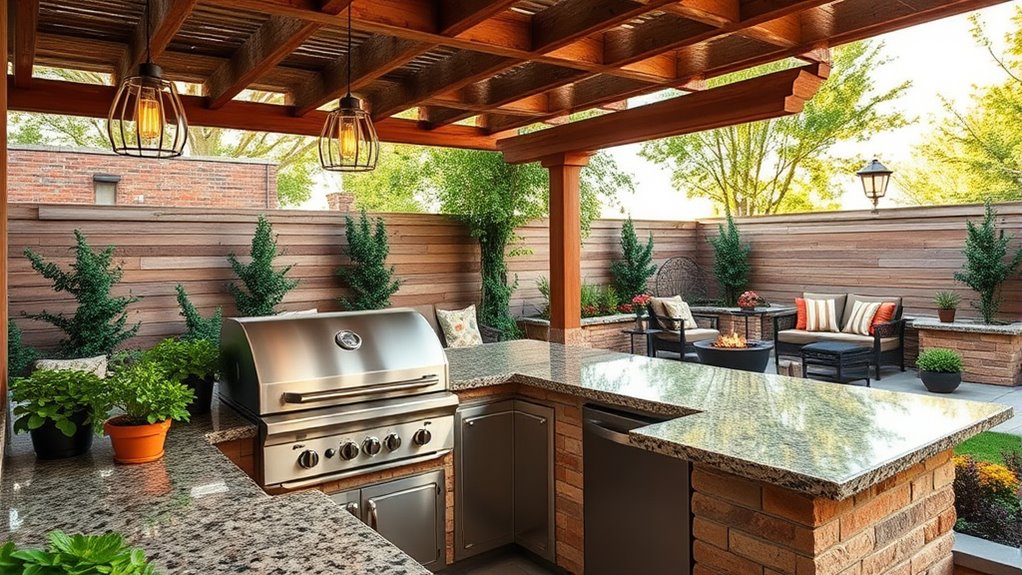

To design a fully equipped outdoor kitchen, focus on combining durable materials like natural stone countertops, weather-resistant cabinetry, and slip-resistant flooring with layered lighting such as ambient, task, and accent lights. Proper fixture placement guarantees safety and enhances aesthetics while weatherproof options preserve durability. Incorporate automation for added convenience, and select materials that complement your space and withstand outdoor conditions. Keep exploring to discover how these elements come together for a practical, inviting alfresco cooking area.
Key Takeaways
- Incorporate layered lighting with ambient, task, and accent fixtures for optimal functionality and ambiance.
- Choose weatherproof, durable materials like natural stone, weather-resistant cabinetry, and slip-resistant flooring.
- Strategically position lighting to enhance food visibility, prevent glare, and highlight design features.
- Integrate automation and dimming options for convenient control and adaptable lighting moods.
- Ensure proper placement and weatherproofing of fixtures to withstand outdoor conditions and maximize safety.

An outdoor kitchen transforms your backyard into a versatile space for cooking, entertaining, and relaxing. When designing this area, two key elements to consider are lighting design and material selection. Proper lighting ensures you can cook and socialize comfortably even after the sun sets, while choosing the right materials guarantees durability and aesthetics that match your outdoor environment.
Start with lighting design. You want your outdoor kitchen to be functional and inviting, so plan for layered lighting that combines ambient, task, and accent lights. Ambient lighting sets the overall mood, so consider string lights, lanterns, or recessed fixtures that provide soft illumination. Task lighting is essential over cooking surfaces and prep areas; LED under-cabinet lights or mounted fixtures work well here, giving you clear visibility without harsh shadows. Accent lighting adds visual interest, highlighting features like a stone backsplash, built-in grill, or decorative elements. Incorporate dimmable options so you can adjust brightness depending on the occasion, whether it’s a lively cookout or a quiet evening. When planning your lighting, think about weatherproof fixtures designed to withstand outdoor conditions, and position lights strategically to avoid glare or shadows that hinder your view of the food. Additionally, consider robotics integration to automate certain lighting functions for added convenience and efficiency.
Material selection is equally vital. You’ll want materials that can handle outdoor elements like rain, sun, and temperature fluctuations while complementing your home’s style. For countertops, options like natural stone, concrete, or high-quality composite materials offer durability and low maintenance. For cabinetry and furniture, look for weather-resistant woods such as teak or cedar, or opt for metal appliances and cabinetry with powder-coated finishes that resist rust and corrosion. The flooring should also be practical; materials like stamped concrete, natural stone, or porcelain tiles provide slip resistance and longevity. When choosing materials, consider not just their appearance but also their resilience to outdoor wear and tear. It’s worth investing in quality options that will last for years, saving you the hassle of constant repairs or replacements.
Frequently Asked Questions
How Much Does a Custom Outdoor Kitchen Typically Cost?
A custom outdoor kitchen typically costs between $10,000 and $50,000, depending on size, materials, and features. You should focus on cost estimation and budget planning early to make certain your project stays within your financial limits. Keep in mind that adding high-end appliances or premium finishes can increase costs. By planning carefully, you can create a fully equipped alfresco cooking area that fits your needs and budget.
What Permits Are Required for Installing an Outdoor Kitchen?
Your outdoor kitchen setup isn’t just a backyard upgrade; it’s practically a revolution! You’ll need to check local building codes and zoning regulations to make certain everything’s legal. Usually, permits are required for electrical, plumbing, and gas work, plus possibly a construction permit. Contact your city or county offices early to avoid surprises. Failing to follow these rules can turn your dream project into a costly headache, so stay proactive!
How Do I Maintain Outdoor Kitchen Appliances?
To sustain outdoor kitchen appliances, you should regularly perform appliance maintenance by cleaning grills, burners, and countertops after each use. Protect outdoor appliances from the elements by covering them when not in use and inspecting for rust or corrosion. Use outdoor appliance care products to keep surfaces shiny and functional. Avoid harsh chemicals and ensure proper ventilation during cleaning. These steps help prolong the lifespan and ensure safe, efficient operation of your outdoor kitchen.
Can Outdoor Kitchens Be Eco-Friendly and Energy-Efficient?
Yes, your outdoor kitchen can be a beacon of eco-friendliness and energy efficiency. Think of it as planting a green seed in your backyard; using sustainable materials reduces your environmental footprint, while solar-powered appliances harness the sun’s energy, making cooking greener. By blending innovation with eco-conscious choices, you create a space that’s not only beautiful and functional but also kind to our planet, turning your outdoor kitchen into a sustainable oasis.
What Are the Best Materials for Outdoor Kitchen Countertops?
For outdoor kitchen countertops, you should choose materials with excellent durability and appealing aesthetics. Granite tops the list because it resists scratches, heat, and weather, ensuring longevity and a natural look. Quartz offers a sleek, modern appearance and great durability, but it’s less heat-resistant. Concrete provides versatility in design and withstands outdoor conditions well. Consider these options to balance durability and aesthetics, creating a stunning, functional outdoor cooking space.
Conclusion
With a well-designed outdoor kitchen, you turn your backyard into a culinary oasis—your personal haven where flavors and laughter mingle under the open sky. Think of it as your backyard’s heartbeat, pulsing with the aroma of grilled delights and the warmth of good company. So, fire up your imagination, craft your perfect alfresco space, and let every meal become a memorable chapter in your outdoor adventure. Your perfect outdoor kitchen awaits—ready to inspire and delight.