Prefab homes and modular construction are trending toward faster builds, thanks to streamlined manufacturing processes and controlled environments that reduce waste. These methods offer sustainable benefits like eco-friendly materials, energy-efficient designs, and solar-ready options. They also allow you to customize your space easily and adapt it over time. With improved quality control and innovative materials, these homes provide durable, eco-conscious living solutions. Keep exploring to discover how these trends can transform your building experience.
Key Takeaways
- Growing adoption of sustainable and eco-friendly materials in prefab and modular building projects.
- Increased customization options and flexible designs for diverse living and commercial needs.
- Technological advancements improving manufacturing precision, quality control, and overall efficiency.
- Rising demand for energy-efficient, solar-ready, and future-proof homes aligned with green initiatives.
- Industry shift toward faster construction timelines, reduced waste, and lower carbon footprints.
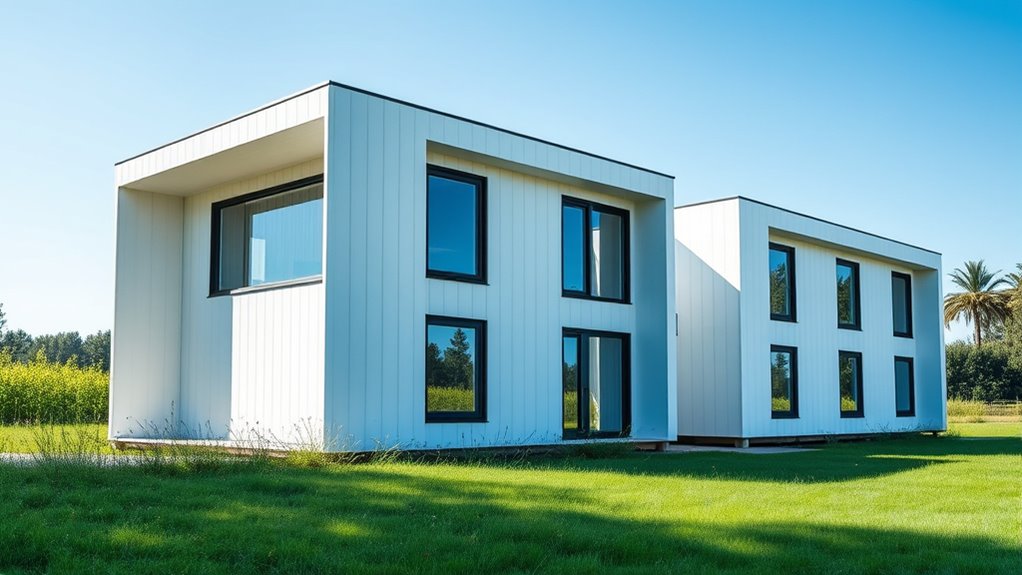
In recent years, prefab homes and modular construction have gained significant momentum as practical solutions to address housing shortages and streamline building processes. You might find yourself drawn to these methods because they offer a faster, more efficient way to create living spaces without sacrificing quality. One of the key benefits is their potential for sustainable building. By designing and constructing homes in controlled environments, you reduce waste, minimize energy consumption, and lower your overall carbon footprint. This approach aligns perfectly with the growing demand for eco-friendly housing options, making it an attractive choice for environmentally conscious buyers.
Prefab and modular homes offer eco-friendly, efficient solutions to modern housing needs.
Innovative materials play a vital role in elevating the appeal and functionality of prefab and modular homes. You’ll notice that manufacturers are increasingly incorporating advanced, sustainable materials such as recycled steel, insulated concrete forms, and eco-friendly composites. These materials not only improve the durability and energy efficiency of your home but also contribute to its overall sustainability. For instance, using lightweight yet sturdy panels can speed up construction, allowing your project to move from blueprint to move-in faster than traditional building methods. Plus, these innovative materials often require less maintenance over time, saving you money and hassle in the long run.
The integration of sustainable building practices with innovative materials means you can customize your prefab home to suit your specific needs and preferences. Whether you’re looking for energy-efficient windows, solar-ready roofs, or eco-conscious insulation, manufacturers are offering solutions that prioritize environmental impact without compromising on style or comfort. This trend is making it easier for you to create a space that’s not only modern and functional but also aligned with your values of sustainability.
Moreover, modular construction’s inherent flexibility allows for easier upgrades and expansions down the line. As your needs change, you can add modules or replace components without entirely demolishing your home. This adaptability, combined with the use of cutting-edge materials, means you’re investing in a property that’s future-proof and aligned with the latest advancements in sustainable building. Additionally, the controlled manufacturing environments facilitate quality control, ensuring consistent standards and reducing on-site construction delays. Overall, these trends are transforming the housing industry, making it possible for you to enjoy a home that’s quicker to build, more eco-friendly, and built with innovative materials that enhance performance and longevity.
As an affiliate, we earn on qualifying purchases.
Frequently Asked Questions
What Are the Main Cost Differences Between Prefab and Traditional Homes?
When you compare costs between prefab and traditional homes, you’ll find that prefab homes generally have a lower cost comparison. This is mainly because prefab construction reduces material expenses through efficient manufacturing processes and minimizes waste. Additionally, prefab homes often save you money on labor, as most components are preassembled. Overall, you’ll notice significant savings in both material expenses and construction time when choosing prefab options over traditional building methods.
How Long Does It Typically Take to Build a Modular Home?
Imagine your dream home as a puzzle, with each piece fitting perfectly. The assembly timeline for a modular home usually spans about 6 to 12 weeks, depending on design complexity and factory schedules. The construction duration is notably shorter than traditional builds, often completed in a fraction of the time. You’ll find the process efficient, predictable, and quicker, so you can start enjoying your new space sooner.
Are Prefab Homes Customizable to Individual Preferences?
You can customize prefab homes to suit your preferences thanks to their design flexibility and a variety of material options. Builders often allow you to choose layouts, finishes, and features, making your home truly unique. You get to select from different materials for exterior and interior, ensuring your space reflects your style. This adaptability means your dream home can be tailored precisely to your needs, blending convenience with personal expression.
What Are the Environmental Impacts of Modular Construction?
When it comes to environmental impacts, you should know that modular construction often hits two birds with one stone. It uses sustainable materials, reducing waste, and promotes energy efficiency during and after build. While manufacturing processes are more controlled, reducing emissions, transportation can add emissions if not managed properly. Overall, it’s a greener option that helps lessen your carbon footprint, making it a smart choice for eco-conscious builders like you.
How Do Building Codes Affect Prefab Home Installation?
Building codes directly impact how you install prefab homes by enforcing zoning restrictions and permit requirements. You need to make certain your project complies with local regulations, which may restrict where you can place the home or require specific permits. These rules aim to guarantee safety and consistency, but they can also cause delays or additional costs if not followed properly. Staying informed helps you navigate code compliance smoothly during installation.
Conclusion
As you explore prefab homes and modular construction, remember they’re like building with Lego blocks—each piece fits perfectly to create something bigger and better. Just last year, a family in California cut construction time by 40% using modular methods, turning their dream home into reality faster than traditional builds. Embracing these trends means you’re not just saving time and money; you’re shaping the future of homebuilding—one innovative piece at a time.