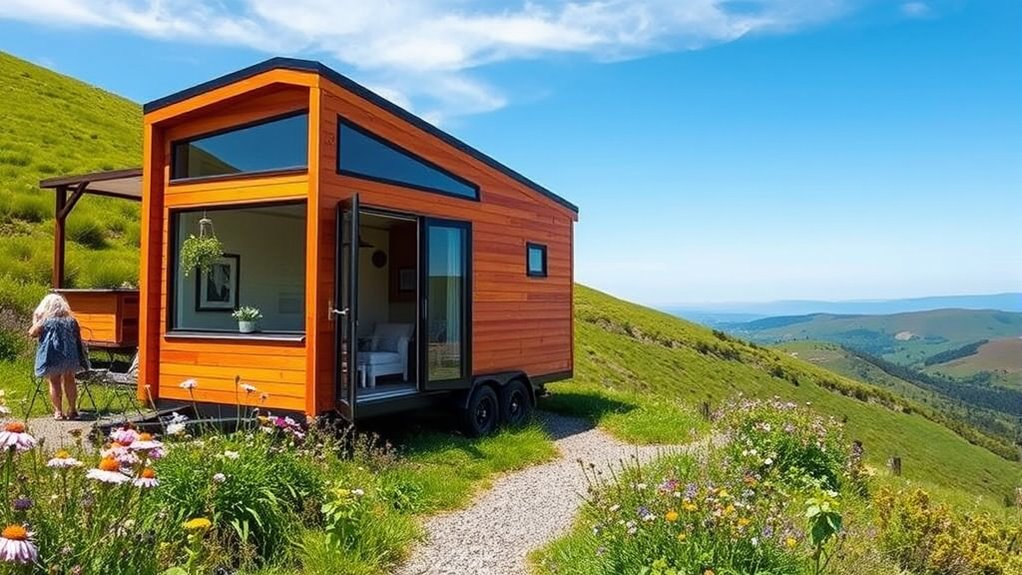

The tiny house movement is gaining popularity because it promotes affordability, sustainability, and minimalist living. It helps reduce your ecological footprint with eco-friendly materials and renewable energy, while lowering overall costs. However, it also brings challenges like limited space for guests, zoning restrictions, and emotional hurdles related to possessions. If you’re curious about how this lifestyle can transform your approach to home and life, keep exploring the benefits, drawbacks, and emerging trends.
Key Takeaways
- The movement promotes minimalism, sustainability, and affordability, encouraging a simplified lifestyle with eco-friendly design principles.
- Benefits include reduced costs, lower environmental impact, and increased financial and personal freedom.
- Challenges involve limited space, zoning restrictions, and emotional adjustments to possessions and social norms.
- The trend reflects a shift toward mindful living, emphasizing experiences and relationships over material possessions.
- Growing popularity is driven by the desire for sustainable, cost-effective housing options aligned with personal values.
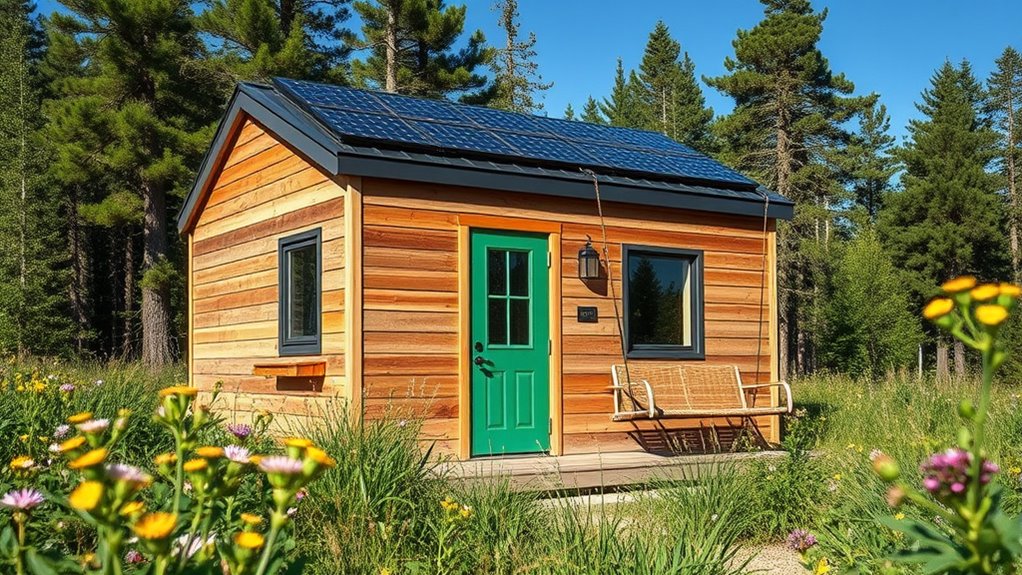
Have you ever wondered if smaller living spaces could lead to a bigger quality of life? The tiny house movement has gained momentum in recent years, appealing to those who seek simplicity, affordability, and a more sustainable way of living. When you choose a tiny house, you’re often embracing sustainable design principles that minimize environmental impact. These homes typically feature energy-efficient appliances, solar panels, and eco-friendly materials, helping you reduce your carbon footprint. By adopting a minimalist lifestyle, you prioritize what truly matters, removing clutter and excess to create a space that’s functional and calming. This intentional approach to living encourages you to focus on experiences and relationships rather than material possessions.
Living in a tiny house challenges conventional ideas about space and possessions. With limited square footage, you’re pushed to be more deliberate about what you keep and how you organize your belongings. This promotes a minimalist lifestyle, which can lead to less stress and more mental clarity. You learn to appreciate quality over quantity and find joy in simple pleasures. Plus, the reduced size makes maintenance easier and cheaper, freeing up your time and resources for travel, hobbies, or other pursuits. It also means you’re less dependent on external utilities and resources, aligning with sustainable values and reducing ongoing costs. Understanding permits and inspections is essential to ensure your tiny house complies with local regulations and can be legally placed on your property.
However, downsizing isn’t without its challenges. Limited space can make hosting guests or accommodating a family difficult, and zoning laws or building codes may restrict where you can place your tiny home. You might also face emotional hurdles if you’re attached to possessions or worried about storage. Despite these obstacles, many find that the benefits of a tiny house—financial freedom, environmental responsibility, and a more intentional lifestyle—outweigh the drawbacks. Trends indicate that more people are adopting the tiny house model not just for affordability but as a statement of sustainability and minimalism.
In the end, the tiny house movement represents more than just a trend; it’s a shift toward mindful living. If you’re considering a move, think about how sustainable design and a minimalist lifestyle could transform your daily routine. It’s about creating a space that supports your values, reduces your ecological footprint, and enables you to live intentionally. While it’s not for everyone, the tiny house movement offers a compelling alternative to traditional housing, encouraging you to reevaluate what truly makes a home.

Dollhouse 1/12 Miniture Coffee Maker & Juicer Set 2Pcs Doll House Kitchen Appliances Furniture Plastic Model Coffee Pot Blender Accessories (White)
- Realistic Miniature Design: Exquisitely crafted with detailed features
- Versatile Use: Ideal for dollhouse displays and interactive play
- Great Gift Choice: Perfect for collectors and miniature enthusiasts
As an affiliate, we earn on qualifying purchases.
As an affiliate, we earn on qualifying purchases.
Frequently Asked Questions
How Do Tiny Houses Impact Property Taxes?
When you consider how tiny houses impact property taxes, it mainly depends on tax assessment and local regulations. Since tiny houses are often classified differently than traditional homes, they may be assessed at a lower value, reducing your taxes. However, some areas have specific rules that could increase or limit your tax benefits. Always check local regulations to understand how your tiny house will be taxed and guarantee proper compliance.
What Are Common Financing Options for Tiny Homes?
When exploring tiny house financing, you typically consider tiny home loans, personal loans, or RV loans. Many lenders now offer tiny house financing options, but terms vary. You might also use savings or find a specialized lender familiar with tiny homes. It’s smart to compare rates and terms to find the best fit. Remember, understanding your financing options helps you make confident decisions and turn your tiny house dream into reality.
Are Tiny Houses Suitable for Families With Children?
You might find tiny houses challenging for families with children due to limited space. Family privacy can be hard to maintain, and ensuring child safety requires careful planning. If you prioritize spaciousness and private areas, a tiny house may not be ideal. However, with creative storage solutions and safety measures, some families adapt. Consider your needs carefully to determine if a tiny home can provide a comfortable, safe environment for your kids.
How Do Tiny Houses Handle Waste Management and Plumbing?
In tiny houses, waste management and plumbing are designed to be efficient and eco-friendly. You’ll often use composting toilets to handle waste without traditional plumbing, reducing water use and odor. Water recycling systems let you reuse gray water from sinks and showers for plants or flushing toilets, making the most of limited water resources. These solutions help you maintain hygiene and sustainability in a compact living space.
What Are the Zoning Laws Affecting Tiny House Placement?
Picture your tiny home as a seed, ready to grow in the right space. Zoning restrictions and building codes act as the fertile ground, shaping where it can flourish. You need to navigate local laws, which vary widely—some areas welcome tiny houses, others impose strict limits or bans. Check with local authorities to guarantee your dream fits within zoning laws, avoiding surprises and planting roots where they’re legally allowed to thrive.
Conclusion
Imagine stepping into a small boat, perfectly crafted to navigate tidal waves with ease. The tiny house movement offers you that same freedom—simpler, more intentional living that keeps you afloat amid life’s chaos. While it’s not for everyone, embracing this tiny vessel can lead to a more mindful voyage. Whether you sail smoothly or face storms, remember: sometimes, the smallest craft carries the greatest adventure. Your journey begins with a single, tiny step.