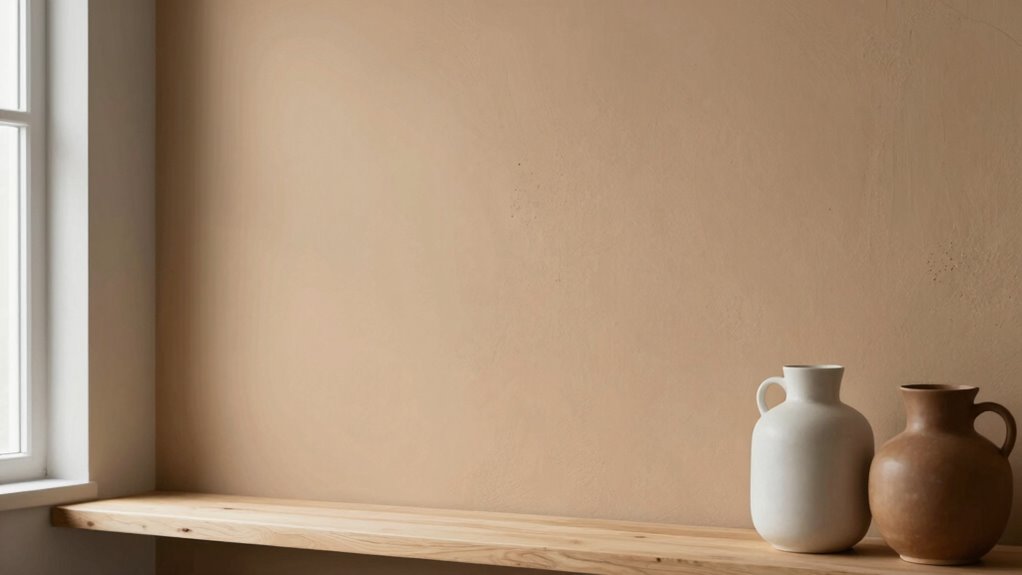

To shift from cool grays to warm neutrals, start by gradually introducing warm tones through accessories like cushions, throws, and artwork in shades of beige, taupe, or caramel. Choose paint colors with warm undertones and test samples in various lighting to see how they appear throughout the day. Balance your space by blending warm hues with textured fabrics and natural elements. If you keep exploring, you’ll uncover expert tips to create a cozy, harmonious New look.
Key Takeaways
- Gradually introduce warm hues through accessories, textiles, and artwork to ease the transition from cool grays.
- Test paint samples in different lighting conditions to ensure warm tones complement your space.
- Incorporate natural materials like wood and rattan to enhance warmth and create a cohesive look.
- Balance warm neutrals with neutral or cool accents to avoid overwhelming the room.
- Use textured layering with fabrics and decor to add depth and harmony during the color shift.

LANANAS Decorative Corduroy Throw Pillow Covers 18×18 Inch Neutral Brown
- Includes 4 Pillow Covers: Set of four 18×18 inch covers
- Neutral Color Palette: Cream, Light Camel, Caramel, Chocolate Brown
- Soft Corduroy Material: Features fine stripe details and smooth texture
As an affiliate, we earn on qualifying purchases.
As an affiliate, we earn on qualifying purchases.
Why Are Warm Neutrals Gaining Popularity Over Cool Grays?
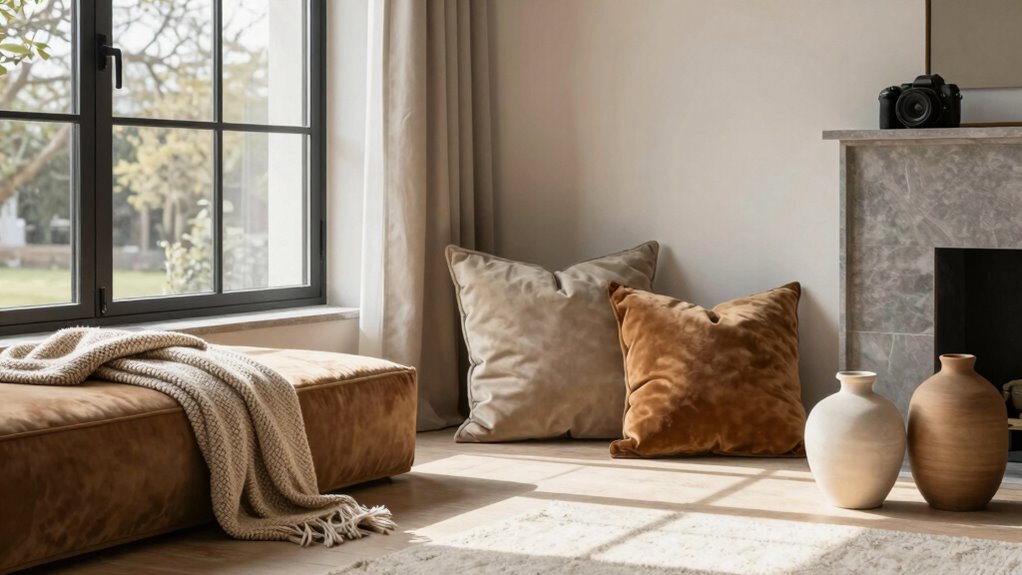
Warm neutrals are gaining popularity over cool grays because they create a more inviting and cozy atmosphere in any space. Color psychology shows that warm tones evoke feelings of comfort, making rooms feel more welcoming. Interior design trends lean toward creating spaces that promote relaxation and warmth, which warm neutrals naturally support. Unlike cool grays, these hues add depth and richness, helping your home feel more personalized and lived-in. As people seek environments that foster well-being and connection, warm neutrals serve as the perfect backdrop. They blend easily with various accents and styles, making them versatile choices. This shift reflects a broader move toward spaces that prioritize emotional comfort and a sense of sanctuary, aligning with current interior design preferences. Incorporating Color psychology principles enhances the understanding of how warm neutrals impact mood and atmosphere. Additionally, warm neutrals can complement various color schemes, making them adaptable for different design aesthetics, especially as they promote a sense of emotional well-being.
How to Pick the Perfect Warm Neutral Paint Colors for Your Home
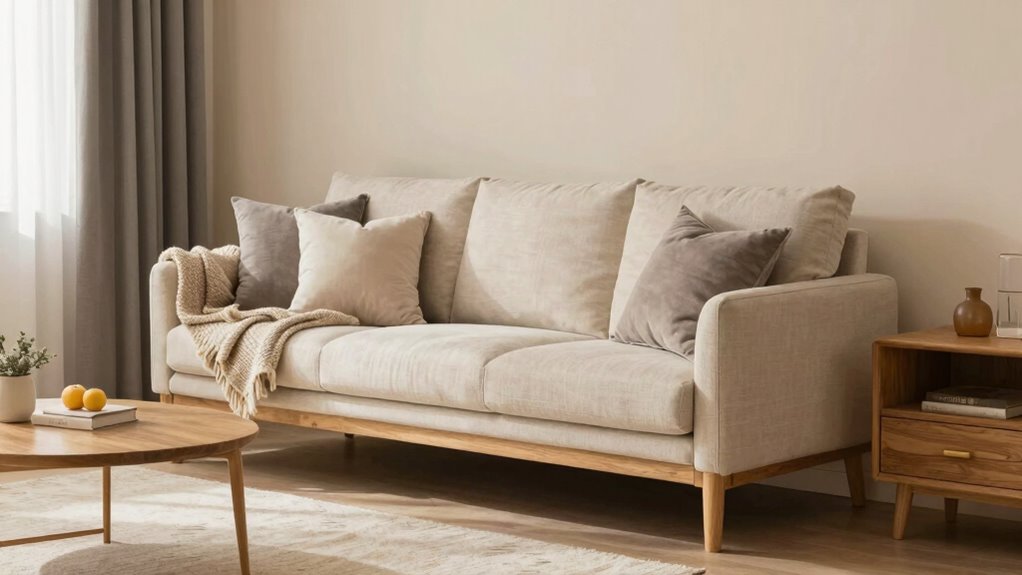
Choosing the right warm neutral paint colors for your home starts with understanding the undertones that best complement your space. Consider your existing color palettes and how different shades will blend or contrast with furniture and decor. Warm neutrals often feature undertones like beige, taupe, or caramel—so identify which ones create harmony in your rooms. Lighting techniques play an essential role; natural light enhances warm tones, making them appear more inviting, while artificial lighting can alter their appearance. Test paint samples in various lighting conditions before committing. This guarantees you select a color that feels cohesive and balanced throughout your home. Being intentional with undertones, palettes, and lighting will help you choose warm neutrals that foster a cozy, stylish atmosphere. Additionally, understanding the impact of lighting on color perception can help you make more informed decisions for a harmonious design.
How to Transition Your Decor From Cool to Warm Tones Seamlessly

Changing your decor from cool to warm tones can feel like a significant change, but with intentional updates, you can create a seamless and inviting shift. Focus on color blending by gradually introducing warm hues through accessories and accents. Use texture pairing to enhance depth—combine soft fabrics with rougher textures for contrast. Incorporate warm neutrals into your existing palette through layered textiles or artwork that features warm undertones. To visualize, consider this ideas table:
| Cool Tones | Warm Tones |
|---|---|
| Gray throw pillow | Earth-toned cushions |
| Silver vases | Copper accents |
| Cool-toned artwork | Warm-colored wall art |
This gradual approach guarantees your transition feels natural, making your space cozier without overwhelming it. Additionally, color psychology can guide your choices to evoke a welcoming atmosphere that aligns with the warm color palette. Understanding home decor trends can also help you select the most harmonious elements for your space.
How to Style Your Furniture and Accessories With Warm Neutrals
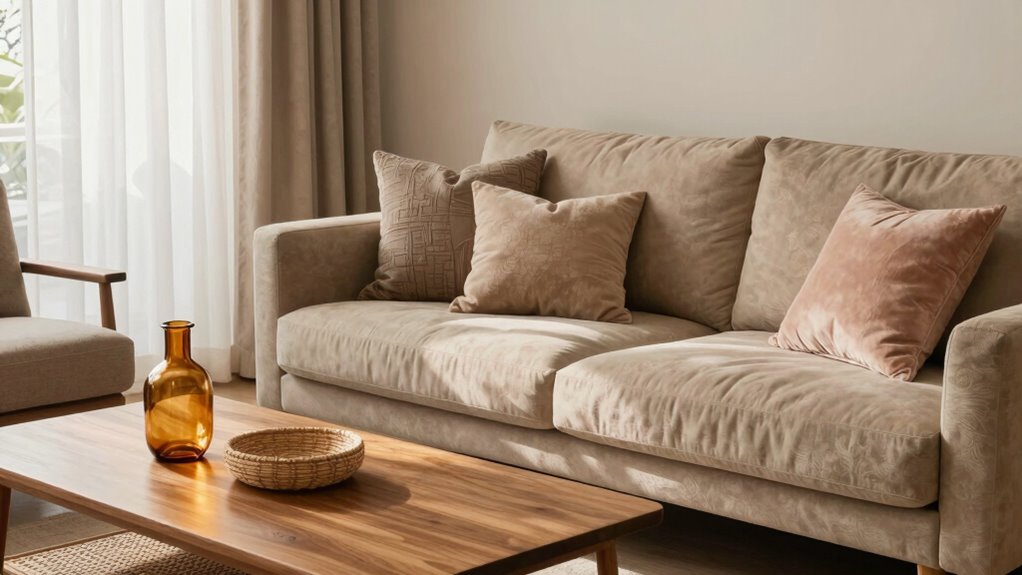
To effectively style your furniture and accessories with warm neutrals, start by selecting pieces that naturally feature earthy tones like beige, taupe, or caramel. Incorporate fabric textures such as linen, wool, or woven materials to add depth and tactile interest. These textures bring warmth and visual appeal, making your space inviting. When layering accessories, mix different shades of warm neutrals—think tan vases, caramel throw pillows, and amber candles—to create a cohesive look. Use variation in size, shape, and texture to prevent your decor from feeling flat. Incorporate natural elements like wood or rattan to enhance the earthy vibe. Additionally, consider cable management solutions when incorporating lighting fixtures or electronic accessories to keep your space organized and aesthetically pleasing. Creating a balanced color palette with warm neutrals will help your space feel harmonious, cozy, and effortlessly stylish.
Common Mistakes to Avoid When Updating Your Space to Warm Neutrals

While updating your space to warm neutrals can create a cozy and inviting atmosphere, it’s easy to make mistakes that undermine your design goals. One common error is poor paint color blending, which can result in uneven tones or mismatched shades. Avoid clashing accessories by ensuring your decor and textiles coordinate well with your new palette. Incorporating visual consistency across different elements helps achieve a harmonious look and feel in your space. Additionally, understanding wall surface finishes and how they interact with different paints can prevent issues like uneven application or sheen mismatches. Be mindful of these pitfalls:
- Overusing too many warm tones without balancing with neutral or cool accents
- Ignoring paint color blending, leading to inconsistent wall finishes
- Neglecting accessory coordination, causing a disjointed look
Frequently Asked Questions
How Do Warm Neutrals Influence the Mood of a Room?
Warm neutrals create a cozy atmosphere and foster an inviting ambiance in your room. By using shades like beige, taupe, or soft browns, you make the space feel more welcoming and comfortable. These colors add warmth and depth, encouraging relaxation and sociability. You’ll notice that your room feels more intimate and charming, making it easier to unwind and connect with others. Warm neutrals truly transform your space into a soothing retreat.
Can Warm Neutrals Complement Existing Cool-Toned Decor?
Yes, warm neutrals can complement your cool-toned decor beautifully. Focus on color coordination by choosing warm neutrals that have subtle undertones matching your existing colors. Incorporate decor accessories like cushions, throws, or artwork in warm shades to create balance and contrast. This approach adds warmth without clashing, making your space feel inviting and cohesive. Play with different textures and tones to seamlessly blend warm neutrals with your cool palette.
What Lighting Enhances Warm Neutral Paint Colors Best?
Think of your space as a symphony, and lighting as the conductor guiding the mood. To enhance warm neutral paint colors, use lighting with a warm color temperature—around 2700K to 3000K—that complements their cozy tones. Incorporate layered lighting, such as ambient, task, and accent lights, to create depth and highlight the warmth. This light layering guarantees your walls glow invitingly and your space feels harmonious and balanced.
Are There Specific Rooms Where Warm Neutrals Work Better?
You’ll find warm neutrals work beautifully in cosy kitchens and inviting bedrooms, creating a welcoming atmosphere. Their rich tones add comfort and depth, making these spaces feel more intimate and relaxing. In kitchens, they pair well with wood accents and warm lighting, while in bedrooms, they promote a sense of calm. Use warm neutrals where you want to foster coziness and a friendly vibe, making your home feel truly inviting.
How Do I Maintain Warmth Without Making the Space Feel Outdated?
To maintain warmth without feeling outdated, incorporate decorating tips like balancing warm neutrals with rich textures and subtle patterns. Use color pairing by combining warm tones with earthy accents or soft metallics to keep your space fresh. Add cozy textiles, layered lighting, and modern accessories to update the look. This approach guarantees your space feels inviting and current, blending warmth with contemporary style effortlessly.
Conclusion
Think of your home’s palette as a wardrobe—sometimes, you need to swap out cool tones for warm neutrals to feel more inviting. I once helped a client transform her space by replacing icy grays with cozy beige shades, and suddenly, her living room felt like a warm hug. Embracing warm neutrals isn’t just about color; it’s about creating a space where you truly feel at home, grounded and comforted in every corner.