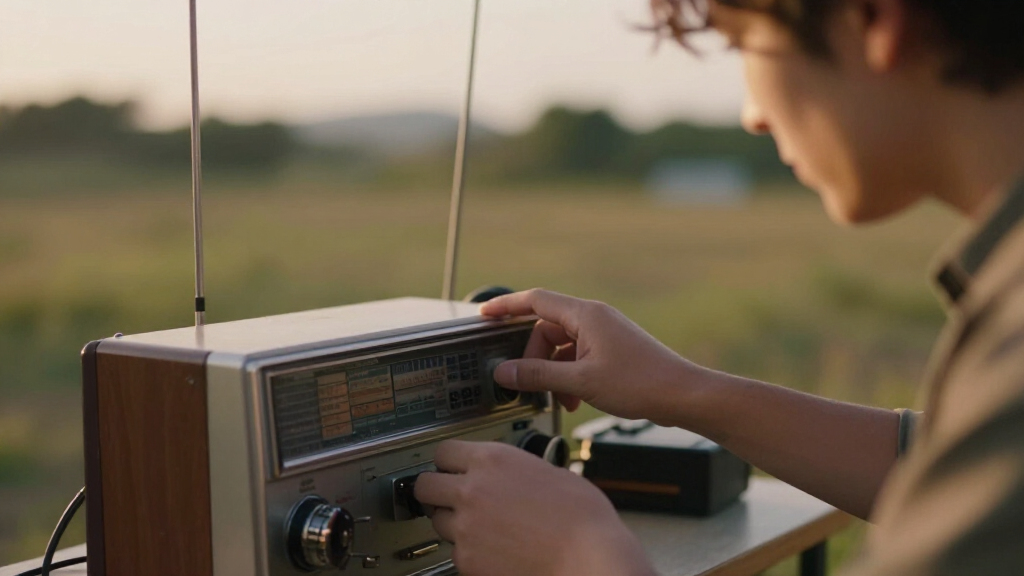

📊 Full opportunity report: AI-Engineered Station 36: A New Era In Shortwave Numbers Listening Sites on ThorstenMeyerAI.com — validation score, market gap, and execution plan.
Play games included with Prime
Start a Prime free trial and play with Amazon Luna on your devices.
Start playingAs an affiliate, we earn on qualifying purchases.
TL;DR
A new AI-created online shortwave numbers station, Station 36, has launched, providing an interactive vintage radio experience. It combines authentic design, spectral visualization, and synthesized audio, marking a novel approach to digital radio history.
Station 36, an AI-crafted virtual shortwave numbers station, has been launched as an interactive web experience that emulates vintage radio hardware and signals. This development introduces a new way for enthusiasts and the public to explore the world of secretive radio signals through a browser-based, tactile interface, blending historical aesthetics with modern technology.
The site, created entirely by artificial intelligence, features a detailed SVG-based vintage radio room, complete with a tuning dial, knobs, and meters, all rendered in a retro color palette. Users can manually tune frequencies by dragging the dial, which updates spectral visuals and triggers synthesized audio signals that mimic static, heterodyne whistles, Morse code, and voice-like bursts. The spectral waterfall visualization scrolls dynamically beneath the controls, illustrating real-time signal activity. The audio component is activated via a dedicated power switch, ensuring an authentic, suspenseful experience. The project was developed without external assets or frameworks, emphasizing a pure web-based craftsmanship, with meticulous attention to visual and interactive fidelity.According to the creators, the goal was to evoke the tactile, slow-paced joy of vintage radio listening while leveraging AI to craft an immersive, authentic environment. The site also contains hidden elements, such as a secret frequency that reveals a coded message, adding an element of discovery for users. The entire experience is optimized for various screen sizes, ensuring accessibility and visual clarity across devices, as detailed in the original analysis.
Innovative Blend of AI, Vintage Radio, and Web Tech
This project signifies a novel intersection of artificial intelligence, digital craftsmanship, and radio history. It offers a new platform for enthusiasts and educators to explore shortwave signals and clandestine communications virtually, without hardware. The immersive design and interactivity could influence future digital recreations of historical communication methods, making radio history more accessible and engaging. It also demonstrates AI’s potential to produce highly detailed, authentic digital environments without reliance on external assets or frameworks, pushing the boundaries of web-based simulation and artistic expression.As an affiliate, we earn on qualifying purchases.
Advancement in Digital Radio History Re-creations
Traditional shortwave numbers stations have long been associated with covert communications during the Cold War era, and their signals remain a subject of fascination. Prior to this, digital recreations of such stations have been limited to static images or audio recordings. Recent developments have focused on immersive experiences, but few have combined detailed visual design, real-time spectral visualization, and synthesized audio in a single, browser-based environment. This project builds on the trend of AI-driven web art, emphasizing authenticity and user engagement, and follows other experimental digital reconstructions of vintage technology. Its release aligns with a broader interest in preserving and exploring radio history through innovative digital means.“The integration of AI and web technologies in Station 36 creates a compelling, tactile experience that authentically evokes vintage shortwave listening.”
— an anonymous researcher
Remaining Questions About Technical and Interactive Depth
It is not yet clear how deeply the site simulates authentic radio signals beyond the visual and audio layers, or whether it incorporates more complex signal decoding or interactivity. The extent of AI’s role in dynamically generating signals and visuals remains partially unexplained. Additionally, the long-term stability and accessibility of the experience, as well as potential educational applications, are still to be explored.
Future Developments and Potential Expansions
Developers may expand the site with additional signal types, more interactive features, or educational modules that explain the history of shortwave communications. There could also be integrations with real-time radio data or community-driven content. As the project is AI-driven, updates might include enhanced realism, new puzzles, or hidden messages for users to discover, further deepening engagement and authenticity.
Key Questions
Is Station 36 based on real shortwave signals?
The signals are synthesized to mimic real-world shortwave signals, including static, Morse code, and voice-like bursts, but are not based on actual live transmissions.
Can I decode real signals using this site?
No, the site is a simulation designed for immersive experience, not a tool for decoding actual radio transmissions.
How does the site create its visual and audio effects?
Using AI-generated SVG graphics for visuals and Web Audio API for sound synthesis, the site creates a realistic vintage radio environment entirely within the browser.
Will there be more features or updates?
Future updates may include additional signal types, interactive puzzles, or educational content, depending on user feedback and development plans.
Source: ThorstenMeyerAI.com
Fall yard work Picks
leaf blowers
As an affiliate, we earn on qualifying purchases.