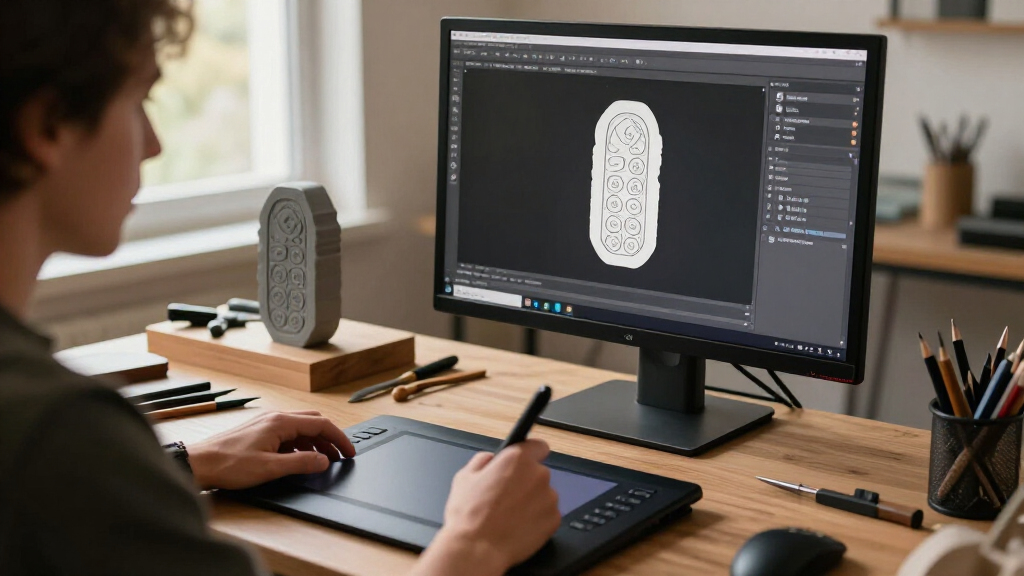

🔍 Read the full analysis: Harnessing AI For SVG Carving Animation: 'The Runestone Field' Explored on ThorstenMeyerAI.com

Get the little things that make your day delivered free with Prime
- Fast, free delivery on millions of items
- Prime Video, Amazon Music and more included
- Member-only deals all year
TL;DR
A new project leverages artificial intelligence to animate SVG carvings of runestones, transforming static images into dynamic narratives. This approach bridges ancient storytelling with modern automation, offering a novel way to explore history through digital art.
Thorsten Meyer’s team has developed ‘The Runestone Field,’ an SVG carving animation project that uses artificial intelligence to animate ancient runic carvings, creating an immersive digital storytelling experience. This development highlights how automation and AI can elevate traditional art forms and storytelling in visual design, offering new ways to engage audiences with history. For more context, see the original analysis.
The project, titled ‘The Runestone Field,’ employs advanced SVG techniques combined with AI-driven animation to simulate the carving process and bring the runes to life. The team integrated precise vector graphics with fluid, automated animations, producing a dynamic visual narrative that resembles stones speaking anew. This approach not only showcases the artistry behind traditional runic carvings but also demonstrates how automation can enhance storytelling in digital art.
According to Thorsten Meyer, the project involved a detailed process of designing the SVG elements to accurately reflect the carvings, then applying AI algorithms to animate the carving and erosion effects. The goal was to create an experience where viewers can explore the intricate details of each runestone, almost as if the stones themselves are narrating stories from the past. The project is live and available for public viewing, exemplifying how digital artisans are blending craftsmanship with automation.
While the technical aspects are well-documented, the team notes that challenges included achieving realistic carving textures and fluid animations that preserve historical authenticity. The project also aims to serve as a case study for future applications of AI in visual storytelling, especially in historical and cultural contexts.
Harnessing AI For SVG Carving Animation: ‘The Runestone Field’ Explored
Thorsten Meyer’s team has developed ‘The Runestone Field,’ an SVG carving animation project that uses artificial intelligence to animate ancient runic carvings — transforming static historical artifacts into dynamic, immersive digital narratives where the stones themselves become storytellers.
Innovative Fusion of Tradition and Technology
This project exemplifies how AI and SVG technology can revolutionize visual storytelling by transforming static historical artifacts into dynamic, engaging narratives — making ancient art accessible and immersive for modern audiences.
Digital Heritage Access
Opens new avenues for digital preservation and education, making ancient runic carvings explorable and engaging rather than locked away on silent stones.
Craftsmanship at Scale
Automation reduces manual effort while enhancing detail and realism — carving textures and erosion effects generated algorithmically, setting a precedent for future digital craftsmanship.
Stones That Speak
For viewers, it offers a fresh perspective on history where stones no longer remain silent but become active storytellers, bridging centuries through technological innovation.
From Static Carving to Living Narrative
The team integrated precise vector graphics with fluid, automated animations, producing a dynamic visual narrative that resembles stones speaking anew.
SVG Design
Runic carvings are faithfully replicated as precise vector paths, accurately reflecting the historical artifacts.
AI Carving
Algorithms generate realistic carving textures, simulating the chisel-work of ancient artisans.
Erosion FX
Automated erosion effects animate stone aging, adding lifelike depth and weathering.
Live Experience
Viewers explore each runestone’s intricate details, as if the stones narrate stories from the past.
By combining precise SVG techniques with AI-driven animation, we’ve created a dynamic experience that brings ancient runes to life, inviting viewers to explore history in a new way.
— Thorsten MeyerHistorical Carvings Meet Modern Animation
Traditional runic carvings have long been a symbol of cultural heritage. Digital artists and technologists increasingly seek to preserve and reinterpret these symbols through modern tools — ‘The Runestone Field’ builds on this trend, though not without obstacles.
Confirmed vs. Unconfirmed Aspects
While the current implementation demonstrates feasibility, details about long-term preservation, user interaction, and broader deployment remain under exploration.
| Aspect | Status | Details |
|---|---|---|
| Live public viewing | ✓ Confirmed | The project is live and accessible to viewers, inviting exploration of carved details. |
| AI carving & erosion | ✓ Confirmed | AI models generate realistic carving textures and animate stone aging effects. |
| Historical authenticity | ✓ Confirmed | Extensive experimentation preserved authenticity in textures and animations. |
| Scalability to other artifacts | ~ Partially | Techniques could adapt to other carvings, but customization is still in development. |
| AR / VR integration | ~ Planned | Future developments may include augmented and virtual reality components. |
| Commercial applications | ✗ Unconfirmed | No specific plans for future updates or wider deployment have been disclosed. |
What You Need to Know
The most common questions about ‘The Runestone Field’ and its implications for AI-driven cultural storytelling.
How does AI enhance the SVG carving animation?
AI algorithms generate realistic carving textures and animate erosion effects, making the SVG carvings appear more lifelike and dynamic — simulating the carving process and stone aging.
Can this technology be used for other historical artifacts?
Yes, the techniques demonstrated could be adapted to animate other carvings or inscriptions, though scalability and customization for different artifact types are still under development.
What are the main technical challenges faced?
Achieving realistic textures, smooth animations, and maintaining historical authenticity required extensive experimentation with AI models and precise SVG design.
Will this project be available for public interaction?
The project is currently live and accessible to viewers, with plans to explore more interactive features and potential educational integrations in the future.
What is the significance for digital preservation?
It demonstrates how automation and AI can help preserve and animate cultural heritage, making it more accessible and engaging while reducing manual effort.
What comes next for the team?
Refined animations, interactive customization features, application to other cultural artifacts, AR/VR exploration, and educational collaborations — plus published technical documentation.
Innovative Fusion of Tradition and Technology
This project exemplifies how AI and SVG technology can revolutionize visual storytelling by transforming static historical artifacts into dynamic, engaging narratives. It opens new avenues for digital preservation, education, and artistic expression, making ancient art accessible and immersive for modern audiences. The use of automation reduces manual effort while enhancing detail and realism, setting a precedent for future digital craftsmanship. For viewers, it offers a fresh perspective on history, where stones no longer remain silent but become active storytellers, bridging centuries through technological innovation.As an affiliate, we earn on qualifying purchases.
Historical Carvings Meet Modern Animation Techniques
Traditional runic carvings have long been a symbol of cultural heritage, often inscribed on stones and artifacts dating back centuries. In recent years, digital artists and technologists have sought ways to preserve and reinterpret these symbols through modern tools. The use of SVG (Scalable Vector Graphics) for digital carving allows precise replication of stone carvings, while AI-driven animation introduces movement and storytelling. Thorsten Meyer’s project builds on this trend, aiming to showcase how automation can elevate the visual and narrative quality of digital artifacts. The concept of animating runestones is not entirely new, but integrating AI to automate the carving and erosion effects marks a significant step forward. The project was developed over several months, with the team experimenting with different AI models to generate realistic carving textures and dynamic animations. The live version invites viewers to interact with the stones, exploring their carved details and listening to the imagined stories they tell. The project aligns with ongoing efforts in digital preservation and interactive storytelling, emphasizing the potential of AI to breathe new life into ancient symbols.“By combining precise SVG techniques with AI-driven animation, we’ve created a dynamic experience that brings ancient runes to life, inviting viewers to explore history in a new way.”
— Thorsten Meyer
Unconfirmed Aspects and Future Developments
It is not yet clear how scalable or adaptable the AI techniques used in this project are for other types of historical artifacts or storytelling formats. While the current implementation demonstrates feasibility, details about long-term preservation, user interaction, or commercial applications remain unconfirmed. Additionally, the extent to which this approach can be integrated into broader digital preservation efforts or educational platforms is still under exploration. The team has not disclosed specific plans for future updates or wider deployment, leaving some questions open regarding the project’s broader impact and sustainability.Next Steps and Potential Expansions
Thorsten Meyer’s team plans to further refine the animation techniques and explore interactive features that could allow users to customize or deepen their engagement with the runestones. They are also considering applying similar methods to other cultural artifacts, such as ancient inscriptions or carvings from different regions. Future developments may include integrating augmented reality (AR) or virtual reality (VR) components to enhance immersion, as well as collaborating with educational institutions to incorporate the project into digital heritage programs. The team aims to publish detailed technical documentation and case studies to share insights and encourage adoption across the digital arts community. As the project gains attention, discussions around scalability, accessibility, and ethical considerations of AI-driven preservation are expected to intensify, shaping the future of digital cultural storytelling.
Key Questions
How does AI enhance the SVG carving animation?
AI algorithms generate realistic carving textures and animate erosion effects, making the SVG carvings appear more lifelike and dynamic, simulating the carving process and stone aging.
Can this technology be used for other historical artifacts?
Yes, the techniques demonstrated in ‘The Runestone Field’ could be adapted to animate other carvings or inscriptions, though scalability and customization for different artifact types are still under development.
What are the main technical challenges faced?
Achieving realistic textures, smooth animations, and maintaining historical authenticity required extensive experimentation with AI models and precise SVG design.
Will this project be available for public interaction?
The project is currently live and accessible to viewers, with plans to explore more interactive features and potential educational integrations in the future.
What is the significance of this project for digital preservation?
It demonstrates how automation and AI can help preserve and animate cultural heritage, making it more accessible and engaging for modern audiences while reducing manual effort.
Source: ThorstenMeyerAI.com
NFL season / tailgating Picks
team gear
As an affiliate, we earn on qualifying purchases.