📊 Full opportunity report: How Computer Vision Supports Form Assessment For Young Athletes on IdeaNavigator AI — validation score, market gap, and execution plan.

Get the little things that make your day delivered free with Prime
- Fast, free delivery on millions of items
- Prime Video, Amazon Music and more included
- Member-only deals all year
TL;DR
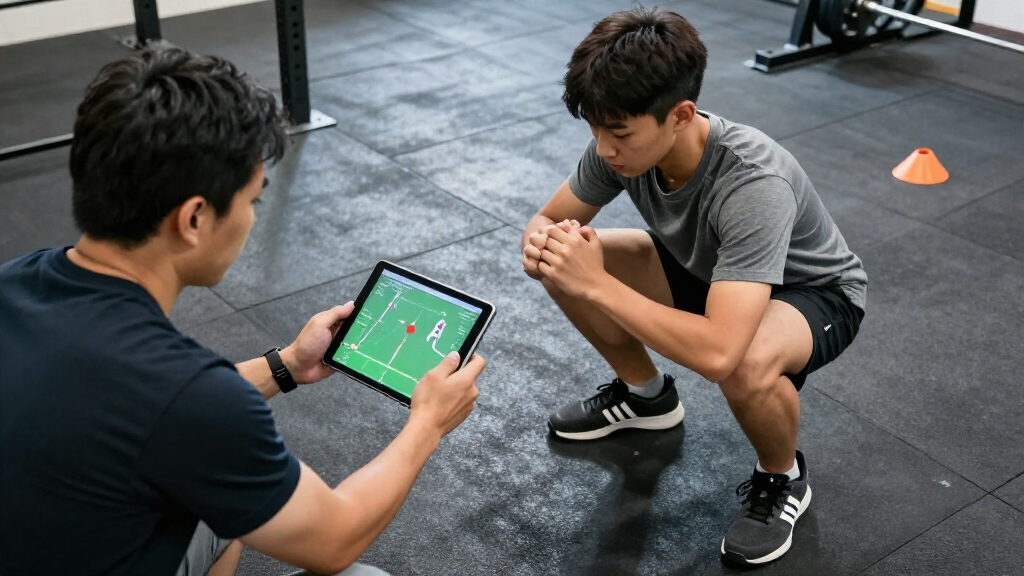
An IdeaNavigator AI proposal describes a phone-based app that would grade young athletes’ mechanics against reference motions and suggest one targeted drill per session. The concept has not been shown to be validated: its proposed first test is a baseball-hitting pilot in which certified coaches assess the app’s grades for 100 children.
IdeaNavigator AI has proposed a phone-based form-assessment app for young athletes that would compare video of their movements with reference mechanics, grade selected checkpoints and suggest a drill. The plan identifies parents of children practicing without a private coach as the initial customers, but the product and its accuracy have not been established; the proposed first test is a baseball-hitting pilot involving 100 children and certified coach reviews.
According to IdeaNavigator AI’s proposal, the app would film a repetition, such as a swing, and use pose-estimation models running on a phone to assess parts of the athlete’s movement. It would show the child’s motion against a reference profile and grade checkpoints such as hip rotation, release angle or stride, depending on the skill being assessed. The proposal says the app would then recommend one drill aimed at the largest identified gap in that session.
IdeaNavigator AI frames the concept around families whose young athletes practice without a private coach. The proposal says repeated practice can leave form flaws unnoticed and gives private coaching costs of $75 to $150 per session. These are claims and figures from the proposal; it provides no independent pricing survey or evidence that the suggested app would prevent injuries.
For validation, IdeaNavigator AI proposes a single-sport baseball-hitting pilot in which certified coaches would review the app’s grades against their own assessments across 100 children. The proposal also suggests a family subscription for each sport and a coach tier for team use. It specifies no launch date, participating coaches, pricing or pilot results.
Testing Feedback Without a Private Coach
If the approach works as intended, it could give families a way to review practice repetitions between coaching sessions and focus on a specific movement rather than relying only on unaided observation. IdeaNavigator AI’s proposal specifies a one-drill-per-session format, narrowing feedback to a single adjustment instead of presenting a young athlete with several technical changes at once.
The stakes go beyond convenience. The proposal argues that persistent technique flaws may become habits and contribute to injury risk, but it provides no evidence that this product would reduce injuries. A tool that grades movement could also mislead families if its references do not fit a child’s age, physical development, skill level or individual technique. That makes the coach review central to the idea: families would need to know not just that the app produces a score, but whether its assessment is useful and appropriately qualified.
IdeaNavigator AI also proposes a coach-facing version for teams, which could offer a way to review multiple athletes’ mechanics. The proposal does not describe how coaches would use such a tier, what oversight it would provide, or whether it would supplement or replace in-person instruction. Those questions matter before the concept can be treated as a proven training tool.
As an affiliate, we earn on qualifying purchases.
From Phone Pose Estimates to Sport Feedback
IdeaNavigator AI’s proposal rests on the claim that pose-estimation models can now run on phones with enough accuracy to compare a child’s mechanics with reference motion profiles. The proposal does not name a model, report a measured accuracy rate or describe conditions under which the system was tested. It presents phone-based processing as the reason a free tier might be possible, but gives no technical or cost details.
The proposed comparison is against pro-derived reference mechanics, rather than a general form score. IdeaNavigator AI does not identify the reference athletes, explain how a profile would account for differences among children, or say how many checkpoints would be graded for each skill. Its proposed baseball pilot is intended to test whether the resulting assessments align with certified coaches’ judgments.
Accuracy and Safety Still Need Testing
IdeaNavigator AI reports no working app, completed trial or coach-audit findings. The central open question is whether its grades would match qualified assessments consistently across children and recording conditions. The proposed sample of 100 young athletes is a plan, not evidence of accuracy; the proposal does not supply details such as participants’ ages, coaches’ credentials, scoring criteria or how disagreements would be handled.
It is also unclear whether the proposed app would account for differences in body size, development, mobility, equipment, camera angle and skill level. A professional reference may not be suitable for every young athlete. The proposal does not explain how the app would communicate uncertainty, guard against overconfident or harmful feedback, or direct users to a coach or health professional when needed. It demonstrates no injury-prevention outcome.
Business details remain open as well. IdeaNavigator AI suggests a family subscription and team coach tier but gives no prices and does not describe the proposed free tier. The concept names parents practicing without private coaches as its initial buyer, but provides no evidence about how many families would use the app or whether they would pay for it.
Coach Review Is the Proposed Test
IdeaNavigator AI’s proposal sets out a first test focused on baseball hitting: certified coaches would compare the app’s grades with their own assessments for 100 children. The results could help determine whether the concept merits development beyond a single skill and sport. The proposal announces no pilot schedule, recruitment plan or results.
For that test to clarify the app’s usefulness, its developers would need to explain what counts as agreement with a coach, how video is captured, and whether grades vary across children and conditions. Reporting those methods alongside results would help families distinguish a promising demonstration from evidence that the feedback is reliable in everyday practice. Until a pilot is completed and its findings are shared, the app remains a proposal rather than a validated coaching alternative.
Source: IdeaNavigator AI
Key Questions
What would the proposed app do?
According to IdeaNavigator AI’s proposal, it would analyze video of an athlete’s movement, compare it with a reference profile, grade selected mechanics checkpoints and suggest one targeted drill. The proposal does not describe a launched or tested product.
Who is the first intended customer?
IdeaNavigator AI’s proposal names a parent of a young athlete practicing without a private coach as its initial buyer. It also suggests a separate coach tier for team use.
Has the app been shown to prevent injuries?
No. The proposal raises injury risk as a concern associated with repeated form flaws, but reports no evidence that the app detects injuries or reduces their occurrence.
How would the idea be tested?
The proposal’s first test is a baseball-hitting pilot in which certified coaches would review the app’s grades against their own assessments for 100 children. No results or timeline have been reported.
Source: IdeaNavigator AI
NFL season / tailgating Picks
team gear
As an affiliate, we earn on qualifying purchases.