
📊 Full opportunity report: Your Guide To A Flare-by-Flare Eczema And Psoriasis Journal on IdeaNavigator AI — validation score, market gap, and execution plan.

Get the little things that make your day delivered free with Prime
- Fast, free delivery on millions of items
- Prime Video, Amazon Music and more included
- Member-only deals all year
TL;DR
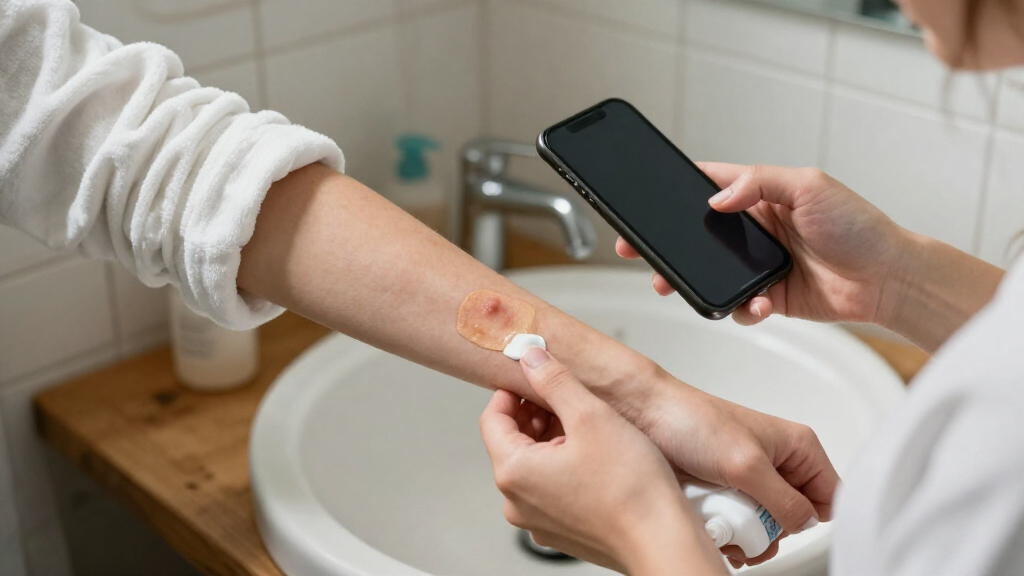
An IdeaNavigator AI proposal outlines a weekly photo journal for adults tracking eczema or psoriasis between dermatology visits. The suggested first test is a one-month pilot with 15 eczema patients; whether the timeline improves appointments or attracts paying users is not yet known.
IdeaNavigator AI has proposed a flare-by-flare photo journal for adults with eczema or psoriasis, designed to help them document changes between dermatology appointments. The concept pairs weekly, dated skin photos with notes about possible triggers, but it remains a proposed product workflow: no completed patient test, clinical benefit, or commercial demand is reported.
In its proposal, IdeaNavigator AI describes a minimum viable product that would prompt users to take a photo each week using consistent framing and lighting guidance. Each image would be added to a dated, side-by-side timeline, with a short note for a possible trigger. The intended use is to give patients a record to review before or during a visit, rather than relying only on memory of when a flare began or how it changed.
IdeaNavigator AI identifies history storage, image exports, and a visit-preparation PDF as possible paid subscription features. These are product and revenue ideas, not services confirmed to be available. The proposal does not specify a price, app platform, privacy or data-retention policy, or whether the journal would connect with clinical records.
For an initial test, IdeaNavigator AI suggests recruiting 15 people with eczema to log photos weekly for one month. The proposal says their dermatologists would then be asked whether the timeline changed the appointment, while participants would be asked about willingness to pay. This is a suggested validation step, not evidence that recruitment or testing has begun.
Testing Better Flare Records
Skin conditions can change between appointments, while a short clinical visit may not capture every shift a patient has noticed. A dated record could help patients describe when changes occurred and show how a visible area looked over time. That may make the conversation more specific, especially when a patient is trying to explain whether a treatment coincided with improvement or worsening.
However, a photo timeline would document appearance, not establish what caused a flare or whether a treatment worked. Lighting, camera distance, skin tone representation, and the choice of body area can affect comparisons. The proposal’s focus on consistent capture prompts addresses some variation, but it does not establish that photographs alone provide clinically reliable evidence.
The practical question is whether the tool changes care enough to justify the effort of regular logging. If the proposed pilot shows that patients can maintain the routine and clinicians find the record useful, the concept may merit further evaluation. If entries are incomplete or do not affect discussions, a subscription model may be difficult to support. Neither outcome is known yet.
As an affiliate, we earn on qualifying purchases.
From Phone Photos to Visit Prep
IdeaNavigator AI’s proposal targets adults who are already tracking flares between dermatology visits. It describes a specific problem: patients may have difficulty recalling flare timing, possible triggers, and treatment changes later. A log could provide dates and images to refer to, though notes about triggers would remain the user’s observations rather than verified causes.
The proposal also cites widespread phone cameras and cloud storage, as well as teledermatology appointments where patients may be asked to provide progress images, as reasons the workflow could be practical now. It provides no figures on how commonly clinicians request images or how often patients use them. The proposal is narrower than a general skin-care platform: it centers on weekly documentation and appointment preparation.
Clinical Value Still Untested
IdeaNavigator AI reports no results showing whether patients would take photos consistently, whether dermatologists would change their consultations after reviewing a timeline, or whether users would pay for the proposed features. Its suggested test covers 15 eczema patients over four weeks; the proposal does not describe a comparison group, a measurement scale for visit impact, or plans to include people with psoriasis in that first pilot.
Important implementation details are also unspecified in the proposal. These include how sensitive skin images would be stored and protected, who could access them, how long they would be retained, and whether users could delete or export them. It is also unclear how the app would handle different skin tones, body locations, or changes in lighting and camera quality. The proposal does not claim that the journal can diagnose conditions or replace medical advice.
A Small Pilot Is Proposed
IdeaNavigator AI’s proposed next step is to recruit 15 adults with eczema for weekly photo logging over one month, then ask their dermatologists whether the timeline affected the visit and ask participants about willingness to pay. The source gives no start date, recruitment plan, or pilot results. Until those details emerge, the idea should be understood as a proposed test rather than a launched or validated product.
Key Questions
Has the eczema and psoriasis journal launched?
No launch is reported. IdeaNavigator AI’s proposal describes a possible product and an initial test, but does not say that an app is available.
What would users record?
The proposal describes a weekly skin photo taken with consistent framing and lighting prompts, alongside a dated note about a possible trigger.
Would the journal determine what caused a flare?
No. The proposed timeline would organize photos and user notes. A trigger entry would be the user’s observation, not a confirmed cause or diagnosis.
How would the idea be tested?
IdeaNavigator AI recommends a one-month test with 15 eczema patients, followed by questions for patients and their dermatologists about usefulness and willingness to pay.
Source: IdeaNavigator AI
Halloween Picks
halloween
As an affiliate, we earn on qualifying purchases.