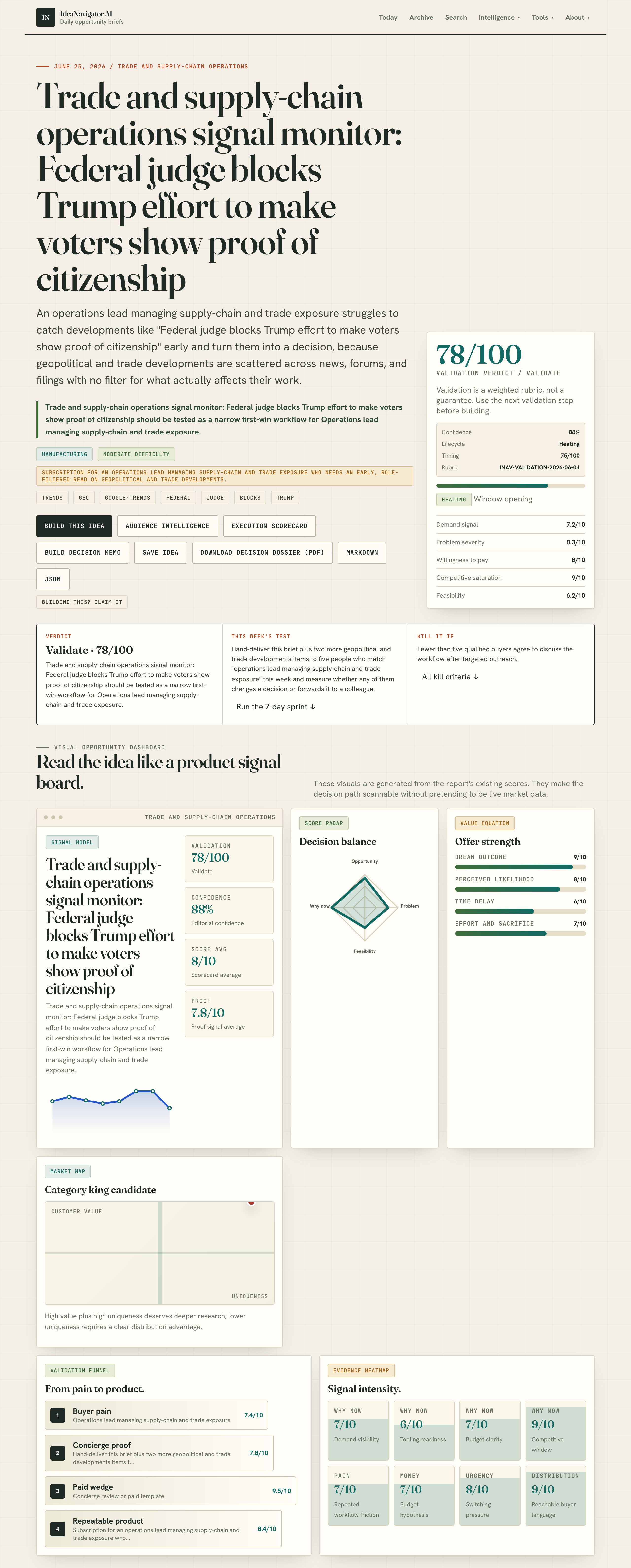
📊 Full opportunity report: Trade and supply-chain operations signal monitor: Federal judge blocks Trump effort to make voters show proof of citizenship on IdeaNavigator AI — validation score, market gap, and execution plan.

Get the little things that make your day delivered free — and shop member deals
- Fast, free delivery on millions of items
- Access to Prime Big Deal Days deals on October 6–7
- Prime Video, Amazon Music and more included
TL;DR
A federal judge has blocked an effort by Trump to require voters to show proof of citizenship. This legal development is relevant for operations managing trade and supply chains, highlighting the need for real-time geopolitical monitoring.
A federal judge has blocked former President Donald Trump’s attempt to enforce a requirement for voters to show proof of citizenship, a decision that impacts ongoing political and trade-related monitoring efforts.
The ruling was issued by a federal district court, which temporarily halted Trump’s efforts to implement stricter voter proof-of-citizenship rules. This legal decision comes amid heightened attention to election integrity measures and their broader implications for trade and geopolitical stability.
Trade and supply-chain operations managers rely on real-time updates of political developments that could influence trade policies, tariffs, or international relations. The court’s decision is confirmed by court documents and official statements, though the legal reasoning and potential appeals are still unfolding.
Implications for Trade and Supply Chain Monitoring
This legal ruling underscores the importance of real-time geopolitical intelligence for operations managing trade exposure. Changes in election laws or political stability can have immediate effects on trade agreements, tariffs, and international relations, making timely information critical for decision-making.
For operations leads, understanding the legal landscape and its potential to influence trade flows is essential. This decision highlights how judicial rulings in political cases can ripple through global supply chains, emphasizing the need for focused monitoring tools.
real-time geopolitical monitoring tools
As an affiliate, we earn on qualifying purchases.
As an affiliate, we earn on qualifying purchases.
Legal Challenges and Political-Trade Intersections
During the 2024 election cycle, efforts to tighten voting requirements have been a contentious issue, with Trump advocating for stricter proof-of-citizenship measures. Courts have often been the battleground for these disputes, with recent rulings blocking or upholding such measures.
This specific case reflects ongoing legal battles over election laws that can influence political stability and, consequently, trade relations. The legal environment remains dynamic, with potential for further rulings that could impact international trade and supply chains.
Legal and Political Uncertainties Moving Forward
It remains unclear whether the ruling will be appealed or if similar legal challenges will arise in other jurisdictions. The broader impact on election law and trade policies will depend on future court decisions and political developments.
Next Steps in Legal and Political Developments
The legal battle is likely to continue, with potential appeals to higher courts. Monitoring agencies and trade operations should track upcoming rulings and political statements that could influence international trade policies or election laws.
Further developments may include court hearings, legislative responses, or shifts in political rhetoric, all of which could impact trade and supply-chain stability in the near term.
Key Questions
What is the significance of this court ruling for trade operations?
The ruling highlights how legal and political developments can influence trade policies and international relations, making real-time monitoring essential for supply-chain management.
Could this legal decision affect future election laws?
Yes, the ruling may set a legal precedent or influence subsequent court cases and legislative efforts related to election requirements.
Will the decision be appealed?
It is not yet clear whether the Trump legal team will appeal the ruling, but legal challenges and appeals are likely in the coming weeks.
How does this impact geopolitical stability?
Legal disputes over election laws can affect political stability, which in turn influences international trade relations and supply chain confidence.
What should operations managers do now?
They should enhance their geopolitical monitoring, focusing on legal and political developments that could impact trade policies or supply chains.
Source: IdeaNavigator AI
NFL season / tailgating Picks
team gear
As an affiliate, we earn on qualifying purchases.