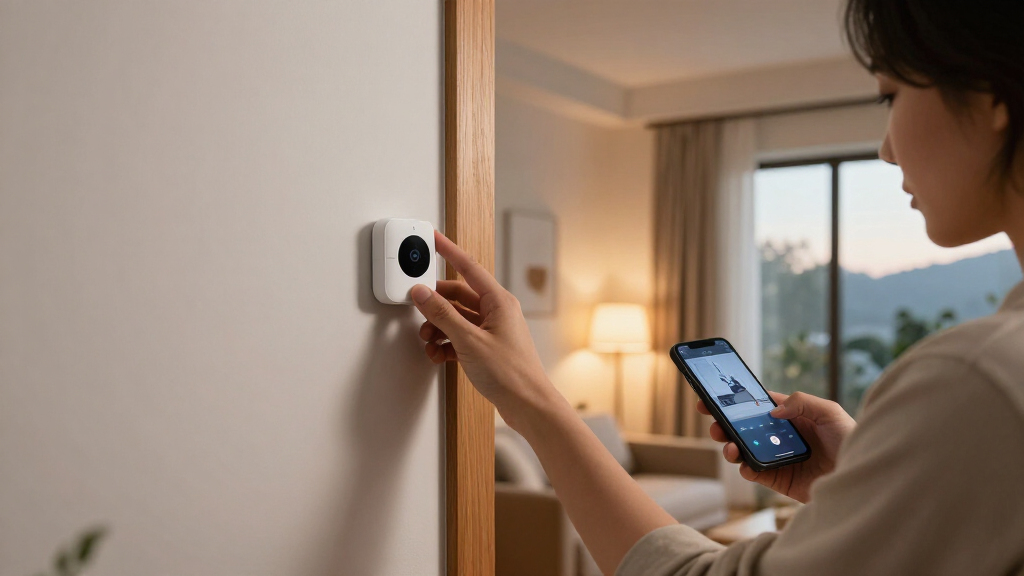

Choosing the best mmWave motion sensors requires balancing detection range, false trigger prevention, and smart home ecosystem compatibility. The Aqara FP300 stands out as the top overall pick due to its versatile 5-in-1 design and robust wireless performance. For users deeply integrated into Home Assistant, the SONOFF SNZB-06P24 offers superior zone positioning and self-learning calibration. While traditional PIR sensors struggle with stationary presence, mmWave radar solves this by detecting micro-movements like breathing, though it introduces challenges with signal penetration through walls. This guide breaks down the specific tradeoffs in range, power source, and protocol to help you select the right sensor for your specific automation needs.

Get the little things that make your day delivered free with Prime
- Fast, free delivery on millions of items
- Prime Video, Amazon Music and more included
- Member-only deals all year
Key Takeaways
- Wireless battery-powered mmWave sensors like the Aqara FP300 offer easier installation but often have shorter detection ranges compared to USB-powered models.
- Home Assistant integration is a major differentiator, with brands like Sonoff and Akamatis offering deeper customization via local APIs compared to cloud-dependent options.
- Matter over Thread support, seen in the Meross MS605 and LWR02, is emerging as the standard for cross-ecosystem compatibility, reducing reliance on proprietary hubs.
- Zone positioning features allow for room-specific automation triggers, significantly reducing false positives from pets or hallway traffic in open-plan layouts.
- DIY components like Waveshare and Fermion modules provide the highest flexibility for custom enclosures but require soldering and firmware knowledge.
| SONOFF SNZB-06P24 Zigbee Presence Sensor |  | Best for Zone-Based Lighting | Radar frequency: 24 GHz | Maximum range: 4 m | Field of view: 110° | VIEW LATEST PRICE | See Our Full Breakdown |
| AKAMATIS Human Presence Sensor v2.2 for Home Assistant |  | Best for Straightforward Home Assistant Setup | Radar module: HLK-LD2410B | Controller: Seeed C3 | Detection range: Up to 20 ft (6 m) | VIEW LATEST PRICE | See Our Full Breakdown |
| Martin Jerry Array Sensor, 24 GHz mmWave Presence Sensor |  | Best for Expandable Local-Data Coverage | Radar frequency: 24 GHz | Connectivity: Wi-Fi via ESP32 | Maximum range: 19 ft | VIEW LATEST PRICE | See Our Full Breakdown |
| SwitchBot Smart mmWave Radar Motion Sensor |  | Best for Cable-Free Placement | Radar frequency: 60 GHz | Moving-human detection range: Up to 8 m | Stationary-human detection range: Up to 5 m | VIEW LATEST PRICE | See Our Full Breakdown |
| Aqara FP300 Wireless 5-in-1 Presence Sensor with mmWave |  | Best Multi-Sensor Wireless Pick | Radar frequency: 60 GHz | Additional sensors: PIR, light, temperature, and humidity | Connectivity: Matter over Thread and Zigbee 3.0 | VIEW LATEST PRICE | See Our Full Breakdown |
| Fermion C4002 mmWave Human Presence Sensor for ESPHome and Home Assistant |  | Best for DIY Home Assistant Builds | Radar frequency: 24 GHz | Motion detection distance: Up to 11 m | Static presence distance: Up to 10 m | VIEW LATEST PRICE | See Our Full Breakdown |
| Meross MS605 Matter Over Thread Human Presence Sensor |  | Best for Multi-Platform Smart Homes | Sensors: mmWave, PIR, and light | Connectivity: Matter over Thread | Maximum range: 6 m | VIEW LATEST PRICE | See Our Full Breakdown |
| 2-Pack 24 GHz Human Micro-Motion Radar Sensors with UART and GPIO |  | Best Two-Sensor DIY Kit | Quantity: 2 sensors | Frequency band: 24–24.25 GHz | Modulation: FMCW | VIEW LATEST PRICE | See Our Full Breakdown |
| GoveeLife Human Presence Sensor, mmWave Radar & PIR Wired Motion Sensor |  | Best for GoveeLife and Voice-Assistant Automations | Detection technology: mmWave radar and PIR | Maximum range: 26 ft | Connectivity: 2.4 GHz Wi-Fi | VIEW LATEST PRICE | See Our Full Breakdown |
| Besisglas Zigbee Human Presence Sensor with 24 GHz Millimeter Wave Radar |  | Best Battery-Powered Zigbee Pick | Radar frequency: 24 GHz | Connectivity: Zigbee; compatible hub required | Maximum range: 7 m | VIEW LATEST PRICE | See Our Full Breakdown |
| Akamatis Human Presence Sensor v1.3 |  | Best for Home Assistant Enthusiasts | Sensor Technology: 24 GHz mmWave Radar (HLK-LD2410B) | Maximum Range: 20 ft (6 m) | Connectivity: 2.4 GHz Wi-Fi | VIEW LATEST PRICE | See Our Full Breakdown |
| Waveshare 24 GHz Human Micro-Motion Sensors (3-Pack) |  | Best for DIY Developers & Prototyping | Quantity: 3 Sensors | Frequency: 24 GHz | Interface: UART, GPIO | VIEW LATEST PRICE | See Our Full Breakdown |
| LWR02 5-in-1 Presence Sensor (PIR + mmWave) |  | Best All-Rounder for Multi-Protocol Homes | Sensors: mmWave Radar, PIR, Temp, Humidity, Light | Connectivity: Matter over Thread | Presence Range: 4 meters | VIEW LATEST PRICE | See Our Full Breakdown |
| Akamatis LITOS v3 Presence & Light Sensor |  | Best for Integrated Lighting Automation | Radar Module: HLK-LD2401 (24 GHz) | Light Sensor: VEML7700 Ambient Light | Connectivity: 2.4 GHz Wi-Fi (External Antenna) | VIEW LATEST PRICE | See Our Full Breakdown |
| Meross MS605 Matter over Thread Presence Sensor |  | Best Consumer-Friendly mmWave Sensor | Sensors: mmWave, PIR, Light | Connectivity: Matter over Thread | Ingress Protection: IP67 | VIEW LATEST PRICE | See Our Full Breakdown |
| mmWave motion sensor | Connectivity | Mounting | Maximum range | Dimensions |
|---|---|---|---|---|
| SONOFF SNZB-06P24 Zigbee Prese | Zigbee | Ceiling mount | 4 m | 1.74 × 1.74 × 2.32 in |
| AKAMATIS Human Presence Sensor | 2.4 GHz Wi-Fi | Wall mount | — | 0.55 × 1.6 × 1.05 in |
| Martin Jerry Array Sensor | Wi-Fi via ESP32 | Wall mount | 19 ft | 2.07 × 2.8 × 3 in |
| SwitchBot Smart mmWave Radar M | Bluetooth; platform support varies and may require a SwitchBot Hub | Magnetic base; surface or wall placement | — | 2.1 × 1.2 × 2.1 in |
| Aqara FP300 Wireless 5-in-1 Pr | Matter over Thread and Zigbee 3.0 | Adjustable wall, ceiling, or corner mount | — | 1.65 × 1.65 × 1.97 in |
| Fermion C4002 mmWave Human Pre | — | — | — | 22 × 26 mm |
| Meross MS605 Matter Over Threa | Matter over Thread | Wall mount; 90° foldable and 360° rotatable stand | 6 m | — |
| 2-Pack 24 GHz Human Micro-Moti | — | — | — | 20 × 20 mm |
| GoveeLife Human Presence Senso | 2.4 GHz Wi-Fi | Wall or ceiling mount; magnetic base folds 120° and rotates 360° | 26 ft | 1.49 × 1.65 × 2.53 in |
| Besisglas Zigbee Human Presenc | Zigbee; compatible hub required | Wall mount | 7 m | — |
| Akamatis Human Presence Sensor | 2.4 GHz Wi-Fi | — | 20 ft (6 m) | — |
| Waveshare 24 GHz Human Micro-M | — | Wall or Top-Mounted | — | — |
| LWR02 5-in-1 Presence Sensor | Matter over Thread | — | — | — |
| Akamatis LITOS v3 Presence & L | 2.4 GHz Wi-Fi (External Antenna) | — | 20 ft (6 m) | — |
| Meross MS605 Matter over Threa | Matter over Thread | Foldable/Rotatable Stand | 6 meters | — |
More Details on Our Top Picks
SONOFF SNZB-06P24 Zigbee Presence Sensor
The SONOFF SNZB-06P24 is the most tailored pick here for room-specific lighting automations. Its 24 GHz radar detects subtle movement, while seven configurable zones let you exclude a corridor or window and focus on a desk or sofa. That control can help limit unwanted triggers in a busy room. The built-in light sensor adds another useful condition: lights can respond to occupancy only when the room is dim. Compared with the AKAMATIS v2.2, which offers a longer stated detection range and direct Wi-Fi connection to Home Assistant, SONOFF uses Zigbee and is limited to a four-meter range. It also needs a compatible hub and USB-C power. Choose it for close-range, carefully bounded automation, not broad coverage or a cable-free setup.
Pros:- Seven configurable zones help exclude common sources of unwanted detection.
- Ambient light sensing supports occupancy-and-brightness lighting rules.
- Self-learning calibration is designed to filter recurring interference.
- Compatible with Home Assistant, SmartThings, and Alexa through Zigbee.
Cons:- Requires a Zigbee hub and a USB-C power connection.
- Four-meter maximum range is shorter than the stated range of the AKAMATIS v2.2.
- Zone configuration and third-party setup may take more effort than a basic motion sensor.
Best for: Zigbee smart-home owners who want to target specific areas of a room and make lighting depend on both presence and ambient brightness.
Not ideal for: Buyers without a Zigbee hub, people who need coverage beyond four meters, or anyone seeking a battery-powered sensor.
- Radar frequency:24 GHz
- Maximum range:4 m
- Field of view:110°
- Configurable detection zones:Up to 7
- Connectivity:Zigbee
- Power:USB-C, corded electric
- Mounting:Ceiling mount
- Dimensions:1.74 × 1.74 × 2.32 in
Our verdict“Choose the SONOFF if you have a Zigbee hub and want detailed zone control for close-range lighting automations.”
AKAMATIS Human Presence Sensor v2.2 for Home Assistant
The AKAMATIS v2.2 is a focused choice for Home Assistant users who want stationary-presence detection without building a sensor from parts. Its HLK-LD2410B radar is specified to detect moving and still objects up to six meters indoors, and the unit arrives with ESPHome pre-flashed. That removes the firmware-flashing step, though setup still depends on Home Assistant and a 2.4 GHz Wi-Fi network. Compared with the Martin Jerry Array Sensor, this is the simpler single-unit option: Martin Jerry adds MQTT auto-discovery and support for multiple secondary sensors, while AKAMATIS is smaller and has an external Wi-Fi antenna. The tradeoff is less emphasis on expanding coverage. It also needs continuous USB-C power, so placement depends on access to a cable and outlet.
Pros:- Pre-flashed ESPHome avoids a separate firmware installation step.
- Detects moving and stationary objects up to six meters indoors.
- External Wi-Fi antenna is included.
- Compact wall-mount design with USB-C power.
Cons:- Requires a running Home Assistant installation and 2.4 GHz Wi-Fi.
- Must remain connected to USB-C power.
- Does not offer the multi-sensor array expansion described for the Martin Jerry model.
Best for: Home Assistant owners who want a compact, pre-flashed ESPHome presence sensor for one room and have reliable 2.4 GHz Wi-Fi.
Not ideal for: Shoppers seeking a standalone smart-home sensor, battery operation, or an expandable multi-sensor array.
- Radar module:HLK-LD2410B
- Controller:Seeed C3
- Detection range:Up to 20 ft (6 m)
- Connectivity:2.4 GHz Wi-Fi
- Firmware:Pre-flashed ESPHome
- Power:USB-C, corded electric
- Mounting:Wall mount
- Dimensions:0.55 × 1.6 × 1.05 in
Our verdict“Pick the AKAMATIS v2.2 for a compact, pre-flashed Home Assistant sensor when Wi-Fi and wired power are acceptable.”
Martin Jerry Array Sensor, 24 GHz mmWave Presence Sensor
The Martin Jerry Array Sensor earns its place for buyers who want to build out local, MQTT-based presence coverage. It stores data locally, offers adjustable radar settings, and uses MQTT auto-discovery to reduce manual Home Assistant configuration. Its distinctive advantage over the AKAMATIS v2.2 is array support: one master can pair with up to eight secondary sensors, which may suit a large room better than relying on one sensor’s placement. The stated maximum range is 19 feet, close to AKAMATIS’s 20 feet, but both require wired power and a compatible home-automation platform. Martin Jerry also uses Wi-Fi rather than Zigbee or Matter, so it is not the best fit for someone seeking broad consumer-hub compatibility. Its array capability is useful only if you are prepared to configure and power additional units.
Pros:- Local data storage without a required cloud service or manufacturer app.
- MQTT auto-discovery can simplify integration with compatible platforms.
- One master supports up to eight secondary sensors.
- Radar distance, sensitivity, and detection energy are configurable.
Cons:- Requires Home Assistant or another MQTT platform.
- Uses Wi-Fi and does not provide Matter or Zigbee connectivity.
- Wall mounting and corded power limit placement flexibility.
Best for: Home Assistant or MQTT users who want local data handling, adjustable radar settings, and the option to extend coverage with secondary sensors.
Not ideal for: Buyers who want a battery-powered, hub-free, or Matter- and Zigbee-based sensor with simple placement.
- Radar frequency:24 GHz
- Connectivity:Wi-Fi via ESP32
- Maximum range:19 ft
- Integration:Home Assistant or other MQTT platforms; MQTT auto-discovery
- Data storage:Local
- Array support:One master and up to eight secondary sensors
- Power:Corded electric
- Mounting:Wall mount
- Dimensions:2.07 × 2.8 × 3 in
Our verdict“Choose Martin Jerry when local MQTT integration and expandable coverage matter more than wireless power or mainstream hub compatibility.”
SwitchBot Smart mmWave Radar Motion Sensor
The SwitchBot Presence Sensor is the flexible pick for people who cannot or do not want to run a power cable to the sensor. Its battery-powered design and magnetic base allow placement on a surface or wall, with an adjustable angle for aiming detection. The listed stationary-human range is five meters, while moving-human detection reaches eight meters. That makes it more placement-friendly than the USB-C-powered SONOFF SNZB-06P24, but SONOFF provides seven detection zones and Zigbee connectivity rather than SwitchBot’s Bluetooth-based approach. SwitchBot also combines mmWave with PIR and light sensing, and offers AI interference filtering. The ecosystem connection may require additional SwitchBot hardware for some platforms, including a Matter Hub for Apple Home support. Battery longevity is presented inconsistently in the product information, so buyers should treat runtime as a stated estimate rather than a guarantee.
Pros:- Battery power avoids the fixed placement constraints of USB-C models such as the SONOFF.
- Magnetic base supports surface placement, wall mounting, and angle adjustment.
- Combines mmWave, PIR, and light sensing.
- AI self-learning is designed to reduce interference from fans and air conditioners.
Cons:- Some ecosystem features require a SwitchBot Hub; Apple Home support is specified through a Matter Hub.
- Battery-life claims differ within the supplied product information.
- The listed stationary-human range is shorter than the moving-human range.
Best for: Renters and homeowners who need an adjustable presence sensor in a spot without convenient cable access and already use, or plan to use, SwitchBot-compatible integrations.
Not ideal for: Buyers who need clearly specified zone controls, want direct Zigbee integration, or prefer a wired sensor with no battery upkeep.
- Radar frequency:60 GHz
- Moving-human detection range:Up to 8 m
- Stationary-human detection range:Up to 5 m
- Field of view:120°
- Detection technologies:mmWave, PIR, and light sensing
- Connectivity:Bluetooth; platform support varies and may require a SwitchBot Hub
- Power:2 AAA batteries, included
- Mounting:Magnetic base; surface or wall placement
- Dimensions:2.1 × 1.2 × 2.1 in
Our verdict“Pick SwitchBot when flexible, cable-free placement matters more than direct Zigbee setup or clearly defined zone controls.”
Aqara FP300 Wireless 5-in-1 Presence Sensor with mmWave
The Aqara FP300 stands out for buyers who want presence detection plus room-condition readings in one battery-powered device. Its 60 GHz mmWave radar works alongside PIR, light, temperature, and humidity sensors, so automations can react to a person sitting still as well as to changing room conditions. The adjustable mount supports wall, ceiling, or corner placement; by comparison, the SONOFF SNZB-06P24 offers more explicit zone controls but is USB-C powered and has a shorter four-meter range. FP300 reaches up to six meters and supports Zigbee 3.0 or Matter over Thread. The connectivity choice affects battery life: the stated maximum is three years in Zigbee mode and two in Thread mode. Third-party Matter setups need a Thread Border Router and Matter Controller, while Aqara use requires a compatible hub.
Pros:- Combines mmWave presence detection with PIR, light, temperature, and humidity sensing.
- Wireless installation with adjustable wall, ceiling, or corner mounting.
- Supports Zigbee 3.0 and Matter over Thread.
- Stated battery life reaches up to three years in Zigbee mode.
Cons:- Third-party Matter use requires both a Thread Border Router and a Matter Controller.
- Aqara setup requires a compatible Zigbee or Matter hub.
- Stated battery life is shorter in Thread mode than in Zigbee mode.
Best for: Smart-home owners who want wireless presence sensing and light, temperature, and humidity readings for automations across a room.
Not ideal for: Buyers without a compatible Zigbee hub or Matter-and-Thread setup, or anyone who wants to avoid replacing batteries.
- Radar frequency:60 GHz
- Additional sensors:PIR, light, temperature, and humidity
- Connectivity:Matter over Thread and Zigbee 3.0
- Maximum detection range:6 m (20 ft)
- Field of view:120°
- Power:2 replaceable CR2450 batteries
- Battery life:Up to 3 years in Zigbee mode; up to 2 years in Thread mode
- Mounting:Adjustable wall, ceiling, or corner mount
- Dimensions:1.65 × 1.65 × 1.97 in
Our verdict“Choose the FP300 if you want wireless still-presence detection and several environmental readings, and have a compatible hub or Thread setup.”
Fermion C4002 mmWave Human Presence Sensor for ESPHome and Home Assistant
The Fermion C4002 is the strongest fit here for a reader building a custom mmWave setup rather than seeking a ready-to-pair smart-home device. Its listed 10 m static-presence range helps detect someone sitting still, while configurable zones and noise filtering give an integrator ways to tune coverage and reduce unwanted triggers. The UART connection and included ESPHome files suit Arduino, ESP32, and Raspberry Pi projects, but also mean you need a host and some setup work. Compared with the Meross MS605, this tiny module offers more hands-on configuration and a longer stated static-presence range, but lacks its Matter over Thread convenience and battery-powered enclosure. The built-in light sensor can drive automations, though its 0–50 lux range is limited to darker conditions.
Pros:- Detects stationary presence and micro-motion, not just movement.
- Configurable zones and noise filtering support more tailored sensing.
- UART compatibility and ESPHome files suit DIY integrations.
- Integrated light sensing can trigger low-light automations.
Cons:- Requires a compatible host and integration work.
- The light sensor’s range stops at 50 lux.
- The module is not a standalone, enclosed smart-home sensor.
Best for: Home Assistant and ESPHome users who already have an ESP32, Arduino, or Raspberry Pi and want configurable presence sensing in a compact module.
Not ideal for: Buyers who want a finished sensor that joins a smart-home network directly, or who need light readings above 50 lux.
- Radar frequency:24 GHz
- Motion detection distance:Up to 11 m
- Static presence distance:Up to 10 m
- Light detection range:0–50 lux
- Operating voltage:3.6–5.5 V
- Output interface:Configurable OUT and UART
- Compatible devices:Arduino, ESP32, Raspberry Pi
- Dimensions:22 × 26 mm
Our verdict“Choose the C4002 if you want a configurable mmWave module for a DIY Home Assistant build and are comfortable supplying the host hardware.”
Meross MS605 Matter Over Thread Human Presence Sensor
The Meross MS605 is the most straightforward choice in this group for shoppers who want mmWave presence sensing inside a broader smart-home setup. It combines mmWave, PIR, and light sensing with Matter over Thread, so it can fit several ecosystems rather than tying the purchase to one brand. Its 6 m maximum range is shorter than the Fermion C4002‘s stated static-presence distance, but Meross offers a finished, battery-powered unit instead of a bare module that needs a host. The foldable stand and rotating mount give more placement options, and the IP67 rating adds flexibility in damp locations. The tradeoff is hub dependence: some integrations and remote access need a compatible Matter and Thread hub, and Alexa direct control may need a firmware update.
Pros:- Combines mmWave, PIR, and light sensing with adaptive AI presence detection.
- Matter over Thread supports several smart-home platforms.
- Foldable, rotatable stand allows flexible placement.
- IP67 rating and included CR123A battery support versatile installation.
Cons:- Some integrations and remote access require a compatible Matter and Thread hub.
- Maximum listed range is 6 m, shorter than the Fermion C4002’s stated static-presence range.
- Alexa direct control may require a firmware update.
Best for: Households using Matter-compatible platforms that want a finished, battery-powered presence sensor with flexible placement.
Not ideal for: DIY builders seeking UART-level access, or users without a compatible Matter and Thread hub for the integrations they need.
- Sensors:mmWave, PIR, and light
- Connectivity:Matter over Thread
- Maximum range:6 m
- Power source:CR123A battery, included
- Battery life:Up to 3 years
- Mounting:Wall mount; 90° foldable and 360° rotatable stand
- Water resistance:IP67
- Operating temperature:32 °F to 140 °F
Our verdict“Pick the MS605 if cross-platform Matter support and a finished wireless device matter more than longer-range or DIY sensor tuning.”
2-Pack 24 GHz Human Micro-Motion Radar Sensors with UART and GPIO
This two-sensor kit suits projects that need multiple detection points and direct access to radar outputs. Both modules use 24 GHz FMCW sensing and report moving, standing, and motionless people, with UART configuration for range-specific sensitivity and absence reporting. That gives a builder more control than the consumer-focused Meross MS605, while the included pair makes it easier to cover separate rooms or experiment with different mounting positions. Range depends on orientation: wall mounting lists up to 10 m for movement and 6 m for micro-motion, while top mounting lists shorter distances. The 3.3 V supply requirement and UART setup make these better suited to electronics projects than plug-and-play smart homes. Their 0.7 m distance resolution also limits how finely distance can be distinguished.
Pros:- Includes two compact radar modules for multi-location projects.
- Detects moving and motionless people with configurable sensitivity and absence reporting.
- Provides both UART and GPIO outputs.
- Supports wall-mounted and top-mounted installations.
Cons:- Requires a 3.3 V power supply and host-side integration.
- Micro-motion range is shorter than the moving-target range and varies by mounting orientation.
- The 0.7 m distance resolution limits fine-grained range separation.
Best for: Makers and integrators building a two-zone project with Raspberry Pi, ESP32, Arduino, or similar hardware and needing configurable UART or GPIO outputs.
Not ideal for: Smart-home buyers who want a finished networked sensor, or anyone unable to provide a 3.3 V supply and handle configuration.
- Quantity:2 sensors
- Frequency band:24–24.25 GHz
- Modulation:FMCW
- Power supply:3.3 V
- Output interfaces:UART and GPIO
- Wall-mounted range:Moving: 10 m; micro-motion: 6 m
- Top-mounted range:Moving: 5 m; micro-motion: 4 m
- Dimensions:20 × 20 mm
- Compatible devices:Raspberry Pi, Pi Pico, Jetson Nano, ESP32, Arduino
Our verdict“Choose this kit when you need two configurable radar modules for a DIY build and can manage the power and integration requirements.”
GoveeLife Human Presence Sensor, mmWave Radar & PIR Wired Motion Sensor
The GoveeLife presence sensor is aimed at buyers who want room-level automations without wiring a radar module into a DIY controller. Its mmWave radar and PIR pairing is designed to detect both movement and static presence, while automation can respond to presence duration and distance. The stated maximum range of 26 feet gives it more reach on paper than the Meross MS605‘s 6 m, though GoveeLife needs continuous power and a 2.4 GHz Wi-Fi connection. Its magnetic base can fold and rotate for wall or ceiling placement, and the product supports Alexa, Google Assistant, and IFTTT. The main ecosystem limitation is significant for Home Assistant shoppers: it does not support Home Assistant. Its wired design also makes it less flexible than the battery-powered Meross.
Pros:- Pairs mmWave radar with PIR to detect movement and static presence.
- Automation can use presence duration and distance.
- Magnetic base supports wall or ceiling placement with rotation and folding.
- Works with Alexa, Google Assistant, and IFTTT.
Cons:- Does not support Home Assistant.
- Requires continuous power and 2.4 GHz Wi-Fi.
- Less placement-flexible than the battery-powered Meross MS605 when no outlet is nearby.
Best for: GoveeLife users and Alexa or Google households seeking wired presence automations with adjustable distance and duration conditions.
Not ideal for: Home Assistant users, battery-only installations, or buyers who cannot provide 2.4 GHz Wi-Fi and continuous power.
- Detection technology:mmWave radar and PIR
- Maximum range:26 ft
- Connectivity:2.4 GHz Wi-Fi
- Power source:Corded electric
- Mounting:Wall or ceiling mount; magnetic base folds 120° and rotates 360°
- Compatible platforms:Alexa, IFTTT, Google Assistant
- Operating temperature:32 °F to 104 °F
- Dimensions:1.49 × 1.65 × 2.53 in
Our verdict“Choose GoveeLife for wired, distance-aware presence routines in its supported ecosystem, but skip it if Home Assistant support is a requirement.”
Besisglas Zigbee Human Presence Sensor with 24 GHz Millimeter Wave Radar
The Besisglas Zigbee sensor is a practical fit for buyers who already have a Zigbee hub and want mmWave presence sensing without a nearby power outlet. Its 24 GHz radar can detect someone sitting or lying still, making it more suitable for occupancy lighting than a motion-only trigger. Two included AAA batteries are rated for up to two years in typical use, a simpler installation than the wired GoveeLife sensor, though actual battery life will depend on use. The tradeoff is a 7 m maximum range and dependence on a compatible hub; it does not offer the Matter-over-Thread flexibility of the Meross MS605. For a Zigbee household with moderate-size rooms, its straightforward wall-mount design keeps setup focused on placement rather than custom electronics.
Pros:- 24 GHz radar detects stationary people as well as movement.
- Includes two AAA batteries and lists up to two years of typical battery life.
- Wall-mount design avoids a required power cable.
- Compatible with several Zigbee-based systems, including Home Assistant and SmartThings.
Cons:- Requires a compatible Zigbee hub.
- Maximum listed range is 7 m.
- Uses Zigbee rather than the Meross MS605’s Matter over Thread connectivity.
Best for: Zigbee users who want a battery-powered presence trigger for lighting or occupancy routines in a moderate-size room.
Not ideal for: Households without a compatible Zigbee hub, or buyers who need longer stated range or Matter over Thread support.
- Radar frequency:24 GHz
- Connectivity:Zigbee; compatible hub required
- Maximum range:7 m
- Power source:2 included AAA alkaline batteries
- Battery life:Up to 2 years in typical use
- Mounting:Wall mount
- Operating temperature:-10°C to 65°C
- Compatible devices:Home Assistant, SmartThings, Aeotec, Homey, Hubitat, and Echo devices with built-in Zigbee hub
Our verdict“Choose Besisglas if your Zigbee hub is already in place and you want battery-powered still-presence detection for a smaller room.”
Akamatis Human Presence Sensor v1.3
This sensor stands out for its plug-and-play ESPHome integration, making it a favorite among Home Assistant users who prefer wired stability over battery management. Unlike the Waveshare 24 GHz Sensors, which require manual UART coding to configure sensitivity, the Akamatis v1.3 arrives pre-flashed, reducing the barrier to entry for DIY setups. However, its reliance on 2.4 GHz Wi-Fi means you need a robust wireless network, and the fixed USB-A power connection limits placement options compared to battery-powered rivals like the Meross MS605. It is strictly for those who already have Home Assistant installed; if you are starting from scratch, this adds unnecessary complexity.
Pros:- Pre-flashed ESPHome firmware simplifies integration
- Detects both moving and stationary presence reliably
- Wired USB-A power eliminates battery replacement needs
Cons:- Requires an existing, running Home Assistant installation
- Fixed USB-A connector limits mounting flexibility
- Dependent on 2.4 GHz Wi-Fi network quality
Best for: Home Assistant users with existing Wi-Fi infrastructure who want wired power and native ESPHome support without writing custom code.
Not ideal for: Users without Home Assistant or those who need flexible placement away from USB power outlets.
- Sensor Technology:24 GHz mmWave Radar (HLK-LD2410B)
- Maximum Range:20 ft (6 m)
- Connectivity:2.4 GHz Wi-Fi
- Firmware:Pre-flashed ESPHome
- Power Source:USB-A Male Connector
- Microcontroller:ESP32-C3-WROOM
- Compatibility:Home Assistant
Our verdict“A solid choice for Home Assistant enthusiasts who prioritize wired reliability over installation flexibility.”
Waveshare 24 GHz Human Micro-Motion Sensors (3-Pack)
This pack is engineered for technical users who need raw sensor access rather than a finished consumer product. Unlike the Akamatis v1.3, which hides the complexity behind ESPHome, these sensors expose UART and GPIO outputs, allowing you to connect them directly to Raspberry Pi or Arduino boards for custom logic. The ability to adjust sensing distance and absence-report delays via serial commands offers granular control that consumer sensors rarely provide. However, this flexibility comes at a steep cost: there is no app, no Wi-Fi, and no cloud integration. You must write the code yourself, making this unsuitable for anyone who does not know how to handle serial communication.
Pros:- Direct UART and GPIO outputs for custom hardware integration
- Adjustable sensitivity and detection parameters via serial command
- Cost-effective 3-pack for multi-room prototyping
Cons:- No native Wi-Fi, Bluetooth, or app support
- Requires programming knowledge to configure and utilize
Best for: Developers and makers building custom home automation projects using Raspberry Pi or Arduino who need raw sensor data.
Not ideal for: General consumers or smart home beginners who want a plug-and-play experience with mobile app control.
- Quantity:3 Sensors
- Frequency:24 GHz
- Interface:UART, GPIO
- SoC:SXKMXXX0
- Mounting:Wall or Top-Mounted
- Configuration:Serial Command (UART)
- Compatible Hosts:Raspberry Pi, Arduino
Our verdict“Ideal for coders building custom automation rigs, but completely impractical for standard smart home users.”
LWR02 5-in-1 Presence Sensor (PIR + mmWave)
The LWR02 distinguishes itself by combining PIR and mmWave in a single, battery-powered unit, addressing the weakness of standalone radar sensors that sometimes miss fast movements. Unlike the Meross MS605, which relies on AI learning, this sensor uses a deterministic dual-sensor approach to reduce false triggers from pets or fans while maintaining IPX3 splash resistance for bathrooms. Its Matter over Thread compatibility ensures broad support across Apple, Google, and Amazon ecosystems without a proprietary hub. The tradeoff is the limited range—4 meters for presence is shorter than the 6-meter capability of many competitors, requiring careful placement in larger rooms.
Pros:- Dual PIR/mmWave design minimizes false positives
- IPX3 rating allows safe use in humid environments
- Matter over Thread ensures broad ecosystem compatibility
Cons:- Shorter presence detection range (4 m) compared to rivals
- Requires a Thread Border Router for full functionality
Best for: Smart home users with mixed ecosystems (Apple/Google/Alexa) needing a wireless, splash-proof sensor for bathrooms or kitchens.
Not ideal for: Users with large open-plan living areas who need detection ranges beyond 4 meters for stationary presence.
- Sensors:mmWave Radar, PIR, Temp, Humidity, Light
- Connectivity:Matter over Thread
- Presence Range:4 meters
- Motion Range:8 meters
- Power Source:2x AAA Batteries
- Ingress Protection:IPX3
- Field of View:120 degrees
Our verdict“A versatile, privacy-focused option that balances accuracy and ecosystem compatibility, though range is a limiting factor.”
Akamatis LITOS v3 Presence & Light Sensor
This model expands on the standard presence detection by including a VEML7700 ambient light sensor, making it superior to the Akamatis v1.3 for users who want to automate lighting based on both occupancy and natural light levels. The integration of an external Wi-Fi antenna provides better signal stability than internal-antenna boards, which is critical for consistent reporting. However, like its sibling, it demands an existing Home Assistant setup and wired power. It does not offer the battery convenience of the Meross MS605 or the multi-protocol ease of the LWR02, restricting its appeal to tech-savvy users comfortable with ESPHome YAML configurations.
Pros:- Built-in ambient light sensor enables context-aware automations
- External antenna improves Wi-Fi connection stability
- Pre-flashed ESPHome reduces initial setup friction
Cons:- Strict dependency on Home Assistant platform
- Corded power limits installation locations
Best for: Home Assistant users who want to correlate presence data with ambient light levels for advanced lighting scenes.
Not ideal for: Users without Home Assistant or those who cannot place the sensor near a wired power source.
- Radar Module:HLK-LD2401 (24 GHz)
- Light Sensor:VEML7700 Ambient Light
- Connectivity:2.4 GHz Wi-Fi (External Antenna)
- Controller:Seeed XIAO ESP32-C3
- Firmware:ESPHome (Pre-flashed)
- Maximum Range:20 ft (6 m)
- Power Source:Corded Electric
Our verdict“The go-to choice for Home Assistant power users who need light-aware presence detection in a wired setup.”
Meross MS605 Matter over Thread Presence Sensor
The MS605 is the most accessible option in this lineup, offering Matter over Thread support that works seamlessly with Alexa, HomeKit, and Google Home without requiring a separate hub. Its IP67 rating makes it significantly more durable than the LWR02, allowing for outdoor or high-humidity use. The adaptive AI learning helps filter false triggers better than basic threshold-based sensors, though it may require a calibration period. Unlike the Waveshare or Akamatis models, it requires no coding or technical expertise. The main drawback is the need for a compatible Thread Border Router and the reliance on a single CR123A battery, which may need replacement sooner than the AAA-powered alternatives.
Pros:- IP67 rating supports outdoor and harsh indoor environments
- Matter over Thread ensures broad ecosystem compatibility
- Adaptive AI learning reduces false positives over time
Cons:- Requires a Thread Border Router for third-party integration
- Single CR123A battery may have shorter lifespan than AAAs
Best for: Mainstream smart home users seeking a simple, waterproof, and cross-platform presence sensor with minimal setup.
Not ideal for: Users without a Thread Border Router or those who prefer wired power for critical safety automations.
- Sensors:mmWave, PIR, Light
- Connectivity:Matter over Thread
- Ingress Protection:IP67
- Power Source:1x CR123A Battery
- Battery Life:Up to 3 Years
- Detection Zones:3 Customizable Zones
- Mounting:Foldable/Rotatable Stand
- Maximum Range:6 meters
Our verdict“The most user-friendly and versatile choice for general consumers who want reliable presence detection without technical hurdles.”

How We Picked
To identify the best mmWave motion sensors, I evaluated each model based on detection accuracy, protocol reliability, and ecosystem flexibility. I prioritized sensors that offer micro-motion detection capabilities, which are essential for distinguishing a stationary person from an empty room. Compatibility with major platforms like Home Assistant, Apple Home, and Alexa was a primary filter, as seamless integration is often more valuable than raw hardware specs. I also examined power solutions, distinguishing between battery-operated units for convenience and USB-powered models for consistent performance.
Ranking logic favored sensors that minimize false triggers through advanced algorithms like zone masking or self-learning calibration. Products were compared on their ability to handle complex environments, such as rooms with HVAC airflow or pets. I excluded units with limited documentation or poor firmware support, ensuring that every recommendation offers a reliable long-term user experience. The final selection reflects a mix of ready-to-use consumer devices and modular components for advanced users.
Factors to Consider When Choosing Best MmWave Motion Sensors
Selecting the right mmWave sensor involves more than just checking the frequency band. You must consider how the device communicates with your hub, how it handles power, and whether you need advanced features like zone positioning. This section outlines the critical factors that determine whether a sensor will enhance your automation or cause frustration.Protocol Compatibility and Ecosystem Lock-in
The communication protocol dictates how your sensor interacts with your smart home hub. Zigbee and Thread offer low power consumption and mesh networking benefits, making them ideal for battery-operated devices like the Meross MS605. In contrast, Wi-Fi and Bluetooth sensors, such as the SwitchBot model, are easier to set up but may drain batteries faster or rely on cloud connectivity. Home Assistant users should prioritize devices with local API access or ESPHome support to avoid cloud latency. If you are locked into Apple Home or Alexa, verify that the sensor supports Matter to prevent future compatibility issues. Always check if a proprietary hub is required, as this adds cost and a single point of failure.
Power Source: Battery vs. Wired
Power supply is a significant tradeoff in the mmWave category. USB-powered sensors like the Sonoff SNZB-06P24 provide continuous power, allowing for more aggressive processing and longer detection ranges without battery anxiety. However, they require a nearby outlet or a power strip, which limits placement flexibility. Battery-powered models like the Aqara FP300 offer discreet installation anywhere in the room but often sacrifice range or update frequency to conserve energy. Consider the maintenance burden: changing batteries in high-mounted sensors can be annoying. Wired options are better for critical automations where uptime is non-negotiable, while battery units suit temporary or hard-to-reach locations.
Detection Range and Zone Control
Not all mmWave sensors detect presence equally. Detection range varies by model, with some covering a 3-meter radius and others extending to 5 meters or more. More importantly, look for zone positioning or sensitivity masking features. These allow you to define specific areas where detection is active, ignoring traffic in adjacent hallways or pets on the floor. Without zone control, mmWave sensors can penetrate walls or windows, leading to false triggers from people moving in neighboring rooms. The ability to customize detection zones is a key differentiator between premium and budget models, directly impacting the reliability of your lighting or HVAC automations.
Installation Complexity and DIY Requirements
Some products are consumer-ready, while others are components for makers. Plug-and-play devices like the GoveeLife or SwitchBot sensors come with app-based setup and clear instructions. Conversely, modules like the Waveshare 24 GHz or Fermion C4002 require soldering, wiring to a microcontroller, and configuring firmware like ESPHome. This DIY approach offers unmatched customization and cost savings per unit but demands technical skill and time. Assess your comfort level with electronics before choosing a bare-module sensor. If you lack soldering skills, stick to finished products to avoid warranty voids and setup failures. The convenience premium on finished units often pays for itself in time saved.
Frequently Asked Questions
Why do mmWave sensors trigger through walls?
mmWave radar operates at high frequencies that can penetrate non-metallic materials like drywall, glass, and wood. This allows the sensor to detect movement in adjacent rooms or through windows, which is often undesirable. To mitigate this, choose a sensor with adjustable sensitivity or zone masking features. Positioning the sensor away from thin walls or using physical barriers can also help reduce false triggers. Some advanced models allow you to define exclusion zones in software to ignore signals from specific directions.Can mmWave sensors detect stationary humans?
Yes, this is the primary advantage of mmWave technology over traditional PIR sensors. While PIR relies on changes in infrared heat signatures, mmWave detects micro-movements associated with breathing and heartbeat. This makes it ideal for automating lights in bathrooms or bedrooms where a person might sit still for extended periods. However, extreme stillness or sleeping can sometimes cause a timeout if the sensitivity is not tuned correctly. High-quality sensors with self-learning calibration handle this better by adapting to the baseline noise of the room.Do I need a hub for mmWave motion sensors?
It depends on the communication protocol. Zigbee and Thread sensors typically require a compatible hub or gateway to connect to your smart home ecosystem. Wi-Fi and Bluetooth models often connect directly to your router or smartphone, though Bluetooth may still need a bridge for remote access. Matter-enabled devices may work directly with Matter controllers like Apple TV or HomePod. Always check the product specifications to see if a separate hub is included or required, as this adds to the total cost and complexity.Are mmWave sensors safe for pets?
mmWave sensors emit low-power radio waves that are generally considered safe for humans and pets. However, they may detect small animals like cats or dogs, triggering automations unintentionally. To prevent this, use sensors with height-adjustable sensitivity or zone masking to ignore motion below a certain level. Some models allow you to set a ‘pet immunity’ threshold. If you have large dogs, you may need to mount the sensor higher on the wall or use a directional sensor to focus on human-height activity.How do I calibrate a mmWave sensor for my room?
Calibration involves adjusting sensitivity and detection zones to match your specific room layout. Start by setting the sensitivity low and gradually increasing it until you can detect movement at your desired range. Use the app or interface to map out false trigger zones, such as windows or doorways, and mask them out. Test the sensor by walking through the room and standing still to ensure it detects presence without dropping out. Repeat this process after rearranging furniture, as large objects can reflect or block radar signals.Conclusion
Selecting the best mmWave motion sensors depends largely on your existing smart home infrastructure and technical comfort level. For most users, the Aqara FP300 is the best overall choice due to its balance of wireless convenience, multi-protocol support, and ease of setup. Home Assistant enthusiasts will find the SONOFF SNZB-06P24 to be the best value option, offering deep integration and zone control at a competitive price point. If you prefer a premium, all-in-one solution with light sensing capabilities, the Akamatish LITOS v3 is a strong contender. Beginners should stick to SwitchBot or GoveeLife models for their straightforward app interfaces and minimal setup requirements. Advanced makers looking for maximum customization should consider Waveshare or Fermion modules, provided they have the necessary hardware skills. Ultimately, match the sensor’s protocol and power needs to your room’s layout to avoid false triggers and ensure reliable automation.