The best smart door locks pair dependable everyday access with the entry methods and connectivity a household will actually use. My best overall pick is the Schlage Encode WiFi Smart Deadbolt for buyers who value a recognizable deadbolt design and built-in Wi-Fi; the eufy Security Smart Lock C220 stands out for fingerprint access, while the ULTRALOQ Bolt SE is a compelling choice for Matter-focused homes. The main tradeoffs are between a straightforward deadbolt and a full handle set, built-in connectivity and extra hardware, and convenience features versus setup demands. I compare all 15 options by access methods, smart-home fit, installation scope, and practical limitations. Read on for the full breakdown and a guide to choosing a lock that suits your door and routine.

Get the little things that make your day delivered free with Prime
- Fast, free delivery on millions of items
- Prime Video, Amazon Music and more included
- Member-only deals all year
Key Takeaways
- The Schlage Encode leads this lineup for buyers seeking a conventional smart deadbolt: its Wi-Fi integration keeps the setup simpler than options that depend on a separate gateway, though it does not offer the varied biometric access found on fingerprint and palm-recognition models.
- Fingerprint access appears across several distinct product types: the Tapo DL110, eufy C220, and multiple Philips models offer biometric entry, but buyers still need to compare deadbolt-only designs with handle-set packages.
- More entry methods can add setup complexity: the WYZE Palm Lock and eufy FamiLock S3 Max use palm recognition, while the FamiLock also adds video, making it a better fit for feature-seeking households than those wanting a simple keypad replacement.
- Hardware scope is a major differentiator: the Philips handle-set models bundle more of the door hardware, while the standalone deadbolts are a better match for replacing an existing compatible deadbolt without changing the handle.
- Smart-home compatibility deserves a separate check: the ULTRALOQ Bolt SE lists Matter support, but buyers should verify that their hub, phone, and preferred automations support the functions they plan to use before choosing by ecosystem alone.
| Tapo DL110 Smart Wi-Fi Deadbolt with Fingerprint Recognition |  | Best Overall | Model: DL110 | Access methods: Fingerprint, keypad, Wi-Fi, Bluetooth, voice assistant, key | Fingerprint capacity: Up to 100 fingerprints | VIEW LATEST PRICE | See Our Full Breakdown |
| Philips Wi-Fi Smart Door Lock with Fingerprint Recognition |  | Best for Beginners | Model: DDL240X-1HW | Unlock methods: App, fingerprint, PIN code, voice assistant, physical key | Connectivity: Built-in Wi-Fi | VIEW LATEST PRICE | See Our Full Breakdown |
| Philips Wi-Fi Smart Deadbolt with Handles and Gateway |  | Best Complete Door Set | Model: DDL240X-1HBG-H | Unlock methods: App, fingerprint, PIN code, key, Alexa or Google Assistant voice commands | Wi-Fi: 2.4 GHz only | VIEW LATEST PRICE | See Our Full Breakdown |
| Schlage Encode WiFi Smart Deadbolt with Century Trim, Matte Black |  | Best for High-Capacity Code Management | Model: BE489WBCEN622 | Finish and trim: Matte black; Century | Connectivity: Built-in Wi-Fi | VIEW LATEST PRICE | See Our Full Breakdown |
| eufy Security Smart Lock C220 with Fingerprint Keyless Entry |  | Best for Weather Exposure | Model: T8506 | Unlock methods: Fingerprint, app, keypad, physical key, Apple Watch, Alexa or Google Assistant | Connectivity: Built-in Wi-Fi; no bridge required | VIEW LATEST PRICE | See Our Full Breakdown |
| WYZE Palm Lock Smart Door Lock with Palm Vein Recognition |  | Best for Contactless Entry | Model: WPLCK1 | Lock type: Deadbolt | Unlock methods: Palm vein recognition, keypad codes, Wi-Fi app, Alexa, Google Assistant, mechanical key | VIEW LATEST PRICE | See Our Full Breakdown |
| Philips Wi-Fi Smart Lock and Handle Set with Fingerprint Keypad |  | Best Complete Handle Set | Model: DDL242X-1HW-H-NEW | Unlock methods: Fingerprint, smartphone app, passcode, backup keys, Alexa, Google Assistant | Fingerprint unlock speed: 0.3 seconds | VIEW LATEST PRICE | See Our Full Breakdown |
| Wyze Lock Bolt v2 Wi-Fi Fingerprint Smart Deadbolt |  | Best for Longer Listed Battery Life | Model: WLCKB2 | Lock type: Biometric deadbolt with keypad | Unlock methods: Fingerprint, app, keypad code, physical key | VIEW LATEST PRICE | See Our Full Breakdown |
| LOCKSTAR Smart Keyless Deadbolt with Fingerprint and Wi-Fi |  | Best for Card-Fob Access | Model: LS-SDL | Material: Zinc alloy | Access methods: App, fingerprint, keypad code, card fob, traditional key | VIEW LATEST PRICE | See Our Full Breakdown |
| Philips Wi-Fi Smart Deadbolt Lock with Keyless Entry |  | Best for High-Capacity Guest Codes | Model: DDL242X-1HW | Unlock methods: App, passcode, fingerprint, physical key, Alexa, Google Assistant | Connectivity: Built-in 2.4 GHz Wi-Fi; no hub required | VIEW LATEST PRICE | See Our Full Breakdown |
| Philips 4200 Series Wi-Fi Smart Deadbolt with Keypad, Fingerprint Reader, and Handle |  | Best for Flexible Household Access | Model: DDL242X-1HW-L | Connectivity: 2.4 GHz Wi-Fi; no hub required | Entry methods: PIN, fingerprint, app, Alexa, Google Assistant | VIEW LATEST PRICE | See Our Full Breakdown |
| Philips Wi-Fi Smart Keypad Deadbolt Lock Set with Handles |  | Best for Easy Setup | Model: DDL240X-1HW-H2 | Unlock methods: App, fingerprint, PIN, key, Alexa, Google Assistant | User PIN capacity: Up to 100 PIN codes, plus unlimited one-time codes | VIEW LATEST PRICE | See Our Full Breakdown |
| eufy Security FamiLock S3 Max Video Smart Lock with Palm Vein Recognition |  | Best Premium Video Lock | Model: E85V0JY1 | Unlock method: Palm vein recognition | Recognition speed: 0.6 seconds | VIEW LATEST PRICE | See Our Full Breakdown |
| Philips Wi-Fi Smart Door Lock and Handle Set |  | Best for Scheduled Guest Codes | Model: DDL242X-15HW-H-MB | Unlock methods: App, keypad, physical key, Alexa, Google Assistant | Password capacity: Up to 100 | VIEW LATEST PRICE | See Our Full Breakdown |
| ULTRALOQ Bolt SE Wi-Fi Smart Deadbolt Lock with Matter Support | 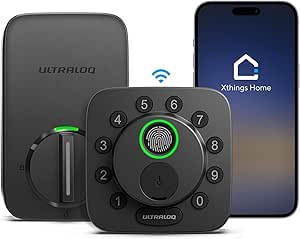 | Best for Outdoor Durability | Connectivity: 2.4 GHz Wi-Fi; Matter over Thread with compatible hub | Access methods: Fingerprint, passcode, app, web portal, shared eKey or code, voice control, mechanical key | Fingerprint capacity: Up to 50 | VIEW LATEST PRICE | See Our Full Breakdown |
| smart door lock | Model | Unlock methods |
|---|---|---|
| Tapo DL110 Smart Wi-Fi Deadbol | DL110 | — |
| Philips Wi-Fi Smart Door Lock | DDL240X-1HW | App, fingerprint, PIN code, voice assistant, physical key |
| Philips Wi-Fi Smart Deadbolt w | DDL240X-1HBG-H | App, fingerprint, PIN code, key, Alexa or Google Assistant voice commands |
| Schlage Encode WiFi Smart Dead | BE489WBCEN622 | — |
| eufy Security Smart Lock C220 | T8506 | Fingerprint, app, keypad, physical key, Apple Watch, Alexa or Google Assistant |
| WYZE Palm Lock Smart Door Lock | WPLCK1 | Palm vein recognition, keypad codes, Wi-Fi app, Alexa, Google Assistant, mechanical key |
| Philips Wi-Fi Smart Lock and H | DDL242X-1HW-H-NEW | Fingerprint, smartphone app, passcode, backup keys, Alexa, Google Assistant |
| Wyze Lock Bolt v2 Wi-Fi Finger | WLCKB2 | Fingerprint, app, keypad code, physical key |
| LOCKSTAR Smart Keyless Deadbol | LS-SDL | — |
| Philips Wi-Fi Smart Deadbolt L | DDL242X-1HW | App, passcode, fingerprint, physical key, Alexa, Google Assistant |
| Philips 4200 Series Wi-Fi Smar | DDL242X-1HW-L | — |
| Philips Wi-Fi Smart Keypad Dea | DDL240X-1HW-H2 | App, fingerprint, PIN, key, Alexa, Google Assistant |
| eufy Security FamiLock S3 Max | E85V0JY1 | — |
| Philips Wi-Fi Smart Door Lock | DDL242X-15HW-H-MB | App, keypad, physical key, Alexa, Google Assistant |
| ULTRALOQ Bolt SE Wi-Fi Smart D | — | — |
More Details on Our Top Picks
Tapo DL110 Smart Wi-Fi Deadbolt with Fingerprint Recognition
The Tapo DL110 is my best all-around pick for households that want several ways to get inside without adding a separate hub. Its six access methods include fingerprint, keypad, app connectivity, voice control, and a physical key, so family members and guests can use whichever method suits them. The fingerprint reader is listed at 0.42 seconds, while the rechargeable battery can run for up to a year in Wi-Fi mode under the stated conditions. Compared with the Philips Wi-Fi Smart Door Lock, it adds Bluetooth operation and supports up to 100 fingerprints; Philips has a faster listed fingerprint time and includes AA batteries. The Tapo’s tradeoffs are that battery life varies with use and fingerprint results can depend on conditions and registration quality.
Pros:- Six access methods cover household, guest, and backup entry needs.
- Supports up to 100 fingerprints and several types of access codes.
- Rechargeable battery pack uses USB-C and is rated for up to one year in Wi-Fi mode.
- Works with Alexa, Google Home, and Samsung SmartThings.
Cons:- Actual battery life may be shorter or longer depending on use.
- Fingerprint recognition can vary with environmental conditions and registered prints.
Best for: Households that want fingerprint entry, flexible guest codes, and Wi-Fi or Bluetooth access in one deadbolt.
Not ideal for: Buyers who prefer replaceable AA batteries or want the fastest listed fingerprint response; the Philips Wi-Fi Smart Door Lock lists a 0.3-second unlock time.
- Model:DL110
- Access methods:Fingerprint, keypad, Wi-Fi, Bluetooth, voice assistant, key
- Fingerprint capacity:Up to 100 fingerprints
- Listed fingerprint unlock speed:0.42 seconds
- Battery life:Up to 1 year in Wi-Fi mode; up to 2 years in Bluetooth mode
- Charging port:USB-C
- Smart home compatibility:Amazon Alexa, Google Home, Samsung SmartThings
- Security grade:BHMA Grade 2
Our verdict“Choose the Tapo DL110 if you want broad access flexibility and rechargeable power in one connected deadbolt.”
Philips Wi-Fi Smart Door Lock with Fingerprint Recognition
The Philips DDL240X-1HW suits buyers who want remote access without a separate gateway and a simple set of familiar entry options. Its built-in Wi-Fi connects app control with fingerprint, PIN, voice assistant, and physical-key access; the listed fingerprint access time is 0.3 seconds. The adjustable auto-lock delay lets owners choose how quickly the lock engages, which can suit different household routines. Compared with the Tapo DL110, Philips offers a faster listed fingerprint response and includes eight AA batteries, while Tapo adds Bluetooth, USB-C recharging, and capacity for up to 100 fingerprints. The Philips package includes a 24-month warranty, but its auto-lock operation depends on the door closing fully and the batteries having sufficient charge. Buyers should also check door fit before ordering, since the supplied details do not specify dimensions.
Pros:- Built-in Wi-Fi enables remote app control without an additional hub.
- Five access methods include fingerprint, PIN, app, voice assistant, and physical key.
- Auto-lock delay can be set from 30 to 180 seconds.
- Includes eight AA batteries and a 24-month warranty.
Cons:- Auto-lock depends on the door being fully closed.
- Battery charge affects auto-lock operation, so battery condition needs attention.
- The supplied product details do not list door-fit dimensions.
Best for: First-time smart-lock buyers who want built-in Wi-Fi, fingerprint and PIN entry, and a physical-key backup without managing a separate hub.
Not ideal for: Households that need Bluetooth access, a stated fingerprint capacity, or a rechargeable battery pack; the Tapo DL110 provides those listed details.
- Model:DDL240X-1HW
- Unlock methods:App, fingerprint, PIN code, voice assistant, physical key
- Connectivity:Built-in Wi-Fi
- Fingerprint access time:0.3 seconds
- Auto-lock timer:30–180 seconds
- Included batteries:8 AA batteries
- Voice assistants:Alexa, Google Assistant
- Warranty:24 months
Our verdict“Pick this Philips if you want straightforward Wi-Fi and fingerprint access with batteries included, but verify door compatibility before buying.”
Philips Wi-Fi Smart Deadbolt with Handles and Gateway
The Philips DDL240X-1HBG-H is the pick for buyers replacing a lock and handle together rather than adding a smart deadbolt to existing hardware. The package includes a matching handle and gateway, while app features cover remote locking, access history, notifications, and guest permissions. Fingerprint entry, PINs, a key, app control, and voice commands give households several ways to manage access; the lock supports up to 100 user codes as well as one-time codes. Compared with the Schlage Encode, this Philips set adds fingerprint access and included handles, while Schlage offers built-in Wi-Fi without a separate gateway. The Philips is limited to 2.4 GHz Wi-Fi, and its fit depends on exact door measurements, including thickness, bore, and backset. Check those dimensions before choosing this bundled option.
Pros:- Includes a gateway, handle, and batteries, making it a bundled hardware replacement.
- Supports fingerprint, PIN, key, app, and voice-command unlocking.
- Offers remote access management, notifications, and access history.
- Allows up to 100 user codes and unlimited one-time codes.
Cons:- Wi-Fi support is limited to 2.4 GHz.
- Door thickness, bore, and backset must match the specified measurements.
- Voice control requires the included gateway to be connected.
Best for: Homeowners replacing both a deadbolt and handle who want fingerprint entry, guest-code management, and remote access features in one package.
Not ideal for: Buyers who want a lock-only replacement, use a Wi-Fi network limited to 5 GHz, or cannot confirm that their door matches the listed dimensions.
- Model:DDL240X-1HBG-H
- Unlock methods:App, fingerprint, PIN code, key, Alexa or Google Assistant voice commands
- Wi-Fi:2.4 GHz only
- Fingerprint unlock time:0.3 seconds
- PIN code capacity:Up to 100 user codes; unlimited one-time codes
- Auto-lock timer:30–180 seconds
- Door thickness:1-3/8–2 in (35–50 mm)
- Included components:Door lock, gateway, handle, 4 batteries
Our verdict“Choose this Philips set when you need a matching handle and gateway as well as a feature-rich smart deadbolt.”
Schlage Encode WiFi Smart Deadbolt with Century Trim, Matte Black
The Schlage Encode stands out for households that rely on PIN access and want remote control from a lock with built-in Wi-Fi. It stores up to 100 access codes, tracks lock history, and sends notifications through the Schlage Home app, making it easier to manage regular visitors without handing out keys. A built-in alarm and auto-lock add useful security and routine controls. Unlike the Philips Wi-Fi Smart Deadbolt with Handles and Gateway, Schlage does not add fingerprint entry or a bundled handle, but it also does not require a separate gateway for its Wi-Fi connection. The tradeoff is its power setup: four AA batteries are listed for up to six months of typical use, so replacement may be more frequent than the rechargeable Tapo DL110’s stated Wi-Fi-mode estimate. Remote features also depend on Wi-Fi and the app.
Pros:- Stores up to 100 access codes and provides lock history.
- Built-in Wi-Fi supports remote control without an additional hub.
- Includes a built-in alarm, auto-lock, and Alexa and Google Home support.
- Designed for standard doors and screwdriver-based installation without hardwiring.
Cons:- Four AA batteries are listed for up to six months of typical use.
- Remote access features require Wi-Fi and the Schlage Home app.
- Does not include fingerprint entry or a handle set.
Best for: Households, landlords, or home offices that need many keypad codes, remote lock monitoring, and a physical-key backup.
Not ideal for: Buyers who want fingerprint unlocking, a rechargeable battery, or a matching handle included; other picks here offer those features.
- Model:BE489WBCEN622
- Finish and trim:Matte black; Century
- Connectivity:Built-in Wi-Fi
- Access methods:Touchscreen keypad, app, physical backup key
- Access code capacity:Up to 100 codes
- Power and listed battery life:Four AA batteries; up to six months with typical use
- Door thickness:1-3/8–1-3/4 in
- Warranty:Limited lifetime mechanical and finish; limited three-year electronics
Our verdict“Choose the Schlage Encode if managing many keypad codes and remote lock activity matters more than fingerprint access or rechargeable power.”
eufy Security Smart Lock C220 with Fingerprint Keyless Entry
The eufy Security Smart Lock C220 is a strong fit for buyers who want fingerprint entry and built-in remote access in a lock with a stated IP53 water-resistance rating. Its six methods include fingerprint, app, keypad, physical key, Apple Watch, and voice assistant, so access does not depend on keeping one credential handy. The lock works with many standard deadbolts and is described as installable without drilling. Compared with the Tapo DL110, the C220 adds Apple Watch access and a stated temperature range, while Tapo uses a rechargeable USB-C pack and lists longer battery estimates in Bluetooth mode. The C220 instead relies on eight AA batteries for up to eight months of use, with actual life varying by use. Its BHMA Grade 3 certification also differs from Tapo’s Grade 2 rating.
Pros:- Six unlocking methods include fingerprint, Apple Watch, and a physical key.
- Built-in Wi-Fi supports remote control without a bridge.
- IP53 water resistance and a listed operating range of -22°F to 158°F.
- BHMA Grade 3 certified and tested for over 100,000 lock cycles.
Cons:- Uses eight AA batteries rather than a rechargeable battery pack.
- Battery life varies with use and is listed for up to eight months.
- Compatibility depends on the existing deadbolt and door setup.
Best for: Buyers who want fingerprint and Apple Watch access on a standard deadbolt, especially where the lock may face rain or a wide range of outdoor temperatures.
Not ideal for: People who prefer rechargeable power or need a higher listed BHMA grade; the Tapo DL110 offers USB-C charging and Grade 2 certification.
- Model:T8506
- Unlock methods:Fingerprint, app, keypad, physical key, Apple Watch, Alexa or Google Assistant
- Connectivity:Built-in Wi-Fi; no bridge required
- Battery life:Up to 8 months with 8 AA batteries
- Water resistance:IP53
- Security certification:BHMA Grade 3
- Operating temperature:-22°F to 158°F (-30°C to 70°C)
- Warranty:36 months for mechanical parts; 18 months for electronic parts
Our verdict“Choose the eufy C220 if weather resistance and Apple Watch entry are priorities and you are comfortable replacing eight AA batteries.”
WYZE Palm Lock Smart Door Lock with Palm Vein Recognition
The WYZE Palm Lock is the distinctive choice here for households that want to open a door without touching a keypad or scanner. Its palm vein recognition works alongside keypad codes, app access, voice assistants, and a mechanical key, so household members and guests have alternatives if biometric entry is inconvenient. Up to 50 unique or one-time codes add flexibility for visitors. Compared with the Wyze Lock Bolt v2, this model swaps fingerprint recognition for palm scanning, but its listed main-battery life is shorter and it carries the same Grade 3 certification. Dual batteries and USB-C emergency charging offer backup options, while the auto-lock and tamper and ajar alarms address everyday security needs. The tradeoff is reliance on Wi-Fi and the Wyze app for smart functions, plus unspecified door compatibility.
Pros:- Contactless palm vein recognition provides a distinct alternative to fingerprint scanning.
- Offers keypad codes, app control, voice assistant access, and a mechanical key.
- Supports up to 50 unique or one-time guest codes.
- Dual batteries, USB-C emergency charging, auto-lock, and tamper and ajar alarms add backup and monitoring options.
Cons:- App-based smart features depend on Wi-Fi and the Wyze app.
- The product data does not specify installation requirements or door compatibility.
- Main-battery life is listed at up to six months, shorter than the Lock Bolt v2’s stated eight months.
Best for: Households seeking touch-free biometric entry, with keypad and key access as fallbacks.
Not ideal for: Buyers who want clearly documented door-fit requirements or longer listed battery life; the Lock Bolt v2 specifies up to eight months for its battery.
- Model:WPLCK1
- Lock type:Deadbolt
- Unlock methods:Palm vein recognition, keypad codes, Wi-Fi app, Alexa, Google Assistant, mechanical key
- Guest codes:Up to 50 unique or one-time codes
- Battery life:Main battery: up to 6 months; secondary battery: up to 2 weeks
- Emergency charging:USB-C
- Weather resistance:IP53
- Certification:BHMA Grade 3
Our verdict“Choose the WYZE Palm Lock if contactless palm recognition matters more than clearly specified door fit or the longer listed battery life of the Wyze Lock Bolt v2.”
Philips Wi-Fi Smart Lock and Handle Set with Fingerprint Keypad
The Philips Wi-Fi Smart Lock and Handle Set suits buyers replacing both the lock and door hardware, rather than fitting a deadbolt alone. Its included exterior handle and interior lever make it a more complete package than the handle-free Philips Wi-Fi Smart Deadbolt Lock with Keyless Entry. Fingerprint, passcode, app, key, and voice control give different household members several ways in, while built-in 2.4 GHz Wi-Fi supports remote status checks, alerts, and guest-code management without a separately listed gateway. Up to 100 time-sensitive codes can serve visitors or scheduled access, and the adjustable auto-lock timer lets owners choose how quickly the door secures itself. DIY installation is specified for standard US doors within the stated dimensions. The drawbacks are four AA batteries that are not included and Wi-Fi limited to 2.4 GHz.
Pros:- Includes an exterior handle and interior lever alongside the smart lock.
- Offers fingerprint, app, passcode, backup-key, Alexa, and Google Assistant access.
- Manages up to 100 time-sensitive codes and supports remote status checks and alerts.
- Adjustable auto-lock timer and stated DIY fit for standard US doors.
Cons:- Four AA batteries are required and not included.
- Wi-Fi support is limited to 2.4 GHz.
- The handle-set format may be unnecessary for buyers who only need a deadbolt replacement.
Best for: Homeowners replacing a standard US door’s lock and handles who want fingerprint access and managed guest codes.
Not ideal for: Buyers keeping existing handles, using only 5 GHz Wi-Fi, or wanting included batteries.
- Model:DDL242X-1HW-H-NEW
- Unlock methods:Fingerprint, smartphone app, passcode, backup keys, Alexa, Google Assistant
- Fingerprint unlock speed:0.3 seconds
- Wi-Fi:Built-in 2.4 GHz
- Auto-lock timer:10–180 seconds
- Access codes:Up to 100 time-sensitive codes
- Door fit:Door thickness: 1-3/8 to 2 inches; cross bore: 1-1/2 or 2-1/8 inches
- Power:4 AA batteries, not included
Our verdict“Pick this Philips set if you are replacing door handles as well as the deadbolt and want fingerprint entry with remote guest-code control.”
Wyze Lock Bolt v2 Wi-Fi Fingerprint Smart Deadbolt
The Wyze Lock Bolt v2 is a strong fit for buyers who want fingerprint entry in a straightforward deadbolt, with a listed battery life of up to eight months. Its scanner is described as unlocking in about 0.5 seconds and adapting to repeated use, which may make daily access easier than entering a code each time. App control, keypad codes, a physical key, auto-lock, and USB-C emergency power provide alternatives when biometric access or the batteries are unavailable. Compared with the WYZE Palm Lock, this model uses fingerprints instead of contactless palm recognition; it also lists a longer main battery life. The tradeoff is a requirement for eight AA batteries, even though they are included, and remote controls still depend on Wi-Fi. Its IP53 rating offers weather resistance, but the supplied data does not specify door-fit dimensions.
Pros:- Fingerprint scanner is specified to unlock in about 0.5 seconds and adapt to repeated use.
- Lists up to eight months of battery life and includes eight AA batteries.
- Includes app, keypad, and physical-key access, plus auto-lock.
- USB-C emergency power provides an option if the batteries run down.
Cons:- Uses eight AA batteries, a larger battery count than the Philips handle-set model’s four.
- Remote app control depends on Wi-Fi connectivity.
- Product data does not specify door thickness or installation compatibility.
Best for: Households wanting fingerprint access, multiple backup entry methods, and a longer listed battery interval.
Not ideal for: Buyers who prefer contactless palm scanning, want to avoid managing eight AA batteries, or need specified door-fit dimensions.
- Model:WLCKB2
- Lock type:Biometric deadbolt with keypad
- Unlock methods:Fingerprint, app, keypad code, physical key
- Fingerprint unlock speed:About 0.5 seconds
- Code or fingerprint capacity:Up to 50
- Battery life:Up to 8 months
- Batteries:8 AA batteries included
- Weather resistance and emergency power:IP53; USB-C emergency power
Our verdict“Choose the Wyze Lock Bolt v2 for fingerprint entry and a longer stated battery interval, unless you prefer the Palm Lock’s contactless scanning.”
LOCKSTAR Smart Keyless Deadbolt with Fingerprint and Wi-Fi
The LOCKSTAR Smart Keyless Deadbolt stands apart by adding a card fob to fingerprint, keypad, app, and traditional-key entry. That makes it a useful match for households that want a physical credential without handing out a key or relying on a phone. Its included Wi-Fi gateway supports remote temporary passcodes, entry history, and real-time alerts, whereas the Philips Wi-Fi Smart Deadbolt Lock with Keyless Entry lists built-in Wi-Fi and does not require a separate gateway. LOCKSTAR also includes installation accessories and automatic locking. Its clearest limitation is fit: the supplied compatibility is for wooden doors 1.5–1.9 inches thick, narrower and more explicit than the Philips model’s stated 1⅜–2-inch range. Remote features depend on the gateway, so this pick makes most sense when the door matches and card access is genuinely useful.
Pros:- Adds card-fob entry to fingerprint, app, keypad, and traditional-key access.
- Included Wi-Fi gateway supports temporary passcodes, entry history, and real-time alerts.
- Automatic locking and manual keypad locking offer different ways to secure the door.
- Installation accessories are included.
Cons:- Compatibility is specified only for wooden doors 1.5–1.9 inches thick.
- Remote functions depend on the included Wi-Fi gateway.
- The product data does not state battery life or weather resistance.
Best for: Households with compatible wooden doors that want card-fob entry alongside fingerprint, keypad, and key access.
Not ideal for: Owners of non-wooden doors or doors outside the specified 1.5–1.9-inch thickness range, and buyers who do not want a gateway-dependent setup.
- Model:LS-SDL
- Material:Zinc alloy
- Access methods:App, fingerprint, keypad code, card fob, traditional key
- Connectivity:Wi-Fi via included gateway
- Door compatibility:Wooden doors 1.5–1.9 inches thick
- Auto-lock:Yes
- Dimensions:1.18 x 2.64 x 6.46 inches
- Included components:Screwdriver, drill piece, smart door lock
Our verdict“Choose LOCKSTAR if your wooden door fits its stated dimensions and card-fob access is more useful to you than built-in Wi-Fi without a gateway.”
Philips Wi-Fi Smart Deadbolt Lock with Keyless Entry
The Philips Wi-Fi Smart Deadbolt is a practical choice for homes that manage frequent visitors, with up to 100 custom passcodes and scheduled or one-time code options. It pairs that capacity with fingerprint, app, passcode, physical-key, and voice-assistant entry. Built-in 2.4 GHz Wi-Fi supports remote access, alerts, and access history without a hub, giving it a simpler connection setup than the gateway-dependent LOCKSTAR Smart Keyless Deadbolt. Its adjustable auto-lock delay offers control over how long the door stays unlocked after entry. Compared with the Philips handle-set model, this is the deadbolt-only option, so it suits buyers keeping their existing handles. The tradeoffs are that AA batteries are not included, Wi-Fi is limited to 2.4 GHz, and there is no door sensor to confirm whether the door is physically open.
Pros:- Supports up to 100 custom passcodes, including scheduled and one-time options.
- Built-in Wi-Fi enables remote access, alerts, and access history without a hub.
- Offers fingerprint, app, passcode, physical-key, and voice-assistant entry.
- Adjustable auto-lock delay ranges from 10 to 180 seconds.
Cons:- AA alkaline batteries are not included.
- Connects only to 2.4 GHz Wi-Fi.
- No door sensor is included to report whether the door is open.
Best for: Hosts, landlords, and busy households that need many scheduled or temporary access codes on a deadbolt-only replacement.
Not ideal for: Buyers who need a door-open sensor, use only 5 GHz Wi-Fi, or want a handle set and batteries included.
- Model:DDL242X-1HW
- Unlock methods:App, passcode, fingerprint, physical key, Alexa, Google Assistant
- Connectivity:Built-in 2.4 GHz Wi-Fi; no hub required
- Maximum custom passcodes:100
- Auto-lock delay:10–180 seconds
- Compatible door thickness:1⅜–2 inches (38–50 mm)
- Batteries:AA alkaline (LR6), not included
- Door sensor:Not included
Our verdict“Pick this Philips deadbolt if managing many guest codes matters more than having a door sensor, included batteries, or replacement handles.”
Philips 4200 Series Wi-Fi Smart Deadbolt with Keypad, Fingerprint Reader, and Handle
The Philips 4200 Series is a good fit for households that want fingerprint entry, PINs, and remote management without adding a separate hub. Its 0.3-second fingerprint reader makes quick entry the main draw, while permanent, one-time, periodic, and recurring PINs give owners more control over guests and regular visitors than a single shared code. Compared with the Philips Wi-Fi Smart Door Lock and Handle Set, this model adds fingerprint access, but both depend on 2.4 GHz Wi-Fi for remote features. The included matching handle also makes it a more complete replacement set. The tradeoffs are practical: batteries are not included, and auto-lock is off by default, so remember to enable it in setup. I’d choose it for varied access needs, not for a household that wants the simplest installation-and-forget setup.
Pros:- Fingerprint, keypad, app, and voice-assistant entry
- Supports permanent, one-time, periodic, and recurring PIN codes
- Remote control, access history, and credential management through the app
- Matching handle set is included
Cons:- Batteries are not included
- Auto-lock must be enabled manually
- Remote functions rely on a suitable 2.4 GHz Wi-Fi connection
Best for: Households that want fast fingerprint entry plus separate PIN types for family, guests, and recurring visitors.
Not ideal for: Buyers who want auto-lock active out of the box or do not have reliable 2.4 GHz Wi-Fi near the door.
- Model:DDL242X-1HW-L
- Connectivity:2.4 GHz Wi-Fi; no hub required
- Entry methods:PIN, fingerprint, app, Alexa, Google Assistant
- Fingerprint unlock speed:0.3 seconds
- Auto-lock delay:0–180 seconds
- Battery life:Up to 6 months
- Door thickness:1-3/8 to 1-3/4 inches (38–50 mm)
- Included components:Smart lock, two door levers, latch assembly, mounting hardware, user manual
Our verdict“Choose the Philips 4200 Series if your household will use both fingerprint access and flexible PINs, and you are comfortable setting up auto-lock and supplying batteries.”
Philips Wi-Fi Smart Keypad Deadbolt Lock Set with Handles
For buyers who want a complete lock-and-handle replacement with fewer setup surprises, this Philips set has a practical advantage: four batteries are included. It offers five entry routes—app, fingerprint, PIN, physical key, and voice commands—plus notifications and access history, so it covers everyday use without leaning on one credential type. The 30–180-second auto-lock timer also gives more flexibility than a lock whose automatic locking needs to be enabled separately, such as the Philips 4200 Series. That model, however, specifies a faster fingerprint response and a broader range of PIN schedules; this listing does not provide those details. Remote functions still rely on the Philips app and Wi-Fi, and the door must fall within its stated thickness range. I’d pick this set for a straightforward upgrade, not for shoppers who need precise smart-home independence.
Pros:- Supports app, fingerprint, PIN, key, and voice-assistant entry
- Includes matching handle set and four batteries
- Adjustable automatic locking from 30 to 180 seconds
- App access management includes notifications and history
Cons:- Remote features depend on Wi-Fi and the Philips app
- Fits only doors 35–50 mm thick
- Product details do not specify battery life
Best for: Homeowners replacing a deadbolt and handle together who want batteries in the box and multiple ways to enter.
Not ideal for: Buyers whose doors fall outside the 35–50 mm thickness range or who want remote control without depending on Wi-Fi and the Philips app.
- Model:DDL240X-1HW-H2
- Unlock methods:App, fingerprint, PIN, key, Alexa, Google Assistant
- User PIN capacity:Up to 100 PIN codes, plus unlimited one-time codes
- Auto-lock timer:30–180 seconds
- Door thickness:35–50 mm
- Included batteries:Four
- Included components:Door lock and matching handle set
Our verdict“Pick this Philips set for a convenient lock-and-handle replacement with batteries included, rather than for advanced credential scheduling.”
eufy Security FamiLock S3 Max Video Smart Lock with Palm Vein Recognition
The eufy Security FamiLock S3 Max is the most expansive choice here: it combines a deadbolt, 2K camera, video doorbell, and interior screen, letting someone at home check visitors without opening an app. Its palm vein recognition offers a different entry experience from the fingerprint readers on the Philips 4200 Series and ULTRALOQ Bolt SE, while local storage and broad platform support suit buyers who want more control over where footage is kept. The interior display is a particularly useful distinction for households with children or less tech-focused family members. That feature set brings real compromises: the rechargeable battery is rated for up to four months, well below the Bolt SE’s stated 18 months, and camera streams are not supported through Matter. I’d favor it when door monitoring is as important as access; skip it if a simple, low-maintenance deadbolt is the goal.
Pros:- Combines a smart lock, 2K camera, video doorbell, and interior screen
- Palm vein unlocking works without a fingerprint reader
- Stores data locally on built-in storage
- Supports Matter and major smart-home platforms
Cons:- Rechargeable battery life is rated for up to four months
- Camera streams are not supported through Matter
- Not compatible with HomeBase 2
Best for: Households that want a smart lock and visitor-monitoring system in one, especially where people at home need an interior screen.
Not ideal for: Buyers who prioritize long battery intervals, a basic deadbolt, or camera streaming through Matter.
- Model:E85V0JY1
- Unlock method:Palm vein recognition
- Recognition speed:0.6 seconds
- Camera:2K HD, f/1.8 lens, 150° viewing angle
- Battery life:Up to 4 months
- Emergency power:Four AAA batteries
- Smart-home compatibility:Matter, Apple Home, Google Home, Alexa, SmartThings
- Local storage:16 GB built-in
Our verdict“Choose the FamiLock S3 Max if seeing and speaking with visitors from the lock is worth more to you than longer battery life and a simpler setup.”
Philips Wi-Fi Smart Door Lock and Handle Set
This Philips set is the more straightforward choice for owners who need to manage access codes and remote alerts, rather than fingerprint entry. It accepts app, keypad, physical key, and voice-assistant commands, and supports up to 100 passwords, including timed options. That makes it better suited to coordinating cleaners, guests, or scheduled access than the Philips 4200 Series, whose listed PIN types are varied but whose standout feature is fingerprint unlocking. The included handle and DIY-oriented installation add convenience when replacing both pieces of hardware. In return, there is no fingerprint reader listed, and the lock needs eight AA batteries, sold separately. Its 2.4 GHz-only Wi-Fi also narrows compatibility with some home networks. I’d choose it for code-based access management, but not if biometric entry or reduced battery purchasing is a priority.
Pros:- Supports app, keypad, physical key, Alexa, and Google Assistant
- Stores up to 100 permanent, one-time, or scheduled passwords
- Includes handle and is designed for DIY installation
- Offers adjustable auto-lock, activity records, and real-time alerts
Cons:- Eight AA alkaline batteries are required and sold separately
- Wi-Fi is limited to 2.4 GHz
- Fingerprint unlocking is not listed as an access method
Best for: Owners who regularly give temporary or scheduled access to visitors and want app alerts and a matching handle.
Not ideal for: Buyers who want fingerprint unlocking, included batteries, or Wi-Fi support beyond 2.4 GHz.
- Model:DDL242X-15HW-H-MB
- Unlock methods:App, keypad, physical key, Alexa, Google Assistant
- Password capacity:Up to 100
- Wi-Fi:Built-in 2.4 GHz
- Auto-lock delay:10–180 seconds
- Door thickness:1-3/8 to 2 inches (35–50 mm)
- Cross bore:1-1/2 or 2-1/8 inches (38 or 54 mm)
- Batteries:Eight AA alkaline batteries, not included
Our verdict“Choose this Philips set if scheduled PIN access and alerts matter more than fingerprint unlocking or included batteries.”
ULTRALOQ Bolt SE Wi-Fi Smart Deadbolt Lock with Matter Support
The ULTRALOQ Bolt SE stands apart from the Philips models with its IP65 weather resistance and a battery-life rating of up to 18 months, making it the most compelling pick here for buyers focused on outdoor exposure and fewer battery changes. It also gives households several ways to enter: fingerprint, passcode, app, web portal, shared eKey or code, voice control, and mechanical keys. Built-in 2.4 GHz Wi-Fi handles remote control without a hub; Matter over Thread is available only with a compatible hub, so it is not a hub-free Matter setup. Compared with the eufy FamiLock S3 Max, the Bolt SE is a simpler access-focused lock, without a camera or visitor screen, but its listed battery life is much longer. The missing door sensor also means it cannot report door position through that accessory. I’d pick it for a weather-resistant deadbolt, not for integrated video monitoring.
Pros:- IP65 weather resistance and zinc-alloy construction
- Built-in Wi-Fi enables remote control without a hub
- Supports fingerprint, passcode, app, web portal, eKey, voice, and mechanical-key access
- Battery life is rated for up to 18 months
Cons:- Matter over Thread requires a compatible hub
- Supports 2.4 GHz Wi-Fi only
- Door sensor is not included
Best for: Homeowners seeking a weather-resistant, multi-entry smart deadbolt with long stated battery life and remote access.
Not ideal for: Buyers who want an included door sensor, camera and doorbell functions, or Matter over Thread without a compatible hub.
- Connectivity:2.4 GHz Wi-Fi; Matter over Thread with compatible hub
- Access methods:Fingerprint, passcode, app, web portal, shared eKey or code, voice control, mechanical key
- Fingerprint capacity:Up to 50
- Passcode capacity:Up to 50
- Battery life:Up to 18 months
- Weather resistance:IP65
- Material:Zinc alloy
- Included components:Two emergency keys, installation kit, user guide
Our verdict“Choose the Bolt SE for weather resistance, many access options, and long rated battery life, but look elsewhere for video or a door sensor.”
How We Picked
I ranked these locks around the decisions that affect daily use: entry methods, connectivity, installation scope, and smart-home fit. I gave more weight to products that present a clear role for a specific household than to a long feature list without a distinct benefit. A built-in Wi-Fi lock can suit someone who wants remote access without an additional bridge, while a model with a gateway or an expanded handle set asks the buyer to account for more hardware and setup.
The order reflects how broadly useful each lock appears for its intended role, balanced against practical tradeoffs. I considered whether a product is a deadbolt replacement or a full handle set, whether it offers keypad, fingerprint, palm, or video-based functions, and whether its connectivity serves a clear purpose. Models with specialized features rank higher for buyers who will use those features, not automatically for every household. Before buying, check the manufacturer’s current fit requirements, included components, power needs, and compatibility details for your door and smart-home system.
Factors to Consider When Choosing Best Smart Door Locks
Choosing among these locks starts with the door and household routine, not the longest feature list. I would confirm fit and access needs first, then weigh connectivity and smart-home plans against setup effort and upkeep.
Match the Lock to Your Existing Door Hardware
Start by deciding whether you are replacing only the deadbolt or updating the lock and handle together. A deadbolt-only model can preserve a handle you already like, while a handle-set package may create a more coordinated look and cover a broader hardware refresh. Do not assume that a lock labeled a deadbolt fits every door: door thickness, borehole size, backset, and the existing latch can all affect installation. Check the product’s fit guide and measure before ordering, especially for older doors or unusual trim. Also check whether the exterior key cylinder, interior thumb turn, and strike plate suit your security and installation preferences. Choosing the wrong hardware scope can mean extra parts, return delays, or a mismatched finish even if the smart features look right.
Choose Entry Methods Your Household Will Actually Use
Keypads suit guests and family members who need separate codes, while fingerprint readers can speed up routine entry for people who do not want to remember a code. Palm recognition and video add different kinds of convenience, but they also add features to configure and maintain. Think through who needs access: children may find codes easier, frequent visitors may need temporary credentials, and a household member with limited dexterity may prefer a physical key or another access method. Keep a backup method available rather than relying on a single biometric reader. A common mistake is paying attention to the number of entry options without checking how the lock handles failed recognition or low power. Favor the access method that works for the least tech-comfortable person who will use the door.
Decide How Much Connectivity You Need
Built-in Wi-Fi can allow remote lock status checks or control without a separate bridge, but the lock still depends on a reliable home network and may use power differently from a simpler local connection. A gateway-based package adds hardware and another setup step, so check where that device must sit and whether it is included. Matter support can help a lock fit into a multi-brand smart home, but the label alone does not promise every function works with every hub or app. Confirm which features are available through the ecosystem you use, including alerts, remote access, and automations. If you only need keypad access at the door, paying for remote control or broader integrations may not improve your routine. Choose connectivity for a specific use, such as checking a door while away, rather than treating every protocol as a benefit by itself.
Account for Power, Maintenance, and Backup Access
Smart locks need a power plan, and battery access should be part of the buying decision rather than an afterthought. Review the manufacturer’s battery guidance and low-power alerts, then decide who will monitor them and replace batteries. Biometric sensors may need occasional cleaning, while Wi-Fi-connected features can make network troubleshooting part of ownership. A physical key, emergency power provision, or another documented fallback can reduce stress if the batteries run down or the electronics stop responding. Check how the lock signals low power and whether the alert reaches the person responsible for maintenance. Households that travel often should think about who can help if the lock needs attention while they are away. A simpler model can be the better fit when low maintenance matters more than advanced access features.
Settle on a Smart-Home and Privacy Plan
Before choosing a connected lock, list the phone app, voice assistant, hub, and automations you already depend on. Then confirm that the lock supports the functions you want, not just basic pairing with the same ecosystem. Remote access and video can bring added convenience, but they also make account security and notification settings more important. Use a strong, unique account password, enable available account protections, and limit access to people who need it. For video or access logs, decide who can view the information and how long it should remain available. If your household prefers fewer connected services, a keypad-focused model may be a better match than one built around remote monitoring. Compatibility checks before purchase can prevent paying for features that your current setup cannot use.
Pay for Features That Solve a Real Problem
Higher-feature locks make sense when their extras address a repeated household need, such as checking a door remotely, granting temporary access, or seeing who is outside. A full handle set can also justify its added scope when you are replacing both pieces of hardware at once. If you only want keyless entry, a basic keypad or fingerprint deadbolt may avoid unnecessary complexity. Compare what comes in the box, including gateways, handles, and installation hardware, rather than judging by the feature name alone. Think about future upkeep too: extra electronics and services can add steps even when they improve convenience. The right choice is the least complicated lock that covers your actual access needs and fits your door.
Frequently Asked Questions
Should I choose a deadbolt-only lock or a lock and handle set?
Choose a deadbolt-only model if your existing handle is in good condition and you want to change only the locking mechanism. A handle-set package makes more sense when you are replacing both pieces of hardware or want them to match. The packages in this lineup vary, so check exactly which components are included rather than assuming every set contains the same parts. Measure your door and verify the manufacturer’s fit requirements before deciding. If you are uncertain about the existing hardware, take photos and measurements before ordering or ask an installer to review them.
Is built-in Wi-Fi worth choosing over a lock that uses a gateway?
Built-in Wi-Fi can simplify remote access because you do not need to place and configure a separate gateway. A gateway-based option may still suit you if its connectivity fits your network setup or the lock package meets another need, but it adds equipment and a location requirement. Neither approach removes the need for a stable connection when using remote features. Check whether the functions you want—such as status checks, alerts, or remote control—work in the app and ecosystem you use. If you mainly need local keypad entry, remote connectivity may not be worth prioritizing.
Are fingerprint or palm-recognition locks a good fit for a household with guests?
Biometric entry can make everyday access convenient for household members, but it is not a substitute for guest credentials. Visitors may be better served by keypad codes or another access method that can be shared and changed. Before choosing a biometric model, check how many users it supports and what happens when recognition fails. A backup key or alternate entry method is useful for guests and household members whose fingerprints or palms may not register consistently. If guest access is a frequent need, prioritize straightforward code management alongside biometrics.
What should I check before buying a smart lock for an older door?
Verify the door’s thickness, backset, borehole dimensions, and existing latch arrangement against the lock’s installation requirements. Older doors may have nonstandard measurements or wear around the strike plate, so a product’s general compatibility statement may not answer every fit question. Check whether the package includes the hardware needed for your setup and whether the handle must be replaced too. Make sure the door closes and latches smoothly before installing a smart lock; a misaligned door can cause problems that the electronics cannot fix. If measurements fall outside the listed range, contact the manufacturer or an installer before purchase.
How do I choose between a simple keypad lock and a video smart lock?
Pick a keypad lock if your main goal is keyless entry and you want a more focused setup. A video-equipped model can add visibility at the door, but it also brings camera-related setup, notification, privacy, and power considerations. Ask whether you will use video often enough to justify those extra responsibilities. Check how video access works through the app and whether it depends on your network and account settings. For households that mainly need reliable entry for family or guests, a simpler lock may be easier to live with.
Conclusion
For the broadest balance in this lineup, I would start with the Schlage Encode, the best overall pick for buyers seeking a familiar deadbolt format with built-in Wi-Fi. The Wyze Lock Bolt v2 is my best value direction for shoppers drawn to a fingerprint keypad deadbolt, while the eufy FamiLock S3 Max is the best premium choice for households that want a video-focused feature set and palm recognition. For beginners, I would favor a straightforward keypad or fingerprint deadbolt over a lock with a gateway, handle replacement, or video setup; compare the Philips Wi-Fi Smart Deadbolt Lock with Keyless Entry and the Tapo DL110 based on whether you prefer keypad access or fingerprint recognition. For specific needs, choose the ULTRALOQ Bolt SE if Matter support matches your smart-home plans, or a Philips handle-set model if you are replacing more than the deadbolt. My final check would be door fit, backup access, and confirmed app compatibility—not the number of features on the box.