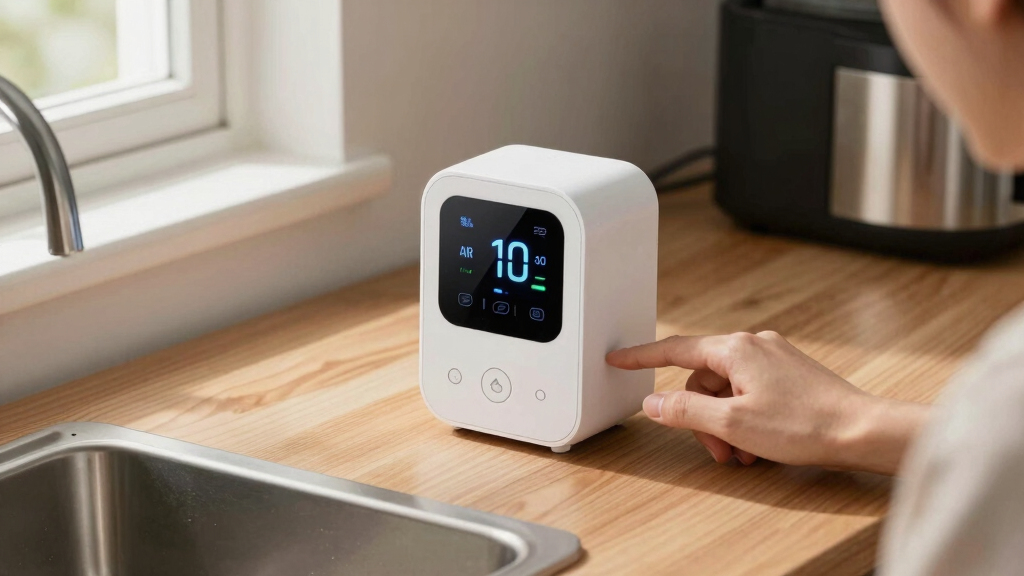
Choosing the best smart air quality monitor for home involves balancing accuracy, ease of use, and features like connectivity and data storage. The SAF Aranet4 Home stands out as the best overall choice for its portability and detailed data, while the GoveeLife Smart Air Quality Monitor with WiFi offers excellent value with comprehensive sensors. For those new to air quality monitoring, the Amazon Smart Air Quality Monitor provides seamless Alexa integration and simplicity. The main challenge for buyers is finding a device that combines reliable measurements with user-friendly interfaces, without paying a premium for unnecessary extras. Keep reading for a detailed breakdown of each option to find your best fit.
Key Takeaways
- Most top monitors focus on multiple pollutants like PM2.5, CO2, and TVOC, but battery life varies significantly, impacting portability.
- WiFi-enabled models generally provide more comprehensive data access and app features, though they tend to be more expensive.
- Ease of use and setup are critical for beginners, with some products offering simple interfaces and integration with smart home assistants.
- Data storage capacity and alert customization are key features that differentiate higher-end monitors from basic models.
- Price ranges widely; investing more typically yields more accurate sensors and better connectivity, but some affordable options still deliver solid performance.


More Details on Our Top Picks
SAF Aranet4 Home: Wireless Indoor Air Quality Monitor for Office or School (CO2, Temperature, Humidity and More) Portable, Battery Powered, E-Ink Screen, App for Configuration & Data History
This pick stands out for its exceptional battery life of up to four years and its wireless, cable-free design, making it ideal for those who want a hassle-free, portable air quality solution. Unlike the GoveeLife monitor, which requires power at all times, the Aranet4’s low power consumption allows for months or even years of use without recharging. Its nondispersive infrared (NDIR) sensor provides highly accurate CO2 measurements, crucial for maintaining healthy indoor environments. The small, sleek design and Bluetooth connectivity make it perfect for users who prefer a simple setup and remote access via the app. However, the lack of Wi-Fi limits its integration into broader smart home systems, which the Airthings device offers. This model is better suited to individuals prioritizing portability and long battery life over seamless smart home integration. The main tradeoff is that it cannot be connected directly to Wi-Fi or integrated with other smart devices without additional hardware.
Pros:- Battery life up to 4 years, minimizing maintenance
- Wireless, cable-free design for portability
- High-precision NDIR CO2 sensor ensures accurate readings
Cons:- Limited to Bluetooth connectivity, preventing Wi-Fi integration
- No built-in display—relies on app for data visualization
Best for: Homeowners or small office users who want accurate, long-term CO2 monitoring without frequent charging or wired setup.
Not ideal for: Smart home enthusiasts seeking Wi-Fi-enabled monitoring that integrates with voice assistants and other smart devices, as this model relies solely on Bluetooth.
- Battery Life:up to 4 years
- Connectivity:Bluetooth
- Sensor Technology:NDIR
- Size:2.76 x 2.76 x 0.94 inches
- Weight:3.67 ounces
- Display:E-Ink (no display)
Bottom line: A perfect choice for those seeking a portable, long-lasting CO2 monitor with reliable accuracy and minimal upkeep.
Temtop Smart Air Quality Monitor – Indoor Air Quality Meter with PM2.5, AQI, Temperature and Humidity Detector for Home, Office or School, App Connectivity, OTA Updates, 60-Day Battery Life
This device makes the most sense for users who want a multi-parameter monitor at an affordable price, offering detailed PM2.5, AQI, temperature, and humidity data. Compared with the Aranet4, which focuses solely on CO2 and long battery life, the Temtop provides a fuller picture of indoor air quality, including particulate matter, which is vital for allergy sufferers and urban dwellers. Its 60-day battery life is impressive, reducing the need for frequent charging, and its app connectivity allows for easy data review and OTA updates. However, it lacks the high accuracy of professional sensors used in more advanced monitors, and its design is less sleek, making it more suitable for fixed placement rather than portability. The tradeoff is that it doesn’t support real-time alerts for specific parameters as immediately as more premium models but provides reliable overall monitoring for most homes.
Pros:- Affordable price point with comprehensive air quality data
- Long battery life of up to 60 days
- Easy-to-read display and app connectivity for simple monitoring
Cons:- Less precise sensors compared to high-end monitors
- No real-time push alerts for specific parameters
Best for: Budget-conscious households or schools wanting reliable, multi-parameter air quality data without complex setup.
Not ideal for: Users needing professional-grade accuracy or seamless integration with smart home systems, as this device relies on app alerts and less precise sensors.
- PM2.5 Accuracy:±15 µg/m³
- AQI:Yes
- Temperature Accuracy:±0.54°F
- Humidity Accuracy:±3%RH
- Battery Life:up to 60 days
- Connectivity:App (Wi-Fi)
Bottom line: Ideal for budget-minded users seeking a straightforward, multi-parameter indoor air quality monitor with long-lasting battery life.
GoveeLife Smart Air Quality Monitor for Home, CO2 Detector for Health, Sleep Quality & Energy Efficiency, Thermometer Hygrometer with Real-Time Display & Alarm, for Office, Bedroom, Kitchen
This model excels in delivering immediate, visual feedback through its bright LED display and customizable alerts, making it ideal for users who want instant awareness of air quality changes. Unlike the Aranet4, which requires a phone app and Bluetooth connection, the GoveeLife provides a clear, on-device display that is easy to read at a glance, even in low light. Its triple alert system—buzzer, app notifications, and email—ensures no critical threshold breaches go unnoticed, which is especially useful for households with children or elderly members. It also connects with Govee’s smart home devices, allowing for automation. However, it relies on AC power, limiting portability, and its accuracy, while good, is not at the professional level of some other monitors. This pick is better suited for fixed placement in actively monitored spaces.
Pros:- Bright, real-time LED display with customizable alerts
- Triple alert system (buzzer, app, email) for comprehensive notifications
- Supports smart home integration for automated responses
Cons:- Requires constant AC power, reducing portability
- Less suited for outdoor or mobile use
Best for: Families or office users wanting a quick, visual understanding of indoor air quality with instant alerts and smart home integration.
Not ideal for: People seeking a portable, long-term battery-powered device, as this monitor needs constant power and is less discreet.
- Display Type:LED
- CO2 Accuracy:±40ppm + 5%
- Temperature Accuracy:±0.54°F
- Humidity Accuracy:±3%RH
- Power:AC powered
- Connectivity:Wi-Fi, App, Email
Bottom line: A great choice for households seeking immediate visual feedback and smart alerts in a fixed location with easy-to-understand data.
GoveeLife Smart Air Quality Monitor with PM2.5, WiFi, Temperature & Humidity Sensors, LED Display, 2s Refresh, 2-Year Data Storage, for Home & Office Wired
This monitor shines in its fast two-second refresh rate and its ability to connect with Govee’s smart appliances, making it ideal for users who want rapid updates and automation. Unlike the Temtop, which has a broader set of parameters but slower refresh intervals, the GoveeLife’s quick data updates allow for near real-time responses, especially when linked to compatible smart devices like purifiers or humidifiers. Its 2-year data storage and export features support in-depth analysis, which surpasses simpler models like the Temtop. However, it requires a wired power source, limiting placement flexibility, and its sensor accuracy, while good, is not at professional levels. This device is better suited for fixed installation in smart homes aiming for rapid environmental adjustments.
Pros:- Rapid 2-second data refresh rate for near real-time updates
- Seamless integration with Govee smart appliances
- Long-term data storage and export for analysis
Cons:- Requires wired power source, limiting placement options
- Moderate sensor accuracy compared to professional-grade devices
Best for: Smart home users who want fast updates and integration with their existing appliances for better indoor environment control.
Not ideal for: Portable users or those needing battery operation, as it must be plugged in continuously.
- Refresh Rate:2 seconds
- Parameters Monitored:PM2.5, Temp, Humidity
- Data Storage:2 years
- Connectivity:Wi-Fi
- Power:Wired
- Display:LED
Bottom line: An excellent option for smart home enthusiasts wanting quick updates and device automation, with the caveat of needing continuous power.
Professional 16 in 1 Air Quality Monitor Indoor 10h Battery & 5.5″ Display 9 AQI+7 AQI Alerts, Portable CO2 Monitor Air Quality Tester for CO2, TVOC, PM2.5, HCHO, Temp/Humidity
This model is tailored for users who need comprehensive, high-precision measurements across multiple parameters, including CO2, TVOC, formaldehyde, and various particulate sizes. The external high-precision sensors with 0.001 accuracy set it apart from consumer-grade devices like the GoveeLife, making it ideal for health-conscious families, environmental professionals, or advanced users. Its 10-hour battery life offers portability, although it is bulkier than other monitors, and the 5.5-inch display provides clear, detailed readings. The multiple alert types—seven in total—ensure you stay informed about any pollutant exceeding safe levels, which is a significant advantage over simpler devices. The main tradeoff is the higher cost and slightly larger size, making it less discreet for casual users.
Pros:- High-precision sensors with 0.001 accuracy for multiple parameters
- Portable with up to 10 hours of cordless operation
- Multiple alert types (7) for comprehensive safety coverage
Cons:- Relatively bulky and heavier than consumer models
- Higher price point may be prohibitive for casual users
Best for: Environmentally sensitive households, health professionals, or industries requiring detailed, multi-parameter air quality data with high accuracy.
Not ideal for: Casual users seeking a simple, affordable device or those preferring battery-powered, ultra-portable monitors, due to its size and price.
- Parameters Monitored:CO2, TVOC, HCHO, PM2.5, PM1.0, PM10, Temp, Humidity, AQI
- Sensor Accuracy:0.001 units
- Battery Life:10 hours
- Display Size:5.5 inches
- Alert System:7 types
- Portability:Yes
Bottom line: The best choice for those needing detailed, professional-grade air quality data with high accuracy and alert reliability.
18-in-1 Smart Air Quality Monitor, WiFi Indoor Air Detector with Dual Chip, Real-Time Monitoring for AQI, CO2, PM2.5, PM1.0, PM10, TVOC, HCHO, Time, Temperature and Humidity with APP
This multi-functional air quality monitor stands out for its extensive sensor array, providing a wealth of real-time data including AQI, CO2, particulate matter, TVOC, and formaldehyde levels. Compared to simpler models like the Amazon Smart Air Quality Monitor, this device offers more detailed insights and the ability to track trends over time via app data storage. Its dual-chip technology ensures fast, accurate readings, making it ideal for households with sensitive individuals or those who want a thorough understanding of indoor air quality. A notable tradeoff is its larger size and more complex setup, which might be overwhelming for users seeking a straightforward device. The app interface is feature-rich but may require a learning curve. The device is wall-mountable, has a skin-friendly surface, and offers up to 15 hours of battery life, making it suitable for continuous monitoring in any home environment.
Pros:- Extensive sensor suite covering 18 parameters for comprehensive insight
- Dual-chip technology delivers fast, reliable readings
- App supports data storage, trend tracking, and remote control
Cons:- Larger and more complex setup compared to simpler monitors
- Higher price point may deter budget-conscious buyers
Best for: Homeowners who need detailed, multi-parameter air quality data and proactive monitoring for health concerns or allergy management
Not ideal for: Casual users seeking a simple, plug-and-play device with minimal setup and basic alerts
- Sensor count:18-in-1
- Connectivity:Wi-Fi
- Battery life:7-15 hours
- Display:HD LCD with adjustable brightness
- Power source:Rechargeable battery with Type-C charging
- Size:2″D x 4″W x 3″H
Bottom line: This monitor is ideal for users who want in-depth air quality analysis and are comfortable with a more detailed device setup.
Amazon Smart Air Quality Monitor – Know your air, Works with Alexa
Choosing the Amazon Smart Air Quality Monitor makes sense for those already invested in Alexa-enabled devices, as it offers effortless integration with voice commands and routines. Unlike the more detailed 18-in-1 monitor, this model focuses on five key factors—PM 2.5, VOCs, CO, humidity, and temperature—delivering straightforward alerts via color-coded LED and app scores. Its main advantage lies in ease of use and seamless Alexa integration, making it perfect for users who prefer minimal setup and rely on voice notifications. However, it provides less granular data, which could be a drawback for those needing in-depth analysis. The device’s compact size and automatic calibration add to its convenience, with real-time updates displayed through simple color cues, ideal for quick understanding of indoor air quality.
Pros:- Seamless integration with Alexa for voice alerts and routines
- Compact, unobtrusive design
- Automatic calibration and self-cleaning features
Cons:- Limited data parameters—does not cover formaldehyde or PM1.0
- Less detailed insights compared to multi-parameter monitors
Best for: Alexa users who want quick, basic air quality insights with the convenience of voice control
Not ideal for: Users seeking detailed pollutant breakdowns or advanced data logging
- Key measurements:PM 2.5, VOC, CO, Humidity, Temp
- Connectivity:Wi-Fi, BLE
- Size:65x65x45mm
- Power:Micro-USB
- Calibration:Auto calibration
- Display:Multicolor LED
Bottom line: This monitor is perfect for Alexa-centric households desiring simple, real-time air quality updates without complexity.
Professional Indoor Air Quality Monitor with AQI Alerts, Portable Real-Time Detector for Home, Car, Plants & Pet (Deep Black)
This compact, portable air quality monitor offers a professional-grade experience with 16 parameters including PM1.0, PM2.5, PM10, CO2, TVOC, and HCHO. Its single-button operation and large HD display make it accessible for beginners, while its quick 6-second data refresh ensures timely updates. Compared to the Wi-Fi based models, this device provides more immediate, on-the-spot readings without needing an app or internet connection, making it ideal for on-the-go testing in various environments like cars or nurseries. The battery lasts up to 8 hours, and fast USB-C charging keeps downtime minimal. A notable tradeoff is its reliance on manual operation and absence of remote data logging, which may limit long-term trend analysis. Its stylish design and versatile mounting options make it suitable for quick checks anywhere you go.
Pros:- Portable design suitable for home, car, or outdoor use
- 16 parameters for detailed air quality assessment
- Simple one-button operation with mute function
Cons:- Limited runtime of 4-8 hours on a single charge
- No app or cloud data tracking for long-term analysis
Best for: Home users or professionals needing portable, quick, and reliable air quality checks in multiple settings
Not ideal for: Consumers seeking continuous, long-term monitoring with app integration
- Parameters:16
- Display:HD color screen
- Battery duration:4-8 hours
- Charging:Type-C rapid charge
- Size:portable handheld
- Operation:One-button, double-tap to mute
Bottom line: This device is best for quick, on-the-spot air quality assessments in various environments rather than continuous monitoring.

How We Picked
Our evaluation focused on how well each device balances accuracy, usability, and connectivity. We prioritized models with multi-pollutant detection, reliable app integration, and long-term data storage. Ease of setup and user interface were also critical, especially for first-time buyers. We compared battery life, portability, and the availability of real-time alerts, aiming to identify options suitable for various budgets and home environments. Devices were ranked based on overall performance, value for money, and how well they meet the needs of typical home users.
Factors to Consider When Choosing Best Smart Air Quality Monitor For Home
When selecting a smart air quality monitor for home, understanding key features helps you make a more informed choice. The right device depends on your specific needs—whether monitoring for health, energy efficiency, or simply peace of mind. Consider how each factor aligns with your home environment and lifestyle to avoid common pitfalls like overpaying for unnecessary sensors or choosing a device with poor connectivity.Sensor Range and Accuracy
Look for monitors that detect multiple pollutants such as PM2.5, CO2, TVOC, and HCHO, as these provide a comprehensive picture of indoor air quality. More sensors typically mean better accuracy, but also higher cost. Check whether the device’s sensors are calibrated for consistent readings over time, especially if you plan to rely on the data for health decisions. Bear in mind that some budget models may sacrifice precision, which can lead to misleading results.
Connectivity and Data Access
WiFi-enabled monitors generally offer more detailed insights through dedicated apps and remote notifications, making them ideal for busy households. Bluetooth-only models might require closer proximity but can be simpler and cheaper. Consider whether integration with smart home systems like Alexa or Google Assistant is important for your setup, as this can streamline alerts and voice control. Reliable connectivity ensures you get timely updates without constant manual checks.
Ease of Use and Setup
Devices with clear displays, simple app interfaces, and straightforward installation tend to be more user-friendly, especially for those new to air quality monitoring. Some models include guided setup or automatic calibration, reducing the learning curve. Avoid overly complex systems if you prefer a plug-and-play experience. A device that provides real-time alerts and easy-to-understand data helps you act quickly to improve indoor air conditions.
Data Storage and Alerts
Long-term data storage allows you to analyze trends over days or weeks, which can inform better ventilation practices. Customizable alerts—such as notifications when CO2 exceeds safe thresholds—are valuable for immediate action. Higher-end monitors often include cloud backups and historical graphs, while budget options may only show current readings. Decide whether detailed data analysis or simple alerts better suits your needs.
Price and Value
Higher-priced models typically offer more sensors, better accuracy, and advanced features like automatic calibration and extensive data logs. However, some affordable options deliver surprisingly good performance for basic monitoring needs. Balance your budget against the importance of detailed data and connectivity features. Remember that investing in a quality device can save you money in the long run by providing reliable information for healthier living.
Frequently Asked Questions
How accurate are smart air quality monitors for home use?
Most smart air quality monitors provide reasonably accurate readings suitable for general awareness and health monitoring, especially from reputable brands with well-calibrated sensors. However, they may not match professional-grade equipment in precision. Variations can occur depending on sensor quality, calibration, and environmental conditions. For everyday use, a well-reviewed consumer model will usually be sufficient to identify indoor air quality issues and track improvements over time.
Do I need a monitor with WiFi or Bluetooth?
WiFi monitors generally offer more comprehensive data access, remote notifications, and integration with smart home systems, making them more versatile. Bluetooth-only models are simpler and often more affordable but require proximity for updates, which might limit real-time awareness. Your choice depends on whether you want constant remote monitoring or just occasional checks. For busy households or those concerned about health, WiFi-enabled devices tend to be more convenient.
Can smart air quality monitors help reduce indoor pollutants?
Yes, by providing real-time data and alerts, these monitors can help you identify pollution sources like cooking, smoking, or poor ventilation. With this information, you can take steps such as improving ventilation, using air purifiers, or adjusting habits to lower pollutant levels. Some devices also integrate with home automation systems to trigger air purifiers automatically when pollutant levels rise, creating a healthier environment effortlessly.
How often should I calibrate my air quality monitor?
Many monitors are designed to calibrate automatically or require minimal manual calibration. However, for optimal accuracy, it’s advisable to check calibration periodically—typically every 6-12 months—especially if the device is used frequently or in environments with variable conditions. Some models include calibration reminders or do it automatically via firmware updates, which helps maintain reliable readings without added effort.
Are more expensive monitors worth the extra cost?
Generally, higher-priced monitors offer better sensor accuracy, more pollutant detection, longer data storage, and enhanced connectivity options. If you need detailed tracking over time or have specific health concerns, investing more can make a difference. However, for basic awareness or casual monitoring, more affordable models often suffice. Weigh your needs carefully to avoid paying for features you won’t use.
Conclusion
For most home users, the SAF Aranet4 Home offers the best overall balance of portability, accuracy, and data access, making it ideal for those who want detailed insights. The GoveeLife Smart Air Quality Monitor with WiFi provides excellent value with comprehensive sensors and app features for budget-conscious buyers. If you prefer a straightforward, smart home-compatible device, the Amazon Smart Air Quality Monitor suits beginners and those invested in Alexa ecosystems. Higher-end users or those with specific health concerns should consider premium models with extensive data and multi-pollutant detection. Ultimately, your choice depends on your budget, tech setup, and how deeply you want to monitor your indoor air quality.