
For shoppers comparing deals on smart doorbells, my best overall pick is the Tapo D210, which pairs 2K video with a chime and a wide field of view. The Arlo Video Doorbell 2K (2nd Gen) stands out for buyers who want wired or wireless installation, while the Ring Battery Doorbell 2K is a fit for those who value zoom and a familiar app ecosystem. The main tradeoffs are video coverage versus installation flexibility, and advanced features versus storage or subscription requirements. This roundup also includes simpler 1080p models and systems with indoor screens for different household needs. Read on for the full breakdown and guidance on choosing the right doorbell for your home.

Get the little things that make your day delivered free with Prime
- Fast, free delivery on millions of items
- Prime Video, Amazon Music and more included
- Member-only deals all year
Key Takeaways
- Tapo D210 is the strongest all-around balance in this lineup: 2K video, a chime, and a 160-degree view give buyers useful coverage without requiring a built-in indoor monitor.
- Arlo Video Doorbell 2K (2nd Gen) offers the broadest installation choice among the named options, since it supports wired or wireless use and includes Chime 2.
- Ring Battery Doorbell 2K emphasizes detail and zoom, but the two color listings are variants of the same model, not two distinct feature choices.
- Indoor-screen systems solve a different problem: the 4.5-inch monitor and 7-inch touchscreen models suit households that want to see visitors indoors, though their listed video resolution is 720p or 1080p rather than 2K.
- Several lower-detail listings leave key buying questions unanswered, including storage terms, power arrangements, or smart-home compatibility, so buyers should verify these before choosing a seemingly simple wireless model.




| deals on smart doorbell | Connectivity | Resolution | Storage | Field of view |
|---|---|---|---|---|
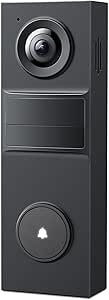
| myQ Secure View™ 3-in-1 Smart | Wi-Fi | — | — | — |
| Tapo D210 2K Wireless Smart Vi | — | 2K | microSD up to 512 GB (card not included); optional 30-day Tapo Care cloud | 160° diagonal |
| Wireless Video Doorbell Camera | — | 720p HD | TF card up to 128 GB (card not included) | — |
| Ring Battery Doorbell 2K | Wi-Fi 4, 2.4 GHz | — | — | 140° horizontal; 140° vertical |
| Wireless Doorbell Camera | 2.4 GHz Wi-Fi | — | 128 MB flash memory; cloud storage available by subscription | — |
| Ring Battery Doorbell 2K | Wi-Fi 4, single-band 2.4 GHz | — | — | 140° horizontal, 140° vertical |
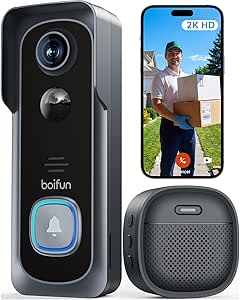
| BOIFUN Wireless Video Doorbell | 2.4 GHz Wi-Fi | 2K HD | microSD up to 128 GB; card not included | 166° |
| Tapo D205 2K Wireless Smart Vi | 2.4 GHz Wi-Fi | 2K, 3 MP | microSD up to 512 GB; card sold separately | 160° |
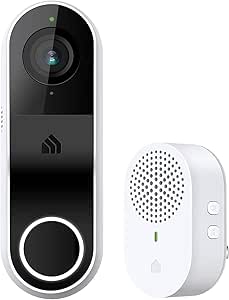
| Kasa KD110 2K Smart Video Door | 2.4 GHz Wi-Fi | 2K, 3 MP | — | 160° diagonal |
| 1080P Video Doorbell Camera Wi | 2.4 GHz Wi-Fi | 1080P | AES-128 encrypted cloud storage; subscription required | — |
| Wireless Smart Video Doorbell | Wi-Fi, 2.4G and 5G | 1080P | Local TF-card storage | — |
| Orbitell M52 1080p Wireless Vi | 2.4 GHz Wi-Fi only | 1080p | — | — |
| 1080p WiFi Video Doorbell Came | — | 1080p | Cloud storage options; subscription required for full features | — |
| Arlo Video Doorbell 2K | — | — | — | 180° |
More Details on Our Top Picks
myQ Secure View™ 3-in-1 Smart Lock with 2K HDR Video Doorbell Camera, Face Access, Fingerprint, PIN & App Control
The myQ Secure View is the most ambitious option here: it combines a smart deadbolt, video doorbell, and security camera, so it can replace separate devices at the entry. Its 2K HDR video, color night vision, and access choices—including fingerprint, PIN, face access, app, and key—suit households that want to manage both visitors and door access in one system. Compared with the Ring Battery Doorbell 2K, this pick adds lock control and more ways to get inside, while Ring is a simpler dedicated doorbell. The tradeoff is that smart detection features require a subscription, and face access is limited to the US and Canada. At 4.9 pounds, it is also a substantial device, and its stated 4–6 month battery life can vary with use.
Pros:- Combines a smart deadbolt, doorbell camera, and security camera in one device.
- Offers fingerprint, PIN, face, app, and key access options.
- 2K HDR video and color night vision support clearer visitor checks after dark.
- Connects to the myQ ecosystem for remote entry management.
Cons:- Subscription required for smart detection features.
- Face Access is available only in the US and Canada.
- Battery life is listed at 4–6 months and may shorten with frequent use.
Best for: Homeowners who want a video doorbell and smart lock in one device, with multiple ways for household members to enter.
Not ideal for: Buyers who want a low-maintenance doorbell without a subscription, or renters who cannot replace their existing deadbolt.
- Video:2K HDR
- Access methods:Face recognition, fingerprint, PIN, app, and key
- Connectivity:Wi-Fi
- Control method:App
- Battery life:4–6 months
- Subscription:Required for smart detection features
- Dimensions:2.95 x 3.84 x 6.85 inches
- Weight:4.9 pounds
- Material and color:Metal; black
Our verdict“Choose the myQ Secure View if you want a doorbell that also replaces your smart lock, and skip it if you only need visitor video.”
Tapo D210 2K Wireless Smart Video Doorbell with Chime, 160° Ultra-Wide View
The Tapo D210 makes a strong case for buyers who want broad coverage without being locked into cloud storage: it pairs a 160° diagonal view with 2K video and supports microSD cards up to 512 GB. Person detection and activity zones are included without a subscription, while an optional cloud plan adds another storage route. Its adjustable spotlight provides full-color night vision, which gives it a more capable low-light setup than the FunnyPanda 720p doorbell, though the FunnyPanda avoids Wi-Fi and app dependence altogether. The Tapo’s 6400 mAh battery allows flexible placement, but busy entryways can mean more frequent charging. The microSD card is not included, and the supplied chime is for indoor use, so it may not be audible from every part of a home.
Pros:- 2K resolution and a 160° diagonal field of view cover a broad entry area.
- Free person detection and activity zones help limit irrelevant alerts.
- Supports local microSD storage up to 512 GB.
- Adjustable spotlight enables full-color night vision.
Cons:- MicroSD card must be purchased separately.
- Optional cloud backup requires a subscription.
- Indoor-only chime may not carry throughout larger homes, and battery life varies with traffic.
Best for: Households seeking a wide door view, free person detection, and the option to save clips locally instead of paying for cloud storage.
Not ideal for: Buyers who need a doorbell that works without Wi-Fi, or who want an outdoor chime or included memory card.
- Resolution:2K
- Field of view:160° diagonal
- Wi-Fi band:2.4 GHz
- Battery:6400 mAh rechargeable
- Storage:microSD up to 512 GB (card not included); optional 30-day Tapo Care cloud
- Night vision:Full color with adjustable spotlight
- Audio:Two-way
- Detection and compatibility:Free person detection and activity zones; Alexa and Google Assistant
- Mounting:Includes 15° angled wedge
Our verdict“Pick the Tapo D210 for wide coverage and flexible local storage, but choose a no-Wi-Fi system if you want a more self-contained setup.”
Wireless Video Doorbell Camera with 720p HD and 4.5″ Monitor Screen
The FunnyPanda takes a different route from app-connected models: its doorbell sends video to a 4.5-inch indoor monitor over a private 2.4 GHz link, with no Wi-Fi, smartphone app, or subscription required. That makes it a practical choice for buyers who prefer a dedicated screen and local recordings on a TF card. Compared with the Tapo D210, it gives up 2K detail, a wider view, and remote phone access, but it avoids depending on a home internet connection. The stated battery life of up to 50 days can also mean less frequent charging than a high-traffic wireless setup, though actual use will affect it. The monitor must stay plugged into power, and the 720p camera’s 120° view is narrower than the Tapo’s.
Pros:- Works without Wi-Fi, an app, or a subscription.
- Dedicated 4.5-inch indoor monitor makes visitor checks straightforward.
- Local TF-card recording avoids cloud-storage fees.
- Outdoor unit is rated IP54 and offers infrared night vision.
Cons:- Indoor monitor needs a continuous DC power connection.
- 720p video and a 120° viewing angle provide less detail and coverage than the Tapo D210.
- No smartphone app or remote viewing away from the monitor.
Best for: People who want to see visitors on a dedicated indoor screen without setting up Wi-Fi, an app, or a cloud account.
Not ideal for: Smartphone-first households that need remote viewing, higher-resolution video, or alerts while away from home.
- Resolution:720p HD
- Screen:4.5-inch IPS LCD
- Viewing angle:120°
- Wireless connection:Private 2.4 GHz link; no Wi-Fi required
- Outdoor battery:1000 mAh rechargeable; up to 50 days
- Wireless range:16–262 ft
- Storage:TF card up to 128 GB (card not included)
- Night vision and audio:Six 940 nm infrared LEDs; two-way audio
- Weather protection:IP54
Our verdict“Choose the FunnyPanda for a simple, local monitor-based system, not for remote access or sharper video.”
Ring Battery Doorbell 2K (Newest Model) Retinal with Wide-Angle Video and 6x Zoom – Speckled Gray
Ring’s clearest advantage is the combination of Retinal 2K video and up to 6x enhanced zoom: the added magnification can help when a visitor or package is farther from the lens. Its 140° horizontal and vertical field of view offers substantial coverage, and two-way talk supports quick conversations without opening the door. Compared with the Tapo D210, Ring emphasizes zoom and its Alexa-compatible ecosystem, while Tapo offers free person detection and a local microSD option up to 512 GB. Ring’s built-in rechargeable battery and weather-resistant construction suit a wireless installation, but its full features and cloud storage require a Ring Protect subscription. The product also calls for a stable internet connection, and some features may be restricted in certain states.
Pros:- Retinal 2K video with up to 6x enhanced zoom.
- 140° horizontal and vertical views cover a broad area.
- Two-way talk supports real-time communication with visitors.
- Built-in rechargeable battery and weather-resistant design simplify wireless installation.
Cons:- Ring Protect subscription required for full features and cloud storage.
- Optimal performance calls for an internet connection of at least 10 Mbps.
- Some features are limited in certain states due to legislation.
Best for: Alexa households that want a wireless 2K doorbell with strong zoom for checking visitors and deliveries at a distance.
Not ideal for: Buyers who want subscription-free cloud features, local microSD recording, or a doorbell that depends less on a fast internet connection.
- Video resolution:Retinal 2K
- Zoom:Up to 6x enhanced zoom
- Field of view:140° horizontal; 140° vertical
- Audio:Two-way talk
- Battery:Built-in lithium-ion rechargeable battery
- Connectivity:Wi-Fi 4, 2.4 GHz
- Operating conditions:-4°F to 120°F; weather resistant
- Dimensions:2.11 x 5.78 x 1.41 inches
- Available colors:Speckled Gray, Matte Mocha, Speckled White
Our verdict“Choose Ring for zoom detail and Alexa integration, but favor the Tapo D210 if local storage and free person detection matter more.”
Wireless Doorbell Camera, Battery Powered Wi-Fi Video Doorbell
This battery-powered doorbell is aimed at buyers who want the essentials—human detection, two-way audio, night vision, and app alerts—without the more involved setup of a combined lock or dedicated-monitor system. Its AI detection is designed to reduce alerts from non-human activity, giving it a clearer purpose than the FunnyPanda 720p doorbell, which prioritizes a local screen and works without Wi-Fi. This model instead depends on a stable 2.4 GHz connection for remote notifications. The listed 2 MP resolution and 30-foot night-vision range cover basic visitor monitoring, but the product data does not specify a wide field of view or higher-resolution imaging like the Tapo D210 and Ring Battery Doorbell 2K. Cloud storage requires a subscription, and 128 MB of internal flash is limited for retaining clips.
Pros:- AI human detection is intended to reduce non-human alerts.
- Rechargeable battery supports wireless installation.
- Two-way audio allows remote conversations with visitors.
- Night vision has a stated range of up to 30 feet.
Cons:- Cloud video storage requires a subscription.
- 128 MB of internal flash memory offers limited clip storage.
- Requires a stable 2.4 GHz Wi-Fi connection.
Best for: Apartment or office users who want a straightforward battery-powered doorbell with person alerts and two-way app communication.
Not ideal for: Buyers who need generous local recording capacity, subscription-free cloud storage, or a doorbell that works without Wi-Fi.
- Video resolution:2 MP
- Detection:AI human detection with false-alert reduction
- Power:Rechargeable lithium-ion battery
- Night vision:Infrared; six IR LEDs; range up to 30 feet
- Storage:128 MB flash memory; cloud storage available by subscription
- Audio:Two-way audio with microphone and speaker
- Connectivity:2.4 GHz Wi-Fi
- Video encoding:H.264
- Construction:Water-resistant ABS plastic; black
Our verdict“Choose this model for basic person alerts and app-based conversation, but skip it if you need substantial local storage or sharper 2K video.”
Ring Battery Doorbell 2K – Retinal 2K Video, Wide-Angle, 6x Enhanced Zoom, Two-Way Talk, Built-In Battery (Matte Mocha)
The Ring Battery Doorbell 2K makes the most sense when seeing a visitor clearly matters more than keeping ownership costs simple. Its Retinal 2K video and up-to-6× enhanced zoom give it a detail advantage over the BOIFUN Wireless Video Doorbell Camera, which also records in 2K but does not list zoom. A rechargeable battery and USB-C charging avoid doorbell wiring, while Alexa compatibility suits households already using Ring-connected devices. The tradeoff is the subscription: cloud storage and advanced AI features require Ring Protect, so the headline video quality does not mean every useful feature is included. It also uses single-band 2.4 GHz Wi-Fi, and the USB-C cable is not supplied. I’d choose it for visual detail, not for subscription-free recording.
Pros:- Retinal 2K video with up to 6× enhanced digital zoom
- 140° horizontal and vertical motion-detection field of view
- Rechargeable battery avoids hardwired installation
- Two-way talk and live view alerts
Cons:- Ring Protect is required for cloud storage and advanced AI features
- USB-C charging cable is not included
- Wi-Fi is limited to single-band 2.4 GHz
Best for: Ring or Alexa households that want a battery-powered doorbell with zoom for checking faces and packages.
Not ideal for: Buyers who want subscription-free cloud recording or do not already have a USB-C charging cable.
- Video:Retinal 2K with up to 6× enhanced zoom
- Field of view:140° horizontal, 140° vertical
- Power:Rechargeable lithium-ion battery; USB-C
- Connectivity:Wi-Fi 4, single-band 2.4 GHz
- Audio:Two-way talk
- Dimensions:2.11 x 5.78 x 1.41 inches
- Operating conditions:-4°F to 120°F; weather resistant
- Recommended upload speed:10 Mbps minimum
Our verdict“Choose this Ring if zoomed-in 2K detail and battery installation matter more than avoiding an ongoing subscription.”
BOIFUN Wireless Video Doorbell Camera, 2K HD
The BOIFUN Wireless Video Doorbell Camera stands out for buyers who want to keep recordings on a card rather than depend on a cloud plan. Its microSD support up to 128 GB, human detection, and two-way audio cover the core tasks without a required subscription for essential features. The 166° view is wider than the Ring Battery Doorbell 2K’s listed 140° horizontal and vertical detection view, but Ring offers 6× zoom for closer inspection. BOIFUN’s battery is rated for up to 60 days under laboratory conditions; because it is built in and non-removable, real-world use may mean taking the whole unit down to recharge it. The microSD card is also a separate purchase. This is a practical fit for local recording, not for shoppers seeking a replaceable battery.
Pros:- Supports local microSD storage up to 128 GB
- No subscription required for essential features
- 166° field of view with human detection
- IP65 water resistance and a listed two-year warranty
Cons:- Built-in battery is non-removable, and actual runtime varies with use
- microSD card is not included
- Works only with 2.4 GHz Wi-Fi
Best for: Renters and homeowners who want 2K video, person alerts, and local recordings without a required subscription.
Not ideal for: People who prefer replaceable batteries, need dual-band Wi-Fi, or want storage included in the box.
- Resolution:2K HD
- Field of view:166°
- Battery:5,200 mAh built-in rechargeable battery
- Listed battery life:Up to 60 days under stated laboratory conditions
- Connectivity:2.4 GHz Wi-Fi
- Storage:microSD up to 128 GB; card not included
- Night vision range:33 feet
- Weather resistance:IP65
Our verdict“Pick BOIFUN if local, subscription-free recording is your priority and you can live with recharging the entire doorbell.”
Tapo D205 2K Wireless Smart Video Doorbell
The Tapo D205 pairs a wide 160° view with a listed battery life of up to 180 days, making it appealing to buyers who want fewer charging interruptions. Unlike the hardwired Kasa KD110, it does not need an existing doorbell power connection, and it supports local microSD recording up to 512 GB without a required subscription. That card is sold separately, as is the chime, so the apparent simplicity of a wireless setup comes with extra pieces to source. Its 2K video, infrared night vision, person detection, and phone call alerts make it a capable everyday option, but the listing gives conflicting battery capacities—5,200 mAh in one section and 6,400 mAh in another. I’d treat the long runtime as a listed claim, not a guarantee.
Pros:- 2K video with a 160° field of view
- Local microSD storage up to 512 GB without a required subscription
- Listed battery life of up to 180 days
- Person detection, two-way audio, and phone call alerts
Cons:- Chime and microSD card are sold separately
- Battery capacity is inconsistent across the listing
- Supports only 2.4 GHz Wi-Fi
Best for: Wireless-doorbell shoppers who want local storage, person detection, and fewer charging sessions than a shorter-runtime model.
Not ideal for: Buyers who need a chime and memory card included, or want consistent battery-capacity specifications.
- Resolution:2K, 3 MP
- Field of view:160°
- Battery:Rechargeable lithium-ion; listing gives 5,200 mAh and 6,400 mAh
- Listed battery life:Up to 180 days
- Connectivity:2.4 GHz Wi-Fi
- Storage:microSD up to 512 GB; card sold separately
- Weather resistance:IP54
- Compatibility:Alexa, Google Assistant, Tapo app
Our verdict“Choose the Tapo D205 for a wireless setup with high-capacity local storage, but budget for a separate card and chime.”
Kasa KD110 2K Smart Video Doorbell Camera with Chime
The Kasa KD110 is the clearest choice here for someone with compatible doorbell wiring who wants a chime included. Its hardwired power sidesteps the charging routine required by the Tapo D205 and BOIFUN, while the included modular chime and 15° mounting wedge make the package more ready to install. It records 2K 3 MP video, offers two-way audio and night vision up to 30 feet, and supports local microSD recording. That local option can avoid cloud fees, though the card is not included; cloud recording uses an optional Kasa Care service. The compromise is flexibility: unlike the battery-powered Ring Battery Doorbell 2K, this model depends on a suitable wired setup. Wi-Fi is also limited to 2.4 GHz, and the maximum card capacity varies by version.
Pros:- Included modular chime and 15° mounting wedge
- 2K 3 MP video with a 160° diagonal field of view
- Supports local microSD recording
- Works with the Kasa/Tapo app, Alexa, and Google Assistant
Cons:- Requires hardwired installation
- microSD card is not included
- Cloud recording requires an optional subscription; card capacity varies by version
Best for: Homeowners with compatible doorbell wiring who want an included chime and the option of local recording.
Not ideal for: Renters or households without a compatible wired doorbell connection, and buyers who expect a memory card in the box.
- Model:KD110
- Resolution:2K, 3 MP
- Field of view:160° diagonal
- Power:Hardwired, corded electric
- Connectivity:2.4 GHz Wi-Fi
- Night vision range:Up to 30 feet
- Weather resistance:IP64
- Local storage:microSD up to 256 GB; Version 1 supports up to 128 GB
Our verdict“Choose the KD110 if you have compatible wiring and want an included chime without relying on a rechargeable battery.”
1080P Video Doorbell Camera Wireless with Infrared Night Vision
This 1080P Video Doorbell Camera suits shoppers who want a straightforward battery-powered doorbell with an indoor receiver, rather than a higher-resolution system with more setup choices. The included receiver gives the household an in-home alert option, while human-activity detection and motion-activated pre-capture are aimed at making alerts more useful. By comparison, the BOIFUN and Tapo D205 offer 2K video and local microSD storage; this model lists 1080P and subscription-based cloud storage instead. That makes it a narrower pick for buyers who value the receiver and basic person detection over recording flexibility. Its cloud storage and live view require a subscription, and it only supports 2.4 GHz Wi-Fi. The supplied information does not specify a field of view or battery runtime.
Pros:- Indoor receiver is included for flexible in-home alerts
- Human-activity detection is designed to reduce irrelevant motion alerts
- Motion-activated pre-capture is supported
- Battery-powered installation avoids doorbell wiring
Cons:- Cloud storage and live view require a subscription
- Resolution is 1080P, below the 2K BOIFUN and Tapo D205
- Supports only 2.4 GHz Wi-Fi
Best for: Households seeking a battery-powered doorbell with an included indoor receiver and human-activity detection.
Not ideal for: Buyers who want 2K footage, local memory-card recording, or live view without a subscription.
- Resolution:1080P
- Power:Battery powered
- Night vision:Infrared LEDs
- Detection:AI human-activity detection
- Connectivity:2.4 GHz Wi-Fi
- Audio:Two-way communication
- Storage:AES-128 encrypted cloud storage; subscription required
- Indoor receiver:Included
Our verdict“Consider this model if an included indoor receiver matters more than 2K video or subscription-free recording.”
Wireless Smart Video Doorbell System, 7-Inch Touchscreen Display, 1080P Camera with Motion Detection, 2-Way Audio, No Subscription, Easy Install
The main draw here is the included 7-inch touchscreen paired with local TF-card storage, so this system suits buyers who want a dedicated screen and want to avoid a required video-storage plan. Its 160° view is wider than the listed 1080p VanaOrbi V52’s unspecified field of view, which can help cover more of the entry from one mounting position. The tradeoff is that the display and local-storage approach are a different fit from the Arlo Video Doorbell 2K, which offers sharper 2K video and broader smart-home compatibility but ties advanced history to a paid plan. This model records at 1080p, relies on Wi-Fi for full functionality, and runs on a rechargeable 5000mAh battery. I’d shortlist it for a household that values a simple indoor viewing station over premium resolution or a subscription-based cloud ecosystem.
Pros:- Included 7-inch touchscreen provides a dedicated way to view and control the doorbell.
- TF-card local storage avoids a required subscription for recordings.
- 160° viewing angle offers broader coverage than the VanaOrbi V52’s unspecified field of view.
- Battery-powered wireless installation avoids doorbell wiring.
Cons:- 1080p video has lower stated resolution than the Arlo Video Doorbell 2K.
- Battery operation means periodic recharging rather than the Arlo’s option for wired power.
- Full functionality depends on a Wi-Fi connection.
Best for: Households that want a large dedicated indoor touchscreen, local TF-card recording, and wireless installation without a required storage subscription.
Not ideal for: Buyers who want 2K detail, wired power, or the broad smart-home integrations listed for the Arlo Video Doorbell 2K.
- Display:7-inch touchscreen
- Resolution:1080P
- Wide-angle lens:160°
- Motion detection range:5 meters
- Night vision range:10 meters
- Connectivity:Wi-Fi, 2.4G and 5G
- Power:5000mAh battery, 5V
- Supported app:TuyaSmart
- Storage:Local TF-card storage
Our verdict“Choose this system if a dedicated touchscreen and local recording matter more than 2K video or smart-home breadth.”
Orbitell M52 1080p Wireless Video Doorbell Camera with Two-Way Audio, Night Vision, Cloud Storage, AI Motion Detection (2.4 GHz Wi-Fi)
The Orbitell M52 is the most alert-focused pick in this group: its AI detection distinguishes people from vehicles and animals, helping reduce notifications that do not call for a response. Its pre-capture cloud recording can also save footage from just before a motion event begins, a useful distinction from the VanaOrbi V52, which lists human detection but does not specify pre-capture. The cost of those cloud features is a paid subscription, while the 7-inch touchscreen system records locally without a required plan. The M52 also limits connectivity to 2.4 GHz Wi-Fi, unlike that touchscreen model’s listed 2.4G and 5G support. Its IP65 housing and infrared night vision suit exposed entrances, but buyers who prefer local storage or a less plan-dependent setup should look elsewhere.
Pros:- AI detection separates people from vehicles and animals to limit irrelevant alerts.
- Pre-capture cloud recording can include activity from before motion detection starts.
- IP65 weather-resistant construction is suited to outdoor installation.
- Four infrared LEDs support night vision.
Cons:- Cloud storage and pre-capture features require a paid subscription.
- Works only with 2.4 GHz Wi-Fi, unlike the dual-band 7-inch touchscreen system.
- Listed motion alerts are motion-only, so buyers should not assume additional alert types.
Best for: People with busy entrances who want AI to distinguish people from passing vehicles and animals, plus cloud pre-capture clips.
Not ideal for: Buyers who require 5 GHz Wi-Fi or want to avoid a paid subscription for cloud storage and pre-capture.
- Resolution:1080p
- Connectivity:2.4 GHz Wi-Fi only
- Dimensions:1.77 x 1.34 x 5.4 inches
- Weight:6.08 ounces
- Installation:Wireless
- Weather resistance:IP65
- Night vision:Infrared LEDs
- Detection:AI distinction between people, vehicles, and animals
- Recording:Cloud storage with pre-capture; paid subscription required for these features
Our verdict“Pick the Orbitell M52 if reducing false motion alerts and capturing pre-event cloud footage outweigh subscription and Wi-Fi limits.”
1080p WiFi Video Doorbell Camera Wireless, Battery Powered, AI Human and Motion Detection, 2-Way Talk, Night Vision, Cloud Storage, 2.4G WiFi Only, Indoor/Outdoor Surveillance
The VanaOrbi V52 keeps its feature set focused on 1080p video, AI human detection, and two-way talk. That makes it a practical fit for buyers who mainly want to know when someone is at the door, rather than the Orbitell M52’s more specific separation of people, vehicles, and animals or its pre-capture cloud clips. Its stated 15-foot night-vision range gives buyers a clear reference for low-light coverage, though the Orbitell lists infrared night vision without a range. Both models are limited to 2.4 GHz Wi-Fi and rely on cloud storage for fuller features, so neither is the best match for households seeking local recording like the 7-inch touchscreen system. The V52 is listed for indoor and outdoor use, but mounting conditions may affect where it works well. The missing field-of-view and weather-resistance details also make placement harder to judge.
Pros:- AI human detection can reduce alerts triggered by unrelated motion.
- Two-way audio supports conversation with visitors through the doorbell.
- Listed 15-foot night-vision range provides a clear low-light coverage reference.
- Battery-powered design and stated indoor/outdoor suitability allow flexible placement.
Cons:- Full cloud features require a subscription.
- Supports 2.4 GHz Wi-Fi only.
- Field of view and weather-resistance rating are not specified, limiting placement comparisons.
Best for: Buyers who want a compact, battery-powered doorbell with human-focused alerts, two-way audio, and a stated night-vision range.
Not ideal for: Households that need local recording, 5 GHz Wi-Fi, clearly specified weather protection, or more detailed AI categories.
- Brand:VanaOrbi
- Model:V52
- Resolution:1080p
- Power:Battery powered
- Wi-Fi frequency:2.4 GHz
- Night-vision range:15 feet
- Dimensions:1.8 x 1.28 x 5.5 inches
- Mount type:Wall mount
- Storage:Cloud storage options; subscription required for full features
Our verdict“Choose the VanaOrbi V52 for basic human-focused alerts and two-way talk, but skip it if local storage or clear outdoor-rating details are priorities.”
Arlo Video Doorbell 2K (2nd Gen), Wireless or Wired, with Chime 2
Among these four, the Arlo is the clear step-up choice for buyers who value 2K resolution and a 180° field of view. The wider view and higher resolution than the 1080p Orbitell M52 and VanaOrbi V52 can make it easier to see more of a visitor and the surrounding entry. It also gives buyers more installation flexibility, with rechargeable-battery or wired power, and the included Chime 2 adds an adjustable melody and an 80+ dB siren. Its main catch is the service split: live streaming and alerts work without a plan, but AI detection and 60-day video history require Arlo Secure after the trial. The Orbitell offers AI motion filtering too, but its cloud features are also subscription-dependent; the Arlo’s stronger case is resolution, view, power choice, and platform support—not avoiding ongoing fees.
Pros:- 2K video and 180° field of view provide more detail and broader coverage than the 1080p options here.
- Rechargeable-battery or wired power supports different installation situations.
- Included Chime 2 offers adjustable melodies and an 80+ dB siren.
- Works with Alexa, Apple Home, Google Home, Samsung SmartThings, and IFTTT.
Cons:- AI detection and 60-day video history require a paid Arlo Secure plan after the trial.
- Supports 2.4 GHz Wi-Fi only.
- Buyers seeking a no-subscription local-storage setup may prefer the 7-inch touchscreen system.
Best for: Buyers who want higher-resolution video, a very wide view, flexible power, and compatibility with several smart-home platforms.
Not ideal for: People who want AI detection and extended video history without a paid plan, or whose Wi-Fi network lacks 2.4 GHz.
- Video resolution:2K
- Field of view:180°
- Power options:Rechargeable battery or wired trickle charging
- Weather resistance:IP65
- Wi-Fi:2.4 GHz
- Included accessory:Arlo Chime 2
- Chime siren:80+ dB
- Cloud video history:60 days with Arlo Secure plan
- Smart-home compatibility:Alexa, Apple Home, Google Home, Samsung SmartThings, and IFTTT
Our verdict“Choose the Arlo if 2K clarity, a 180° view, and flexible power justify a subscription for its advanced features.”

How We Picked
I ranked these doorbells by how clearly their listed features answer common entryway needs: useful video coverage, practical power and installation options, visitor communication, and the convenience of included chimes or indoor displays. I also weighed how much a product’s stated features tell a buyer before purchase. A 2K camera, broad viewing angle, or flexible wiring can solve a real problem, while a vague listing that omits storage or compatibility details carries more uncertainty.
The order favors models with a more complete, clearly specified feature set, then gives distinct places to products built for a particular household or simpler use. The Tapo D210 leads for its combination of 2K resolution, wide view, and chime; Arlo and Ring follow for flexibility or zoom-focused video. Models with lower listed resolution, less detail about their capabilities, or a specialized screen-based setup rank lower for general use—not because they cannot suit a buyer, but because their appeal depends more on a specific need. I did not treat color variants as separate feature winners.
Factors to Consider When Choosing Deals On Smart Doorbells
A doorbell that appears to be a deal can still be a poor fit if it misses the view, power setup, or recording arrangement your home needs. I’d start with the physical entryway and household routine, then check ongoing service terms and connectivity before comparing headline camera specs.
Match the view to your doorway, not just the resolution
Resolution matters, but it cannot compensate for a camera aimed too high, too low, or too narrowly to show the area you care about. Measure the space around the door and check whether you want to see a visitor’s face, packages at the threshold, or a wider approach path. A wider viewing angle can cover more ground, while zoom can help inspect a smaller area; those features solve different problems. Before buying, check the manufacturer’s actual field-of-view details and whether the camera orientation suits your mounting position. Avoid choosing by “2K” alone, since image detail is only useful when the subject is in frame and lighting is adequate.
Treat battery and wired installation as different commitments
A battery-powered doorbell avoids relying on existing doorbell wiring, which can simplify installation in rentals or older homes. The tradeoff is that charging becomes part of upkeep, and recording or live-view habits can affect how often attention is needed. Wired models can draw on existing power, but you should confirm voltage and installation requirements instead of assuming every existing chime circuit is compatible. Hybrid options offer flexibility, yet the wired and wireless modes may not behave identically. Check the mounting dimensions and local rules before drilling, especially if the doorbell sits in a shared hallway or rental property.
Check storage and service terms before counting features
Live alerts and two-way talk do not automatically mean you can review recorded clips later. Read the product’s storage details to determine whether it supports local storage, cloud recording, or a paid plan, and whether key functions depend on an account or subscription. “No subscription” claims should be checked against the exact features included, since a free live view may differ from saved video or advanced detection. Ask how long clips remain available and whether recording continues during an internet outage. A lower upfront cost may be less appealing if the recording setup you need carries recurring fees.
Confirm Wi-Fi coverage where the doorbell will sit
Doorways can be at the edge of a home’s wireless coverage, especially behind brick, metal doors, or exterior walls. Some listings specify 2.4 GHz Wi-Fi only, which may work well for a doorbell but requires a compatible network and a dependable signal at the mounting point. Check whether your router broadcasts a separate 2.4 GHz network or uses settings that can connect devices on that band. If alerts arrive late or video buffers, the camera may be fine while the network is the weak link. Test the signal at the intended location before installation, or plan for a mesh node or router adjustment.
Decide whether an indoor screen earns its space
A dedicated monitor can make visitor calls easier for children, older relatives, or anyone who does not keep a phone nearby. That convenience comes with another device to power, place, and maintain, and a fixed screen may be less useful than mobile alerts when nobody is home. Consider who will answer the door and where they spend time during the day. A screen-based system may be a better household fit than a higher-resolution camera if quick indoor access is the priority. Check whether the monitor works independently or relies on an app, network connection, or other included equipment.
Compare the full setup, not a headline feature
Before choosing a deal, make a short checklist of what must be included: chime, mounting hardware, battery, indoor display, and any required wiring accessories. A product name may highlight a camera or chime while leaving compatibility and storage details to the listing’s fine print. Also check whether the doorbell supports the phone platform and smart-home devices you already use; a feature is of little help if it cannot join your routine. For homes with multiple entrances, compare how easily the system can add another camera or doorbell. Favor a clearly documented setup over a long feature list when the practical details are missing.
Frequently Asked Questions
Is a 2K smart doorbell worth choosing over a 1080p model?
2K can preserve more detail in a visitor’s face or a package when the subject is properly framed and the image is well lit. It does not guarantee clearer footage in every situation: lens angle, night lighting, Wi-Fi quality, and compression also affect what you see. In this lineup, the 2K models are the more natural fit for buyers prioritizing image detail, while the 1080p options may suit households that value an included indoor screen or a simpler feature set. Check recording quality and storage terms, not just the camera’s resolution label. If your entryway is dim or the camera must sit far from the visitor, those factors may matter more than the resolution upgrade.
Should I choose a battery doorbell if my home already has doorbell wiring?
Not automatically. Battery operation can make installation easier and gives you placement flexibility, but it adds charging and battery upkeep. A wired model may be more convenient for a fixed installation, provided your existing wiring meets the product’s requirements. The Arlo option in this roundup supports wired or wireless use, which gives it a useful middle ground, but buyers should still confirm how each mode works with their setup. Check existing chime compatibility and the manufacturer’s wiring guidance before deciding.
Will I need a subscription to save and review doorbell footage?
That depends on the exact model and which recording features it offers; a camera’s live view or motion alert does not by itself confirm that clips are saved. Review the listing and manufacturer’s service details for local storage, cloud storage, clip history, and any paid-plan limits. Some product names mention cloud storage or no subscription, but those labels do not answer every question about retention or advanced features. If saved footage is a must, confirm the specific storage method before ordering. Include any recurring service cost in your comparison rather than judging only the hardware.
Can a smart doorbell work reliably on 2.4 GHz Wi-Fi?
Many doorbells are designed to use 2.4 GHz Wi-Fi, and that band can offer useful reach through walls. The key is having a stable signal at the door, not simply having a compatible router inside the home. Check whether the product requires 2.4 GHz only and whether your network settings allow the doorbell to join. If the entrance is far from the router or behind dense construction, plan to improve coverage before installation. A weak connection can lead to slow alerts or unreliable video regardless of camera resolution.
Is an indoor monitor a better choice than using a phone app?
An indoor display can be more convenient for people who do not want to rely on a phone to answer the door, especially in a busy household. It also provides a fixed place to see and speak with visitors, though it takes up space and may add another device to maintain. A phone app is more useful when you want alerts away from home, but it depends on your phone being available and connected. The 4.5-inch and 7-inch screen systems in this roundup serve buyers who value a dedicated indoor viewing point, not necessarily those seeking the highest camera resolution. Check whether the screen can also alert you remotely or whether its role is limited to the home.
Conclusion
For most shoppers, I’d start with the Tapo D210 as the best overall, thanks to its 2K video, included chime, and wide view. The Tapo D205 is my best-value direction for buyers who want a 2K Tapo option but do not need the D210’s stated 160-degree view; verify the exact bundle and storage details before choosing. For best premium flexibility, the Arlo Video Doorbell 2K (2nd Gen) is the standout, while Ring’s Battery Doorbell 2K suits buyers who prioritize zoom and prefer the Ring ecosystem. If you are new to smart doorbells, choose the model whose power setup, chime, and app requirements are easiest to confirm for your home rather than chasing the longest feature list. For households that want to answer from a fixed indoor screen, the 7-inch touchscreen system is the specific-use pick; buyers seeking a lower-resolution, simpler camera can compare the 1080p options, but should verify storage and compatibility first.