For most small, controlled cuts, I’d start with the 6-Inch Japanese Pull Saw, SK5 Steel, Double-Edge 14/17 TPI: its two tooth pitches offer flexibility across finer and faster cuts. The SUIZAN 5-Inch Japanese Flush Cut Pull Saw is a standout for trimming dowels or plugs close to a surface, while the LitKiwi Model Craft Hand Saw Kit suits tiny craft work that benefits from several blade shapes. The main tradeoff is between precision and versatility: a dedicated Japanese saw can cut cleanly in a narrow task, while multi-blade kits cover more jobs but add setup and storage needs. Blade length, tooth pitch, and whether the saw cuts on the push or pull stroke also affect control. Read on for my full comparison and advice on choosing the right saw for your small cuts.

Get the little things that make your day delivered free with Prime
- Fast, free delivery on millions of items
- Prime Video, Amazon Music and more included
- Member-only deals all year
Complete the kit


Key Takeaways
- The six-inch double-edge Japanese saw is the strongest all-round fit: its 14/17 TPI sides give it more range than a single-purpose flush-cut blade.
- Flush-cutting is its own job: the SUIZAN five-inch saw and Jorgensen flexible-blade model are more suited to trimming material level with a surface than to general cutting.
- Blade variety favors task changes, not necessarily precision: the LitKiwi kit and TOOLAN and ValueMax multi-blade saws cover more kinds of work, but require blade selection and changes.
- Short blades favor control in confined work: the six-inch and five-inch options are easier to place for small pieces than the 14-inch pro saw or 11-inch pruning saw.
- The pruning saw fills a different niche: the REXBETI folding model is aimed at branches and portable outdoor work, not the fine joinery cuts that define most of this roundup.
| 14-Inch Pro Hand Saw, 11 TPI, Green |  | Best for Small Home Repairs | Blade length: 14 inches (350 mm) | Tooth count: 11 TPI | Blade thickness: 0.9 mm | VIEW ON AMAZON | See Our Full Breakdown |
| LitKiwi Model Craft Hand Saw Kit with 7 Blades |  | Best for Model-Making Detail | Included: One saw holder and seven blades | Blade shapes: Seven | Handle: Rubber-wrapped, non-slip | VIEW ON AMAZON | See Our Full Breakdown |
| TOOLAN 8-in-1 Multi-Blade Hand Saw with Quick-Change Mechanism |  | Best Multi-Material Compact Kit | Model: SW2204N | Included components: One handle and eight blades | Blade length: 6 inches | VIEW ON AMAZON | See Our Full Breakdown |
| 6-Inch Japanese Pull Saw, SK5 Steel, Double-Edge 14/17 TPI |  | Best for Precise Small Wood Cuts | Blade length: 6 inches | Tooth density: 14/17 TPI, double edge | Blade material: SK5 steel | VIEW ON AMAZON | See Our Full Breakdown |
| ValueMax 8-in-1 Multi-Blade Hand Saw with Quick-Change Blades |  | Best for Lightweight Task Variety | Blade count: Eight | Blade materials: Bi-metal and chrome vanadium steel | Included blades: 10-inch hacksaw, 6-inch metal-cutting, two small metal-cutting, 7-inch drywall/jab, 6.5-inch pruning, and two small wood-cutting blades | VIEW ON AMAZON | See Our Full Breakdown |
| SUIZAN 5-Inch Japanese Flush Cut Pull Saw |  | Best for Flush-Trimming Dowels and Plugs | Power source: Hand powered | Blade length: 5 inches | Blade material: Japanese steel | VIEW ON AMAZON | See Our Full Breakdown |
| Jorgensen Japanese Pull Saw 7.25″ Single Edge 17 TPI SK5 Flexible Blade Flush Cut Saw with Soft Grip Handle |  | Best for Comfortable, Versatile Detail Cuts | Blade length: 7.25 inches | Teeth per inch: 17 TPI | Blade material: High-frequency-hardened SK5 steel | VIEW ON AMAZON | See Our Full Breakdown |
| REXBETI 11-Inch Folding Pruning Saw |  | Best for Outdoor Branch Trimming | Blade length: 11 inches | Blade material: SK-5 alloy steel | Teeth per inch: 7 TPI | VIEW ON AMAZON | See Our Full Breakdown |
| RUITOOL 6-Inch Japanese Double-Edge Ryoba Pull Saw |  | Best for Switching Between Rip and Cross Cuts | Blade length: 6 inches | Blade material: SK5 high-carbon steel | Blade hardness: HRC 60–63 | VIEW ON AMAZON | See Our Full Breakdown |
| 2-Pack Japanese Pull Saw, 6-Inch Double-Edge Hand Saw |  | Best Two-Saw Set for Mixed Small Cuts | Pack quantity: 2 saws | Blade length: 6 inches | Teeth per inch: 17 TPI and 11 TPI | VIEW ON AMAZON | See Our Full Breakdown |
| hand saws for small cut | Blade length | Blade material | Handle material |
|---|---|---|---|
| 14-Inch Pro Hand Saw | 14 inches (350 mm) | Heat-treated 65Mn alloy steel | Thermoplastic rubber (TPR) |
| LitKiwi Model Craft Hand Saw K | — | — | — |
| TOOLAN 8-in-1 Multi-Blade Hand | 6 inches | Alloy steel | Plastic |
| 6-Inch Japanese Pull Saw | 6 inches | SK5 steel | Beechwood |
| ValueMax 8-in-1 Multi-Blade Ha | — | — | Thermoplastic elastomer (TPR) |
| SUIZAN 5-Inch Japanese Flush C | 5 inches | Japanese steel | Wood |
| Jorgensen Japanese Pull Saw 7. | 7.25 inches | High-frequency-hardened SK5 steel | — |
| REXBETI 11-Inch Folding Prunin | 11 inches | SK-5 alloy steel | Rubber-coated polymer |
| RUITOOL 6-Inch Japanese Double | 6 inches | SK5 high-carbon steel | Beechwood |
| 2-Pack Japanese Pull Saw | 6 inches | SK5 high-carbon steel; description also lists alloy steel | Wood |
More Details on Our Top Picks
14-Inch Pro Hand Saw, 11 TPI, Green
For small cuts in boards, plywood, plastic pipe, or drywall, this saw offers more reach than the compact craft and pull saws in this roundup. Its 14-inch blade and 11 TPI teeth suit quick, practical cuts where a very fine finish matters less than getting through the material. The three cutting surfaces work on both push and pull strokes, which can speed progress compared with the single-direction action of the 6-Inch Japanese Pull Saw.
The longer blade is also the tradeoff: it is less nimble for tight spaces, tiny parts, or controlled flush trimming. A TPR non-slip handle, low-friction coating, and tooth cover add comfort and safer storage, but this remains a manual saw that takes physical effort. I’d choose it for occasional household fixes, not delicate joinery.
Pros:- Three cutting surfaces support quicker progress through common household materials
- Cuts on push and pull strokes rather than relying on a single cutting direction
- Non-slip TPR handle and low-friction coating support more comfortable cutting
- Protective blade cover helps guard the teeth during storage
Cons:- Long blade is awkward for very small or confined cuts
- Manual cutting takes physical effort, especially across repeated cuts
- The listing provides no warranty details
Best for: Homeowners who need one hand saw for short repair cuts in wood, plastic pipe, plywood, or drywall
Not ideal for: Model makers and woodworkers making tiny, precise cuts in confined spaces; the 14-inch blade is less maneuverable than the LitKiwi kit or compact Japanese saws
- Blade length:14 inches (350 mm)
- Tooth count:11 TPI
- Blade thickness:0.9 mm
- Blade material:Heat-treated 65Mn alloy steel
- Handle material:Thermoplastic rubber (TPR)
- Weight:12 ounces
- Included:Protective case
Our verdict“Choose this for small household repair cuts that need a longer, versatile blade, but pick a compact pull saw for finer control.”
LitKiwi Model Craft Hand Saw Kit with 7 Blades
The LitKiwi kit is the most specialized choice here for small model cuts: its holder accepts seven blade shapes for trimming, disassembly, and detail work. That range gives it more flexibility for tiny parts than the 14-Inch Pro Hand Saw, whose longer blade is better suited to household repairs. The rubber-wrapped handle also gives a small saw a more secure feel during careful hand positioning.
This is a blade-selection kit, not a general-purpose saw for substantial stock. The product description warns that the chuck must be tightened securely to prevent blade slippage, adding a setup step that fixed-blade options such as the 6-Inch Japanese Pull Saw avoid. It is also not intended for overly hard materials. I’d pick it when the ability to swap shapes matters more than fast cutting or a ready-to-go setup.
Pros:- Seven interchangeable blade shapes suit different small cutting and trimming tasks
- Rubber-wrapped, patterned handle supports a steadier grip
- Designed for model work, including trimming and disassembly
- One holder and multiple blade options keep specialized blades together
Cons:- Chuck must be tightened securely before use to limit blade slippage
- Not intended for materials that are too hard
- Narrow model-craft focus makes it less useful for routine larger cuts
Best for: Model builders and hobbyists who make varied trimming, disassembly, and detail cuts in small, relatively soft workpieces
Not ideal for: DIYers cutting thick lumber, hard materials, or larger household pieces; this kit is designed for delicate work and needs careful blade clamping
- Included:One saw holder and seven blades
- Blade shapes:Seven
- Handle:Rubber-wrapped, non-slip
- Unit count:Eight pieces
- Pack count:One
- Intended tasks:Model trimming, cutting, and disassembly
Our verdict“Choose the LitKiwi kit for varied, delicate model work if you are comfortable fitting and securing interchangeable blades.”
TOOLAN 8-in-1 Multi-Blade Hand Saw with Quick-Change Mechanism
TOOLAN’s compact handle-and-blade system is a practical pick when small cuts involve different materials rather than one type of woodworking. It comes with eight interchangeable blades and a lockback mechanism, so a buyer can switch from wood or drywall to other listed materials without carrying a full-size saw for each job. At 8.48 ounces, it is easier to tuck into a toolbox than the 14-inch Pro saw, while offering broader task coverage than the single-purpose 6-Inch Japanese Pull Saw.
The tradeoff is that a short, changeable blade is not the same as a dedicated saw built for a particular cut. The listing notes that replacement blades may need to be purchased separately, so continued use depends on blade availability. I’d favor this for occasional, varied small cuts; for fine woodworking control, the Japanese pull saw’s fixed, double-edge blade is a more focused choice.
Pros:- Eight interchangeable blades cover multiple materials and tasks
- Quick-change mechanism and lockback help secure blades during use
- Compact, lightweight design stores easily in a toolbox
- Non-slip ergonomic handle supports grip during manual cutting
Cons:- Replacement blades may need to be purchased separately
- Interchangeable-blade setup is less specialized than a dedicated pull saw
- Short six-inch blade is not suited to larger cuts
Best for: DIYers who want a toolbox-ready saw system for occasional small cuts in wood, drywall, plastic, and other listed materials
Not ideal for: Woodworkers who prioritize a fine, controlled finish on small joinery cuts or buyers who want a dedicated fixed-blade saw
- Model:SW2204N
- Included components:One handle and eight blades
- Blade length:6 inches
- Blade material:Alloy steel
- Teeth:32
- Handle material:Plastic
- Weight:8.48 ounces
- Dimensions:1.6 × 2.6 × 6.8 inches
Our verdict“Pick TOOLAN when a compact kit for varied small cuts matters more than the focused control of a dedicated woodworking saw.”
6-Inch Japanese Pull Saw, SK5 Steel, Double-Edge 14/17 TPI
This is the most focused woodworking pick in the group: its 6-inch double-edge blade offers 14 TPI for faster cuts and 17 TPI for finer control. That choice between tooth densities is useful when a small project moves from trimming stock to cleaning up a more delicate cut. Unlike the TOOLAN 8-in-1, which trades specialization for interchangeable blades across materials, this saw is built around controlled cuts in wood, dowels, and joinery.
The pull-stroke action can help keep the blade on the marked line, while the beechwood handle suits deliberate handwork. Its compact size is an advantage on small pieces but a limit on larger cuts; the 14-inch Pro saw will handle broader household tasks more readily. I’d choose this for crafts and woodworking detail, not for a mixed-material repair kit.
Pros:- Two tooth densities let users choose between faster cutting and finer control
- Pull-cut action supports guided cuts along a marked line
- Compact blade suits dowels, trimming, joinery, and crafts
- Beechwood handle provides a traditional grip for controlled work
Cons:- Six-inch blade is intended for small tasks rather than large cuts
- Woodworking focus is less versatile than multi-blade kits for mixed materials
- Requires pull-stroke technique, which may not suit every cutting task
Best for: Woodworkers and craft hobbyists making short, controlled cuts in dowels, trim, and small joinery pieces
Not ideal for: Buyers who need one saw for large boards or frequent cuts in drywall, plastic, and other varied materials
- Blade length:6 inches
- Tooth density:14/17 TPI, double edge
- Blade material:SK5 steel
- Handle material:Beechwood
- Cutting action:Pull stroke
- Number of teeth:336
- Dimensions:12 × 2.3 × 0.7 inches
Our verdict“Choose this Japanese pull saw for controlled small woodworking cuts, and choose TOOLAN or ValueMax instead for broader material coverage.”
ValueMax 8-in-1 Multi-Blade Hand Saw with Quick-Change Blades
ValueMax suits buyers who want several saw types in one compact hand tool for light, occasional cuts. Its eight included blades cover wood, metal, drywall, and pruning tasks, with small wood-cutting blades among the options for tighter work. Compared with the TOOLAN 8-in-1, this kit specifies a wider mix of blade types—including pruning and hacksaw blades—while its tool-free blade changes keep swaps straightforward.
That breadth does not make it a heavy-duty saw. The product is expressly intended for small tasks, so buyers cutting substantial stock or making repeated demanding cuts should look elsewhere. It also gives up the fine woodworking focus of the 6-Inch Japanese Pull Saw; interchangeable blades make it more adaptable, but less specialized for controlled joinery. I’d choose it for a light-duty household kit that needs to stay compact and easy to store.
Pros:- Eight blades cover several materials and small-task uses
- Tool-free quick-change mechanism simplifies blade swaps
- Non-slip TPR handle supports grip while cutting
- Lightweight, compact design is easy to store and carry
Cons:- Designed for small tasks and not suitable for heavy-duty use
- Interchangeable-blade versatility is less focused than a dedicated pull saw
- The listing does not specify individual blade lengths for every included blade
Best for: DIYers who want a light, compact kit for occasional small cuts across wood, metal, drywall, and pruning tasks
Not ideal for: People making frequent heavy-duty cuts or seeking a dedicated saw for precise woodworking; this kit is intended for light tasks
- Blade count:Eight
- Blade materials:Bi-metal and chrome vanadium steel
- Included blades:10-inch hacksaw, 6-inch metal-cutting, two small metal-cutting, 7-inch drywall/jab, 6.5-inch pruning, and two small wood-cutting blades
- Handle material:Thermoplastic elastomer (TPR)
- Blade change:Tool-free quick-change mechanism
- Weight:0.29 kg
- Model:V016008
- Power source:Hand
Our verdict“Choose ValueMax for a portable light-duty kit with varied blade options, but use a dedicated saw for demanding or precision woodworking.”
SUIZAN 5-Inch Japanese Flush Cut Pull Saw
For short cuts that need to finish nearly level with a wood surface, I’d put the SUIZAN 5-Inch Japanese Flush Cut Pull Saw ahead of longer, more general-purpose blades. Its short Japanese-steel blade and pull-saw action suit trimming dowels and plugs with a controlled, smooth stroke, while the 25 teeth support fine work in hardwood and softwood. At just 0.05 kg, it is also a lighter, more focused choice than the Jorgensen 7.25-Inch Japanese Pull Saw, whose longer flexible blade is better suited to varied detail cuts. The tradeoff is its narrow job description: the blade is not replaceable, and the short length is less useful for cuts that need more reach or speed. I’d choose it for careful finishing, not as my only workshop saw.
Pros:- Short 5-inch blade offers control for close flush trimming.
- 25-tooth Japanese-steel blade is designed for smooth cuts in hardwood and softwood.
- Pull-saw action supports controlled cutting with less effort than a push stroke.
- Very light at 0.05 kg.
Cons:- Non-replaceable blade means damage or wear may require replacing the saw.
- Short blade is less suited to longer cuts or work that needs extra reach.
Best for: Woodworkers who regularly trim dowels, plugs, or small projections flush with a furniture surface.
Not ideal for: DIYers seeking one saw for varied cuts or a replaceable blade; this model is short and its blade cannot be replaced.
- Power source:Hand powered
- Blade length:5 inches
- Blade material:Japanese steel
- Handle material:Wood
- Number of teeth:25
- Item weight:0.05 kg
- Blade replaceable:No
Our verdict“Choose this focused, lightweight saw for neat flush trimming; pick the longer Jorgensen if you need more reach for general detail cuts.”
Jorgensen Japanese Pull Saw 7.25″ Single Edge 17 TPI SK5 Flexible Blade Flush Cut Saw with Soft Grip Handle
The Jorgensen 7.25-inch Japanese Pull Saw is my pick when small cuts call for more reach and a more comfortable grip than a compact flush saw. Its 17 triple-ground teeth and thin, flexible SK5 blade are suited to precise work in wood and other soft materials, while the soft-grip handle gives the hand a more secure, cushioned hold than the wood handle on the SUIZAN 5-Inch Flush Cut Pull Saw. That longer blade makes this a more adaptable detail-cutting tool, though it is less specialized for trimming right against a surface. Flexibility also calls for restraint: forcing or bending the blade can damage it. I’d favor this for repeated fine woodworking cuts, but not for rough outdoor branches or heavy-duty material.
Pros:- 7.25-inch flexible blade offers more reach than the SUIZAN 5-inch saw.
- 17 triple-ground SK5 teeth are designed for precise, fast cuts.
- Soft-grip handle supports a secure hold during extended detail work.
- Lightweight design allows one-handed use.
Cons:- Thin flexible blade can be damaged by excessive force or bending.
- Not intended for heavy-duty cuts or hard materials such as metal.
- Longer blade is less specialized for close, flush trimming than the SUIZAN.
Best for: Furniture makers and DIY woodworkers who want a comfortable-grip pull saw for repeated small cuts with added blade reach.
Not ideal for: Buyers who need a rigid, rough-cutting saw or frequently cut metal and other hard materials; the thin flexible blade is not made for that work.
- Blade length:7.25 inches
- Teeth per inch:17 TPI
- Blade material:High-frequency-hardened SK5 steel
- Blade thickness:0.5 mm
- Handle grip:Soft, non-slip ergonomic handle
- Item dimensions:13.19 × 1.42 inches
- Color:Orange
Our verdict“Pick the Jorgensen for comfortable, fine wood cuts with extra reach, but choose the SUIZAN for more focused flush trimming.”
REXBETI 11-Inch Folding Pruning Saw
Most saws in this group are built around small, controlled woodworking cuts; the REXBETI 11-Inch Folding Pruning Saw takes a different route. Its 7 TPI staggered teeth and long SK-5 blade are designed to move through green wood, branches, and firewood faster than the finer-toothed RUITOOL 6-Inch Japanese Ryoba. The folding format and rubber-coated handle also make it more practical to carry for landscaping or camping. That speed comes at a cost for this roundup’s small-cut focus: the aggressive teeth are less suited to neat finish work, and an 11-inch blade is bulkier around tiny pieces than a short Japanese pull saw. Manual cutting takes effort, too. I’d keep it for outdoor pruning, not furniture joinery or careful flush cuts.
Pros:- Folding design makes the saw easier to carry and store.
- 11-inch SK-5 alloy-steel blade with 7 TPI teeth suits green wood and branches.
- Rubber-coated polymer handle supports a secure grip.
- Designed for branches up to 6–7 inches in diameter.
Cons:- Aggressive 7 TPI teeth are less suited to fine, smooth finish cuts.
- Long blade is cumbersome for small, close woodworking cuts.
- Manual cutting requires physical effort, particularly on larger branches.
Best for: Campers, landscapers, and homeowners who need a portable hand saw for branches, green wood, or firewood.
Not ideal for: Woodworkers making small, clean finish cuts or trimming plugs flush; its long blade and aggressive teeth are aimed at rougher outdoor work.
- Blade length:11 inches
- Blade material:SK-5 alloy steel
- Teeth per inch:7 TPI
- Weight:14.88 ounces
- Handle material:Rubber-coated polymer
- Design:Folding
- Warranty:Lifetime
Our verdict“Choose this folding saw for outdoor branches and firewood, not for the precise small cuts better suited to the RUITOOL or SUIZAN.”
RUITOOL 6-Inch Japanese Double-Edge Ryoba Pull Saw
The RUITOOL 6-Inch Japanese Double-Edge Ryoba earns its place by putting two woodworking tooth patterns on one compact blade: 17 TPI for rip cuts and 14 TPI for crosscuts. That makes it more adaptable across small projects than the single-edge Jorgensen, while staying far more focused on fine woodworking than the coarse-toothed REXBETI pruning saw. Its flexible SK5 blade and light 0.11 kg build support controlled pull strokes, and the beechwood handle keeps the feel simple and compact. The main compromise is the 6-inch blade: it gives up reach compared with the Jorgensen and will not suit longer cuts as well. I’d pick it when changing cut direction matters more than having one dedicated edge or a longer blade.
Pros:- Two tooth patterns support both rip cuts and crosscuts.
- Flexible SK5 high-carbon-steel blade suits controlled woodworking cuts.
- Lightweight at 0.11 kg.
- Beechwood handle keeps the design compact.
Cons:- Six-inch blade offers less reach than the Jorgensen’s 7.25-inch blade.
- Two cutting edges may be less convenient than a single dedicated edge for a narrowly defined task.
Best for: Woodworkers and DIYers making small projects that involve both rip and crosscuts and benefit from one compact saw.
Not ideal for: Buyers who need more blade reach for longer cuts or want a saw dedicated to flush trimming; the 6-inch blade limits reach and versatility in those tasks.
- Blade length:6 inches
- Blade material:SK5 high-carbon steel
- Blade hardness:HRC 60–63
- Tooth pitches:17 TPI and 14 TPI
- Handle material:Beechwood
- Item weight:0.11 kg
- Warranty:Lifetime
Our verdict“Choose the RUITOOL when one small saw needs to handle both rip and crosscuts; choose the Jorgensen for a longer single-edge blade.”
2-Pack Japanese Pull Saw, 6-Inch Double-Edge Hand Saw
This two-saw set suits a workshop where a fine cut and a faster trim are both routine, but I would not rank it ahead of the RUITOOL for a buyer who wants one compact saw. Each 6-inch blade has 17 TPI and 11 TPI edges, giving the set finer and more aggressive options than the RUITOOL’s 17/14 TPI pairing. That difference can help when a project moves between careful detail work and quicker trimming; the second saw can also stay on hand for another user or task. The limitation is that both blades remain short, so neither adds much reach over the RUITOOL. Product details also conflict on blade material, listing SK5 and alloy steel. I’d choose this set for shared or varied DIY work, not for a single highly specified tool.
Pros:- Two saws provide a spare or a second tool for another user.
- 17 TPI and 11 TPI edges offer finer and faster-cutting options.
- Flexible blades suit detail work and tight spaces.
- Triple-ground teeth are designed for smooth cutting.
Cons:- Six-inch blades offer limited reach for longer cuts.
- Product description gives conflicting blade material details, listing SK5 and alloy steel.
- The 11 TPI edge favors faster trimming over the finer finish of the 17 TPI edge.
Best for: DIYers or small workshops that want two compact pull saws for alternating between fine cuts and faster trimming.
Not ideal for: Buyers seeking one clearly specified saw with longer reach or a single all-purpose blade; this set has 6-inch blades and conflicting material details.
- Pack quantity:2 saws
- Blade length:6 inches
- Teeth per inch:17 TPI and 11 TPI
- Blade material:SK5 high-carbon steel; description also lists alloy steel
- Blade hardness:HRC 60–63
- Number of teeth:96
- Handle material:Wood
- Dimensions:12.3 × 4.7 × 0.7 inches
Our verdict“Choose the set for two users or two cutting speeds; choose the RUITOOL if you prefer one compact saw with a consistent rip-and-crosscut pairing.”
How We Picked
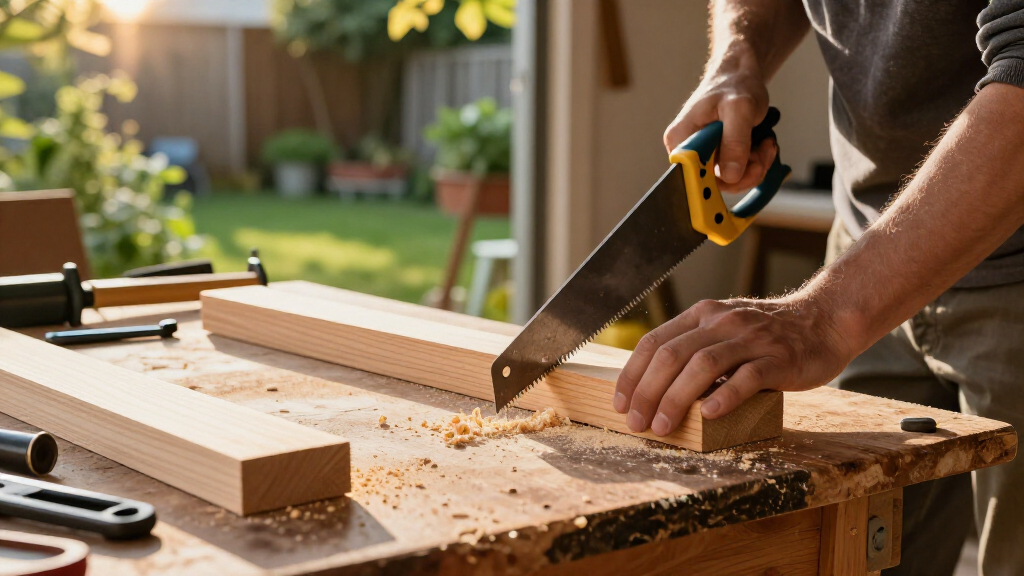
I ranked these saws around the jobs implied by small cuts: controlled trimming, craft work, flush cuts, and cutting small pieces without a long blade getting in the way. I compared blade length and tooth pitch, whether the saw uses a pull stroke or push stroke, whether it offers one or multiple cutting edges, and how well its design matches a specific task. A compact dedicated saw can be easier to place and control, while a multi-blade tool earns its place when the buyer genuinely needs different blade types.
The ranking favors useful precision and a clear fit for small work over sheer versatility or outdoor reach. I also weighed setup, storage, and the tradeoffs of specialized designs: a flush-cut saw excels at one kind of trim but is less adaptable, while a folding pruning saw is portable but not intended for delicate finish cuts. Products with a distinct role remain lower when that role is less central to small indoor cuts.
| hand saws for small cut | Handle material |
|---|---|
| 14-Inch Pro Hand Saw | Thermoplastic rubber (TPR) |
| LitKiwi Model Craft Hand Saw K | — |
| TOOLAN 8-in-1 Multi-Blade Hand | Plastic |
| 6-Inch Japanese Pull Saw | Beechwood |
| ValueMax 8-in-1 Multi-Blade Ha | Thermoplastic elastomer (TPR) |
| SUIZAN 5-Inch Japanese Flush C | Wood |
| Jorgensen Japanese Pull Saw 7. | — |
| REXBETI 11-Inch Folding Prunin | Rubber-coated polymer |
| RUITOOL 6-Inch Japanese Double | Beechwood |
| 2-Pack Japanese Pull Saw | Wood |
Factors to Consider When Choosing Hand Saws For Small Cuts
Before choosing a saw, match its cutting action and blade shape to the material and the space around the cut. A compact blade is not automatically the right choice: tooth layout, clearance, and the cut’s finish can matter more than length alone. These factors help separate a fine trimming tool from a general-purpose or outdoor saw.
Match Tooth Pitch to the Finish You Need
Tooth pitch affects both how quickly a saw removes material and how cleanly it can leave an edge. Finer teeth generally suit small, delicate cuts where a rough edge would mean extra sanding or fitting, while a coarser pattern can make quicker work of larger or softer stock. A double-edge blade, such as a 14/17 TPI design, gives you two cutting options, but you still need to choose the side that suits the material and task. A frequent mistake is treating a higher tooth count as universally better; very fine teeth may cut slowly when the work calls for speed. Start with the finish you need, then pick the tooth pitch that gets there without forcing the saw.
Choose Pull or Push Action for Your Working Space
Japanese pull saws cut as you draw the blade toward yourself, which can make it easier to guide a thin blade through controlled work. Their thinner blades can be useful when the cut needs accuracy, but they call for a light touch rather than force. A conventional push saw works on the forward stroke and may feel more familiar to buyers accustomed to Western-style saws. The choice also affects how you position your body and support the workpiece, especially near a wall or in a tight corner. Try to match the stroke to the space where you will cut, not just to a general idea that one style is easier.
Decide Whether You Need a Flush-Cut Blade
A flush-cut saw is designed to trim material that stands proud of a surface, such as a dowel end, without the blade’s teeth digging into the surrounding face. That purpose differs from cutting a board to length or shaping a craft piece, so a dedicated flush saw may leave other jobs uncovered. Check whether the blade can flex or be positioned flat against the work and whether its teeth are intended for that contact. One common error is pressing a standard saw flat against a finished surface and expecting it to cut without marking it. If flush trimming is occasional, a versatile saw may be enough; if it is frequent, a purpose-built design can reduce damage and cleanup.
Balance Blade Length Against Control and Reach
A shorter blade is easier to maneuver around small parts and in restricted spaces, but it also has less cutting reach per stroke. Longer blades can be helpful for larger stock or branches, yet may feel awkward when the workpiece itself is small. Think about both the dimensions of the material and the room needed to move the handle. For small indoor cuts, buyers can overestimate how much blade they need and end up with less control than the task calls for. For outdoor pruning, the opposite mistake is choosing a compact craft saw that is poorly suited to branches.
Buy Blade Changes Only If Your Tasks Require Them
Multi-blade saws and craft kits can cover different materials or cut shapes without asking you to buy a separate tool for each job. That flexibility has a cost in setup: blades need to be selected, changed, and stored safely, and an unused assortment adds little value. Check how clearly the blades are distinguished and whether the change mechanism fits your tolerance for swapping parts mid-task. If most of your work is one repeated kind of cut, a dedicated saw is usually simpler to keep ready. If your projects vary widely, a kit may earn its extra complexity.
Consider Storage, Maintenance, and the Material
Fine-toothed blades can be vulnerable to damage if they are stored loose with other tools, so consider whether the saw folds, comes with blade storage, or needs a separate case. Keep the blade clean and dry, and avoid twisting it through a cut, since a thin blade is more likely to bend than a heavier general-purpose one. Material also changes what a small-cut saw needs to do: a tool suited to clean woodworking is not automatically suited to pruning or mixed materials. Before buying, identify the material you cut most and where the saw will live between jobs. A little attention to storage and care can matter more to blade life than choosing the most feature-rich design.
Frequently Asked Questions
Is a Japanese pull saw a good choice for a beginner making small cuts?
It can be, especially when the work calls for a controlled cut in a small piece, but its pull-stroke action may feel unfamiliar at first. Let the teeth do the cutting instead of pushing hard, and support the work securely so it does not move. A short blade can make placement easier, though a double-edge model asks you to choose the right tooth pitch before starting. If you expect to cut branches or prefer a familiar forward stroke, a different saw style may suit you better. For small woodworking tasks, the main adjustment is learning to guide rather than force the blade.
Should I choose a double-edge saw or a multi-blade kit?
Choose a double-edge saw when two tooth pitches would cover most of your work and you want them ready on one tool. A multi-blade kit makes more sense when projects call for distinct blade types or shapes, particularly for varied craft tasks. The kit’s flexibility brings extra decisions and blade storage, so it is less convenient if you repeat the same cut often. Think about how many different jobs you actually do in a typical month, not how many a kit could handle. For a narrow set of woodworking cuts, the double-edge option is often the simpler match.
Can I use a flush-cut saw for ordinary small cuts?
You can use one for some small cuts, but its design is focused on trimming material level with a surface. That makes it less of a general-purpose substitute for a compact crosscut or craft saw. Check the blade’s flexibility and tooth arrangement before using it on a task outside flush trimming, since those details affect control and the cut edge. If most of your jobs involve dowels, plugs, or protruding joints, the specialization can be useful. For varied cuts, a general-purpose small saw is likely to cover more tasks.
Is a folding pruning saw suitable for small woodworking cuts?
A folding pruning saw is better suited to branches and portable outdoor cutting than to fine indoor woodworking. Its longer blade and pruning-oriented purpose make it a different choice from the short Japanese saws in this roundup. It may handle a rough cut on a small piece of wood, but buyers seeking a neat edge or close control should look at a saw designed for that work. Choose it when cutting live or woody growth is the main task and safe storage matters. Do not select it just because it folds if precision is the priority.
What should I pick if I only need one saw for small home projects?
Start by listing the cuts you expect to make most: trimming small stock, cutting craft pieces, or removing material flush to a face. For varied small woodworking tasks, a compact double-edge Japanese saw offers more range than a dedicated flush-cut model. If your projects regularly involve several materials or cutting shapes, a blade kit may be a better fit despite the added setup. Buyers who mostly trim dowels or plugs should prioritize a flush-cut design instead. The best one-saw choice is the tool that covers your repeated jobs, not the one with the longest feature list.
Conclusion
For the broadest fit across small woodworking cuts, I recommend the 6-Inch Japanese Pull Saw, SK5 Steel, Double-Edge 14/17 TPI as best overall: it pairs a compact format with two tooth pitches. For best value in flexibility, the LitKiwi craft kit is the pick for buyers who will use its different blades rather than leave them stored away. The best premium-style dedicated choice for close trimming is the SUIZAN five-inch flush-cut saw, while the LitKiwi kit is also my best choice for beginners doing varied craft work who want several blade options. For specific needs, choose the Jorgensen flexible-blade saw for flush cuts, the REXBETI folding saw for portable pruning, or the TOOLAN or ValueMax multi-blade saws when quick blade changes matter. Match the tool to your most frequent cut, and you can avoid paying in space, setup, or control for features you rarely use.
Halloween Picks
halloween
As an affiliate, we earn on qualifying purchases.