For a pellet grill for smoking brisket, I rank the Traeger Woodridge Pro as the best overall choice for its large cooking area and WiFIRE controls, while the recteq Flagship 1600 stands out for cooks who want room for several briskets and the Pit Boss 700 FB2 for buyers seeking a simpler, more accessible setup. The main tradeoffs are cooking capacity, temperature management, and footprint: a large grill handles brisket comfortably but needs more space, while a compact model can limit brisket size and placement. Features such as Wi-Fi can help monitor a long cook, but they do not replace sound fire management or a reliable thermometer. I compare all 15 options by how well their design suits low-and-slow brisket cooking, as well as their usability and versatility. Read on for the full breakdown and guidance on matching a grill to your cooking habits.

Get the little things that make your day delivered free with Prime
- Fast, free delivery on millions of items
- Prime Video, Amazon Music and more included
- Member-only deals all year
Complete the kit


Key Takeaways
- The Woodridge Pro leads for most brisket cooks because its 970-square-inch cooking area and WiFIRE controls offer a useful balance of room and monitoring without moving into the largest-grill category.
- The Flagship 1600 and RT-2500 BFG are capacity-first choices for cooking multiple briskets or feeding a crowd, but their larger footprints make less sense for occasional cooks with limited patio space.
- Wi-Fi is useful for long cooks, not a substitute for temperature checks. Models such as the recteq DualFire 1200 and Pit Boss Navigator 850 add remote monitoring, while a separate probe remains a sound way to check brisket doneness.
- Compact grills have a clear brisket-size tradeoff. The Pit Boss 150 Portable, recteq Bullseye models, and smaller Z GRILLS are easier to fit or move, but their cooking areas may restrict brisket size and placement.
- High-heat versatility separates some grills from smoking-first options. The Bullseye models and DualFire offer a broader hot-cooking role, while dedicated large smokers such as the Weber Smoque XL prioritize room for low-and-slow cooking.
| Z GRILLS VC-700D6 Electric Pellet Grill and Smoker |  | Best for Long, Steady Brisket Cooks | Cooking area: 697 sq. in. | Temperature range: 180°F–450°F | Temperature control: PID 3.0 | VIEW ON AMAZON | See Our Full Breakdown |
| recteq Bullseye Deluxe 2.0 RT-380BD Wi-Fi Pellet Grill and Smoker |  | Best for Brisket with High-Heat Finishing | Temperature range: 200°F–1000°F | Temperature control: PID | Connectivity: Dual-band Wi-Fi | VIEW ON AMAZON | See Our Full Breakdown |
| Traeger Pro Series 22 Wood Pellet Grill and Smoker, 572 sq. in. |  | Best for Straightforward Brisket Smoking | Cooking area: 572 sq. in. | Temperature range: 180°F–450°F | Temperature accuracy: ±15°F | VIEW ON AMAZON | See Our Full Breakdown |
| recteq DualFire 1200 Wood Pellet Smoker Grill |  | Best for Smoking and Grilling at the Same Time | Cooking chambers: 2 | Temperature range: 180°F–700°F | Temperature control: PID algorithm | VIEW ON AMAZON | See Our Full Breakdown |
| Traeger Woodridge Pro Wood Pellet Grill and Smoker, 970 sq. in., WiFIRE |  | Best for Large Brisket Gatherings | Cooking area: 970 sq. in. | Temperature range: 180°F–500°F | Connectivity: WiFIRE app control | VIEW ON AMAZON | See Our Full Breakdown |
| recteq RT-B380 Bullseye Wood Pellet Grill and Smoker | 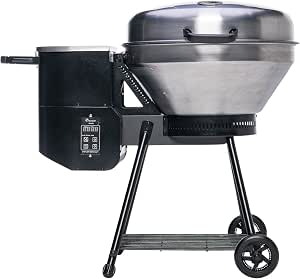 | Best for High-Heat Versatility | Cooking area: 380 sq. in. | Maximum temperature: 749°F | Hopper capacity: 15 lb | VIEW ON AMAZON | See Our Full Breakdown |
| Pit Boss 700 FB2 Wood Pellet Grill and Smoker |  | Best Value for Large Brisket Cooks | Cooking area: 747 sq. in. | Temperature range: 180°F–500°F | Direct flame searing: Up to 1,000°F | VIEW ON AMAZON | See Our Full Breakdown |
| recteq Flagship 1600 Wood Pellet Grill and Smoker |  | Best Premium for Multiple Briskets | Cooking area: 1,667 sq. in. | Temperature range: 180°F–700°F | Hopper capacity: 40 lb | VIEW ON AMAZON | See Our Full Breakdown |
| Z GRILLS ZPG-450A2 Wood Pellet Grill and Smoker |  | Best for Straightforward Temperature Control | Cooking area: 459 sq. in. | Controller: PID V3.0 | Fuel: Wood pellets | VIEW ON AMAZON | See Our Full Breakdown |
| Pit Boss 150 Portable Wood Pellet Grill and Smoker |  | Best Portable Pick for Small Brisket Cooks | Cooking surface: 256 sq. in. | Temperature range: 180°F–500°F | Flame broiler temperature: Up to 1,000°F | VIEW ON AMAZON | See Our Full Breakdown |
| Weber Smoque XL 34-Inch Pellet Smoker, Black |  | Best for Smoke-Focused Brisket | Cooking temperature: Up to 500°F | Controller: Rapid React PID with digital LCD | Food probes: 2 included; 2 integrated probe ports | VIEW ON AMAZON | See Our Full Breakdown |
| Z GRILLS 8-in-1 Electric Wood Pellet Grill and Smoker, Model VC-7002C |  | Best Value for Long Cooks | Cooking area: 697 sq. in. | Temperature range: 180°F to 450°F | Cooking functions: 8 | VIEW ON AMAZON | See Our Full Breakdown |
| Brisk It Zelos-450 Wood Pellet Grill and Smoker |  | Best for Hands-Off Brisket Cooking | Cooking area: 450 sq. in. | Temperature range: 180°F to 500°F | Cooking functions: 7-in-1 | VIEW ON AMAZON | See Our Full Breakdown |
| recteq RT-2500 BFG Wi-Fi Pellet Smoker Grill with Grilling Basics Bundle |  | Best for Large Gatherings | Cooking area: 2,535 sq. in. | Temperature control: PID system; maintains temperature within 5°F | Connectivity: Wi-Fi | VIEW ON AMAZON | See Our Full Breakdown |
| Pit Boss Navigator 850 WiFi and Bluetooth Wood Pellet Grill and Smoker |  | Best for Brisket Plus Direct-Flame Searing | Cooking area: 932 sq. in. | Temperature range: 180°F to 500°F | Hopper capacity: 30 lb | VIEW ON AMAZON | See Our Full Breakdown |
| pellet grill for smoking brisket | Cooking area | Temperature range | Weight | Hopper capacity |
|---|---|---|---|---|
| Z GRILLS VC-700D6 Electric Pel | 697 sq. in. | 180°F–450°F | 120 pounds | — |
| recteq Bullseye Deluxe 2.0 RT- | — | 200°F–1000°F | 230 pounds | 18 lb |
| Traeger Pro Series 22 Wood Pel | 572 sq. in. | 180°F–450°F | — | — |
| recteq DualFire 1200 Wood Pell | — | 180°F–700°F | — | — |
| Traeger Woodridge Pro Wood Pel | 970 sq. in. | 180°F–500°F | — | — |
| recteq RT-B380 Bullseye Wood P | 380 sq. in. | — | 70 lb | 15 lb |
| Pit Boss 700 FB2 Wood Pellet G | 747 sq. in. | 180°F–500°F | 119.1 lb | 21 lb |
| recteq Flagship 1600 Wood Pell | 1,667 sq. in. | 180°F–700°F | 230 lb | 40 lb |
| Z GRILLS ZPG-450A2 Wood Pellet | 459 sq. in. | — | 84 lb | — |
| Pit Boss 150 Portable Wood Pel | — | 180°F–500°F | 43.3 lb | 7 lb |
| Weber Smoque XL 34-Inch Pellet | — | — | 110 pounds | — |
| Z GRILLS 8-in-1 Electric Wood | 697 sq. in. | 180°F to 450°F | — | 28 lb |
| Brisk It Zelos-450 Wood Pellet | 450 sq. in. | 180°F to 500°F | 70.5 lb | 12 lb |
| recteq RT-2500 BFG Wi-Fi Pelle | 2,535 sq. in. | — | 500 lb | 53 lb |
| Pit Boss Navigator 850 WiFi an | 932 sq. in. | 180°F to 500°F | — | 30 lb |
More Details on Our Top Picks
Z GRILLS VC-700D6 Electric Pellet Grill and Smoker
For brisket cooks that call for a long stretch at low heat, the VC-700D6 pairs PID 3.0 control with an insulated base and a hopper designed for up to 28 hours of cooking. That runtime can reduce the need to interrupt an overnight smoke to refill pellets, while its two meat probes let you monitor more than one cut without lifting the lid. Its 697 square inches also leave room for a full brisket alongside other food. Compared with the Traeger Pro Series 22, it offers more cooking space and a longer stated hopper runtime; the Traeger lists a temperature accuracy of ±15°F, while no equivalent tolerance is given here. The tradeoff is weight: at 120 pounds, it is not an easy grill to move, and it needs electricity to operate.
Pros:- 697 sq. in. cooking area accommodates a brisket with room for additional food.
- PID 3.0 control, insulated base, and dual meat probes support steady, monitored cooks.
- Hopper is designed for up to 28 hours of cooking, which may reduce refill interruptions.
- Hopper cleanout makes changing pellet types easier.
Cons:- At 120 pounds, it is cumbersome to move frequently.
- Cooking and temperature control depend on an AC power connection.
- The stated temperature range tops out at 450°F, limiting high-heat searing compared with the recteq Bullseye Deluxe 2.0.
Best for: Brisket cooks who want dual-probe monitoring, substantial rack space, and a hopper designed for extended unattended smoking.
Not ideal for: Buyers who need a portable or electricity-free smoker, or who want a stated temperature-accuracy tolerance before choosing.
- Cooking area:697 sq. in.
- Temperature range:180°F–450°F
- Temperature control:PID 3.0
- Meat probes:2
- Hopper runtime:Up to 28 hours
- Cooking functions:8-in-1
- Power source:AC
- Weight:120 pounds
Our verdict“Choose the VC-700D6 if extended brisket cooks, dual probes, and generous cooking space matter more than portability.”
recteq Bullseye Deluxe 2.0 RT-380BD Wi-Fi Pellet Grill and Smoker
The Bullseye Deluxe 2.0 stands out for cooks who want a pellet grill to smoke brisket and then reach far beyond typical smoking temperatures: its range runs from 200°F to 1000°F. PID control and dual-band Wi-Fi support temperature management, while the stainless steel construction and rainproof vented dome suit outdoor use. Compared with the Traeger Woodridge Pro, which offers a larger 970-square-inch cooking area and Super Smoke mode, the Bullseye is more compelling for high-heat finishing than for hosting several cuts at once. The supplied information does not state its cooking area, so I would not pick it for a brisket-heavy gathering without confirming the usable grate space. Its 230-pound weight also makes relocation difficult, and its 200°F lower limit is higher than the 180°F offered by the Z GRILLS VC-700D6.
Pros:- 200°F–1000°F temperature range supports smoking and high-heat searing.
- PID temperature control and dual-band Wi-Fi provide connected cooking management.
- Stainless steel construction and a rainproof vented dome are suited to outdoor use.
- 18 lb hopper capacity is specified.
Cons:- At 230 pounds, it is difficult to reposition.
- The provided product data does not specify cooking area, making capacity hard to judge for brisket.
- Its 200°F minimum is higher than the 180°F starting points of the Traeger Pro Series 22 and Z GRILLS VC-700D6.
Best for: Brisket cooks who want one pellet grill for smoking and very high-heat finishing, with app-connected temperature control.
Not ideal for: Buyers who need a clearly specified large cooking surface, a lower smoking floor, or a grill they can move around easily.
- Temperature range:200°F–1000°F
- Temperature control:PID
- Connectivity:Dual-band Wi-Fi
- Hopper capacity:18 lb
- Material:Stainless steel
- Dome:Rainproof, vented
- Fuel type:Wood pellets
- Weight:230 pounds
Our verdict“Pick the Bullseye Deluxe 2.0 if high-heat finishing matters as much as smoking and its unspecified cooking capacity fits your needs.”
Traeger Pro Series 22 Wood Pellet Grill and Smoker, 572 sq. in.
The Pro Series 22 is a straightforward choice for brisket cooks who want a familiar low-and-slow range without paying for app connectivity or specialized smoke modes. Its 180°F–450°F range, 18 lb hopper, and two wired meat probes cover the basics for monitoring a long cook, while 572 square inches provide space for a brisket and some sides. The tradeoff is its ±15°F temperature tolerance: buyers who prioritize tighter stated control may prefer the Z GRILLS VC-700D6, which lists PID 3.0 control and an insulated base, though it gives no accuracy tolerance. The Woodridge Pro has far more area at 970 square inches and adds WiFIRE and Super Smoke, but this model is the simpler fit for cooks who do not need those extras. It still needs electricity and pellets, and the supplied specs identify a 2014 manufacture year.
Pros:- 180°F–450°F range covers low-and-slow brisket smoking and everyday grilling.
- Two wired meat probes support monitoring without opening the lid.
- 572 sq. in. cooking area fits a brisket and additional food.
- Six cooking modes add flexibility for meals beyond brisket.
Cons:- Temperature may vary by up to ±15°F, a stated limitation for cooks focused on tight control.
- Requires both wood pellets and an electrical connection.
- Offers less cooking area and fewer connected features than the Traeger Woodridge Pro.
Best for: Brisket beginners who want a practical smoking range, included probes, and enough grate space for a single large cook.
Not ideal for: Cooks seeking app control, a dedicated higher-smoke mode, or a stated temperature tolerance tighter than ±15°F.
- Cooking area:572 sq. in.
- Temperature range:180°F–450°F
- Temperature accuracy:±15°F
- Pellet hopper capacity:18 lb
- Cooking modes:Grill, smoke, bake, roast, braise, and BBQ
- Meat probes:2 wired probes included
- Construction:Powder-coated steel body with porcelain-coated grates
- Manufacture year:2014
Our verdict“Choose the Pro Series 22 for uncomplicated brisket smoking if its stated temperature variation and lack of app control suit your priorities.”
recteq DualFire 1200 Wood Pellet Smoker Grill
The DualFire’s defining advantage is its two cooking chambers, letting a brisket smoke low and slow while another chamber handles hotter cooking. Its 180°F–700°F range and Wi-Fi-connected PID control cover a wide span of cooking styles, and stainless steel construction is a draw for buyers seeking a substantial outdoor unit. That split setup gives it a different purpose from the Traeger Woodridge Pro, which offers 970 square inches in one grill and Super Smoke mode, or the Bullseye Deluxe 2.0, whose range reaches a much higher 1000°F. The DualFire may suit mixed-temperature cooks better than either, but the supplied data gives no dimensions or cooking capacity, making it hard to judge whether a full brisket fits comfortably. It also needs considerable outdoor space, so it is a poor fit for compact patios.
Pros:- Two chambers allow low-and-slow smoking and hotter cooking at the same time.
- 180°F–700°F range supports smoking, searing, and baking.
- Wi-Fi and PID control provide connected temperature management.
- Stainless steel construction is designed for durability.
Cons:- The dual-chamber design may require substantial outdoor space.
- Product data does not provide dimensions or cooking capacity, leaving brisket fit uncertain.
- Its 700°F maximum is below the Bullseye Deluxe 2.0’s stated 1000°F ceiling.
Best for: Outdoor cooks with room for a large grill who want to smoke brisket while using a separate chamber for another temperature or cooking task.
Not ideal for: Buyers with limited patio space or anyone who needs confirmed cooking dimensions and capacity before purchasing.
- Cooking chambers:2
- Temperature range:180°F–700°F
- Temperature control:PID algorithm
- Connectivity:Wi-Fi
- Material:Stainless steel
- Fuel type:Wood pellets
Our verdict“Choose the DualFire if simultaneous cooking in two temperature zones is worth the space and the missing capacity details are acceptable.”
Traeger Woodridge Pro Wood Pellet Grill and Smoker, 970 sq. in., WiFIRE
For cooks serving a crowd, the Woodridge Pro brings 970 square inches of cooking space and a Super Smoke mode aimed at adding more wood-fired flavor. WiFIRE app control and a digital pellet sensor help monitor a long brisket cook and pellet supply, while Keep Warm mode can hold food after smoking. Compared with the Traeger Pro Series 22, it offers substantially more listed cooking area and connected features; the Pro Series 22 is the simpler, smaller option for a single brisket. The Woodridge Pro’s 180°F–500°F range suits smoking and general grilling, but it does not approach the Bullseye Deluxe 2.0’s 1000°F ceiling for high-heat finishing. The supplied data also does not state hopper capacity or temperature accuracy, so buyers who prioritize those details should compare carefully. Pellet fuel is required.
Pros:- 970 sq. in. cooking area offers substantial room for brisket and additional food.
- Super Smoke mode is designed to add wood-fired flavor.
- WiFIRE app control and a digital pellet sensor support remote cook and fuel monitoring.
- Keep Warm mode and the EZ-Clean Grease & Ash Keg add holding and cleanup functions.
Cons:- Requires wood pellets for operation.
- The supplied specifications do not state hopper capacity or temperature accuracy.
- Its 500°F maximum is far below the recteq Bullseye Deluxe 2.0’s 1000°F range.
Best for: Hosts who smoke brisket alongside other food and want app monitoring, a pellet sensor, and a dedicated Super Smoke mode.
Not ideal for: Buyers with limited space, those who want a specified hopper capacity or temperature accuracy, or cooks seeking extreme searing heat.
- Cooking area:970 sq. in.
- Temperature range:180°F–500°F
- Connectivity:WiFIRE app control
- Smoke feature:Super Smoke mode
- Pellet monitoring:Digital pellet sensor
- Holding feature:Keep Warm mode
- Cleanup feature:EZ-Clean Grease & Ash Keg
- Warranty:10-year limited
Our verdict“Pick the Woodridge Pro for crowd-sized brisket cooks and connected monitoring if you value capacity and smoke features over extreme searing heat.”
recteq RT-B380 Bullseye Wood Pellet Grill and Smoker
The RT-B380 Bullseye is the pick here for brisket cooks who also want a pellet grill that can reach intense searing temperatures. Its 380-square-inch cooking area is a tighter fit for a large brisket than the Pit Boss 700 FB2, but the Bullseye’s stated maximum of 749°F gives it a broader high-heat range for cooking after the smoke. For the brisket itself, the smaller surface favors a single brisket rather than multiple large cuts or a crowd-sized spread.
A 15-pound hopper and stainless steel components suit a freestanding setup, while the rainproof venting is a useful detail for outdoor storage. The tradeoff is that the provided details do not list Wi-Fi, a meat probe, or a specific low-temperature range. I’d choose it for versatility and searing, not for maximum brisket capacity or remote monitoring.
Pros:- 749°F maximum temperature supports high-heat searing alongside smoking.
- 380 square inches suits a single brisket and everyday grilling.
- Stainless steel components and rainproof venting are suited to outdoor use.
- 15-pound pellet hopper offers more capacity than the portable Pit Boss 150’s 7-pound hopper.
Cons:- Cooking area is substantially smaller than the Pit Boss 700 FB2’s 747 square inches.
- The provided product details do not specify an included meat probe or remote control.
- No low-end temperature range is listed, making low-and-slow control harder to compare from the supplied specifications.
Best for: Brisket cooks who want a compact freestanding pellet grill that can also handle high-heat searing.
Not ideal for: Cooks who regularly smoke multiple briskets or want documented Wi-Fi control, an included meat probe, or a large cooking surface.
- Cooking area:380 sq. in.
- Maximum temperature:749°F
- Hopper capacity:15 lb
- Fuel:Wood pellets
- Materials:Stainless steel
- Weight:70 lb
- Dimensions:22.5 in. D x 40 in. W x 36 in. H
Our verdict“Choose the RT-B380 if you want brisket-smoking capability with unusually high searing heat, but skip it if capacity or documented monitoring features matter more.”
Pit Boss 700 FB2 Wood Pellet Grill and Smoker
For brisket buyers who need room to work, the Pit Boss 700 FB2 makes a stronger case than the compact RT-B380: its 747 square inches can accommodate a large cut with room left for sides or additional food. The 21-pound hopper and included meat probe are practical for longer cooks, while two probe ports leave space to add another probe. Its 180°F–500°F controller range covers low-and-slow smoking, and the Flame Broiler adds direct searing up to 1,000°F.
The tradeoff is its 119.1-pound weight; this is a substantial freestanding grill, not a casual carry-around option like the Pit Boss 150. It also supplies only one probe despite having two ports. I’d rank it for brisket capacity and useful basics, rather than compact storage or app-based control, which the recteq Flagship 1600 offers.
Pros:- 747 square inches provide generous room for brisket and additional food.
- 21-pound hopper supports longer smoking sessions than the Pit Boss 150’s 7-pound hopper.
- Included meat probe and two probe ports aid cook monitoring.
- Flame Broiler offers direct searing up to 1,000°F.
Cons:- At 119.1 pounds, it is difficult to move frequently.
- Only one meat probe is included despite having two ports.
- The listed controller range tops out at 500°F, below the RT-B380’s stated 749°F maximum.
Best for: Home brisket cooks who want room for a large cut, a useful hopper, and an included probe without stepping up to an oversized grill.
Not ideal for: Buyers who need a portable grill, Wi-Fi control, or two included probes for monitoring multiple cuts.
- Cooking area:747 sq. in.
- Temperature range:180°F–500°F
- Direct flame searing:Up to 1,000°F
- Hopper capacity:21 lb
- Cooking racks:2 porcelain-coated steel racks
- Meat probes:2 ports; 1 probe included
- Weight:119.1 lb
- Warranty:5 years
Our verdict“Pick the 700 FB2 for a roomy brisket setup with an included probe and direct searing, unless frequent portability or Wi-Fi control is a priority.”
recteq Flagship 1600 Wood Pellet Grill and Smoker
The recteq Flagship 1600 is the capacity-and-control choice in this group. Its 1,667 square inches give brisket cooks far more room than the Pit Boss 700 FB2’s 747 square inches, making it better suited to multiple large cuts or a full cook for guests. The 40-pound hopper is listed for up to 40 hours of cooking, and PID control is specified to hold temperatures within 5°F—useful when a long smoke calls for steady heat. Wi-Fi app control adds a way to manage the grill without staying beside it.
That scale comes with real costs: the grill weighs 230 pounds, and its large footprint is excessive for occasional single-brisket cooks. The 180°F–700°F range is versatile, but the Pit Boss 700 FB2 has a stated direct-flame feature, while the Flagship’s supplied details do not list one. I’d choose this for volume and temperature management, not easy relocation.
Pros:- 1,667 square inches offer far more brisket capacity than the Pit Boss 700 FB2.
- 40-pound hopper is specified for up to 40 hours of cooking.
- PID control is specified to maintain temperatures within 5°F.
- Wi-Fi app control and a 180°F–700°F range support varied cooking tasks.
Cons:- 230-pound weight makes relocation difficult.
- Its large capacity may be unnecessary for cooks who usually smoke one brisket.
- The supplied specifications do not list a direct-flame searing feature.
Best for: Frequent brisket hosts and cooks who need space for multiple large cuts, long smoking sessions, and app-based temperature management.
Not ideal for: Small patios, occasional single-brisket cooks, or anyone who needs a grill that is easy to move and store.
- Cooking area:1,667 sq. in.
- Temperature range:180°F–700°F
- Hopper capacity:40 lb
- Cooking time:Up to 40 hours with a full hopper
- Temperature control:PID; maintains temperature within 5°F
- Connectivity:Wi-Fi and recteq app
- Material:Stainless steel
- Weight:230 lb
Our verdict“Choose the Flagship 1600 for high-volume brisket smoking with precise app-enabled control, provided you have space for a very heavy grill.”
Z GRILLS ZPG-450A2 Wood Pellet Grill and Smoker
The Z GRILLS ZPG-450A2 is a sensible middle ground for someone smoking one brisket at a time. Its 459-square-inch cooking area is roomier than the recteq RT-B380’s 380 square inches, but it falls short of the Pit Boss 700 FB2 if you want space for extra cuts or a large spread. The PID V3.0 controller automatically adjusts fuel and airflow, giving the cook a hands-off approach to temperature management; the included meat probe adds a way to follow the brisket’s internal temperature.
A foldable shelf keeps tools close, and the included rain cover helps protect the grill when stored outdoors. Unlike the Flagship 1600, the supplied details do not specify Wi-Fi or a large hopper capacity, so this is a more basic monitoring setup for a smaller cook. At 84 pounds, it is also not especially light despite its wheels. I’d favor it for useful included accessories and automated control, not portability or high-volume brisket cooking.
Pros:- PID V3.0 automatically adjusts fuel and airflow for temperature control.
- 459 square inches offer more cooking room than the recteq RT-B380.
- Included meat probe helps monitor the brisket during a cook.
- Rain cover and foldable shelf add useful storage and prep convenience.
Cons:- Cooking area is smaller than the Pit Boss 700 FB2’s 747 square inches.
- At 84 pounds, it is heavy to lift or transport.
- The supplied specifications do not list hopper capacity or Wi-Fi connectivity.
Best for: First-time or occasional brisket smokers who want automatic temperature adjustments, an included probe, and a rain cover.
Not ideal for: Cooks who need a large multi-brisket surface, app connectivity, or a lightweight grill to carry between locations.
- Cooking area:459 sq. in.
- Controller:PID V3.0
- Fuel:Wood pellets
- Included components:Assembly gloves, grease bucket, meat probe, pellet grill, rain cover
- Material:Alloy steel
- Weight:84 lb
- Dimensions:28 in. D x 45 in. W x 49 in. H
Our verdict“Choose the ZPG-450A2 for a single-brisket cook with automatic temperature control and useful included accessories, but look elsewhere for more capacity or app monitoring.”
Pit Boss 150 Portable Wood Pellet Grill and Smoker
The Pit Boss 150 earns its place as the portable choice, not as the main brisket workhorse. Its 256-square-inch surface is much smaller than the Z GRILLS ZPG-450A2’s 459 square inches, so it suits a small brisket or limited outdoor cooking better than a large cut with ample room around it. A 7-pound hopper also means more frequent attention during a long smoke than the 21-pound hopper on the Pit Boss 700 FB2. The included meat probe and digital temperature control still provide useful basics for a compact setup.
Handles and a latch-lock lid support transport, and the grill’s flame broiler reaches up to 1,000°F for direct searing. That range is a bonus, but it does not offset the limited cooking capacity for brisket. I’d choose this for travel or tight storage when portability matters more than running a long, uninterrupted cook on a full-size cut.
Pros:- Portable design includes handles and a latch-lock lid.
- Included meat probe and digital temperature control support basic cook monitoring.
- Flame broiler offers direct heat up to 1,000°F.
- Automatic startup and cooldown simplify operation.
Cons:- 256 square inches are restrictive for a large brisket or extra food.
- 7-pound hopper may require more frequent attention during a long smoke than the Pit Boss 700 FB2’s 21-pound hopper.
- The portable format has less cooking capacity than the Z GRILLS ZPG-450A2.
Best for: Campers and outdoor cooks who want a carryable pellet grill for smaller brisket portions and occasional smoking.
Not ideal for: People who regularly smoke full-size briskets, cook for a crowd, or want a large hopper for less attention during long sessions.
- Cooking surface:256 sq. in.
- Temperature range:180°F–500°F
- Flame broiler temperature:Up to 1,000°F
- Hopper capacity:7 lb
- Weight:43.3 lb
- Dimensions:24.8 x 18.6 x 14 in.
- Cooking grates:Porcelain-coated steel
- Warranty:5 years
Our verdict“Pick the Pit Boss 150 when transport and compact storage matter most, but choose a larger grill for regular full-size brisket smoking.”
Weber Smoque XL 34-Inch Pellet Smoker, Black
The Weber Smoque XL is the strongest fit here for cooks who put smoke flavor and brisket bark ahead of maximum capacity. Its SmokeBoost setting supports smoke absorption, while the SmoqueVent airflow system is designed to circulate smoke and promote browning. The Rapid React PID controller also addresses a common long-cook annoyance: it heats quickly and recovers after the lid opens, so checking a brisket need not mean a long temperature dip. Two included probes help track meat temperature without relying on a separate thermometer. Compared with the much larger recteq RT-2500 BFG, this is a far more manageable backyard footprint, but its 110-pound weight still makes moving it a chore. It also needs an outlet and pellets, and its listed specs do not give a cooking-area figure, making capacity harder to compare.
Pros:- SmokeBoost setting is aimed at stronger smoke absorption during low-and-slow cooks
- SmoqueVent airflow system supports smoke circulation and browning
- Rapid React PID controller heats quickly and recovers temperature after lid openings
- Two included food probes simplify monitoring a long brisket cook
Cons:- At 110 pounds, it is cumbersome to reposition
- Requires both an electrical outlet and wood pellets
- The supplied specs do not state cooking area, limiting capacity comparisons
Best for: Backyard brisket cooks who prioritize smoke circulation, temperature recovery, and included probes over very large batch capacity.
Not ideal for: Buyers who need to move a grill often, cook for very large gatherings, or want a listed cooking-area figure for planning brisket capacity.
- Cooking temperature:Up to 500°F
- Controller:Rapid React PID with digital LCD
- Food probes:2 included; 2 integrated probe ports
- Fuel and power:Wood pellets; electric
- Dimensions:20.4 x 50.8 x 44.5 inches (D x W x H)
- Weight:110 pounds
- Construction:Porcelain-enameled steel, outer and inner
- Warranty:5 years for cook box; 3 years for specified components
Our verdict“Choose the Smoque XL if smoke-focused features and temperature recovery matter more than easy mobility or clearly stated cooking capacity.”
Z GRILLS 8-in-1 Electric Wood Pellet Grill and Smoker, Model VC-7002C
For brisket, the VC-7002C’s most useful advantage is not its eight cooking functions; it is the combination of a 28-pound hopper and 697 square inches of cooking area. That gives cooks room for a substantial cut and fuel capacity suited to extended smoking, though actual burn time will vary with conditions and settings. PID 3.0 control covers 180°F to 450°F, a range tailored more to smoking and roasting than high-heat searing. The LCD and viewing window make it easier to check progress without lifting the lid, and two probes help monitor the meat. Compared with the Brisk It Zelos-450, this Z GRILLS offers more cooking space and a larger hopper, while the Zelos reaches 500°F and adds app-based cooking assistance. The VC-7002C still needs an outlet, and its 450°F ceiling limits high-heat versatility.
Pros:- 697 square inches of cooking area provides room for a large brisket and additional food
- 28-pound hopper supports extended cooks without frequent refills
- PID 3.0 temperature control covers a useful low-and-slow range
- Includes two meat probes, a viewing window, and a grill cover
Cons:- Temperature tops out at 450°F, below the 500°F ceiling of the Brisk It Zelos-450
- Electric power is required during use
- Eight cooking functions add flexibility but do not replace the need to manage a long brisket cook
Best for: Home cooks who want room for a full brisket, a larger pellet hopper for extended smoking, and included monitoring accessories.
Not ideal for: Cooks who want direct high-heat versatility above 450°F, or who cannot place an electric grill near an outdoor outlet.
- Cooking area:697 sq. in.
- Temperature range:180°F to 450°F
- Cooking functions:8
- Hopper capacity:28 lb
- Temperature control:PID 3.0
- Display:LCD
- Included accessories:Rain cover, 2 meat probes, grease bucket, assembly gloves
- Power and fuel:Electric; wood pellets
- Warranty:3 years
Our verdict“Pick the VC-7002C for generous brisket space and hopper capacity, but choose a hotter-running model if searing range matters.”
Brisk It Zelos-450 Wood Pellet Grill and Smoker
The Zelos-450 is aimed at brisket cooks who want more guidance from the grill during a long smoke. Its AI cooking assistant, app control, and automatic cooking management are its clearest distinction from the more straightforward Weber Smoque XL, which instead emphasizes SmokeBoost and smoke circulation. A 180°F-to-500°F range covers low-temperature smoking as well as hotter cooking, and 450 square inches is workable for a single brisket without the footprint of larger units such as the Pit Boss Navigator 850. The tradeoff is a smaller 12-pound hopper, which gives less fuel capacity than the Z GRILLS VC-7002C’s 28-pound hopper and can mean more attention during an extended cook. The included probe and waterproof cover are useful, but app-supported automation may matter less to cooks who prefer direct manual control.
Pros:- AI assistant and app control provide guidance and remote management during long cooks
- 180°F to 500°F temperature range supports both smoking and hotter cooking
- 450 sq. in. cooking area suits a single brisket without a very large grill footprint
- Includes a meat probe and waterproof cover
Cons:- 12-pound hopper is smaller than the Z GRILLS VC-7002C’s 28-pound capacity
- 450 sq. in. cooking area is less suited to multiple large briskets
- Requires both electric power and wood pellets
Best for: Brisket beginners and busy cooks who want app-based guidance, automatic cooking management, and room for one main cut.
Not ideal for: People smoking multiple large cuts at once, cooks seeking a large hopper for fewer pellet checks, or buyers who prefer simple manual controls.
- Cooking area:450 sq. in.
- Temperature range:180°F to 500°F
- Cooking functions:7-in-1
- Hopper capacity:12 lb
- Control features:PID control, AI cooking assistant, app control, automatic cooking management
- Included components:Meat probe, waterproof cover
- Dimensions:29.8 x 46 x 38.8 inches (D x W x H)
- Weight:70.5 lb
- Fuel and power:Wood pellets; electric
Our verdict“Choose the Zelos-450 if app guidance and hands-off management matter more than large-batch capacity or a bigger hopper.”
recteq RT-2500 BFG Wi-Fi Pellet Smoker Grill with Grilling Basics Bundle
When brisket is part of a large cookout rather than the only item on the smoker, the RT-2500 BFG’s 2,535 square inches of cooking area and three racks put it in a different capacity class from the Pit Boss Navigator 850. Its 53-pound hopper also gives it substantially more pellet storage than the Navigator’s 30-pound hopper, a useful match for long sessions and multiple foods. The PID system is specified to maintain temperature within 5°F, while Wi-Fi control lets the cook manage settings remotely. Two meat probes support monitoring, but the supplied information does not state a temperature range, so I would not choose it based on a particular low-end smoking temperature or searing ceiling. At 500 pounds, it is also a fixed-location appliance, not a grill to wheel around routinely. Its scale makes sense for frequent big batches, not casual single-brisket cooks.
Pros:- 2,535 sq. in. of cooking area accommodates large batches across three racks
- 53-pound hopper provides substantial pellet capacity for extended sessions
- Wi-Fi control and PID temperature management support remote adjustments and steady cooking
- Includes two meat probes and three racks
Cons:- At 500 pounds, it is difficult to relocate and needs a dedicated space
- Its very large cooking area is excessive for many cooks who make one brisket at a time
- The supplied specs do not state a temperature range for judging low-and-slow or searing limits
Best for: Hosts, caterers, and serious backyard cooks who regularly smoke brisket alongside food for large groups.
Not ideal for: Small patios, buyers who need to move a grill often, or cooks who want a compact setup for occasional single-brisket smoking.
- Cooking area:2,535 sq. in.
- Temperature control:PID system; maintains temperature within 5°F
- Connectivity:Wi-Fi
- Hopper capacity:53 lb
- Racks:3
- Meat probes:2
- Fuel:Wood pellets
- Weight:500 lb
- Material and color:Stainless steel; silver
Our verdict“Choose the RT-2500 BFG for frequent large-group brisket cooks, but skip its scale if you mostly smoke one cut at a time.”
Pit Boss Navigator 850 WiFi and Bluetooth Wood Pellet Grill and Smoker
The Navigator 850 balances brisket capacity with features for cooks who want to finish other foods over direct flame. Its 932 square inches of cooking space gives it more room than the 697-square-inch Z GRILLS VC-7002C, while the 30-pound hopper is close to that model’s 28-pound capacity for long pellet cooks. Wi-Fi and Bluetooth add remote control options, and two included probes help track meat temperature. The distinctive Flame Broiler Lever adds direct-flame searing, so this grill can handle more than low-and-slow smoking without relying only on indirect heat. That versatility comes with a tradeoff: direct-flame searing is a separate feature from the standard 180°F-to-500°F temperature range, and the grill still needs electricity and hardwood pellets. For a brisket-only buyer, that searing hardware may be less valuable than a smoke-focused design.
Pros:- 932 sq. in. cooking area provides more room than the Z GRILLS VC-7002C
- 30-pound hopper supports extended pellet cooking
- Wi-Fi and Bluetooth allow connected control
- Flame Broiler Lever offers direct-flame searing, with two probes included
Cons:- Requires an electrical outlet and hardwood pellets
- Direct-flame searing is a separate feature rather than the same as standard temperature control
- Its multi-use searing capability may be unnecessary for cooks focused only on smoking brisket
Best for: Backyard cooks who smoke brisket regularly but also want a roomy grill for direct-flame searing and other cooking styles.
Not ideal for: Brisket purists seeking a smoker focused mainly on smoke delivery, or buyers who cannot supply an outlet and hardwood pellets.
- Cooking area:932 sq. in.
- Temperature range:180°F to 500°F
- Hopper capacity:30 lb
- Connectivity:Wi-Fi and Bluetooth
- Meat probes:2 included
- Searing feature:Flame Broiler Lever for direct-flame searing
- Fuel:100% all-natural hardwood pellets
- Warranty:5 years
Our verdict“Pick the Navigator 850 if brisket smoking is only part of your routine and you will use its added capacity and direct-flame searing.”

How We Picked
I ranked these grills around the demands of smoking brisket: maintaining low heat over a long cook, fitting a full brisket without awkward placement, and giving the cook practical ways to monitor and manage the session. I also weighed cooking-area claims against the real space a large cooker needs, along with controls, construction, cleaning demands, and whether the grill has useful roles beyond smoking. A large surface area helped only when it came with a sensible fit for the intended buyer; a compact or high-heat design could still earn a place, but not as the default pick for full-size brisket.
The ranking favors options that balance brisket capacity, temperature control, and everyday usability. That puts the Woodridge Pro ahead as a broad-use choice, while the Flagship 1600 and RT-2500 BFG suit higher-volume cooking rather than every backyard. Smaller and portable models rank lower for brisket because the cooking area can constrain placement, not because they cannot smoke food. I also distinguish between feature-rich convenience and core cooking needs: Wi-Fi and multiple cooking modes are helpful, but they do not outweigh fit, temperature management, and a grill’s match to the buyer’s space.
Factors to Consider When Choosing Pellet Grill For Smoking Brisket
Before choosing a pellet grill for brisket, I would start with the size of the briskets you plan to cook and the space available for the grill. Then weigh how much remote monitoring and grilling versatility matter against the extra footprint, cleanup, and operating complexity that can come with a larger or more feature-packed cooker. These broader choices can matter more to a satisfying purchase than a long feature list.
Match Cooking Area to Your Brisket and Serving Plan
Look beyond the headline cooking-area number and picture the brisket lying flat with room for air to circulate. A surface that technically fits one brisket may feel cramped if you also want a water pan or a second cut, and a tight fit can limit where heat and smoke move around the meat. If you cook for a household, a medium-sized grill may be easier to store and run than a large-capacity model. For gatherings or multiple briskets, extra rack space can save you from cooking in batches. Measure the grill’s planned footprint at home as well as its grate, since big cookers need space for safe placement, access, and cleaning.
Prioritize Steady Low Heat Over a Long Feature List
Brisket takes hours, so dependable low-temperature control matters more than a wide range of cooking modes. Pellet grills use automated feed systems to manage heat, but wind, cold, fuel quality, and lid openings can still affect a cook. A controller with clear settings and useful alerts can make adjustments easier, particularly if you are learning the process. Do not treat app access as proof of temperature accuracy; check the grill’s displayed temperature against a separate probe when you can. If your cooking area has large temperature swings, placement and a suitable cover can matter as much as extra connectivity.
Decide Whether Remote Monitoring Fits Your Routine
Wi-Fi can help you follow pit temperature without standing beside the grill, which is handy during an overnight brisket cook. It does not remove the need to check the meat’s tenderness or respond when conditions change. Think about where the grill will sit and whether your network reaches that spot before paying more for connected controls. A clear onboard display and simple adjustment process may be more useful than app features you rarely open. Plan for a separate food probe if the grill’s included monitoring setup does not give you the readings you want.
Balance Smoker Capacity Against Patio Space
A larger cooker can make brisket placement easier, but its size affects more than storage: it can be harder to move, clean, cover, and position safely. Measure doorways and paths if the grill must pass through a narrow route, and leave room to reach the hopper and ash areas. Compact models suit small patios and occasional cooking, though they may limit brisket size or prevent cooking multiple cuts at once. Portable designs bring flexibility for trips but often ask for compromises in cooking area and convenience. Pick capacity for the cooks you actually plan, not a rare event that leaves you maintaining a much larger grill year-round.
Account for Pellet Use, Ash, and Grease Cleanup
Long brisket sessions consume fuel over many hours, and actual pellet use can vary with weather, temperature settings, and how often the lid is opened. Keep dry pellets on hand and avoid leaving them exposed to moisture, which can cause feeding problems. Before buying, check how the grill handles grease and ash; easy access can make routine cleanup less of a chore. A grease tray liner may simplify one part of maintenance, but it does not replace cleaning the fire pot and cooking chamber as directed. The better choice is a cooker whose upkeep fits your schedule, not simply the one with the most cooking modes.
Pay for Versatility Only If You Will Use It
Some pellet grills are designed to smoke low and slow as well as grill at higher temperatures, while others are more appealing as smoking-focused cookers. That extra range is worthwhile if you expect one appliance to handle weeknight grilling and brisket, but it may add controls or design compromises you do not need. Buyers who mostly smoke large cuts should put capacity, steady operation, and cleanup first. Those who want a single cooker for many meals may value a design that handles both smoking and hotter cooking. Decide which job matters most before comparing features, so versatility supports your cooking rather than distracting from it.
Frequently Asked Questions
How much cooking space do I need for a full packer brisket?
Start with the brisket you normally buy and check the usable grate dimensions, not just the total advertised cooking area. The meat should lie flat without touching the sides or crowding other food, since a cramped position can make cooking and handling awkward. Larger briskets may need to be placed diagonally, so allow extra room for that shape. If you often cook more than one cut, choose capacity for both cuts rather than assuming a second rack will solve every spacing issue. A compact grill can still work if you are comfortable choosing smaller briskets.
Is Wi-Fi worth paying for when smoking brisket overnight?
Remote monitoring is useful if you want to check pit readings and receive alerts without staying beside the grill. It is less valuable if you will be close enough to read the controller or already use a separate wireless thermometer. App access cannot judge whether the brisket is tender, and it will not prevent every temperature fluctuation. Check that your cooking location has a reliable connection before making connectivity a deciding factor. I would treat Wi-Fi as a convenience, not a requirement for a successful brisket cook.
Can a compact or portable pellet grill smoke a brisket?
It can, provided the brisket fits flat on the grate and the grill can hold a suitable low temperature for the cook. The main compromise is limited space: a large packer may be difficult to position, and cooking another item alongside it may not be practical. Portable models can be a good fit for smaller cuts, occasional cooks, or buyers who need easy transport. Measure the cooking surface before choosing one, and avoid relying on the lid shape alone to judge capacity. If full-size brisket is your regular plan, a larger stationary grill is usually the less restrictive choice.
Should I choose a large smoker or a grill that also reaches higher heat?
Choose based on the meals you expect to cook most often. A large smoking-focused model makes sense if brisket and other low-and-slow cuts are the priority or if you regularly cook for a crowd. A more versatile grill can earn its space if you also want to cook burgers, steaks, or weeknight meals on the same appliance. Extra cooking modes do not automatically improve brisket results, and a large surface can be wasteful for small household cooks. Weigh your usual menu against the space and upkeep each design requires.
What should I check before running a long brisket cook in cold or windy weather?
Look for a sheltered, safe location with the clearances specified by the manufacturer, and keep the grill away from strong wind where possible. Cold and wind can make a cooker work harder to hold its set temperature, affecting fuel use and cook timing. Use dry pellets and confirm the hopper has enough fuel for the expected session, while avoiding assumptions that a full hopper guarantees a full cook. Keep a separate thermometer available so you can check both the cooking environment and the meat. Allow extra time, since brisket tenderness matters more than reaching a particular finish time.
Conclusion
For most buyers, I would start with the Traeger Woodridge Pro as the best overall fit: it combines substantial brisket room with connected monitoring without being one of the largest options here. The best value direction is the Pit Boss 700 FB2 for cooks who want a straightforward pellet grill and do not need an extensive app feature set. For a premium, high-capacity choice, compare the recteq Flagship 1600 and RT-2500 BFG, keeping their footprint in mind. Beginners may prefer the Traeger Pro Series 22 for a more manageable cooking area and familiar controls, while buyers who need portability should look at the Pit Boss 150 Portable and accept its tighter space for brisket. If high-heat cooking matters alongside smoking, consider the recteq Bullseye Deluxe 2.0 or DualFire 1200; if you mainly cook large cuts, prioritize the larger smoking-oriented models.
NFL season / tailgating Picks
team gear
As an affiliate, we earn on qualifying purchases.