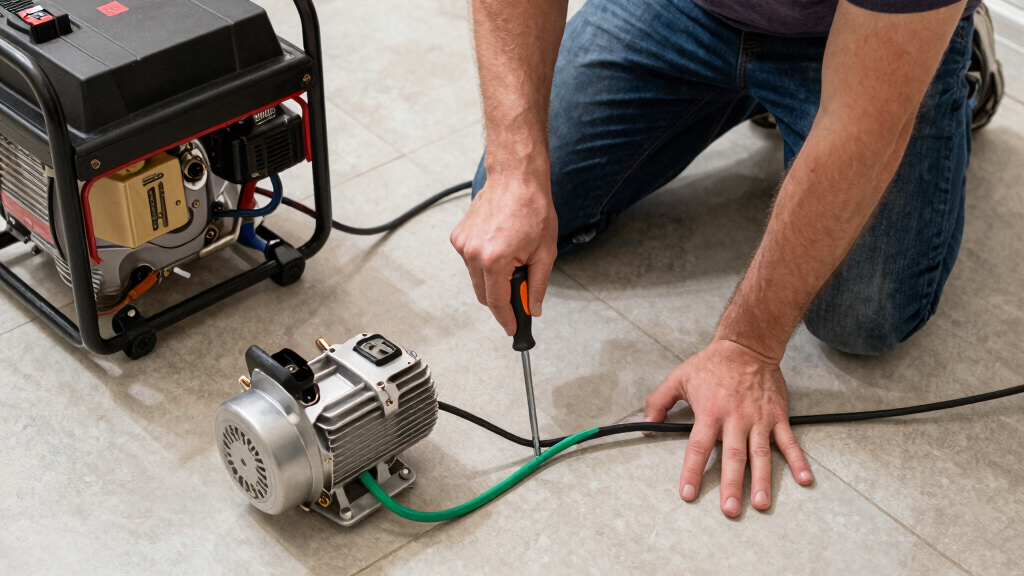

Choosing the best generator for a sump pump and refrigerator requires balancing power, runtime, and reliability. The top overall pick, the Westinghouse 14500 Peak Watt Dual Fuel Generator, offers ample wattage and dual fuel flexibility for heavy loads. The Oxseryn 4400-Watts Inverter Generator stands out for its quiet operation and portability, ideal for smaller setups or frequent use. A key tradeoff in this category is between raw power and ease of use—larger units deliver more capacity but are bulkier and more expensive. Continue reading for a detailed breakdown of these options and how to choose the right generator for your needs.

Get the little things that make your day delivered free with Prime
- Fast, free delivery on millions of items
- Prime Video, Amazon Music and more included
- Member-only deals all year
Complete the kit


Key Takeaways
- The most powerful models like the Westinghouse 14500 Peak Watt provide enough capacity for both sump pumps and refrigerators but tend to be larger and more costly.
- Inverter generators such as the Oxseryn 4400W offer quieter operation and cleaner power, making them suitable for sensitive electronics and frequent backup use.
- Dual fuel capability provides flexibility, allowing you to use gasoline or propane, which can be critical during extended outages.
- Size and portability vary greatly; smaller portable units are easier to store and move but may lack sufficient wattage for heavy loads.
- Price differences often reflect capacity and features—investing in a slightly higher-priced model can improve reliability and longevity.



| generator for sump pump and refrigerator | Fuel Tank Capacity | Peak Watts | Running Watts |
|---|---|---|---|
| Westinghouse 13500 Peak Watt D | 9.5 gallons | — | — |
| Westinghouse 14500 Peak Watt D | 9.5 gallons | 14500 | 11500 |
| Westinghouse 12500 Watt Dual F | 6.6 gallons | 12500 | 9500 |
| Oxseryn 4400-Watts Inverter Ge | 2 gallons | 4400 | 3400 |
| BLUETTI FridgePower Portable P | — | — | — |
| Oxseryn Power Equipment 4400 W | 2 gallons | 4400 | 3400 |
| Librids Portable Power Station | — | — | — |
More Details on Our Top Picks
Westinghouse 13500 Peak Watt Dual Fuel Portable Generator with Remote Start
This generator stands out for its remarkable wattage output, offering up to 13,500 peak watts on gasoline and convenient remote start, making it ideal for running both a sump pump and refrigerator during outages. Compared with the Westinghouse 14500 model, it provides slightly less peak power but remains highly capable for most household needs. Its dual fuel capability adds flexibility, especially during long outages when fuel availability varies. However, the absence of specified weight and dimensions makes transportation less predictable, and its complex setup might challenge some users. This makes the 13500 Peak Watt model an excellent choice for those prioritizing raw power and remote operation.
Pros:- High peak wattage with dual fuel versatility
- Remote electric start for quick operation
- Long runtime of up to 19 hours on a full tank
- Multiple outlets including RV and transfer switch readiness
Cons:- Unspecified weight and dimensions could hinder portability
- Setup may be complex for beginners
- Potential residual fuel odor from factory testing
Best for: Homeowners needing reliable, powerful backup with remote control for large appliances
Not ideal for: Users seeking a lightweight, portable unit for frequent outdoor activities or small spaces
- Peak Watts (Gasoline):13500
- Running Watts (Gasoline):10500
- Peak Watts (Propane):12500
- Running Watts (Propane):9500
- Fuel Tank Capacity:9.5 gallons
- Run Time:up to 19 hours
- Engine:500cc Westinghouse 4-Stroke OHV
- Outlets:GFCI 120V 5–20R, 120V L14-30R, 120/240V 14–50R
- Start Type:Remote electric and recoil
Our verdict“This model suits those who need serious power and remote operation, accepting some logistical challenges.”
Westinghouse 14500 Peak Watt Dual Fuel Portable Generator with Remote Electric Start
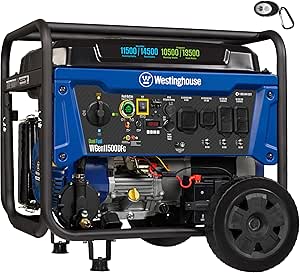
This generator offers the highest wattage in this lineup, with up to 14,500 peak watts and 11,500 running watts on gasoline, making it a prime choice for powering multiple large appliances simultaneously, including sump pumps and refrigerators. Its 550cc engine provides robust performance, and the low THD ensures safe operation of sensitive electronics. Compared to the 13500 model, it delivers more power and a larger engine, but at the expense of increased weight and cost, which could make moving it more challenging. Its long runtime of 19 hours on a 9.5-gallon tank makes it suitable for extended outages, yet its bulkier size might limit portability for some users. Overall, this unit is better suited for those with a permanent setup or access to help with transportation.
Pros:- Highest peak wattage in the lineup for maximum power
- Remote electric start and transfer switch readiness
- Long runtime of up to 19 hours on a full tank
- Durable construction with heavy-duty engine
Cons:- Heavy and less portable due to size
- Higher price point may deter casual users
- Complex setup might require technical knowledge
Best for: Large households or small businesses requiring sustained, high-capacity backup power
Not ideal for: Individuals needing a lightweight, easy-to-move generator for occasional use or outdoor activities
- Peak Watts:14500
- Running Watts:11500
- Propane Peak Watts:13500
- Propane Running Watts:10500
- Runtime (gasoline):up to 19 hours
- Fuel Tank Capacity:9.5 gallons
- Engine:550cc 4-Stroke OHV
- Outlets:Multiple including transfer switch ready
- Start Type:Remote Electric Start
Our verdict“This model makes the most sense for users prioritizing maximum power and extended runtime over portability.”
Westinghouse 12500 Watt Dual Fuel Portable Generator with Remote Electric Start
This generator offers a balanced mix of power and practicality, with 12,500 peak watts and 9,500 running watts on gasoline, plus remote start and multiple outlets, including RV-ready options. Its 457cc engine supports a runtime of up to 12 hours, which is adequate for most backup scenarios involving sump pumps and refrigerators. While it doesn’t match the peak output of the 14500 model, it provides enough power for typical household needs, especially given its more manageable size. Compared to inverter options like Oxseryn, this unit delivers more raw power but lacks inverter technology, which may impact sensitive electronics. It’s a solid choice for users who want reliable power with simpler operation and longer runtime than smaller units.
Pros:- High wattage with remote electric start
- Multiple outlets, including transfer switch compatible
- Longer runtime of up to 12 hours
- Versatile for different power needs
Cons:- Heavier and bulkier than inverter generators
- Lacks inverter technology for sensitive electronics
- Setup may be complex for some users
Best for: Homeowners seeking dependable backup with decent runtime and easy operation
Not ideal for: Users who need ultra-quiet operation or the highest possible wattage
- Peak Watts:12500
- Running Watts:9500
- Fuel Tank Capacity:6.6 gallons
- Runtime (gasoline):up to 12 hours
- Engine:457cc Westinghouse 4-Stroke OHV
- Start Type:Remote Electric
Our verdict“This generator offers a reliable, well-rounded option for those who need steady power with manageable size and good runtime.”
Oxseryn 4400-Watts Inverter Generator, Gas Powered, Emergency Home Backup, RV Ready 30A Outlet
With 4400 peak watts and 3400 running watts, the Oxseryn inverter generator is tailored for smaller-scale backup needs, making it ideal for protecting a refrigerator and a few household essentials during outages. Its inverter technology ensures clean power, safe for sensitive electronics, and its lightweight design at 56 lbs makes moving it effortless. Compared with larger units like the Westinghouse models, it sacrifices raw power for portability and quiet operation. Its 2-gallon tank limits runtime to roughly 14 hours at 25% load, which is sufficient for short outages but less ideal for extended emergencies. This generator is best suited for users prioritizing portability and quiet operation over maximum wattage.
Pros:- Lightweight and portable at 56 lbs
- Inverter technology for clean, safe power
- RV-ready 30A outlet
- Fuel-efficient with up to 14 hours runtime at 25% load
Cons:- Limited fuel capacity requires frequent refueling
- Lower maximum wattage limits use to small appliances
- Less suitable for powering multiple high-demand devices
Best for: RV owners and small households needing portable backup power for essentials
Not ideal for: Users seeking to power multiple large appliances simultaneously or longer outages
- Peak Watts:4400
- Running Watts:3400
- Fuel Tank Capacity:2 gallons
- Runtime at 25%:14 hours
- Weight:56 lbs
- Outlets:2x 120V, 1x 30A RV, 1x 12V DC
Our verdict“This inverter generator fits those who need portable, quiet backup power for essential appliances and electronics.”
BLUETTI FridgePower Portable Power Station, 2016Wh 1800W LFP Battery Backup
The BLUETTI FridgePower stands out as a dedicated solution for refrigerator and household appliance backup during power outages. Its massive 2016Wh capacity and 1800W continuous output ensure extended runtime, especially when compared to inverter generators like Oxseryn, which are limited in capacity. Its smart UPS mode automatically switches to battery power during outages, providing seamless protection. While its higher price and the need for installation might deter casual users, this unit excels in delivering reliable, long-term backup for critical household items. Compared with portable generators, its focus on continuous, stable power makes it ideal for those wanting to keep their refrigerator running without interruption.
Pros:- Large capacity with 2016Wh and expandable options
- Smart UPS mode for seamless automatic switching
- Ultra-slim, compact design fits easily in most kitchens
- Low standby power consumption at 4W
Cons:- Higher upfront cost compared to portable generators
- Requires installation for wall mounting
- Limited to refrigerator and household appliance backup
Best for: Homeowners seeking a dedicated, maintenance-free backup solution for refrigerators and sensitive home appliances
Not ideal for: People needing portable power for outdoor activities or multiple high-demand devices
- Capacity:2016Wh
- Power Output:1800W
- Battery Type:LFP
- Standby Power Consumption:4W
- Expandable Capacity:8064Wh with BlueCell 200
- Dimensions:75mm ultra-slim
Our verdict“This power station is ideal for those prioritizing reliable, long-term refrigerator backup over portability.”
Oxseryn Power Equipment 4400 Watts Inverter Generator Gas Powered, Portable Open Frame Generator, Low Noise with ECO Mode, RV Ready, Emergency Home Backup
This inverter generator stands out for its combination of power, portability, and quiet operation, making it an excellent choice for both RV owners and home backup needs. Compared to the Librids Portable Power Station, it offers a higher peak wattage and longer runtime, which is essential during extended outages or when powering larger appliances like a refrigerator or sump pump. Its lightweight design at just 56 lbs enhances portability, and the low noise level under 72 dBA ensures it won’t disturb when used in residential settings. However, it may emit a slight gas smell initially and could require some setup, which might be inconvenient for those seeking a plug-and-play solution. Overall, this model delivers robust power in a portable form, with tradeoffs in initial smell and setup complexity.
Pros:- High peak and running watts suitable for essential appliances
- Extended runtime of up to 14 hours on 2 gallons of fuel
- Low noise operation enhances residential usability
- Lightweight for easy transport and setup
Cons:- Potential initial gas smell can be off-putting
- Requires some setup and functional testing before first use
Best for: Homeowners needing reliable backup power for sump pumps and refrigerators during outages or RV enthusiasts seeking quiet, portable power.
Not ideal for: People looking for a completely maintenance-free, plug-and-play generator, as this unit may need initial setup and has a slight gas smell upon arrival.
- Peak Watts:4400
- Running Watts:3400
- Fuel Tank Capacity:2 gallons
- Runtime at 25% load:up to 14 hours
- Noise Level:under 72 dBA
- Weight:56 lbs
- Output Ports:2x120V AC, 1x12V DC, 1xRV port
Our verdict“This inverter generator is an ideal pick for users who need portable, quiet, and reliable power for home backup and RV use, accepting minor setup requirements.”
Librids Portable Power Station 640Wh, 1200W Surge, Solar Generator with 4 AC Outlets
The Librids Portable Power Station excels as a compact, high-capacity backup for sensitive electronics during outages or outdoor trips, especially when compared with larger, noisier generators like the Westinghouse dual-fuel models. Its 640Wh capacity combined with a 1200W surge power ensures it can handle small to medium loads—perfect for refrigerator and sump pump backup—while its pure sine wave inverter guarantees safe power for delicate devices. The rapid 1.5-hour charging time and extensive 4000+ cycle lifespan make it a solid long-term investment. Nonetheless, its weight and bulk are drawbacks for those seeking a lightweight, portable unit for frequent outdoor use, and it’s strictly intended for indoor or covered environments due to its design. This pick makes the most sense for users prioritizing clean, stable power with long battery life over portability.
Pros:- Fast charging in just 1.5 hours, minimizing downtime
- Multiple outlets support various device types simultaneously
- Long-lasting LiFePO₄ battery with over 4000 cycles
- Pure sine wave inverter ensures safe power for sensitive electronics
Cons:- Heavy and bulky, limiting portability
- Indoor use only, not suitable for wet or outdoor environments
Best for: Homeowners seeking reliable, clean power for sensitive electronics like refrigerators and sump pumps during outages, especially in indoor or covered settings.
Not ideal for: Outdoor adventurers or users needing ultra-lightweight units, as the station is heavy and best used indoors or in protected areas.
- Capacity:640Wh
- Surge Power:1200W
- Charging Time:1.5 hours
- Number of Outlets:4 AC, USB ports
- Battery Type:LiFePO₄
- Battery Cycles:4000+
- Warranty:5 years
Our verdict“This power station is a strong choice for homeowners wanting clean, stable backup power for critical devices during outages, with less concern for portability.”

How We Picked
To determine the best generators for sump pump and refrigerator use, I evaluated each model based on power output, runtime, fuel flexibility, noise levels, and ease of use. Reliability and build quality were also key factors, as these appliances require consistent power during outages. I prioritized generators that can handle at least 3000W, ensuring they can support both a sump pump and refrigerator simultaneously without overload. Cost-to-value ratios were considered, balancing features against price. The products are ranked to reflect overall performance, versatility, and suitability for different user needs, from heavy-duty backup to portable solutions.Factors to Consider When Choosing Best Generator For Sump Pump And Refrigerator
Selecting the right generator for your sump pump and refrigerator involves understanding several critical factors. Power capacity is paramount; you need enough wattage to run both devices simultaneously without tripping. Portability can matter if you need to move the generator around or store it easily. Fuel type and runtime influence how long you can rely on backup power and what fuels are available during an outage. Noise levels and ease of use also impact daily operation, especially if the generator will be used frequently or in residential areas. Considering these factors carefully helps avoid common pitfalls like underpowered units or overly complicated setups.Power Output and Surge Capacity
Ensuring your generator supplies enough wattage is essential. Sump pumps and refrigerators usually require 1500-3000W combined, but it’s wise to choose a model with a higher rated capacity—at least 3500-4000W—to account for startup surges and future needs. A generator with adequate surge capacity prevents overloads during motor startup, which is common with appliances like sump pumps. Underpowered units risk tripping circuit breakers or failing to start your appliances altogether. Always check the running wattage and surge wattage ratings before making your choice.
Fuel Type and Runtime
Most generators run on gasoline, but dual fuel models that accept propane as well offer added flexibility, especially during extended power outages when fuel scarcity might occur. Runtime varies significantly; larger tanks and efficient engines extend operation time, reducing the need for frequent refueling. For essential backup like sump pumps and refrigerators, aim for a generator that can run at least 8-12 hours on a full tank to avoid interruptions. Think about your typical outage length and select accordingly.
Portability and Size
If you need to move your generator for maintenance or storage, portability becomes a key feature. Compact inverter generators excel here, offering lightweight design and easy handling, but they often lack the capacity for heavy-duty appliances. Larger portable units provide more power but tend to be bulkier and heavier, making them less convenient for frequent relocation. Consider your storage space and how often you’ll need to move the generator when weighing size versus power needs.
Noise Levels and Ease of Use
Quiet operation can significantly improve the experience, especially if the generator will be used in a residential setting or during nighttime outages. Inverter models typically run more quietly than traditional open-frame units, making them suitable for sensitive environments. Ease of start-up, fuel management, and maintenance are also worth considering—look for features like electric start, fuel gauges, and low-oil shutoff to simplify operation. These details matter more if you’ll be using the generator frequently or for extended periods.
Price and Long-Term Value
While budget models may seem attractive initially, they often lack the capacity or durability needed for reliable backup power. Investing in a slightly more expensive unit with higher wattage and better build quality can translate into longer lifespan and fewer maintenance issues. Consider the total cost of ownership, including fuel efficiency, warranty, and availability of spare parts. A well-chosen generator not only powers your appliances effectively but also offers peace of mind during prolonged outages.
Frequently Asked Questions
Can I run both my sump pump and refrigerator on a portable generator?
Yes, many portable generators can power both a sump pump and refrigerator simultaneously, but you must ensure the generator’s wattage capacity exceeds their combined startup and running wattage. Typically, a unit rated for at least 3500W provides enough headroom to handle these appliances without overloads. It’s important to check the individual wattage requirements of your devices and select a generator accordingly. Using a generator with surge capacity ensures that motor-starting loads don’t trip the circuit.
Is a dual fuel generator worth the extra cost for home backup use?
Dual fuel generators offer significant flexibility during power outages by allowing you to switch between gasoline and propane. Propane can be stored longer without degradation and is often cleaner-burning, which can extend the life of your generator. If you experience frequent outages or live in an area where fuel availability is uncertain, dual fuel models provide peace of mind. However, they tend to be more expensive upfront, so consider your specific needs and backup plans before investing.
How important is noise level for a generator used at home?
Lower noise levels can make a big difference, especially if you’ll be running the generator overnight or during quiet hours. Inverter generators generally produce less noise than traditional open-frame units, making them more suitable for residential use. Excessive noise can disturb family members or neighbors, and may even lead to restrictions on generator operation in some communities. Prioritizing quiet operation can improve your overall experience and reduce potential complaints.
What maintenance should I expect for a home backup generator?
Maintenance requirements vary but generally include regular oil changes, air filter replacements, and fuel system checks. Dual fuel models require additional attention to propane connections and fuel tank cleanliness. Running the generator periodically, even during non-outage times, helps prevent issues and ensures readiness. A good warranty and accessible customer support also contribute to long-term reliability, making maintenance less of a hassle during emergency situations.
Is it better to buy a larger generator than I think I need?
Choosing a generator with more capacity than your immediate needs can provide extra safety margin, especially if you add appliances later or experience higher startup loads. Underpowered units risk overloads and potential damage, while a slightly larger generator can handle surge demands comfortably. However, excessively large generators may be less fuel-efficient for small loads and harder to store. Balance your current requirements with future flexibility, and avoid overspending on capacity you won’t use regularly.
Conclusion
For most homeowners seeking a reliable backup for a sump pump and refrigerator, the Westinghouse 14500 Peak Watt Dual Fuel Generator offers the best overall performance, combining power, fuel flexibility, and ease of use. If budget is a concern, the Oxseryn 4400-Watts Inverter Generator provides a quieter, portable solution suitable for lighter loads. For those prioritizing simplicity and beginner-friendly features, a compact inverter model is ideal. Finally, if you need maximum power for extended outages, investing in a high-capacity, dual fuel model makes the most sense. Match your choice to your specific backup needs, budget, and preferences to ensure reliable power when it matters most.