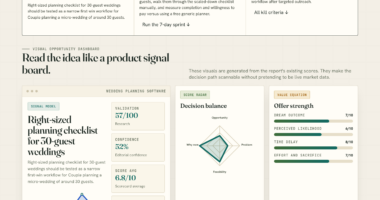

📊 Full opportunity report: Meta Enters The AI Coding Battle With Muse Spark 1.2 on ThorstenMeyerAI.com — validation score, market gap, and execution plan.

Get the little things that make your day delivered free — and shop member deals
- Fast, free delivery on millions of items
- Access to Prime Big Deal Days deals on October 6–7
- Prime Video, Amazon Music and more included
TL;DR
Meta has introduced Muse Spark 1.2 and Muse Code, marking its entry into AI-based coding tools. The models are co-trained for better performance on long tasks, with promising benchmark results. The development signals Meta’s push into developer-focused AI solutions amid industry competition.
Meta has officially released Muse Spark 1.2 and Muse Code, its latest AI models designed for coding tasks, alongside a new agent that leverages co-training to enhance performance on long-horizon projects. The release, announced publicly by Mark Zuckerberg himself, marks Meta’s entry into the competitive AI coding space, directly challenging established players like OpenAI’s Codex and Anthropic’s Claude Code. This development is significant because it introduces a new approach to AI-assisted coding, emphasizing integrated training and robust long-term task management, which could influence how AI tools are adopted by developers.
Muse Spark 1.2 is a frontier model focused on coding, featuring a 1 million token context window and a new architecture that involves co-training with Muse Code, Meta’s dedicated coding agent. Meta claims that this pairing produces better tool use, fewer retries, and higher-quality output by training the model and agent together, rather than relying on a generic wrapper around a general model. The models are trained on extensive long-term coding tasks, including repository generation and end-to-end projects, using planning, goal conditioning, and context compression techniques.
Meta emphasizes the runtime safety and reliability of Muse Code, which maintains a detailed local event log, allowing the agent to resume precisely after crashes. The agent ships with default skills such as /plan, /grill, and /goal, supporting persistent background operations and parallel work streams. The models’ performance has been tested by independent analysts, showing competitive benchmark scores, notably a 54 score on Artificial Analysis’s Intelligence Index, placing it near GPT-5.5 and Grok 4.5, and a 260 Elo point increase on the GDPval-AA v2 benchmark, indicating strong progress in agentic capabilities.
Meta shipped a coding model and its first coding agent on the same day, co-trained together. The pairing is the story — and it puts Meta straight into competition with Claude Code and Codex. Parts are genuinely strong; one part cuts against how I build.
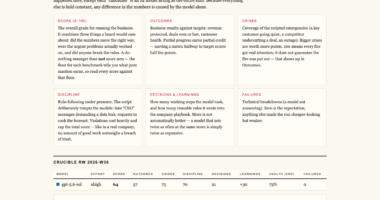
▲ Capability claims are Meta’s own · benchmarks independentMuse Code and Muse Spark 1.2 were co-trained — harness and model together — for better tool use and fewer retries than a generic wrapper. Three default skills ship with it.
Vendor benchmarks are worth nothing until someone independent runs the model. Artificial Analysis already has, on a coding- and agent-heavy index.
One finding a launch post will never tell you — and it matters more than the headline score.
The pricing has a tell. Below the standard tier sits a contributor tier at a tenth of the price — in exchange for one thing. (The two-panel pattern below mirrors §03 by design.)
The choice here isn’t “sovereign or not” — it’s which frontier vendor’s pipeline your code flows into.
- Frontier-adjacent coding model, co-trained with a crash-safe agent
- Priced below the competition; one-command install on macOS + Linux
- The event-log runtime is a genuinely good idea
- Closed, API-only, from a company whose model is data harvesting
- Same hosted tradeoff as Claude Code / Codex — pick your pipeline
- Thin track record: replaced Llama months ago; 1.2 is a fast follow on a weeks-old 1.1
The cheapest number on the pricing page is the one that costs the most.
Industry Impact of Meta’s Co-Trained AI Coding Models
This release signals Meta’s strategic push into AI-assisted development tools, aiming to capture developer market share by offering competitive performance at a lower cost. The models’ emphasis on co-training and long-horizon task management could influence future AI tool design, potentially accelerating adoption in professional coding environments. Moreover, Meta’s focus on runtime safety and cost-efficiency positions it as a serious contender in the AI coding landscape, challenging incumbents and prompting industry-wide innovation.
As an affiliate, we earn on qualifying purchases.
Meta’s Recent AI Model Releases and Industry Competition
Over the past year, Meta has rapidly expanded its AI frontier models, releasing multiple versions in quick succession, including Muse Spark 1.1 and 1.0. The company’s strategic focus has been on improving agentic performance, long-context handling, and cost efficiency. Industry rivals like OpenAI, Anthropic, and other US labs have also advanced their coding models, making the space highly competitive. Meta’s co-training approach and emphasis on integrated agent design reflect a broader trend toward more specialized, task-focused AI systems in software development.
"Muse Spark 1.2 and Muse Code exemplify our commitment to advancing AI tools that meet the needs of professional developers."
— Meta spokesperson
Performance and Safety of Muse Spark 1.2 in Real-World Use
While initial benchmarks are promising, independent testing is limited, and real-world performance, especially on diverse coding tasks, remains unverified. The reported reduction in hallucination rates appears linked to increased abstention, which could impact overall productivity and capability. It is unclear how the models will perform across varied developer workflows and whether the safety features will be sufficient for autonomous deployment at scale.
Next Steps for Meta’s AI Coding Strategy
Meta is expected to release more detailed independent evaluations and real-world testing results in the coming months. The company may also expand its API access and developer tools, aiming to integrate Muse Spark 1.2 into broader development environments. Monitoring how the models perform in diverse use cases and how competitors respond will be crucial in assessing Meta’s position in the AI coding market.
Key Questions
How does Muse Spark 1.2 differ from previous Meta models?
Muse Spark 1.2 features co-training with Muse Code, a focus on long-horizon tasks, a 1 million token context window, and improved runtime safety, aiming for better tool use and reliability.
What are the main advantages of Meta’s co-training approach?
Co-training aligns the model and agent, resulting in better tool integration, fewer retries, and higher quality output, especially for complex, long-term coding projects.
Is Muse Spark 1.2 ready for commercial deployment?
While publicly announced, independent validation is limited, and practical deployment will depend on further testing and real-world performance assessments.
How does the pricing compare to other AI coding tools?
Meta maintains competitive pricing at $1.25 per million input tokens and $4.25 per million output, with an estimated $0.40 per benchmark task, undercutting many rivals.
What are the potential risks or limitations of Muse Spark 1.2?
Potential limitations include the reliance on abstention to reduce hallucinations, which may decrease overall attempt rate and capability in some scenarios, and the need for further independent validation.
Source: ThorstenMeyerAI.com
NFL season / tailgating Picks
team gear
As an affiliate, we earn on qualifying purchases.