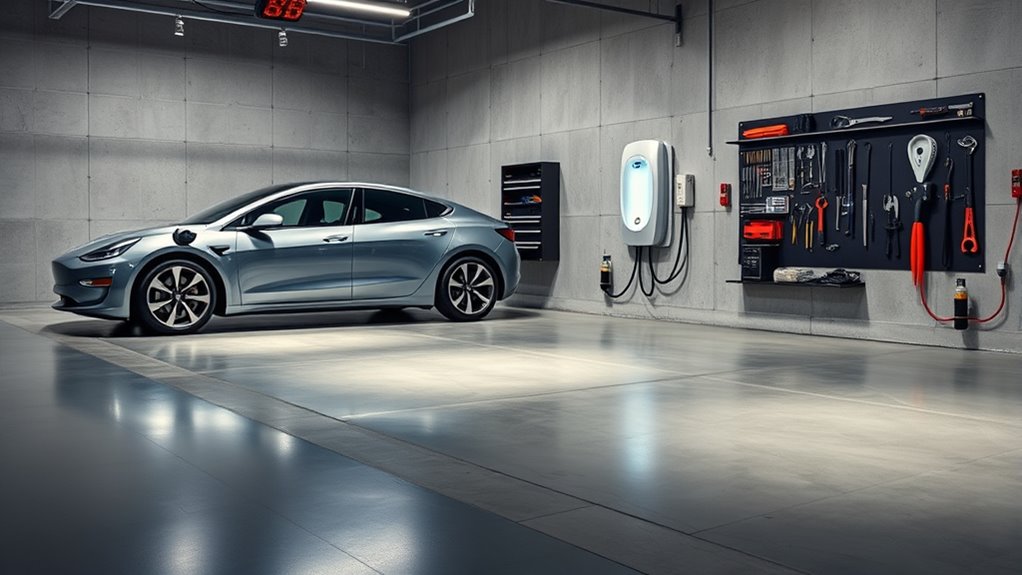

To prepare your garage for EV home charging, verify you hire a licensed electrician to assess your electrical system and install a dedicated circuit breaker. Make sure your wiring can handle the charger’s load and follow local codes for safety. Keep the area organized and check cables regularly for damage. Proper installation and safety measures boost charger efficiency and longevity. For more helpful tips, let’s explore what additional steps you can take.
Key Takeaways
- Hire licensed electricians to assess electrical capacity and install dedicated, properly grounded charging circuits.
- Choose a certified Level 2 charger compatible with your vehicle and adhere to local electrical codes.
- Ensure proper wiring, grounding, and weatherproofing for outdoor or exposed garage setups.
- Keep the charging area organized, free of flammable materials, and regularly inspect cables for damage.
- Install surge protectors and conduct periodic inspections to maintain safety, efficiency, and prolong equipment lifespan.
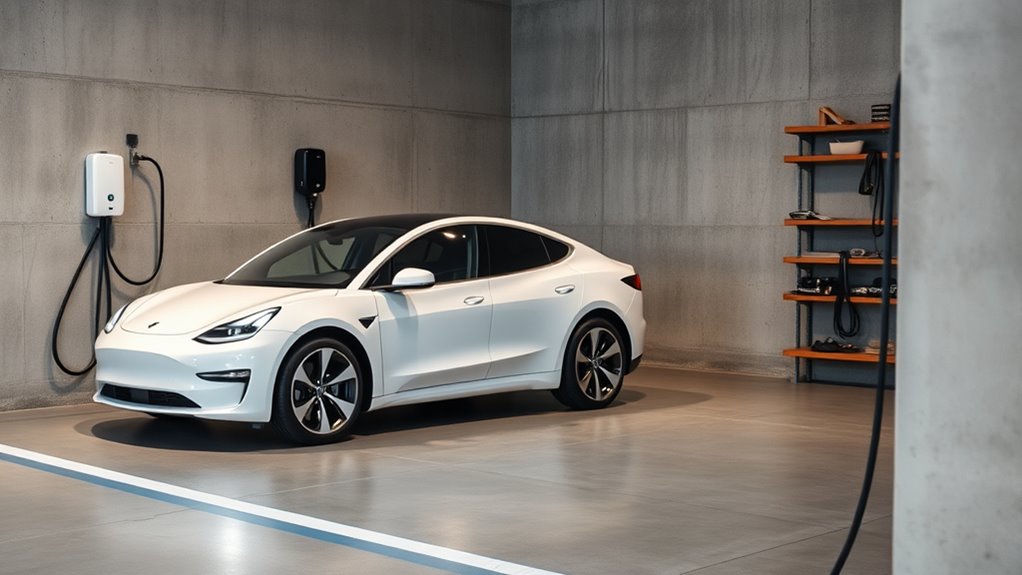
Ever wondered how convenient it is to charge your electric vehicle right at home? Setting up your garage for EV home charging offers unmatched convenience and can save you time and money over the long run. The first step is understanding the significance of proper charger installation. You don’t want to just plug your car into a regular outlet and hope for the best; instead, investing in a dedicated charging station ensures safety, efficiency, and faster charging times. When planning your charger installation, consider the power requirements of your vehicle and choose a level 2 charger if possible—these typically deliver a full charge overnight, which is perfect for daily use.
Charging your EV at home is convenient, safe, and cost-effective with proper installation and a dedicated Level 2 charger.
Before you proceed, it’s vital to prioritize safety precautions during installation. Working with high-voltage electrical systems can be dangerous, so it’s best to hire a licensed electrician who understands EV charging requirements. They’ll assess your garage’s electrical capacity and ensure your wiring can handle the additional load. This not only protects you from potential electrical hazards but also helps prevent future issues like circuit overloads or fires. During the installation, the electrician will install a dedicated circuit breaker, which isolates the charger from other household circuits, safeguarding your entire electrical system. Proper grounding and weatherproofing (if you’re installing an outdoor charger) are also essential safety precautions to guarantee reliable and secure operation.
Additionally, safety precautions extend beyond the installation process. Keep the charging area clear of flammable materials and ensure the charger and cables are in good condition—damaged cords or connectors pose serious safety risks. Regular inspections of your charging setup help maintain safety and peak performance. It’s also wise to familiarize yourself with the manufacturer’s guidelines and local electrical codes to ensure compliance and safety. Using a certified charger and following proper installation procedures minimizes risks and prolongs the lifespan of both your charging station and your vehicle. Proper charger installation not only enhances safety but also ensures optimal performance and longevity of your charging equipment.
Once installed, make sure your garage is organized so that cables are not tripping hazards and that your charging station is easily accessible. Installing a surge protector can provide an extra layer of safety, protecting your equipment from power surges. With the right setup, charging your EV at home becomes a simple, seamless part of your daily routine. Proper charger installation and safety precautions give you peace of mind, knowing your home charging station is both efficient and secure. This way, you can focus on enjoying the benefits of your electric vehicle without worrying about safety or inconvenience.
Frequently Asked Questions
How Much Does Installing a Home EV Charger Typically Cost?
When you ask about the cost estimate for installing a home EV charger, you’re looking at installation expenses that can vary. Typically, expect to pay between $500 and $2,500, depending on your home’s electrical setup and the charger type. You might need additional wiring or upgrades, which could increase costs. To get an accurate idea, consult a professional for a detailed assessment of your home’s requirements and costs.
Can I Install a Charger Myself or Need a Professional?
You can consider DIY installation if you’re comfortable with electrical work, but you need to guarantee charger compatibility and follow safety guidelines. However, for most homeowners, hiring a professional is the safest choice, especially for complex wiring or high-voltage connections. Professionals can ensure your charger is properly installed, meets local codes, and works efficiently. Always prioritize safety and adhere to manufacturer instructions, regardless of your experience level.
What Are the Safety Considerations for EV Home Charging?
Did you know that electrical wiring issues cause over 50% of home fires? When charging your EV at home, prioritize fire safety by ensuring your electrical wiring is up to code and properly installed. Avoid overloading circuits, use certified chargers, and check for damaged cords. If you’re unsure, hire a professional to handle the installation. These steps help prevent hazards and keep your home safe while charging your electric vehicle.
How Does Charging Speed Vary Between Different Chargers?
Charger types considerably impact charging speed. Level 1 chargers are slower, providing about 4-5 miles of range per hour. Level 2 chargers are faster, delivering 25-30 miles per hour, ideal for home use. DC fast chargers offer rapid charging, adding 60-80 miles in just 20-30 minutes. Your choice depends on how quickly you want to recharge and your vehicle’s compatibility with different charger types.
Are There Government Incentives for Installing Home EV Chargers?
You might be eligible for government grants or tax credits when installing home EV chargers. These incentives aim to make electric vehicle adoption easier and more affordable. Check with local or federal programs, as they often provide financial assistance or tax benefits for upgrading your garage. Taking advantage of these options can markedly reduce your overall costs, making it simpler to enjoy the benefits of clean, electric driving.
Conclusion
Now that your garage is ready to charge your EV, you’re planting the seeds for a smoother, greener future. Think of your home charging setup as the heartbeat of your electric journey—pumping energy into every mile you drive. With every step you’ve taken, you’re fueling a movement toward sustainability. Embrace this new chapter, knowing your garage is now the launchpad for a cleaner, more efficient ride, turning your driveway into the gateway of change.