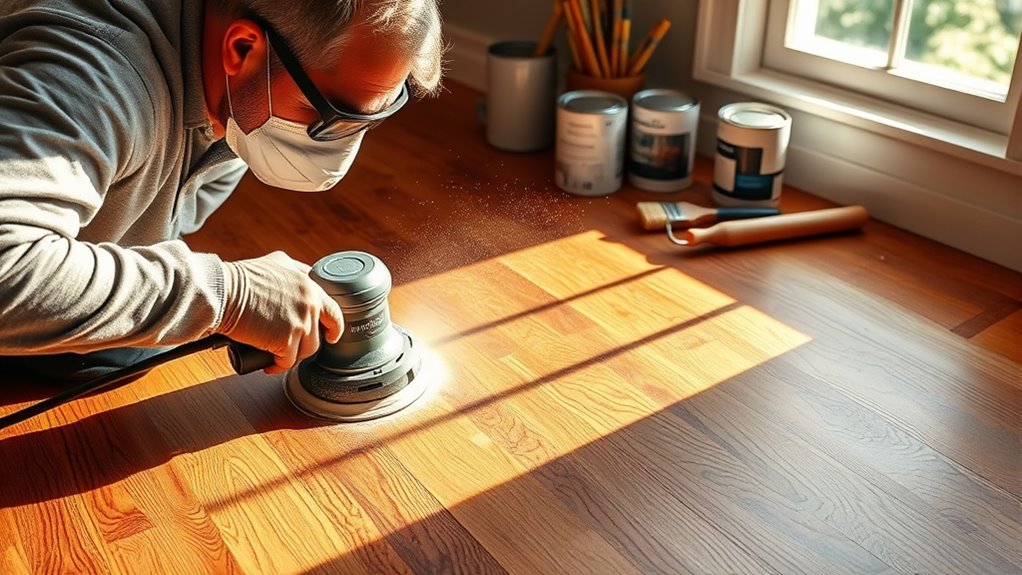

Refinishing hardwood floors involves sanding away the old finish, scratches, and imperfections to create a smooth surface. Start with coarse grit sandpaper, then progress to finer grits for a polished look. Clean thoroughly to remove dust, then apply your chosen stain evenly, wiping off excess for the desired color. Finish with a durable sealant, adding coats if needed. For more detailed guidance, keep exploring each step to achieve professional results.

Get the little things that make your day delivered free with Prime
- Fast, free delivery on millions of items
- Prime Video, Amazon Music and more included
- Member-only deals all year
Key Takeaways
- Prepare the floor by thoroughly sanding from coarse to fine grit to remove old finish and surface imperfections.
- Clean the surface meticulously with vacuum and tack cloth to eliminate dust for a smooth staining and finishing process.
- Test stain on a hidden area, then apply evenly, wiping excess to achieve the desired color before drying.
- Apply a durable protective finish like polyurethane, with optional additional coats, sanding lightly between layers for smoothness.
- Follow safety guidelines, operate sanding equipment carefully, and take your time to ensure a professional, long-lasting result.
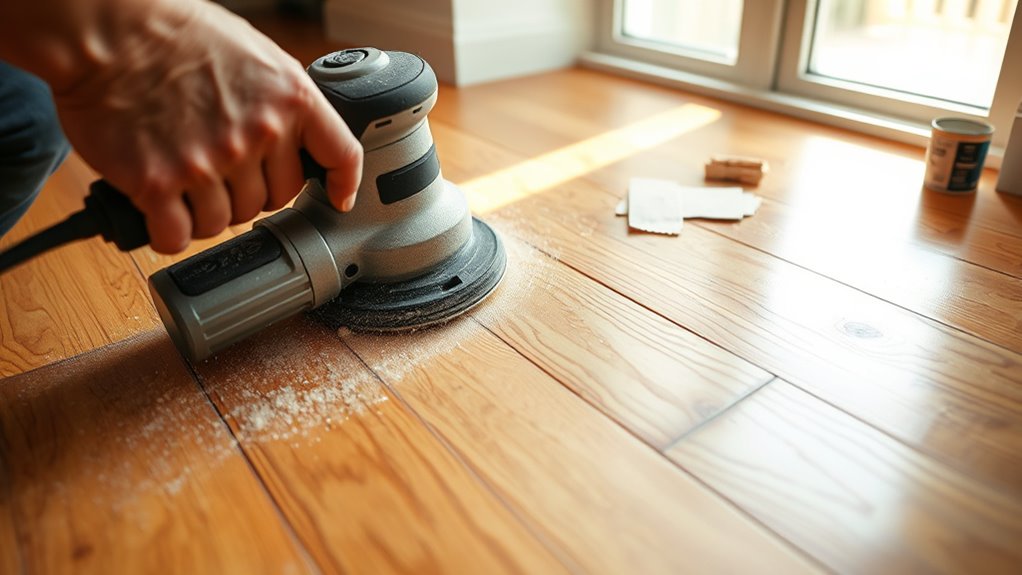
Refinishing hardwood floors is an effective way to restore their beauty and extend their lifespan. When you decide to breathe new life into your floors, the first step is understanding the process involved, especially the importance of floor sanding and stain coloring. Floor sanding is essential because it removes the old finish, scratches, and surface imperfections, creating a smooth, even surface that’s ready for the new finish. You’ll want to rent or buy a drum sander and edge sander, and ensure you’re comfortable operating them safely. Start by carefully sanding along the grain of the wood, progressing gradually from coarse to finer grits. This step not only prepares the surface for stain coloring but also helps eliminate any deep scratches or stains embedded in the wood.
Once the sanding is complete, you’ll need to thoroughly clean the dust. Dust can settle into the new finish and ruin the polished look, so use a vacuum and tack cloth to remove every speck. After cleaning, you’re ready for stain coloring, which is where you can truly customize the look of your floors. Choose a stain that complements your décor, and test it on a small hidden area first to see how it reacts with your wood. Applying stain is straightforward—use a brush or cloth to evenly spread it across the surface, working in manageable sections. Wipe off excess stain with a clean cloth to achieve your desired color intensity, and let it dry completely before proceeding.
After staining, you’ll apply a protective finish, such as polyurethane, to seal in the color and add durability. Once the finish dries, you can decide if you want to add a second coat for extra protection. Remember, patience is key during this process; rushing can lead to uneven finishes or visible imperfections. If you want a more refined look, consider additional sanding between coats, especially if you notice rough patches or drips. Keep in mind that the entire process demands attention to detail—proper floor sanding creates the perfect base for stain coloring, which ultimately enhances your hardwood floors’ aesthetic appeal. Additionally, using a quality automotive paint sealant can help protect your refinished floors from future damage and maintain their shine over time.
As an affiliate, we earn on qualifying purchases.
Frequently Asked Questions
How Often Should I Refinish My Hardwood Floors?
You should refinish your hardwood floors every 7-10 years to maintain their durability and appearance. Regular floor maintenance, like cleaning spills promptly and using protective pads, helps extend the time between refinishes. As floors age, signs like scratches, dullness, or worn finish appear, indicating it’s time for a refresh. Proper upkeep guarantees your hardwood stays beautiful and lasts longer, saving you money on frequent refinishing.
Can I Refinish Hardwood Floors Myself Without Professional Help?
Yes, you can do DIY refinishing, but it’s not always simple. While tackling this project yourself saves money, it requires careful preparation, the right tools, and patience. If you’re comfortable with DIY projects and willing to learn, go ahead. However, for large or heavily damaged floors, professional assistance guarantees a smooth, durable finish. Weigh your skills against the project’s complexity to decide if you should DIY or hire experts.
What Tools Are Essential for Refinishing Hardwood Floors?
You’ll need a floor sander to strip the old finish and smooth the surface efficiently. Don’t forget a dust mask to protect yourself from fine dust particles during sanding. Other essential tools include a hand sander for corners and edges, a vacuum or broom for cleaning, and a finishing applicator like a roller or brush. These tools make refinishing manageable and help you achieve professional-looking results on your hardwood floors.
How Long Does the Entire Refinishing Process Take?
While the surface preparation is quick, the entire refinishing process can take around 3 to 5 days. You’ll spend time sanding, applying stain or finish, and allowing for drying time between coats. The drying time is vital, as rushing it can ruin your work. Expect at least 24 hours for each coat to dry thoroughly, ensuring a smooth, durable finish that revitalizes your hardwood floors.
Is It Necessary to Remove Furniture Before Refinishing?
Yes, you should remove furniture before refinishing your hardwood floors. Furniture removal is essential for proper surface preparation, ensuring you can access the entire floor area and achieve a smooth, even finish. Moving your furniture out minimizes the risk of damage and dust contamination. Plus, it allows you to work efficiently and thoroughly, making the refinishing process smoother and more effective.
Conclusion
Now that you’ve learned the steps to refinish your hardwood floors, you’re like an artist restoring a masterpiece. With patience and care, you can transform your space from worn to wonderful, turning everyday steps into a dance across a polished canvas. Remember, every scratch and stain is just part of the story, and now you hold the brush to create a beautiful new chapter, bringing warmth and elegance back into your home.
NFL season / tailgating Picks
team gear
As an affiliate, we earn on qualifying purchases.