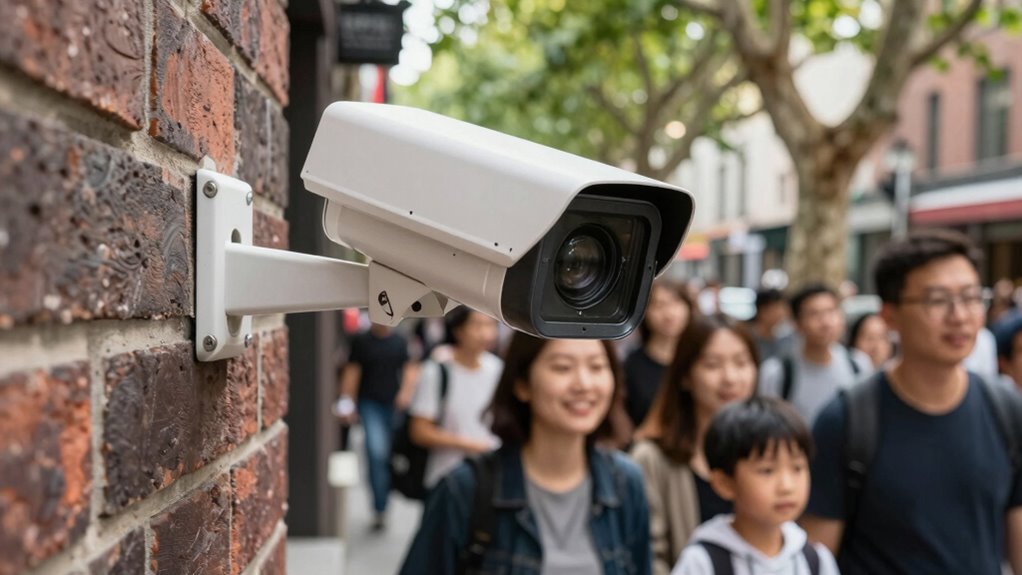

To catch faces effectively, position your security cameras at or slightly above eye level, angled downward to avoid distortion and shadows. *Guarantee* cameras face well-lit areas and avoid extreme angles that hide features. Mount them near entry points and high traffic spots for better coverage, and regularly test and adjust for *peak* clarity. Proper placement and angle adjustment make a big difference in facial recognition — keep going to learn the best strategies.

Get the little things that make your day delivered free with Prime
- Fast, free delivery on millions of items
- Prime Video, Amazon Music and more included
- Member-only deals all year
Key Takeaways
- Position cameras at or slightly above eye level to capture clear facial features without distortion.
- Tilt cameras slightly downward to align with natural eye level and improve face visibility.
- Mount cameras near entry points and high traffic areas for optimal face coverage during activity.
- Ensure the camera faces well-lit areas to avoid shadows that obscure facial details.
- Regularly test and adjust camera angles to accommodate changing lighting conditions and activity zones.
security camera wall mount adjustable
As an affiliate, we earn on qualifying purchases.
As an affiliate, we earn on qualifying purchases.
Why Proper Camera Placement Is Key to Clear Facial Recognition

Have you ever wondered why some security cameras capture clear facial details while others don’t? The answer often depends on your camera’s placement, especially considering lighting conditions and camera resolution. Proper placement ensures faces are well-lit, avoiding shadows or glare that obscure features. Additionally, positioning your camera to maximize resolution benefits helps capture sharp, detailed images. If a camera is too far or placed where light hits at odd angles, facial details become blurry or indistinct. Ensuring your camera’s viewing angle is appropriate can also significantly improve facial clarity. Adjusting the camera angle to reduce distortions can further enhance image quality. Proper lighting conditions are essential, as inadequate or uneven lighting can compromise facial recognition accuracy. By paying attention to these factors, you can considerably improve facial recognition quality. Remember, even the best camera can’t perform well if it’s poorly positioned. Strategic placement, considering lighting and resolution, is essential to ensure clear, identifiable facial captures in your security system. Optimal camera positioning can make a significant difference in capturing high-quality images.
How to Find the Best Heights and Angles for Face Capture
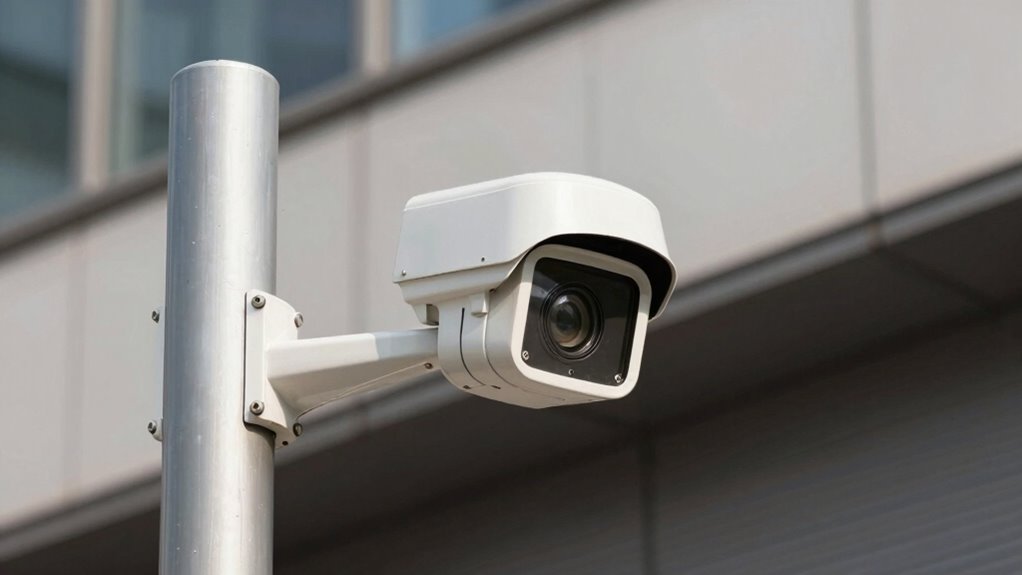
Choosing the right height and angle for your security camera is essential for capturing clear facial images. To optimize face capture, consider lighting conditions—placing the camera where natural or artificial light illuminates faces without causing glare or shadows. The camera tilt also plays a vital role; tilt it slightly downward to align with typical eye level, preventing distortion and ensuring faces are frontal. Avoid extreme angles that can skew features or obscure faces. Positioning the camera at about eye level or slightly above helps achieve a balanced view, especially in well-lit areas. Regularly review footage to adjust the tilt and height if lighting changes or faces appear blurry. Additionally, understanding the angles that actually catch faces can help you make better placement decisions for clear identification. Proper camera positioning is crucial for maximizing facial recognition effectiveness. Being aware of lighting conditions can also greatly enhance image clarity and face detection. Recognizing the importance of angle and height ensures consistent face capture quality, leading to better security outcomes. When selecting camera locations, considering field of view can help ensure comprehensive coverage of the area. Ultimately, the goal is to find a setup that consistently captures sharp, well-lit faces with minimal distortion.
Common Placement Mistakes That Cause Blurry Faces or Blind Spots
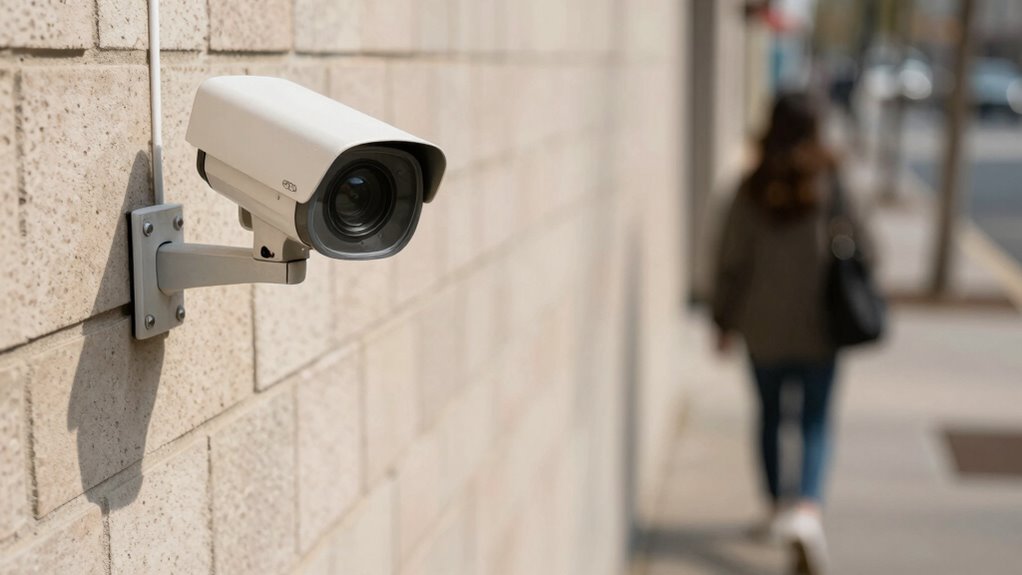
One of the most common placement mistakes is positioning cameras too high or too low, which can lead to blurry faces or blind spots. Poor lighting issues can cause shadows that obscure features, making faces hard to identify. Additionally, choosing the wrong lens selection can distort images or miss key details. To avoid these pitfalls, consider these mistakes:
- Ignoring lighting conditions—aim cameras where lighting is even and sufficient.
- Using inappropriate lens types—select lenses with the right focal length for clear face capture.
- Misplacing cameras relative to subjects—place cameras at eye level to minimize distortion and improve clarity.
Addressing these issues ensures your camera placement captures sharp, recognizable faces without blind spots or blurriness.
Where to Put Your Cameras Near Entry Points and High Traffic Areas
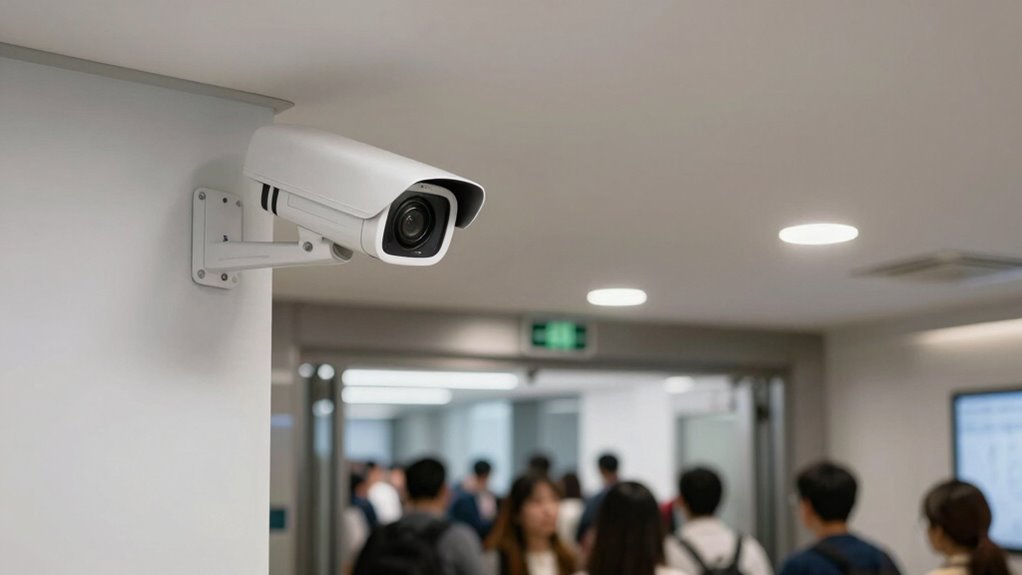
Placing your cameras near entry points and high-traffic areas guarantees you capture crucial moments and deter potential intruders. Position cameras at doorways, windows, and popular walkways to maximize coverage. Use motion sensors to trigger recordings when activity is detected, saving storage and ensuring important events aren’t missed. Combine camera placement with outdoor lighting to eliminate dark spots and improve visibility at night, making it easier to identify faces. Mount cameras slightly above eye level to prevent tampering while still capturing clear images. Regularly review footage to ensure angles stay ideal. Strategic placement near busy areas not only enhances security but also helps you quickly identify visitors or intruders, providing peace of mind and stronger deterrence. Additionally, considering the quality of camera placement can significantly impact the clarity and usefulness of your footage. Proper positioning and angle optimization ensure your security system works effectively and efficiently. Assessing camera coverage regularly allows for adjustments that adapt to changing environments and threats, and understanding security camera placement best practices can further improve your setup’s effectiveness.
Tips for Adjusting and Testing Your Camera Angles for Clear Faces
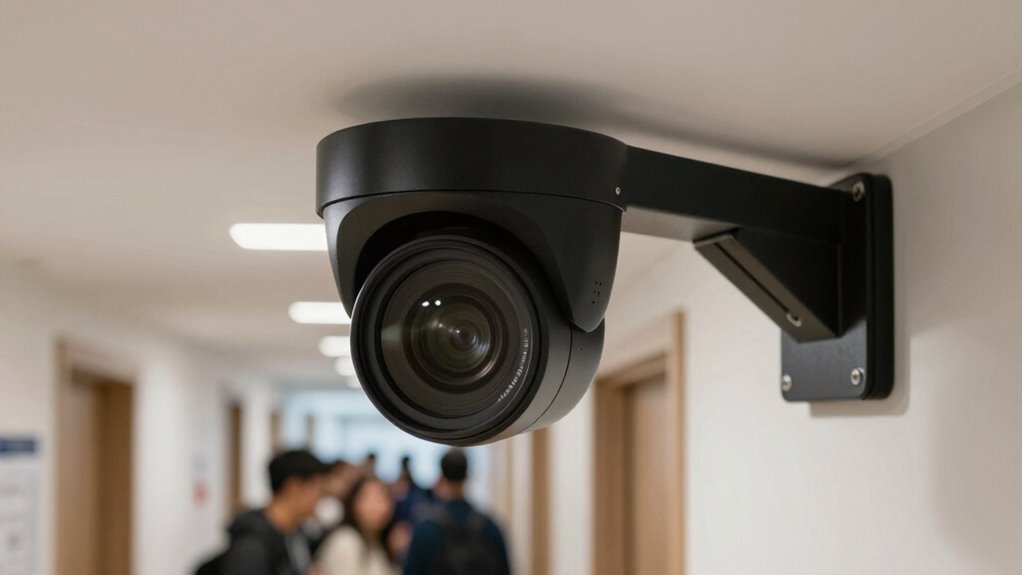
To guarantee faces are captured clearly, it’s essential to adjust your camera angles carefully. Start by considering lighting adjustments; ensure your camera faces well-lit areas to avoid shadows that obscure faces. Next, focus on lens selection—opt for a lens with the right focal length to capture detailed images without distortion. Proper indoor air quality can also influence camera performance by reducing dust and humidity that may fog lenses or cause equipment issues. Maintaining good air circulation helps keep lenses clear and prevents condensation that could obscure footage. Additionally, ensuring proper camera positioning relative to activity zones can significantly improve face visibility. Good camera angles are vital to avoid blind spots and ensure faces are within the field of view. It’s also beneficial to regularly test camera angles during different times of day to identify and correct potential issues caused by changing lighting conditions or activity patterns.
Frequently Asked Questions
How Do Lighting Conditions Affect Camera Face Recognition Accuracy?
Lighting impact markedly affects facial recognition accuracy. Poor or uneven lighting can cast shadows or wash out features, making it harder for cameras to identify faces correctly. Bright, well-lit conditions improve facial recognition by clearly illuminating facial details. Conversely, low-light or harsh lighting can cause glare or shadows, reducing accuracy. To optimize facial recognition, ensure cameras are positioned in areas with consistent, balanced lighting for the best results.
What Are the Best Camera Types for Facial Capture?
Did you know that 85% of successful facial recognition relies on high-quality camera specifications? For ideal facial capture, choose cameras with high-resolution sensors, good low-light performance, and wide dynamic range. Fixed lens cameras with adjustable focus and proper field of view are ideal. These specs ensure facial features are clear and recognizable, even in challenging lighting or angles. Prioritize these features to improve your facial recognition accuracy considerably.
How Often Should Camera Angles Be Re-Evaluated?
You should re-evaluate your camera angles at least every six months to guarantee ideal face angle optimization. Regular camera repositioning frequency helps you adapt to changing environments, new obstructions, or shifts in lighting that could impact facial capture. Keep an eye on footage quality and facial clarity, and adjust your cameras accordingly. This proactive approach maintains effective surveillance and ensures faces are consistently well-captured for identification.
Can Weather Conditions Impact Camera Face Visibility?
Weather effects can definitely impact facial visibility for your security cameras. Rain, fog, snow, and even heavy sunlight can obscure faces, making it harder for cameras to capture clear images. You should regularly check your camera footage under different weather conditions and consider weather-resistant equipment or additional lighting to improve facial visibility. Adjusting angles or adding protective covers can also help mitigate weather effects and guarantee better face capture.
What Privacy Considerations Should Be Taken Into Account?
You should consider privacy concerns and legal compliance when installing security cameras. Guarantee your camera placement respects others’ privacy by avoiding areas like private yards or windows. Be transparent about surveillance, and follow local laws regarding recording and data storage. Regularly review footage policies to prevent misuse. By prioritizing privacy and adhering to legal standards, you protect individuals’ rights while maintaining effective security.
Conclusion
Think of your security camera as a vigilant guardian watching over your home. When placed with purpose and precision, it captures faces clearly, like a loyal friend who never blinks. But if you ignore the angles or rush the setup, your guard might miss the details or turn blind. Take the time to position your cameras thoughtfully—it’s your best defense, turning a simple eye into a sharp, unblinking sentinel that keeps your loved ones safe.
NFL season / tailgating Picks
team gear
As an affiliate, we earn on qualifying purchases.