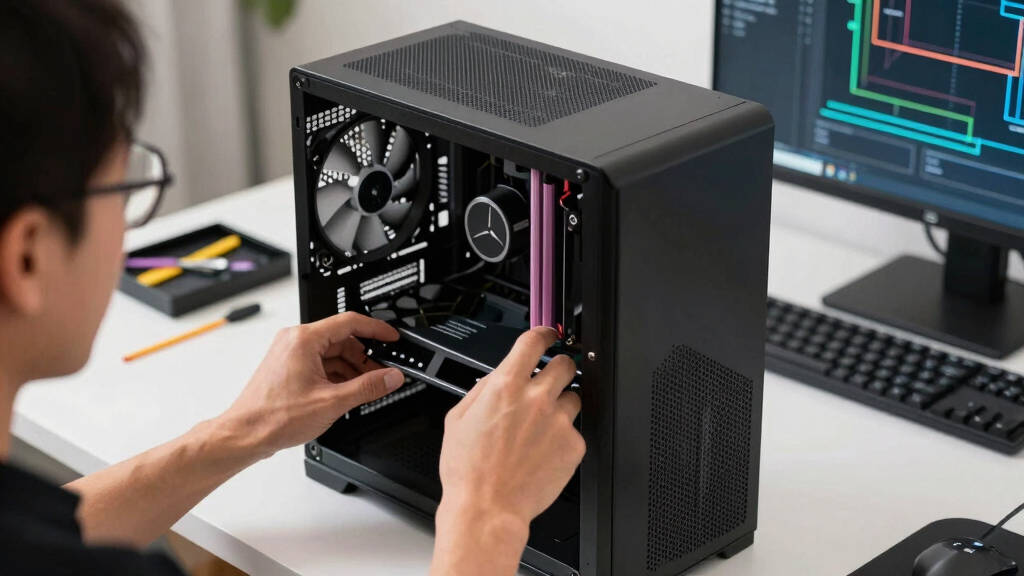

📊 Full opportunity report: Best Quiet Case Fans + the Airflow Setup That Actually Works on ThorstenMeyerAI.com — validation score, market gap, and execution plan.
TL;DR
This article identifies the best quiet case fans for 2026, emphasizing larger, slower-moving fans for optimal noise reduction. It also explains the airflow setup that ensures effective cooling with minimal sound, based on expert recommendations.
In 2026, the top-rated quiet case fans are larger models like the Noctua NF-A14 and Arctic P14, which move air slowly for minimal noise while maintaining effective cooling. These fans, combined with a specific airflow setup, can significantly reduce noise levels in high-performance PCs.
Experts recommend using larger fans, such as 140mm models, running at lower RPMs to achieve quieter operation without sacrificing cooling performance. The Noctua NF-A14 and Arctic P14 are highlighted as the best choices for their balance of airflow, noise, and durability. Fans should be positioned as intake and exhaust, with static-pressure fans like the Noctua NF-F12 or Arctic P12 used on radiators or dense heatsinks to optimize airflow through restrictive components.
According to industry sources, moving air slowly with larger fans produces less noise than smaller, faster fans, even when airflow volume is similar. Proper fan tuning—setting low RPM curves—is essential to maintain quiet operation while preventing overheating. The setup involves prioritizing open-blade airflow fans for case intake/exhaust and pressure-optimized fans for radiators or filters.
Best quiet case fans
+ the airflow that works.
The best fan won’t help if it’s pointed the wrong way. The whole recipe: big fans, running slowly, in a clean front-to-back path, with slightly more intake than exhaust. Build a config in Part 2 and watch the pressure balance respond.
Why Quiet Fans and Proper Airflow Matter in 2026
Choosing the right fans and airflow configuration reduces noise pollution and improves user comfort, especially for workstations used in shared or office environments. It also extends component lifespan by maintaining optimal temperatures without loud fan noise, making high-performance PCs more practical and less disruptive.
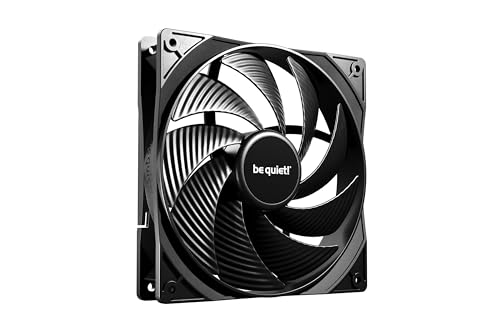
be quiet! Pure Wings 3 140mm Quiet PWM High-Speed Case Fan | Speed-regulating Closed Loop Motor| Extraordinary Air Pressure | BL109
- Optimized Frame Design: Peak performance on radiators
- Enhanced Airflow Blades: Reduce noise, ensure performance
- Quiet Operation: Low RPM for silent performance
As an affiliate, we earn on qualifying purchases.
As an affiliate, we earn on qualifying purchases.
2026 PC Cooling Trends and Fan Technology Advances
Recent developments in fan engineering have focused on larger, more efficient models that operate at lower RPMs. Brands like Noctua, Arctic, and be quiet! continue to lead with innovations that prioritize silence and longevity. The trend toward larger fans (140mm and above) reflects a broader shift to quieter, more efficient cooling solutions for high-power, high-performance systems used in AI, gaming, and professional workloads.
Previously, smaller fans and high RPMs were common but generated significant noise. Current recommendations emphasize the importance of airflow design and fan size, supported by new testing data showing that bigger, slower fans outperform smaller, faster ones in noise-to-cooling ratio.
"Moving to larger fans and tuning them on low RPMs is the most effective way to achieve quiet yet reliable cooling in 2026."
— Thorsten Meyer, AI cooling expert
Remaining Questions About Long-Term Reliability and Compatibility
While the recommended fans are highly rated and widely tested, long-term reliability data for some models in continuous operation is still emerging. Compatibility issues with future case designs or radiator configurations are also possible, and user-specific setups may require adjustments.
Further testing is needed to confirm performance in different ambient conditions and over extended periods, especially for custom or unconventional builds.
Upcoming Testing and Community Feedback on Fan Performance
Manufacturers are expected to release updated models with refined designs, and user feedback will help refine airflow setups. Industry experts plan to conduct long-term stress tests and share detailed results to guide builders in optimizing their systems for noise and cooling efficiency in 2026.
Key Questions
Why are larger fans better for quiet PC builds?
Larger fans move the same amount of air at lower RPMs, which produces less noise compared to smaller, faster fans. This results in quieter operation without sacrificing cooling performance.
Should I use static-pressure fans on radiators?
Yes. Static-pressure fans are designed to push air through dense heatsinks or radiators effectively, ensuring good cooling while maintaining low noise levels.
Can I use these fans in any case?
Most modern cases support 140mm fans, but compatibility depends on your specific case design. Check the case specifications before purchasing.
How do I tune my fans for quiet operation?
Use fan control software or BIOS settings to set low RPM curves, ensuring fans run slowly during low loads and only ramp up when necessary for cooling.
Are premium fans worth the extra cost?
For high-performance, always-on systems where noise reduction and reliability matter, investing in premium fans like Noctua is justified. Budget options can also perform well but may produce more noise at higher loads.
Source: ThorstenMeyerAI.com