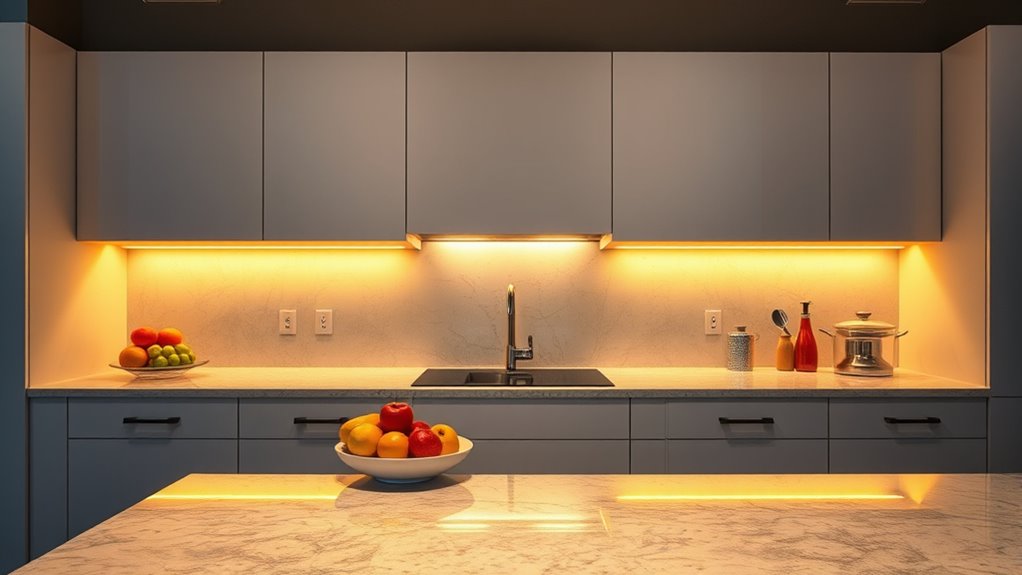

To brighten your workspace, install under-cabinet LED lighting by choosing flexible strips with adhesive backing for easy attachment beneath your cabinets. Plan your power source carefully, using a transformer or plug-in kits, and guarantee wiring is neat and safe. Consider adding switches for control, and verify all components are compatible. Proper installation enhances your kitchen’s ambiance while boosting functionality. Keep reading to learn detailed steps and tips for a seamless setup.
Key Takeaways
- Plan your layout and select suitable LED strips with the desired brightness and color temperature.
- Ensure a proper power source and wiring route, considering outlets or installing dedicated switches.
- Clean and dry surfaces before attaching LED strips with adhesive backing for secure installation.
- Use compatible power supplies and follow manufacturer instructions to prevent flickering or dimming.
- Follow safety guidelines, and consult a professional electrician if wiring or power setup is complex.
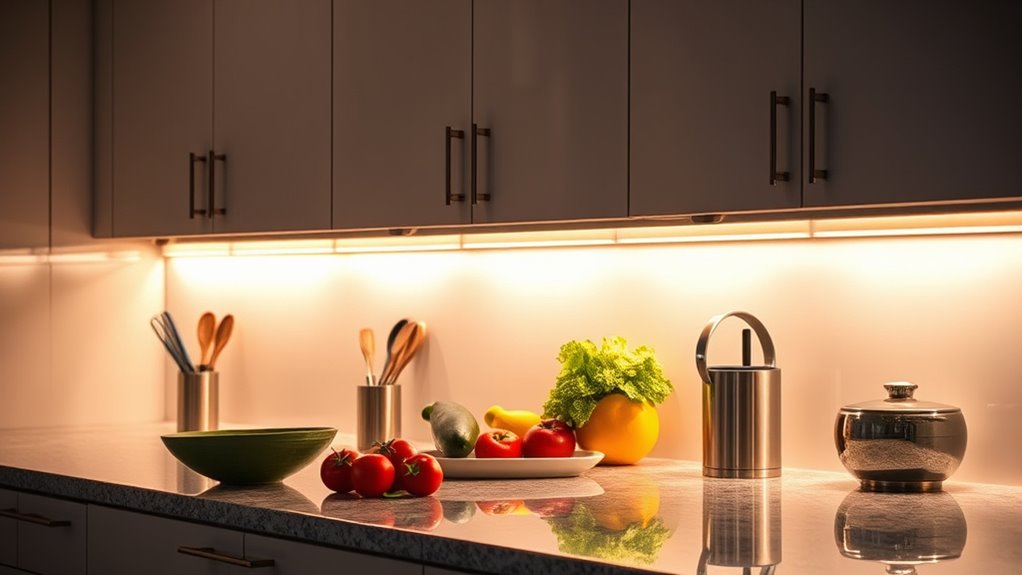
Under-cabinet lighting can transform your kitchen by enhancing both functionality and ambiance. Whether you’re prepping meals or adding a warm glow for entertaining, choosing the right lighting makes a significant difference. When exploring LED strip options, you discover that they come in various brightness levels, color temperatures, and lengths, giving you plenty of flexibility. LED strips are energy-efficient, long-lasting, and easy to install, making them an excellent choice for under-cabinet lighting. You can opt for flexible strips that contour to your cabinet shape, or rigid options if you prefer a sleek, straight look. Many LED strips feature adhesive backing, so attaching them beneath your cabinets is straightforward, but just make certain the surface is clean and dry for the best adhesion.
Under-cabinet LED lighting enhances kitchen ambiance, offering flexible, energy-efficient options with easy installation.
Power source considerations are vital to a successful installation. You need to determine whether you’re connecting your lighting directly to your existing electrical system or using battery-powered options. For permanent setups, you’ll likely want a power supply that converts standard household voltage to the low voltage required by LED strips. This may involve installing a transformer or driver, which should be compatible with your chosen LED strips’ voltage and wattage. Planning your wiring route beforehand helps prevent surprises during installation. If you prefer a simpler approach, plug-in LED strip kits are available, which can be plugged into nearby outlets, eliminating the need for hardwiring.
Another important aspect to take into account is the location of your power source. You might need to install an outlet behind the cabinetry or use extension cords if outlets are farther away. For a cleaner look, consider wiring the LED strips directly into your cabinet’s wiring or installing a switch that allows you to control the lights easily. Keep in mind that LED strips require a stable, reliable power source to avoid flickering or dimming issues. If you’re installing multiple strips, ensure your power supply can handle the combined wattage, and consider daisy-chaining the strips if they support it, which simplifies wiring.
Ensuring safety considerations are met, such as proper electrical ratings and following manufacturer instructions, is essential for a safe and effective installation. Make sure all electrical components are rated for indoor use and follow the manufacturer’s instructions carefully. If you’re unsure about wiring or power considerations, it’s wise to consult a professional electrician. Proper planning and attention to power source considerations will ensure your under-cabinet lighting is both beautiful and safe, providing optimal illumination for your workspace while running efficiently for years to come.
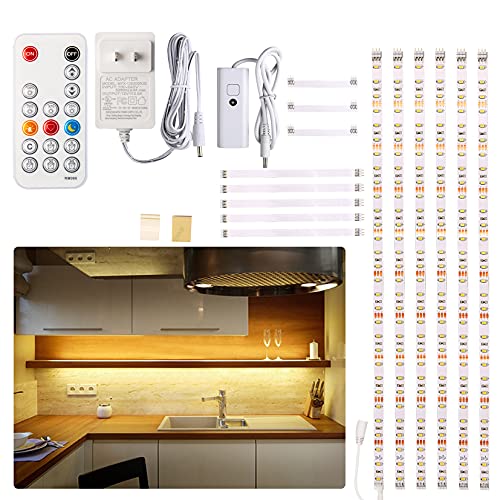
WOBANE Under Cabinet LED Lighting Kit, 6 PCS Dimmable LED Strip Lights with Remote Control Dimmer, 24W Adapter, Hidden 2700K Warm White Set, Bright 1500lm, Timing, Kitchen, Counter, Shelf, Showcase
- Pre-cut LED Light Strips: 6 pieces, 9.8 ft total length
- Multiple Connection Options: Flexible for various setups
- Bright and Adjustable Lighting: 1500 lumens with dimmer control
As an affiliate, we earn on qualifying purchases.
As an affiliate, we earn on qualifying purchases.
Frequently Asked Questions
Can I Install Under-Cabinet Lighting Without Electrical Experience?
You can attempt DIY installation of under-cabinet lighting without much electrical knowledge, but it’s not recommended if you’re unfamiliar with electrical work. Electrical knowledge is essential for safety and proper setup. If you’re comfortable with basic wiring and follow instructions carefully, you might manage it. However, hiring a professional ensures a safe, correct installation and peace of mind, especially if you’re unsure about electrical codes or connections.
What Is the Best Type of Bulb for Under-Cabinet Lighting?
You should choose LED bulbs for your under-cabinet lighting because they offer a long bulb lifespan and energy efficiency. Opt for a color temperature around 3000K to 4000K for a warm, inviting glow or 5000K for a cooler, daylight feel. LEDs also provide consistent brightness, helping you see clearly without frequent replacements, making them the best choice for functional and aesthetic lighting in your workspace.
How Do I Control Multiple Under-Cabinet Lights Simultaneously?
You can control multiple under-cabinet lights simultaneously by installing dimming controls or smart lighting systems. Dimming controls allow you to adjust brightness levels with a single switch or remote, making it easy to set the perfect ambiance. Smart lighting options enable you to use a smartphone app or voice commands for effortless control over all your lights at once. Both methods streamline your lighting management and enhance your workspace.
Are LED Lights Suitable for All Under-Cabinet Applications?
Like a trusty Swiss Army knife, LED lights are versatile for most under-cabinet applications. They’re highly compatible with various fixtures and dimmers, making them a popular choice. LED compatibility guarantees energy efficiency, long lifespan, and minimal heat, enhancing your under-cabinet aesthetics. While they work well in most settings, check specific product specs to ensure they suit your space and desired lighting effect perfectly.
How Do I Maintain and Clean Under-Cabinet Lighting Fixtures?
To keep your under-cabinet lighting fixtures in top shape, follow simple cleaning tips and maintenance routines. Turn off the power before cleaning, and gently wipe the fixtures with a soft, damp cloth to remove dust and grime. Avoid harsh chemicals. Regularly check for loose connections or damaged bulbs. Keeping your fixtures clean and well-maintained guarantees they shine brightly and last longer, enhancing your workspace effectively.
Conclusion
By installing under-cabinet lighting, you create a brighter, more inviting workspace. Did you know that well-lit areas can boost productivity by up to 30%? With just a few simple steps, you’ll transform your kitchen or workspace into a welcoming environment that’s both functional and stylish. So go ahead, add that extra light—your eyes and your mood will thank you every time you step into your beautifully illuminated space.