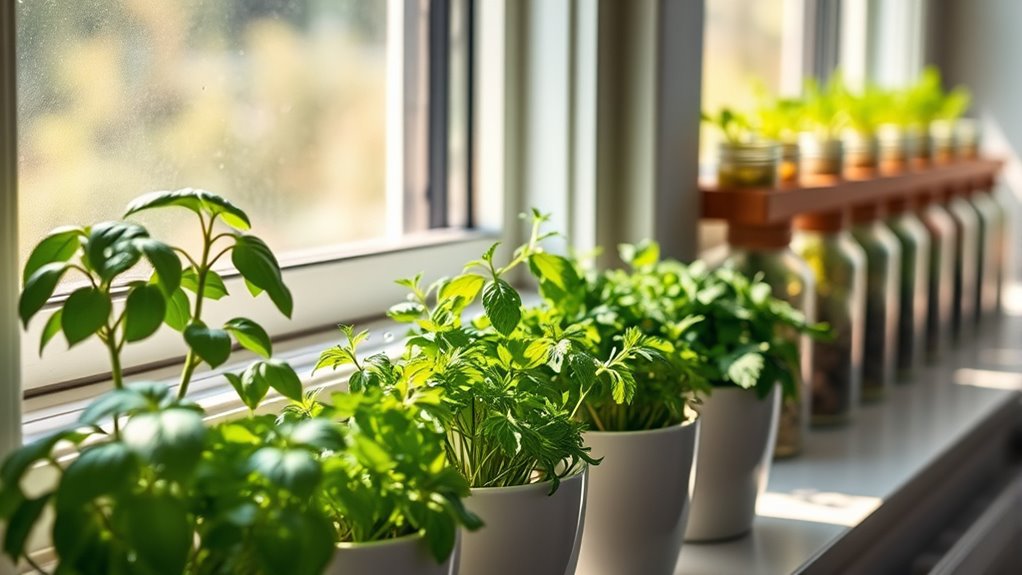

To build an indoor herb garden with fresh flavors year-round, you should establish a consistent watering schedule, checking soil moisture regularly and avoiding overwatering. Use pots with drainage holes to prevent soggy roots, ensuring proper drainage for healthy growth. Keep pests at bay by inspecting plants often and using natural deterrents like neem oil. Maintaining these practices will help your herbs thrive, and if you continue, you’ll discover even more tips for a lush, resilient garden.
Key Takeaways
- Use pots with drainage holes and well-draining soil to prevent overwatering and root rot.
- Establish a consistent watering schedule, checking soil moisture regularly to keep herbs healthy.
- Inspect herbs frequently for pests; use natural deterrents and remove affected leaves promptly.
- Ensure proper ventilation and avoid overwatering to create a pest-resistant indoor environment.
- Maintain routine care with proper watering and pest prevention to promote lush, flavorful herbs year-round.

Creating an indoor herb garden is a simple way to enjoy fresh flavors year-round and add greenery to your home. When you set out to cultivate herbs indoors, one of the most important tasks is establishing a consistent watering schedule. Herbs prefer moist but well-drained soil, so you’ll want to monitor their moisture levels regularly. Stick your finger into the soil; if it feels dry a couple of inches down, it’s time to water. Overwatering can lead to root rot and pest issues, while underwatering causes herbs to wilt and lose flavor. To keep things simple, set a routine—perhaps watering every few days or when the top inch of soil feels dry. Using pots with drainage holes is vital, as excess water needs an escape route to prevent soggy roots. A good watering schedule keeps your herbs healthy and flavorful, reducing stress on the plants and preventing problems down the line. Regularly inspecting soil moisture and ensuring proper drainage are key to maintaining healthy herbs, just as proper watering practices are crucial for electric dirt bikes and other powered equipment.
Pest prevention is another essential aspect of maintaining a thriving indoor herb garden. While pests are less common indoors than outdoors, they can still find their way onto your plants. Common intruders include aphids, spider mites, and whiteflies, which can suck sap and weaken your herbs. To prevent pests, start with healthy, well-draining soil and clean pots. Regularly inspect your herbs for early signs of trouble—tiny pests, sticky residue, or distorted leaves. Introducing natural pest deterrents like neem oil or insecticidal soap can help keep infestations at bay without harming your plants or your home environment. Keep your herbs well-ventilated and avoid overwatering, as excess moisture creates a perfect environment for pests and diseases. If you do notice pests, act quickly by removing affected leaves and treating the plants with natural remedies. Maintaining cleanliness and vigilance is your best defense against pests, ensuring your indoor herb garden stays lush and productive.
Ultimately, creating an indoor herb garden requires a bit of attention and routine care, but it’s well worth the effort. By sticking to consistent watering schedules, you guarantee your herbs stay healthy and flavorful. Meanwhile, practicing pest prevention measures keeps your plants free from unwanted visitors that could compromise their growth. With these simple strategies, you’ll enjoy fresh herbs all year long—whether it’s basil for pesto, mint for drinks, or thyme for roasting. Your indoor garden can become a vibrant, fragrant addition to your living space, providing fresh flavors and a touch of nature whenever you need it. Just remember, regular care and observation are key to cultivating thriving herbs that enhance your cooking and brighten your home.

TCBWFY Indoor Herb Garden Planter Set – 3 Pack 4.7" White Metal Plant Pots with Drainage Holes & Removable Tray – Windowsill Kitchen Counter Balcony Office Garden
- Complete 3-Pot Set: Includes 3 planters and a drip tray
- Larger Soil Capacity: 12% more soil for healthier plants
- Premium Material: Galvanized steel with powder coating
As an affiliate, we earn on qualifying purchases.
As an affiliate, we earn on qualifying purchases.
Frequently Asked Questions
How Do I Prevent Pests in My Indoor Herb Garden?
To prevent pests in your indoor herb garden, start with natural pest control methods like introducing beneficial insects or using neem oil. Practice companion planting by pairing herbs that repel pests with vulnerable plants, which helps keep pests away naturally. Keep your garden clean, remove dead leaves, and avoid overwatering. These steps, combined with companion planting, create a healthy environment that discourages pests and promotes thriving herbs.
What Are the Best Lighting Options for Year-Round Herbs?
You should use LED grow lights or fluorescent fixtures for year-round herbs indoors. LED grow lights are energy-efficient, produce minimal heat, and offer customizable spectrums to support healthy growth. Fluorescent fixtures are budget-friendly and work well for smaller setups. Place lights about 2-4 inches above your herbs and keep them on 12-16 hours daily to mimic natural sunlight, ensuring your herbs stay lush and flavorful all year.
How Often Should I Water My Indoor Herbs?
Water wisely to keep your herbs happy! Typically, you should water your indoor herbs when the soil moisture feels dry to the touch, usually every few days. Avoid overwatering by checking soil moisture regularly; too much water can lead to soggy roots, while too little causes dehydration. Adjust watering frequency based on humidity and plant type, ensuring your herbs stay healthy, vibrant, and flavorful all year long.
Can I Grow Herbs Without Natural Sunlight?
Yes, you can grow herbs without natural sunlight by using artificial lighting. Place your herbs near an indoor spot where they get consistent light, and supplement with grow lights or LED bulbs designed for plant growth. Make sure to position the lights close enough to mimic sunlight, usually about 12-18 inches above the plants, and keep them on for around 12-16 hours daily to guarantee healthy growth.
How Do I Extend the Shelf Life of Harvested Herbs?
To extend the shelf life of harvested herbs, focus on proper herb preservation and harvesting techniques. Immediately after harvesting, trim the stems and remove any damaged leaves. Store herbs in airtight containers or wrap them in damp paper towels and place them in the fridge. For longer storage, consider drying or freezing herbs. Proper herb preservation guarantees your herbs stay fresh and flavorful for as long as possible.
Conclusion
By starting your indoor herb garden, you bring freshness into your life. You nurture your plants, enjoy their vibrant growth, and savor their fragrant leaves. You create a space of beauty, health, and sustainability. You connect with nature, discover joy in daily care, and infuse your meals with love. Embrace this journey, and let your indoor herb garden become a symbol of vitality, creativity, and the simple pleasures that make life truly flavorful.