

To effectively budget for home expenses, you should track your utility bills and upkeep costs regularly using spreadsheets, apps, or notebooks. Recording monthly expenses helps you spot patterns, control spending, and identify savings opportunities early. Monitoring these costs also assists in planning for upcoming repairs and maintenance, preventing financial surprises. Staying organized ensures you stay on top of your household budget. Keep exploring ways to refine your system and maximize your savings over time.

Get the little things that make your day delivered free with Prime
- Fast, free delivery on millions of items
- Prime Video, Amazon Music and more included
- Member-only deals all year
Key Takeaways
- Use consistent systems like spreadsheets or apps to record monthly utility bills and maintenance costs.
- Regularly review bills to spot unusual increases and adjust usage accordingly.
- Budget monthly funds for routine upkeep and set aside reserves for unexpected repairs.
- Track expenses over time to identify spending patterns and potential savings opportunities.
- Incorporate long-term renovation costs into your budget, including contingency funds for unexpected expenses.
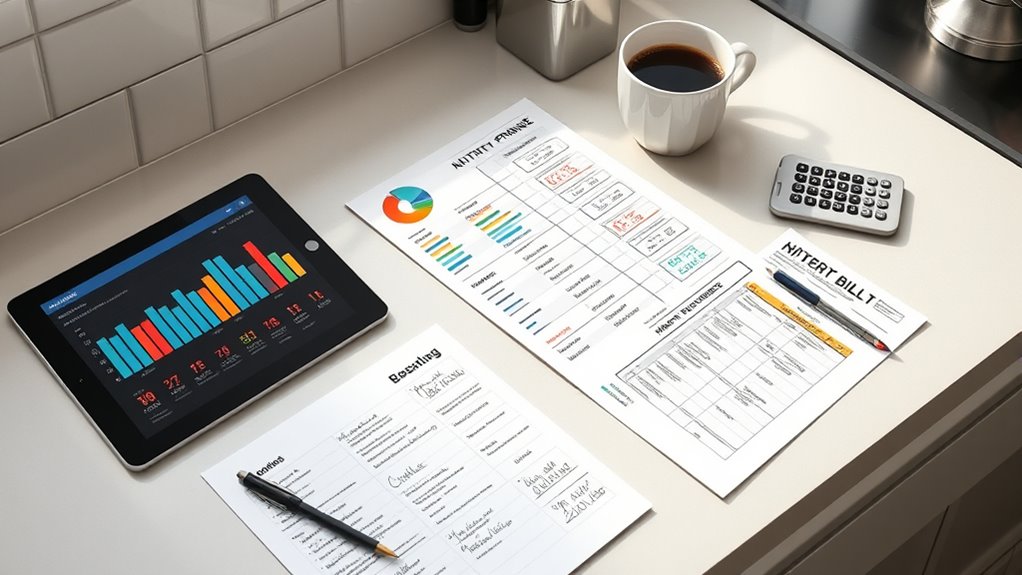
Have you ever wondered how to manage your household finances effectively? One of the key areas to focus on is tracking your utility bills and upkeep expenses. Keeping a close eye on these costs helps you spot patterns, identify potential savings, and plan for future expenses. To start, create a simple system—whether it’s a spreadsheet, an app, or a dedicated notebook—that records your monthly utility bills, maintenance costs, and any unexpected repairs. This way, you’ll have a clear picture of where your money is going and can set realistic budgets for each category. Monitoring your usage regularly helps you catch any unusual spikes early, so you’re not caught off guard by unexpectedly high bills. Additionally, adjusting your thermostat wisely—like lowering the heating or cooling when you’re away—can lead to noticeable savings month after month. Understanding the difference between BTU and CADR can help you choose more efficient appliances and filters that lower your utility and maintenance costs over time. Maintenance and upkeep expenses also require careful tracking. Regular inspections and preventive repairs are essential to avoid costly, emergency fixes later on. Budgeting for routine upkeep, such as HVAC servicing, gutter cleaning, or landscaping, ensures you’re prepared when these expenses arise. Setting aside a small monthly amount for these costs helps you avoid financial strain when an unexpected repair pops up. It’s also wise to keep a reserve fund specifically for home repairs, so you’re not scrambling to cover large expenses suddenly. When planning for larger projects, such as renovations, proper renovation budgeting becomes critical. Before starting any project, research costs thoroughly and get multiple quotes to compare prices. Setting a realistic budget and adding a contingency fund—usually around 10-15% of the total project cost—can protect you from overspending if unforeseen issues emerge. Incorporate these costs into your overall household budget, and don’t forget to think about long-term savings that renovations can bring, like improved energy efficiency or increased home value. Smart planning ensures your investments are cost-effective and align with your financial goals.
utility bill tracking spreadsheet
As an affiliate, we earn on qualifying purchases.
As an affiliate, we earn on qualifying purchases.
Frequently Asked Questions
How Can I Reduce My Utility Bills Effectively?
You can reduce your utility bills effectively by practicing energy conservation, like turning off unused appliances and switching to LED bulbs. Regularly compare costs from different providers to find better rates, and consider upgrading to energy-efficient appliances. sealing windows and doors also helps prevent heat loss. These steps not only save money but also promote eco-friendly habits, ensuring you get the best value for your energy use.
What Is the Best Way to Track Home Maintenance Costs?
Keep tabs on your home maintenance costs by creating a dedicated expense log, so you’re not shooting in the dark. Record every repair, upgrade, and service, including receipts and invoices. This helps you stay on top of expenses, plan for future repairs, and cross-check with your home insurance. Building an emergency fund ensures you’re prepared for surprises, making homeownership smoother and less stressful. Don’t let costs sneak up on you—stay proactive.
How Often Should I Review My Home Expense Budget?
You should review your home expense budget at least quarterly, especially when planning home renovation projects or updating insurance coverage. Regular assessments help you catch unexpected costs early and adapt for changes in utility rates or upkeep needs. By staying proactive, you ensure your budget remains accurate, allowing you to allocate funds wisely for ongoing maintenance, future renovations, and sufficient insurance coverage, keeping your home financially protected and well-maintained.
Are There Any Apps for Managing Home Utility Expenses?
Yes, there are apps that help you manage home utility expenses effectively. Apps like Google Nest or Samsung SmartThings connect with your smart home devices, giving you real-time data and expense alerts. You can easily track your utility usage, set budgets, and get notifications when costs exceed your limits. These apps simplify monitoring your home expenses and help you stay within budget while optimizing your energy use.
What Unexpected Expenses Should I Prepare for in Home Upkeep?
Did you know that 60% of homeowners face unexpected costs each year? You should prepare for emergency repairs like plumbing or roof leaks, which often catch people off guard. Also, seasonal expenses such as heating in winter or cooling in summer can spike bills unexpectedly. Setting aside a fund for these surprises guarantees you’re ready without financial stress, keeping your home in top shape year-round.
Conclusion
By staying on top of your utility bills and upkeep costs, you keep your home’s financial heartbeat steady. Tracking these expenses is like tending a garden—you nurture it regularly, and it flourishes. Remember, a well-planned budget isn’t just a safety net; it’s the foundation that keeps your home thriving. So, take control today, and turn your expenses into a symphony of savings and security.
Halloween Picks
halloween
As an affiliate, we earn on qualifying purchases.