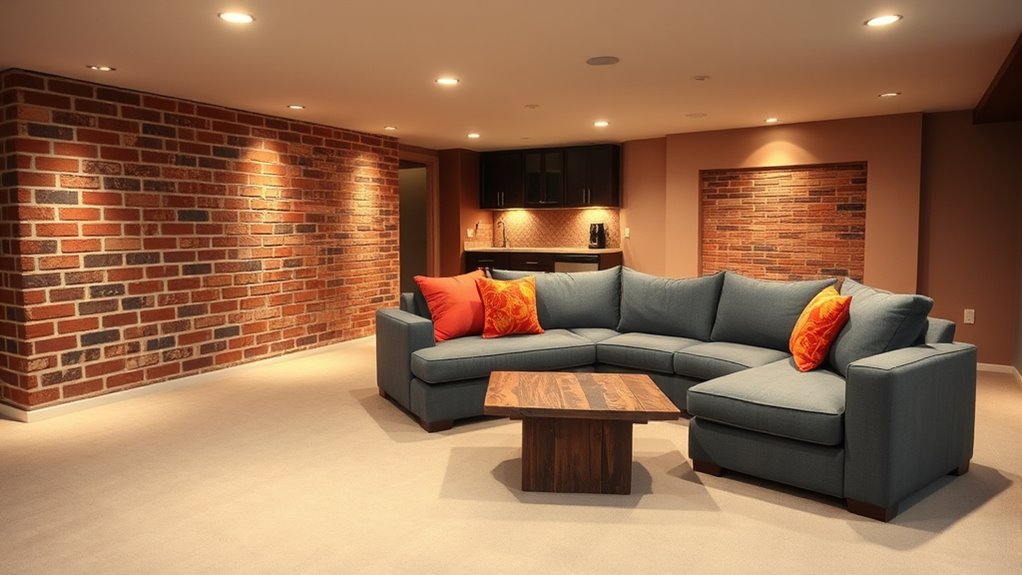

To turn your basement into a functional living area, focus on proper insulation, moisture control, and ventilation. Install foam or spray foam insulation to improve comfort and energy efficiency while preventing mold. Use vapor barriers, waterproof sealants, and sump pumps to keep dampness at bay. Add proper ventilation to control humidity, and choose moisture-resistant flooring and finishes for durability. Keep exploring to uncover essential tips for making your basement safe, cozy, and energy-efficient.
Key Takeaways
- Insulate basement walls and floors with moisture-resistant materials to improve energy efficiency and prevent drafts.
- Install vapor barriers and waterproof sealants to control ground moisture and reduce mold risk.
- Incorporate proper ventilation systems to regulate humidity and ensure good air quality.
- Use moisture-resistant flooring and finishes like sealed concrete or vinyl for durability and safety.
- Plan layered lighting to enhance ambiance, functionality, and overall usability of the space.
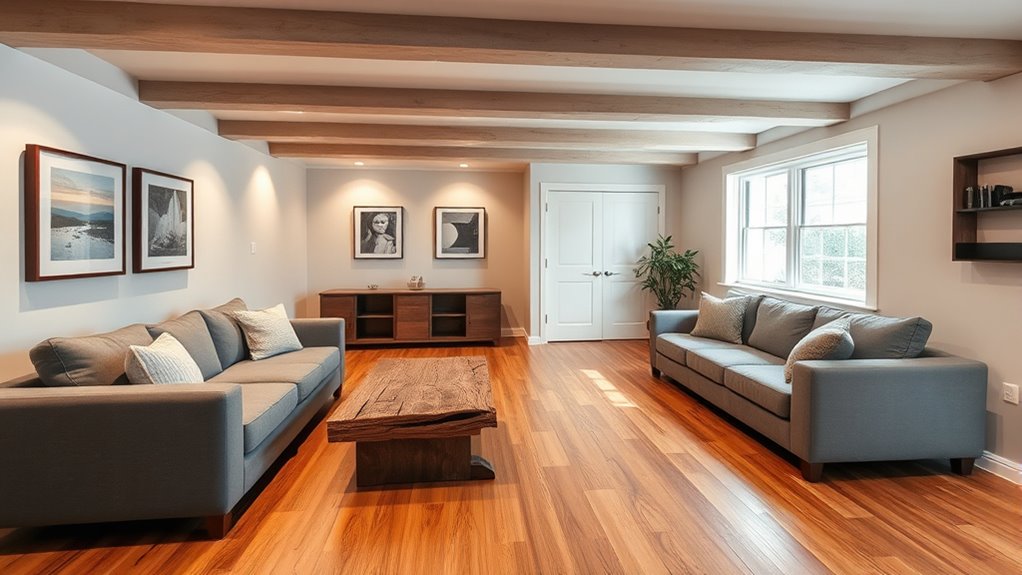
Retrofitting a basement can markedly improve your home’s safety, comfort, and functionality. When you decide to transform an underused space into a welcoming living area, the first step is addressing essential issues like basement insulation and moisture control. Proper basement insulation not only keeps your new space warm in winter and cool in summer but also helps reduce energy costs. Without adequate insulation, you risk drafts, uneven temperatures, and higher utility bills. You’ll want to select materials designed specifically for below-grade environments, such as foam board or spray foam insulation, which resist moisture and mold growth. These materials prevent heat transfer and provide a comfortable, energy-efficient environment.
Moisture control is equally vital during your retrofit project. Basements are inherently prone to dampness due to their below-ground position, which can lead to mold, mildew, and structural damage if not managed properly. Installing a high-quality vapor barrier on the walls and floors helps prevent ground moisture from seeping in, which is essential for maintaining a dry, healthy space. You might also consider applying waterproof sealants to walls or installing a sump pump if water infiltration is a persistent issue. Proper drainage around your foundation can also help divert water away, reducing the likelihood of flooding or dampness. When moisture is well managed, it becomes easier to insulate effectively and create a comfortable living area that feels inviting rather than musty or damp.
Beyond insulation and moisture control, you’ll need to plan for adequate ventilation. Good airflow helps control humidity levels and reduces indoor air pollutants, creating a healthier environment. Installing vents or an HVAC system designed for basement spaces ensures fresh air circulates and prevents stale, humid air from lingering. Lighting is another key aspect; consider installing layered lighting options—ambient, task, and accent—to make the space feel warm and welcoming. Finishing touches such as flooring, drywall, and paint should also be chosen with moisture resistance in mind. Waterproof flooring options like vinyl or sealed concrete can withstand potential spills or dampness better than traditional carpets or hardwood. Additionally, incorporating proper lighting enhances the overall ambiance and functionality of your basement, making it more inviting and usable as a living space.

LZQMRVAK Double-Layer Insulated Foam Panels, 3-Pack Insulation Seal Panels for Portable AC Window Vent Seal Kit, Thick Adjustable Insulation Board, Air Conditioner Window Gap Filler
- Dual-Layer Insulation: Reduces gaps and supports airflow
- Limits Heat, Light, Noise: Reduces heat transfer, light, and noise
- Adjustable Length: Up to 50 inches with 3 panels
As an affiliate, we earn on qualifying purchases.
As an affiliate, we earn on qualifying purchases.
Frequently Asked Questions
What Permits Are Required for Basement Retrofitting?
You’ll need to obtain permits for basement retrofitting by following the permit process through your local building department. Make sure you conform to building codes, which specify safety standards for electrical, plumbing, ventilation, and egress systems. Typically, you’ll submit plans and possibly undergo inspections. Getting these permits ensures your project is legal, safe, and up to code, preventing future issues and ensuring your basement is a functional living space.
How Long Does a Basement Retrofit Typically Take?
A basement retrofit usually takes around 4 to 8 weeks, depending on the project’s complexity. During this time, you’ll focus on basement waterproofing to prevent moisture issues and apply insulation techniques to boost energy efficiency. You might need to coordinate inspections and permits along the way. Keep in mind that unexpected delays, like weather or supply issues, can extend the timeline, so plan accordingly.
What Is the Average Cost of Basement Renovation?
The average cost of basement renovation ranges from $10,000 to $50,000, depending on your project scope. You should consider cost considerations like materials, labor, and design choices when planning your budget. To avoid surprises, prioritize budget planning early, and get detailed estimates from contractors. Keep in mind that higher-end finishes and extensive upgrades will increase the overall cost, so tailor your renovation to fit your financial goals.
Can I Retrofit a Basement Without Professional Help?
You can retrofit a basement yourself, but be prepared for DIY challenges like proper insulation, waterproofing, and electrical work. You’ll need solid budget planning to cover materials and unforeseen issues. If you’re experienced with home projects, tackling this might be doable, but for complex tasks, hiring professionals can save time and reduce risks. Assess your skills carefully before starting to guarantee a successful, safe renovation.
How Do I Ensure Proper Ventilation in a Finished Basement?
To guarantee proper ventilation in your finished basement, you should install exhaust fans and consider a ventilation system that promotes air circulation, such as an HRV or ERV. This improves air quality and helps with moisture control, preventing mold and musty odors. Keep windows open when weather permits and use dehumidifiers to maintain ideal humidity levels. Regularly inspecting vents and filters ensures your basement stays fresh and well-ventilated.
Conclusion
Retrofitting your basement is like planting a seed in hidden soil—you nurture it patiently, and soon it blossoms into a vibrant space where memories are made. With each upgrade, you turn a dark, unused corner into a sanctuary of comfort and possibility. Remember, your effort transforms the underground into a sanctuary that’s truly yours. As the roots grow deep, so does the value and warmth of your home—your personal haven waiting to flourish.