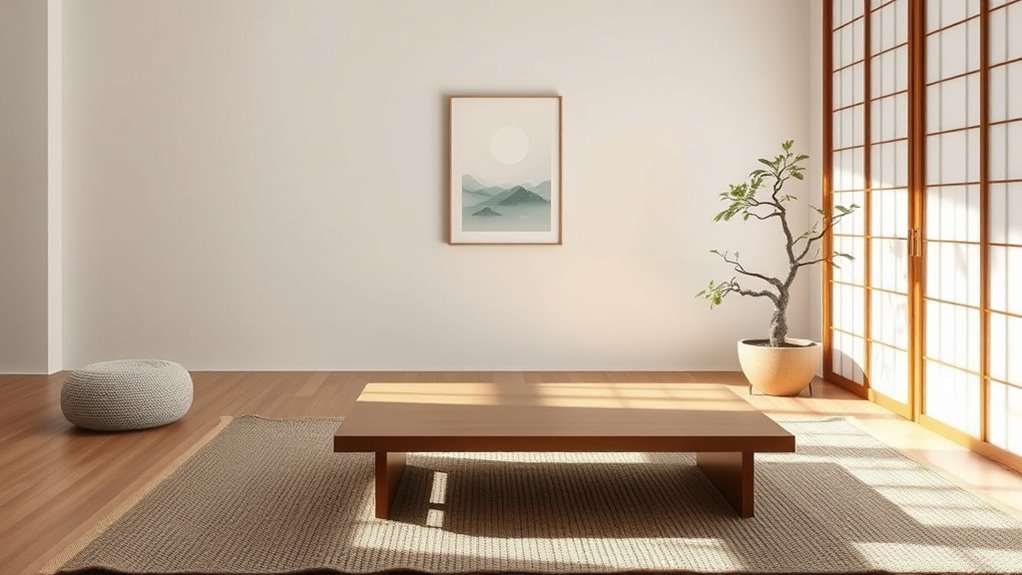

Japandi style blends Japanese minimalism’s simplicity with Scandinavian coziness to create calm, inviting spaces. You’ll focus on clean lines, natural materials like light oak or bamboo, and neutral, earthy colors. Maximize natural light and keep clutter minimal to achieve a harmonious environment. Thoughtful accents and durable, beautiful furniture evoke tranquility and functionality. If you continue exploring, you’ll discover how to craft balanced spaces that feel both serene and stylish.

Get the little things that make your day delivered free with Prime
- Fast, free delivery on millions of items
- Prime Video, Amazon Music and more included
- Member-only deals all year
Key Takeaways
- Japandi style combines Japanese minimalism’s simplicity with Scandinavian coziness for a serene, inviting environment.
- It emphasizes clean lines, natural materials, and functional furniture with a focus on craftsmanship.
- The color palette features subdued, neutral tones inspired by nature, enhancing calmness and harmony.
- Natural light and textures like linen, jute, and ceramics are essential to creating a tranquil atmosphere.
- The style promotes open, clutter-free spaces with durable, high-quality decor for longevity and balance.

Have you ever wondered how to create a space that feels both calming and stylish? If so, embracing Japandi style could be exactly what you need. This design trend masterfully blends Japanese minimalism with Scandinavian coziness, resulting in a space that’s serene yet inviting. One of the key aspects to achieving this look is carefully considering your furniture selections. Opt for pieces with clean lines, natural materials, and simple forms. Think low-profile sofas, wooden coffee tables, and sleek storage units that avoid unnecessary ornamentation. The furniture should serve both form and function, emphasizing quality and craftsmanship over excess. Avoid clutter by choosing pieces that are versatile and unobtrusive, allowing the space to breathe and feel open. When selecting furniture, focus on craftsmanship and natural textures, like light oak, bamboo, or walnut, which add warmth without overwhelming the simplicity. The goal is to create a balanced environment that promotes tranquility and ease. Incorporating durable wooden toys into a child’s play space can also complement the natural aesthetic, emphasizing quality and longevity. Color palettes play an essential role in establishing the Japandi aesthetic. Keep your colors subdued and neutral, drawing inspiration from nature. Soft beiges, warm taupes, muted grays, and earthy greens form the foundation of the palette. These hues foster a sense of calm and provide a perfect backdrop for the other design elements. Incorporate darker accents, like charcoal or black, sparingly to add depth and contrast, but always maintain harmony. The use of natural light is also vital; large windows and minimal window treatments allow daylight to fill the space, enhancing the subtlety of your chosen colors. When it comes to accents, think about incorporating natural materials and textures—like linen, jute, or ceramics—that complement your color scheme and elevate the overall aesthetic. Remember, the key is to keep the palette simple yet layered, avoiding bright or overly bold colors that could disrupt the tranquil atmosphere.
Japandi style minimalist furniture
As an affiliate, we earn on qualifying purchases.
As an affiliate, we earn on qualifying purchases.
Frequently Asked Questions
How Do I Incorporate Natural Elements Into Japandi Decor?
To incorporate natural elements into your Japandi decor, focus on adding natural textures like wood, linen, and rattan to create warmth and authenticity. Use botanical accents such as potted plants, dried flowers, or moss to bring life and serenity to your space. Keep these elements simple and uncluttered, blending seamlessly with clean lines and neutral tones, which are key to achieving that harmonious Japandi aesthetic.
What Color Palettes Are Best for a Japandi Space?
You’ll want a color palette that transforms your space into a sanctuary—think of neutral tones and an earthy palette that breathe calm and warmth into every corner. Soft beiges, warm greys, and muted browns create a serene backdrop, perfectly balancing Japanese minimalism with Scandinavian simplicity. These colors amplify natural light, making your space feel expansive and peaceful, so you can truly unwind in a beautifully harmonious environment.
Can Japandi Style Work in Small Apartments?
Yes, japandi style works well in small apartments. You can optimize your space by choosing multifunctional furniture and keeping clutter minimal. Focus on clean lines and simple designs that reflect the calming, minimalist essence of japandi. Use light colors to make the space feel larger and incorporate natural materials for warmth. Thoughtful furniture selection and space optimization help you create a serene, stylish japandi environment even in limited square footage.
How Do I Balance Functionality and Aesthetics in Japandi Design?
You can perfectly balance functionality and aesthetics in Japandi design by focusing on clever storage solutions that keep clutter out of sight, enhancing tranquility. Opt for minimal yet impactful lighting options that highlight your space’s natural beauty. Keep your furniture simple yet purposeful, ensuring each piece adds value without sacrificing style. This harmony between practicality and beauty creates a serene, inviting environment that truly reflects the essence of Japandi.
What Are Common Mistakes to Avoid in Japandi Styling?
You should avoid cluttering your space with too many decorative accessories, as it can disrupt Japandi’s minimalist vibe. Stick to a few carefully chosen pieces that add subtle elegance. Also, be mindful of your lighting choices—opt for soft, natural light or simple fixtures that enhance the calm atmosphere. Overly ornate or harsh lighting can clash with the serene aesthetic. Keep it simple, functional, and harmonious to maintain the balanced Japandi style.
Conclusion
Embracing Japandi style transforms your space into a tranquil sanctuary where chaos can’t even dream of entering. By blending Japanese serenity with Scandinavian simplicity, you create a haven so harmonious it feels like a gust of fresh mountain air every day. It’s not just interior design; it’s a lifestyle that elevates your well-being to a level so high, even the clouds envy your perfect balance. Immerse yourself in Japandi and experience a serenity that’s truly out of this world.
Fall Picks
fall essentials
As an affiliate, we earn on qualifying purchases.