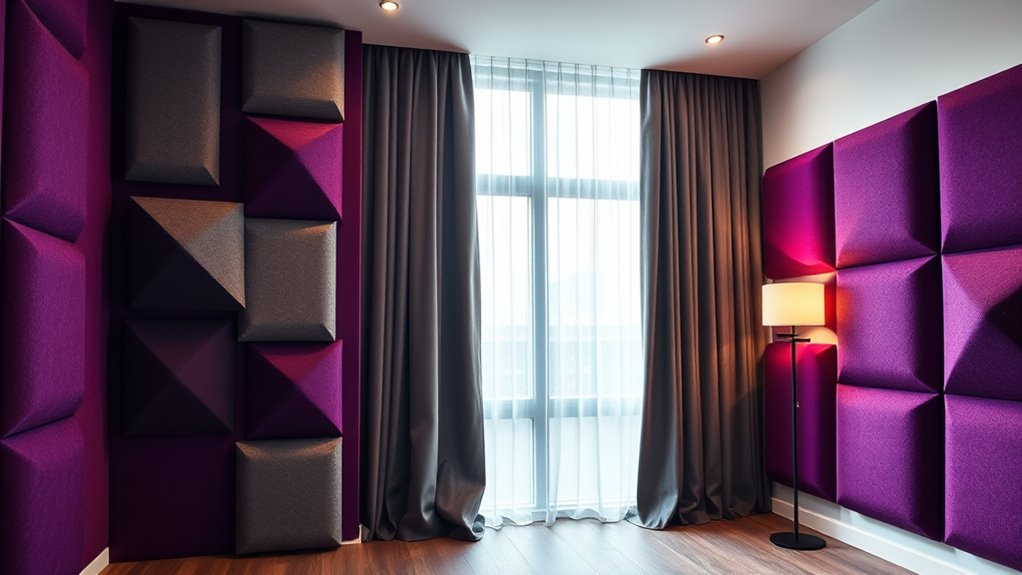

To reduce noise in your room, start by installing acoustic panels on walls where sound bounces, and seal gaps around doors with weatherstripping or door seals to block noise leaks. Use door sweeps at the bottom and add heavy curtains or blankets to windows for extra sound absorption. Combining these simple, affordable measures can make a big difference, and exploring more tips can help you create an even quieter space.
Key Takeaways
- Install acoustic panels on walls to absorb sound and reduce echo effectively.
- Seal gaps around doors with weatherstripping and add door sweeps to block noise leaks.
- Use heavy curtains or blankets over windows to dampen external noise intrusion.
- Combine wall treatments with structural enhancements like upgraded windows for comprehensive soundproofing.
- Focus on quick, affordable fixes such as acoustic panels and door seals for immediate noise reduction.
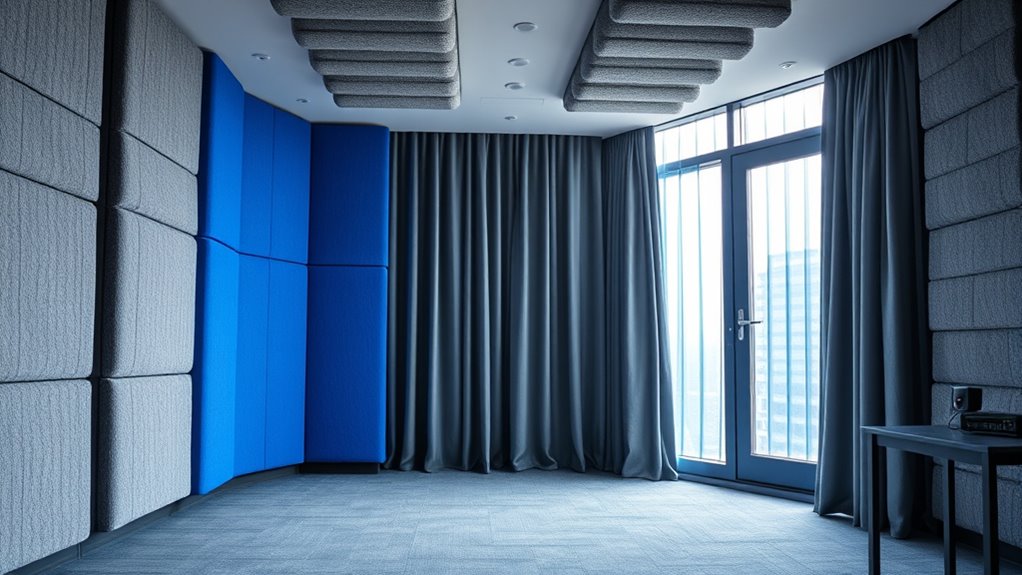
If noise from outside or nearby rooms disrupts your peace, soundproofing your space offers an effective solution. You don’t have to completely overhaul your room to achieve noticeable noise reduction. Simple measures like installing acoustic panels and sealing gaps around doors can considerably cut down on unwanted sound. Acoustic panels are a versatile option; they absorb sound waves rather than reflecting them, reducing echo and muffling noise. You can mount these panels on walls where sound tends to bounce or accumulate, especially behind loud sources like a TV or speakers. They’re available in various sizes and designs, so you can choose ones that blend seamlessly with your decor. Proper placement is key—aim for a balance that covers enough wall space to make a difference without overwhelming the room’s aesthetic.
Another effective step is to focus on sealing gaps around doors. Doors are common culprits for letting noise seep through. Installing door seals creates a barrier that prevents sound from passing through the tiny openings around the door frame. You can use weatherstripping or specialized door seal strips, which are easy to apply and affordable. These seals work by compressing when the door is closed, blocking the gaps and reducing noise transmission. If you find that your door doesn’t sit flush against the frame, consider installing a door sweep at the bottom. This prevents sound from sneaking in beneath the door, especially if there’s a gap. Combining door seals with acoustic panels on the walls or ceiling maximizes your soundproofing efforts, making your space much quieter.
Keep in mind that addressing one aspect isn’t enough; the more points you seal and absorb, the more effective your soundproofing will be. For example, adding a heavy curtain or blanket over a window can help, but pairing it with acoustic panels on the walls will offer a more thorough solution. If you’re dealing with loud neighbors or street noise, consider upgrading your windows as well, since they’re often a weak link in noise insulation. But for a quick, budget-friendly fix, focus on acoustic panels and door seals first. They’re straightforward to install and provide immediate relief from disruptive sounds. Additionally, exploring specialized tuning solutions can further enhance your environment by reducing noise transmission through structural modifications. By taking these steps, you’ll create a more peaceful environment, whether you’re working, resting, or trying to enjoy your favorite music without disturbance.

Focusound 52 Pack Acoustic Foam Panels 1" x 12" x 12" Sound Proof Foam Panles Soundproofing Noise Cancelling Wedge Panels for Home Office Recoding Studio with 300PCS Double-Side Adhesive
- Soundproofing Design: Triangular grooves for noise absorption
- Includes Adhesive Tape: 300pcs strong double-sided adhesive included
- Easy Installation: Adhesive helps secure panels and protect walls
As an affiliate, we earn on qualifying purchases.
As an affiliate, we earn on qualifying purchases.
Frequently Asked Questions
How Long Does Soundproofing Typically Last Before Needing Repairs?
Soundproofing typically lasts between 10 to 20 years, depending on the materials used and your maintenance efforts. You’ll want to regularly check for wear and tear, such as cracks or sagging, which may require repairs. Proper upkeep, like sealing gaps and replacing worn insulation, extends durability lifespan. With good maintenance, your soundproofing can remain effective longer, ensuring consistent noise reduction without frequent repairs.
Are There Eco-Friendly Soundproofing Materials Available?
Absolutely, eco-friendly options exist to quiet your space. You can choose recycled insulation, which repurposes materials like denim or cellulose, reducing waste. Biodegradable barriers made from natural fibers like cork or hemp also help block sound without harming the environment. Think of these materials as nature’s whisper, offering effective soundproofing while keeping your ecological footprint light. Embrace sustainable solutions for a quieter, greener home.
Can Soundproofing Be Effective for Both Indoor and Outdoor Noise?
Yes, soundproofing can be effective for both indoor and outdoor noise. For indoor spaces, you can focus on interior soundproofing techniques like adding insulation, sealing gaps, and using acoustic panels. For outdoor noise, outdoor noise barriers work well to block sound before it reaches your home. Combining these methods helps you markedly reduce noise pollution, creating a quieter environment both inside and outside your property.
What Is the Cost Range for Professional Soundproofing Services?
Imagine your quiet sanctuary costing between $1,000 and $10,000—that’s the range for professional soundproofing services. The cost factors include room size, materials, and complexity. Service providers vary, with some offering detailed solutions and others focusing on specific areas. You’ll want to compare quotes, ask about their experience, and guarantee they understand your noise reduction goals. Investing in quality can make your space truly peaceful.
Are There Temporary Solutions for Soundproofing During Events or Construction?
Yes, you can use temporary barriers like heavy blankets, moving pads, or plywood to block noise during events or construction. DIY solutions such as hanging quilts or installing temporary drywall can also help absorb sound. These options are cost-effective and easy to set up, giving you quick noise reduction. Just guarantee they’re securely placed to maximize effectiveness, and remove them afterward to restore your space.
Conclusion
By applying effective soundproofing methods, you can create a peaceful oasis amid noise. While some solutions, like adding insulation, are simple, others, like installing specialized barriers, require effort. Yet, both approaches serve the same goal: transforming your space into a quiet retreat. So, whether you choose quick fixes or more extensive solutions, remember that your effort can turn chaos into calm, proving that even in a noisy world, silence is within your reach.