
To accurately compare counter-depth and standard-depth refrigerators, you need to measure your kitchen space carefully. Start by measuring the width, height, and depth of the designated spot, factoring in countertop and cabinet clearances. Don’t forget to account for door swing and how much space you need for opening and accessing the fridge comfortably. By ensuring precise measurements, you’ll find the perfect fit for your kitchen. Keep going to discover more tips on making the right choice.

Get the little things that make your day delivered free with Prime
- Fast, free delivery on millions of items
- Prime Video, Amazon Music and more included
- Member-only deals all year
Key Takeaways
- Measure the width, height, and depth of the existing space, including clearance for door swings and ventilation.
- Check the depth from the back wall to the front edge of your countertops to compare counter-depth and standard-depth options.
- Account for door clearance and space for opening refrigerator doors fully without obstruction.
- Confirm the interior storage capacity to ensure it meets your food organization needs within the space constraints.
- Consider overall kitchen layout and traffic flow to select the depth that best balances aesthetics and functionality.
As an affiliate, we earn on qualifying purchases.
Why Your Kitchen Size and Layout Matter When Choosing a Refrigerator
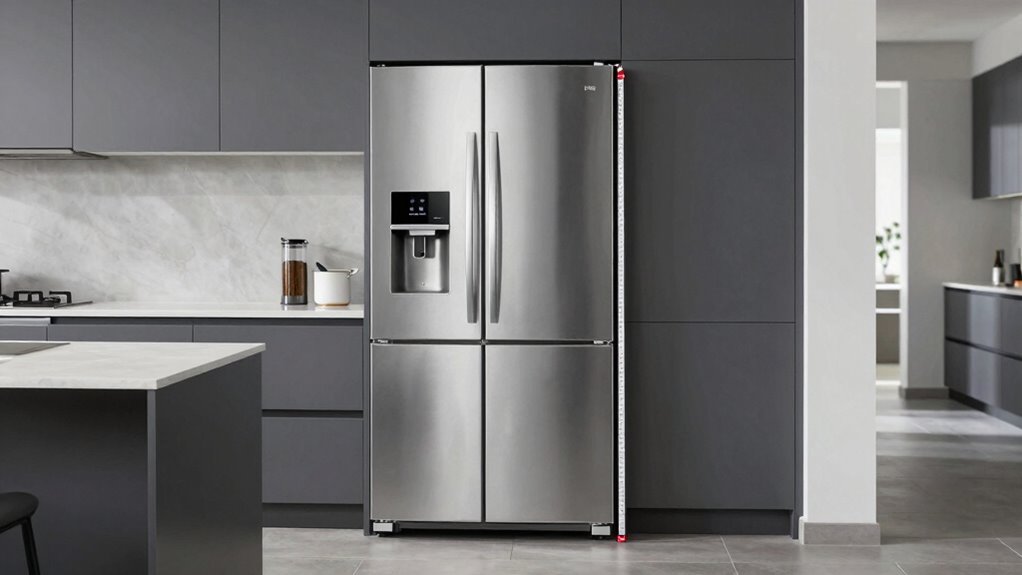
Your kitchen size and layout play a crucial role in selecting the right refrigerator, as they determine how much space is available and how easily you can access your appliances. Proper appliance placement ensures you don’t block walkways or disrupt workflow. Consider the available space for opening doors and drawers comfortably without knocking into walls or counters. Aesthetically, your refrigerator should complement your kitchen’s design, blending seamlessly or making a statement, depending on your style. If your space is limited, a smaller or built-in model might be best. For larger kitchens, you can opt for bigger units without sacrificing functionality. Moreover, understanding your content formats helps you choose a refrigerator that fits well, looks good, and functions efficiently within your space constraints. Additionally, assessing your kitchen’s spatial configuration can help determine the ideal depth and placement for your new refrigerator to maximize usability and work efficiency.
Counter-Depth vs. Standard-Depth Refrigerators: What’s the Difference?

Counter-depth and standard-depth refrigerators differ mainly in how far they extend into your kitchen space. Counter-depth units sit flush with your cabinets, creating a sleek, built-in look. Standard-depth models are deeper, protruding more into the room, which can affect appliance energy efficiency and fridge organization. Free Floating can also influence how these refrigerators integrate with your backyard or outdoor spaces, especially when considering features like landscaping or outdoor kitchens. Additionally, kitchen ergonomics can be impacted by the depth of your refrigerator, affecting ease of access and overall flow. Incorporating design principles into your decision can help ensure your choice aligns with your overall kitchen layout. – Counter-depth fridges save space and give a modern aesthetic but may have less interior storage. – Standard-depth models offer more room inside, making it easier to organize food and beverages. – Counter-depth units usually cost more for the same features due to their design. – Standard-depth refrigerators can impact your kitchen’s flow and accessibility. An understanding of kitchen design principles can help in choosing the right refrigerator for your space and lifestyle, especially as AI ethicist jobs become more prevalent in smart home technology development.
How to Measure Your Kitchen Space for a Refrigerator

Start by measuring the available space in your kitchen to make certain your new refrigerator fits comfortably. Be sure to note the width, depth, and height, including any trim or molding. Don’t forget to take into account door clearance so you can open and close the fridge easily without obstruction.
Measure Available Space
Before choosing a refrigerator, it is vital to accurately measure the available space in your kitchen. Proper measurement ensures your new fridge fits perfectly, aiding in better storage organization and maximizing energy efficiency. Start by measuring the width, depth, and height of the designated spot, leaving extra space for ventilation. Keep in mind door swing clearance and nearby cabinets. Use a tape measure for precise readings, and note any obstructions like electrical outlets or piping. Consider the space needed for easy access and airflow, which impacts energy efficiency. Remember, a tight fit can hinder storage organization and cooling performance. Double-check your measurements before shopping to avoid surprises and make sure your new refrigerator complements your kitchen layout seamlessly.
Consider Door Clearance
To make certain your refrigerator fits comfortably and operates efficiently, you need to carefully measure door clearance. This includes accounting for hinge space and how wide the door swings open. Measure from the edge of the refrigerator to the nearest wall or cabinet when the door is fully open. Keep in mind that some models have doors that swing wider, requiring more space. Use the table below for clarity:
| Refrigerator Type | Required Door Clearance | Hinge Space Needed |
|---|---|---|
| Counter-depth | 2-3 inches | Additional 1-2 inches |
| Standard depth | 4-6 inches | Additional 2-3 inches |
Ensuring enough door clearance prevents obstruction and facilitates easy access. Additionally, considering space planning can help you optimize your kitchen layout for both functionality and comfort. Proper measurements and planning can also help avoid installation issues that might require professional adjustments later.
Factors to Consider When Choosing Refrigerator Depth
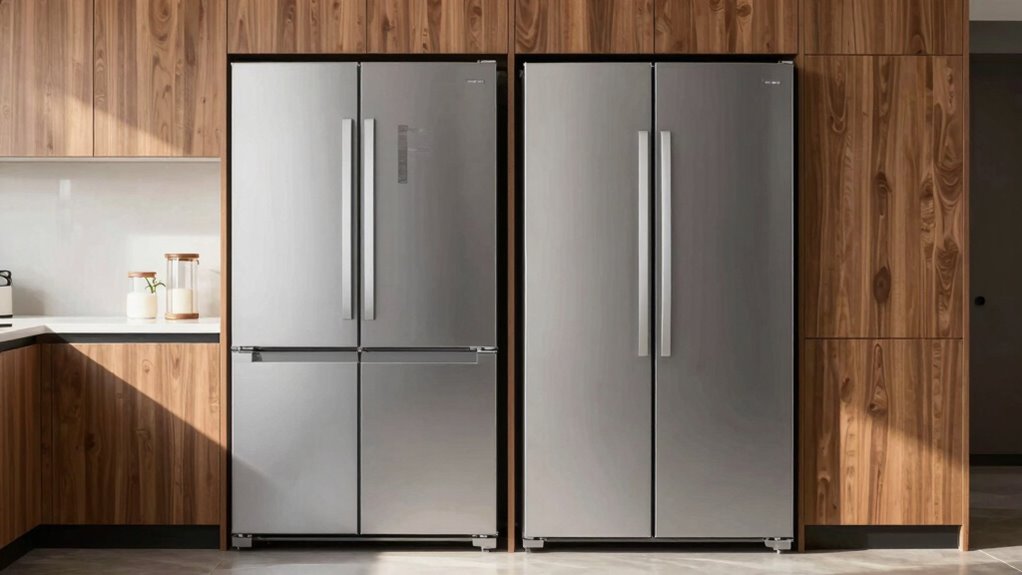
When choosing the right refrigerator depth, it’s important to think about how much space you have available in your kitchen and how the appliance will fit into your existing layout. Depth impacts interior aesthetics and how seamlessly your fridge blends with your cabinetry. Consider whether a counter-depth model offers a sleek, integrated look or if a standard-depth refrigerator provides more storage capacity. Additionally, depth influences energy efficiency—shallower models often consume less power, but may have less interior space. Keep in mind the following factors:
- Available space and clearance
- Interior storage needs
- Overall kitchen design
- Energy consumption and efficiency
- Refrigerator depth can also affect ease of access and daily usability. Understanding the airflow and ventilation requirements of your appliances can help optimize their performance and longevity. Proper ventilation is especially important for water-cooled systems to prevent overheating and maintain efficiency. Moreover, selecting the right depth can impact kitchen workflow by making everyday tasks more convenient. Balancing these elements helps ensure your fridge complements your kitchen’s style and functions efficiently.
Common Mistakes When Measuring for Your Refrigerator (and How to Avoid Them)

Accurate measurements are key to guaranteeing your new refrigerator fits perfectly and functions efficiently. One common mistake is relying on guesswork rather than using proper measuring tools like a tape measure or a laser measure. Always measure the width, height, and depth from multiple points to account for any irregularities in your space. Proper measuring techniques can help ensure your measurements are precise and reliable. Another mistake is neglecting to include space for clearance—both behind and around the refrigerator—which affects placement accuracy and airflow. Be sure to measure doorways, hallways, and any tight turns to confirm your appliance can be moved into position easily. Avoid rushing these steps; double-check all measurements before purchasing. Proper use of measuring tools and attention to placement accuracy help prevent costly mistakes and ensure your refrigerator fits seamlessly. Additionally, understanding spatial awareness can help you better visualize how the appliance will fit within your existing layout. Incorporating body measurements such as width and height considerations can also aid in planning for other household appliances and furniture. Developing a measurement checklist can serve as a helpful reminder to verify all dimensions before making a purchase. Being aware of potential market variations can also guide you in choosing the right model and size for your needs.
Deciding Which Refrigerator Depth Fits Your Kitchen Best

Choosing the right refrigerator depth depends on your kitchen layout and your daily needs. Consider how the appliance aesthetics blend with your cabinets and counters, creating a seamless look or a bold statement. Think about accessibility—do you prefer easy reach or a flush fit? Depth also impacts energy efficiency; shallower models often consume less power. Visualize your space with these points in mind:
- Your cabinet and counter height alignment
- The flow of traffic around the kitchen
- How much countertop space you want to preserve
- The importance of appliance aesthetics and style
- Understanding kitchen ergonomics can be enhanced by knowing how the size of appliances affects your overall kitchen ergonomics.
Final Tips for Selecting the Perfect Refrigerator Size and Depth
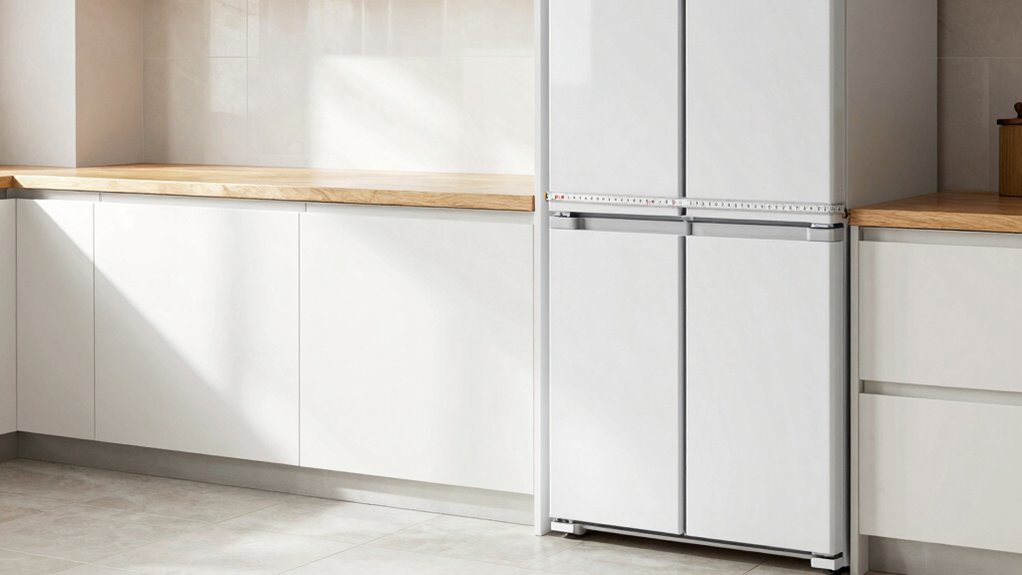
Selecting the right refrigerator size and depth involves balancing your kitchen’s space constraints with your daily needs. Measure your available space carefully, considering appliance dimensions and door clearance. Think about how much storage you require and whether a counter-depth or standard-depth model best fits your lifestyle. Aesthetic considerations also matter—counter-depth refrigerators offer a sleek, integrated look, while standard-depth models provide more interior space. Don’t forget to account for door swing and clearance for easy access. Keep in mind that choosing the right size isn’t just about fitting in; it’s about ensuring efficient operation and convenience. Take your time to compare options, measure precisely, and prioritize both functionality and appearance to select the perfect refrigerator for your kitchen. Additionally, understanding electric bike horsepower can help you gauge the power and performance of various models if you’re considering upgrading your transportation options. To optimize your kitchen setup, consider the proper care of kitchen gear to maintain appliance longevity and efficiency. Being aware of the correct refrigerator dimensions can also help you make more informed choices when shopping for your appliance. Recognizing the importance of accurate measurements ensures you select an appliance that fits comfortably and functions optimally in your space. For example, measuring storage capacity accurately ensures the refrigerator meets your family’s needs without sacrificing space.
Frequently Asked Questions
How Does Refrigerator Depth Affect Overall Kitchen Aesthetics?
Your refrigerator depth greatly influences your kitchen aesthetics by shaping the overall layout and countertop integration. A counter-depth fridge offers a sleek, built-in look that seamlessly blends with cabinets, making your space appear more open and organized. Standard depth models stick out more, which can disrupt the visual flow. Choosing the right depth guarantees your kitchen feels balanced, cohesive, and visually appealing, enhancing both function and style.
Are There Specific Brands Known for Better Counter-Depth Options?
You’ll find that brands like Sub-Zero, Thermador, and Bosch excel in counter-depth options, especially for custom cabinet integration. These brands offer built-in styles that seamlessly blend with your cabinetry, providing a sleek look. While some manufacturers focus on freestanding models, check if their built-in or integrated versions meet your aesthetic goals. Testing different brands’ features helps you choose a product that balances performance and design perfectly.
Can a Refrigerator Be Adjusted to Fit Different Depths?
You can adjust a refrigerator to fit different depths using various adjustment techniques, but it’s not always straightforward. Most models have leveling legs or wheels you can tweak to fine-tune the fit, but installation challenges may arise if the space isn’t perfectly aligned. Always check the manufacturer’s instructions and measure carefully before installation to guarantee a seamless fit, avoiding unnecessary adjustments later.
How Does Refrigerator Depth Impact Energy Efficiency?
Your refrigerator’s depth directly impacts energy efficiency; shallower models, like counter-depth units, often consume less energy because of reduced insulation needs and smaller volume. Deeper refrigerators might have thicker walls, which can improve insulation efficiency but increase energy use due to larger interior space and potentially more frequent door openings. To save energy, choose a size that fits your needs without excess space, optimizing insulation and minimizing energy consumption.
What Are the Maintenance Considerations for Various Refrigerator Depths?
You should regularly clean the coils and door seals to maintain efficiency, regardless of depth. For counter-depth models, make certain there’s enough door swing clearance to access shelves easily, especially if you add custom shelving. Standard-depth refrigerators might need more frequent cleaning due to more accessible coils. Always check door swing clearance before installation to prevent obstructions and make maintenance easier, helping your fridge run smoothly and last longer.
Conclusion
Choosing the right refrigerator depth can make all the difference in your kitchen’s look and function. Did you know that counter-depth models account for about 60% of new refrigerator sales? By measuring carefully and considering your space, you’ll guarantee your new fridge fits perfectly without sacrificing style or storage. Take your time, avoid common mistakes, and you’ll enjoy a seamless, efficient upgrade that suits your needs perfectly.
Halloween Picks
halloween
As an affiliate, we earn on qualifying purchases.