To prevent leaks when installing your dishwasher, start by ensuring it’s properly leveled with all feet adjusted flat. Check all water supply hoses and tighten connections securely without over-tightening. Make sure the drain hose is routed correctly and secured with clamps to avoid kinks or leaks. Inspect the door seal, gasket, inlet valve, and filter for damage or debris. Run a short cycle to verify everything functions correctly and leaks are minimized. Keep exploring for more tips.

Get the little things that make your day delivered free with Prime
- Fast, free delivery on millions of items
- Prime Video, Amazon Music and more included
- Member-only deals all year
Key Takeaways
- Ensure the dishwasher is properly leveled using a spirit level to prevent door seal leaks and water pooling.
- Check and securely tighten water supply hoses and connections, avoiding over-tightening and leaks.
- Properly route and secure the drain hose, avoiding kinks, bends, or loops that could cause blockages or siphoning.
- Regularly inspect and clean door seals, gaskets, and inlet filters to prevent leaks and maintain sealing effectiveness.
- Conduct test cycles to identify hidden leaks and verify all connections and seals are functioning correctly.
dishwasher installation level tool
As an affiliate, we earn on qualifying purchases.
As an affiliate, we earn on qualifying purchases.
Why Proper Dishwasher Installation Prevents Leaks
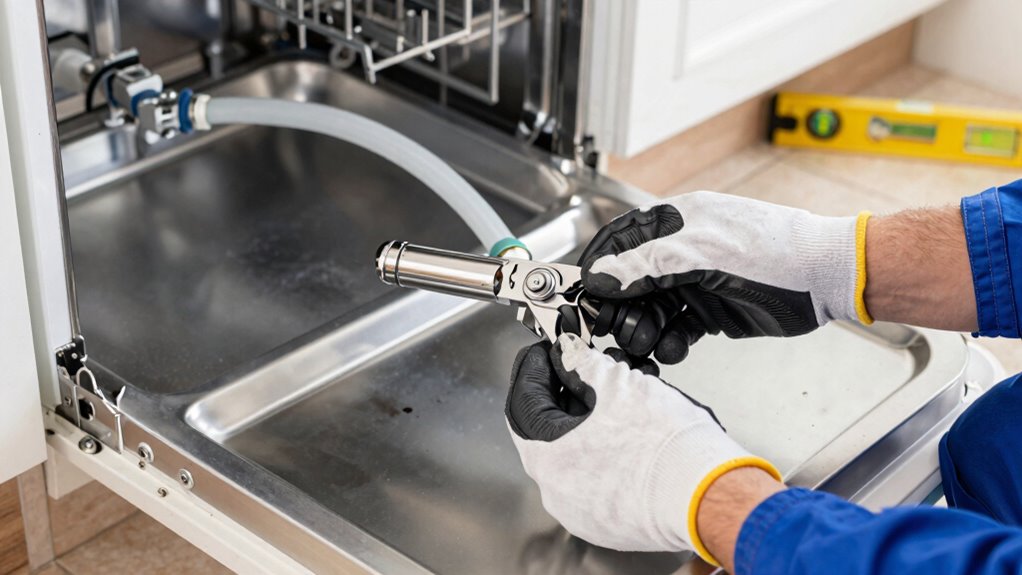
Proper dishwasher installation is essential to prevent leaks because a secure connection guarantees water stays where it belongs. Ensuring dishwasher safety starts with correct setup, which reduces the risk of water damage and mold. To do this, you’ll need the right installation tools like a level, wrench, and screwdriver. These tools help you tighten fittings properly and align the unit correctly. A proper installation prevents loose hoses or fittings that can cause leaks over time. Remember, a well-installed dishwasher not only protects your home but also extends the appliance’s lifespan. Take your time to follow manufacturer instructions carefully, double-check all connections, and use the appropriate tools. Additionally, understanding filtration and suction basics can help you troubleshoot and prevent potential leaks from clogs or improper drainage. Knowing how water flow controls function within your dishwasher can further assist in avoiding common leak sources. Properly inspecting hose connections during installation ensures a tight seal and prevents future leaks. Being aware of common installation mistakes can help you identify issues early and maintain a leak-free operation, ensuring your kitchen runs smoothly. Regularly checking the connection points for wear and tightness also contributes to long-term leak prevention.
Check Your Water Supply and Hose Connections for Leaks
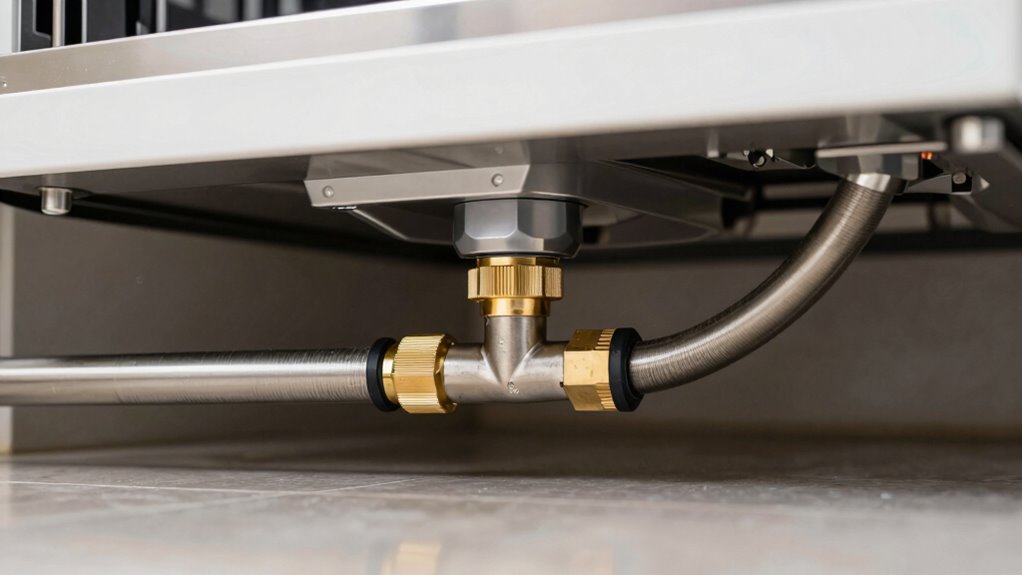
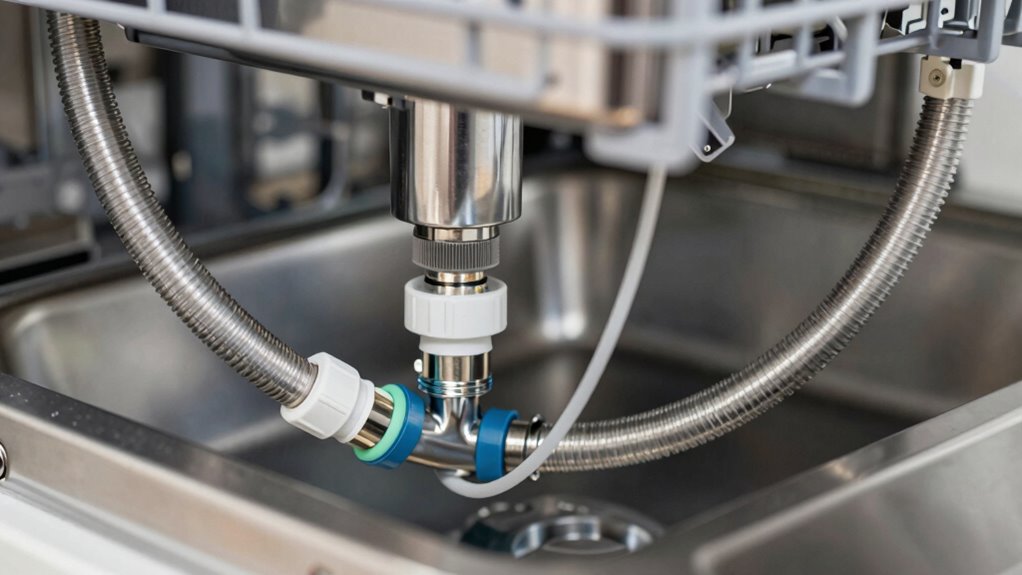
Before running your dishwasher for the first time, carefully check all water supply and hose connections for leaks. Verify the water pressure is appropriate—too high can cause stress on hoses, while too low may prevent proper operation. Inspect the hose material; flexible, reinforced hoses are less prone to cracking or bursting. Tighten fittings securely, but avoid over-tightening, which can damage connections. Look for signs of leaks at connection points, especially where hoses meet the water inlet valve. Consider using a leak-proof sealant if needed. Regularly check for any emerging drips or moisture. Properly secured and high-quality hoses with suitable water pressure help prevent leaks and extend your dishwasher’s lifespan. Also, ensure hose material quality to prevent deterioration over time. Additionally, choosing reinforced hoses can provide added durability and reduce the risk of leaks. Maintaining proper installation practices ensures long-term reliability and minimizes potential water damage. Remember that pressure regulation can be vital in preventing hose failures and leaks over time.
Make Sure the Drain Hose Is Properly Positioned and Secured
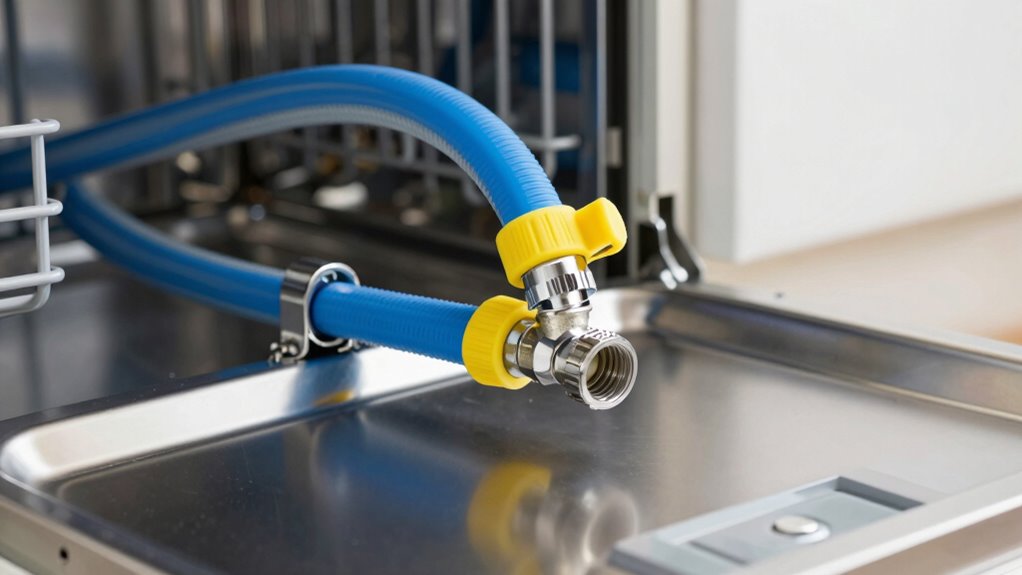
Make certain the drain hose is positioned correctly so water flows freely without leaks. Tighten all connections securely to prevent any drips or disconnections. Also, check for kinks or bends that could block drainage and cause issues during operation. Ensuring proper hose alignment can help maintain optimal performance and prevent water damage. Additionally, inspecting the odor of the water or surrounding environment can help identify potential issues early on. Regularly monitoring for clogged filters can also prevent drainage problems and extend the lifespan of your dishwasher. Proper piercing care and hygiene are essential to prevent infections that could compromise your dishwasher’s components over time.
Verify Proper Hose Placement
To prevent leaks and drainage issues, you need to confirm that the drain hose is positioned and secured correctly. Proper hose routing guarantees water flows smoothly without kinks or loops that can cause backups. Make sure the hose is securely fastened to prevent leaks or disconnection during operation. Check that the hose height meets manufacturer recommendations to avoid siphoning or drainage problems. Proper hose securement keeps the hose in place and prevents movement that could lead to leaks. Additionally, understanding inclusive casting can ensure that all components are accessible and properly installed for optimal performance. Ensuring the correct hose orientation helps maintain proper drainage and prevents potential damage. – Ensure the hose is routed downward, not looped or kinked. – Use clamps or brackets to secure the hose firmly. – Keep the hose elevated above the floor to prevent siphoning. – Confirm the hose is attached tightly to both the dishwasher and drain outlet. – Avoid sharp bends that could restrict water flow. Also, verifying the proper hose material can improve durability and reduce the risk of leaks over time. A flexible hose material can accommodate movement and reduce stress on connections, further preventing leaks. Ensuring the correct installation of the hose can significantly improve overall performance and longevity of your dishwasher setup.
Secure Connections Tightly
Securing the drain hose tightly is essential to prevent leaks and disconnections during dishwasher operation. A loose connection can cause water to escape, leading to potential damage and increased dishwasher noise. Ensuring the hose is firmly attached not only stops leaks but also maintains energy efficiency by preventing unnecessary water loss. Check that the clamp or connector is tight and secure, and that the hose is positioned correctly without any slack. Properly secured hoses reduce vibrations and noise during cycles, making your dishwasher run more quietly. Confirm that the hose is directed downward and away from areas where kinks or bends could form later. Taking these steps guarantees a reliable connection, keeps your dishwasher running smoothly, and minimizes the risk of leaks or operational issues. Additionally, regularly inspecting the hose for wear and tear can help prevent unexpected failures. Performing these checks can also help identify potential problems early, saving time and repair costs. Monitoring hose integrity and ensuring it remains free from cracks or deterioration is crucial for long-term performance and safety, which is vital for preventing water damage.
Avoid Kinks and Bends
Properly positioning the drain hose is essential to prevent kinks and bends that can disrupt water flow. Proper hose routing guarantees water drains smoothly and reduces the risk of leaks. To achieve kink prevention, make sure the hose is straight and free of sharp bends. Secure the hose firmly to prevent movement that could cause kinks over time. Avoid tight loops or twisting, which can impede water flow and cause backups. Additionally, ensure the hose is positioned at the correct height to prevent siphoning or drainage issues. Regularly check the hose for wear or damage. Proper hose routing minimizes stress on connections and keeps your dishwasher running efficiently. Proper hose placement is crucial for maintaining safety and preventing leaks.
Ensure Your Dishwasher Is Level to Prevent Leaks

Ensuring your dishwasher is level is essential to prevent leaks and avoid water damage. Use a spirit level to check both side-to-side and front-to-back alignment. If it’s uneven, adjust the leveling legs until the machine sits perfectly flat. An unlevel dishwasher can cause water to pool and leak around the door or seals during operation. While you’re at it, verify that the dishwasher’s interior and door seal properly when closed. Proper leveling helps guarantee that the dishwasher’s cycle options, like heavy or eco modes, run smoothly without water escaping. Also, keep in mind that using the right dishwasher detergents can reduce residue buildup, which helps maintain a secure seal. A level dishwasher offers peak performance and minimizes the risk of leaks, saving you from costly repairs. Proper installation is crucial to ensuring long-term reliability and efficiency. Additionally, regularly inspecting door seals and gaskets can help identify potential leak sources early and maintain optimal performance. Regularly checking regional water pressure can also prevent undue stress on seals and connections, further reducing leak risks.
Inspect the Door Seal and Gasket for Damage and Dirt
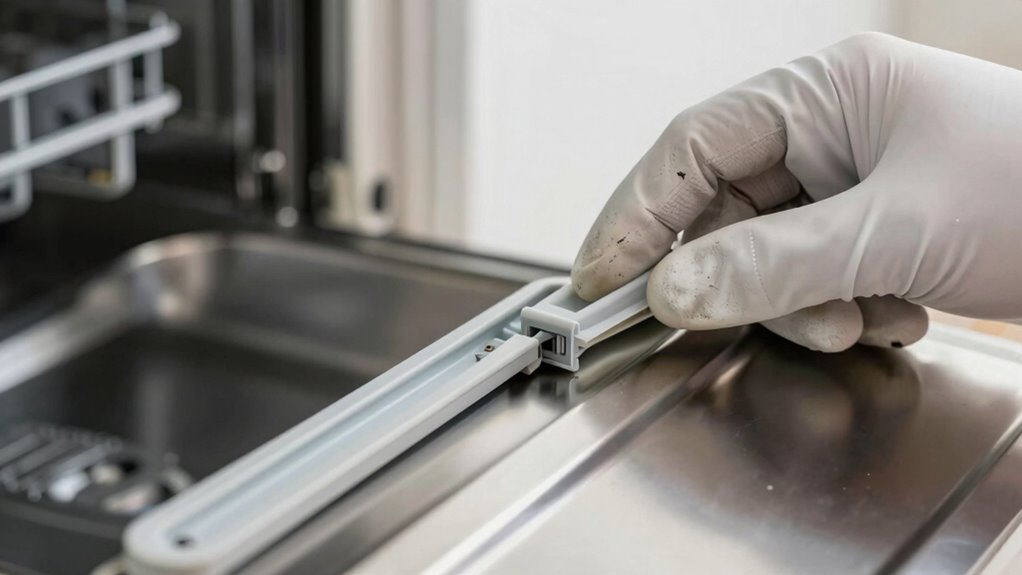
To keep your dishwasher functioning properly and prevent leaks, it’s important to inspect the door seal and gasket regularly for damage and dirt. The door seal forms a watertight barrier, and a damaged gasket can cause leaks. During gasket inspection, look for cracks, tears, or any warping. Dirt or debris can also compromise the seal’s effectiveness.
Check these areas:
- Cracks or tears in the door seal
- Built-up grime or mineral deposits
- Misaligned or warped gasket
- Worn or brittle material
- Gaps or uneven sealing surface
Cleaning the gasket with a soft cloth and mild detergent helps maintain a good seal. Replacing a damaged door seal or gasket ensures your dishwasher remains leak-free and runs efficiently.
Check the Inlet Valve and Filter for Debris and Leaks
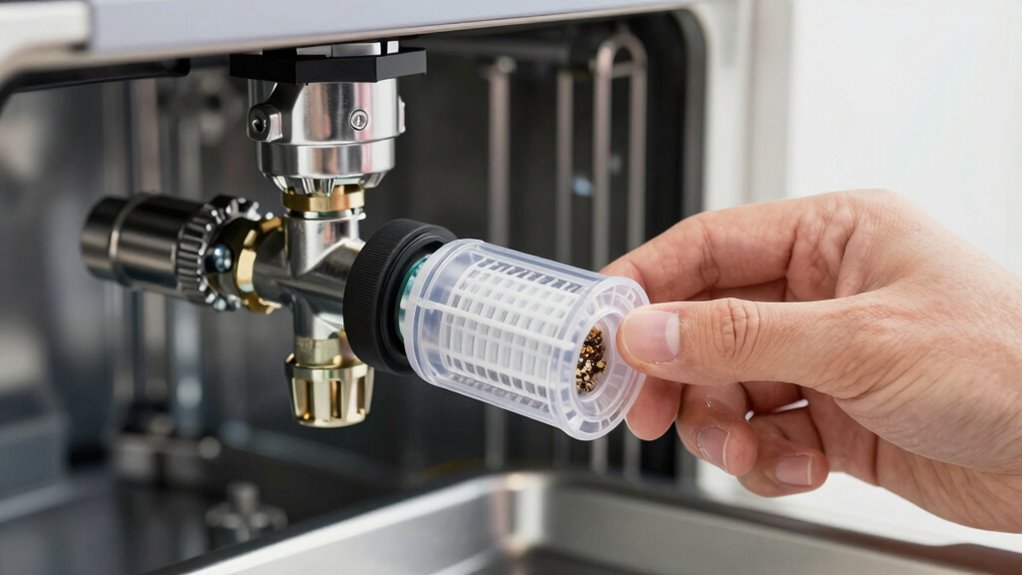
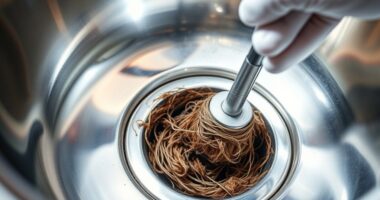
Regularly inspecting the inlet valve and filter is essential to keep your dishwasher running smoothly. During inlet valve inspection, check for leaks around the valve connections and ensure it opens and closes properly. Look for any cracks or damage that could cause water leaks. For filter debris removal, remove the filter and clean out any trapped debris, dirt, or mineral buildup that could restrict water flow. A clogged filter can lead to poor washing performance or leaks. Make sure the filter seats securely after cleaning. Also, inspect the inlet hose for any signs of leaks or cracks. Taking these simple steps helps prevent water damage and keeps your dishwasher functioning efficiently. Regular checks save you time and potential costly repairs later.
Run a Test Cycle to Detect Hidden Leaks and Verify Function
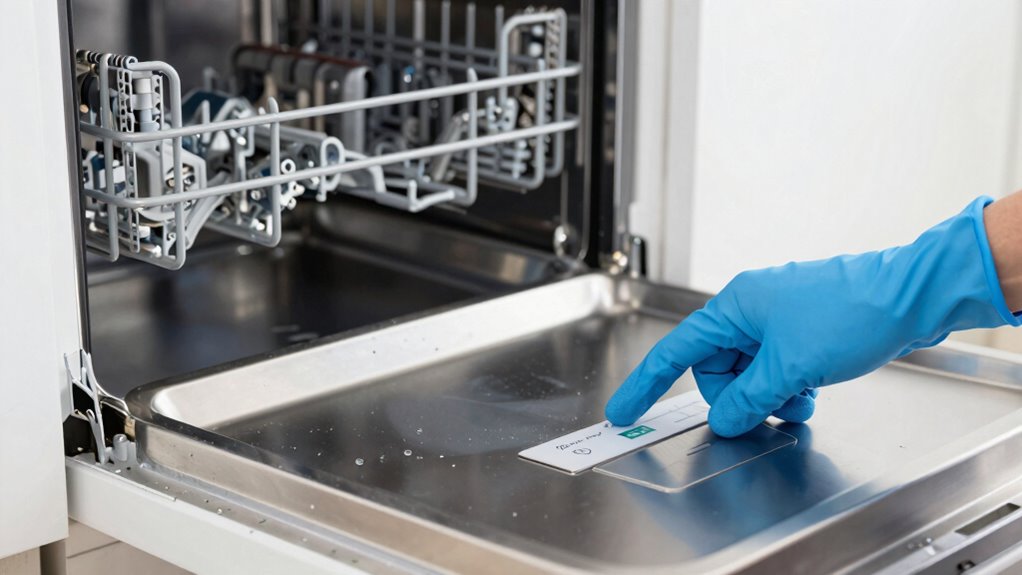
Running a test cycle after inspecting the inlet valve and filter helps verify your dishwasher is functioning correctly and reveals any hidden leaks. During cycle testing, observe for drips, pooling, or water escaping from seals. This step guarantees leak detection before regular use. Here are key points to focus on:
Running a test cycle ensures your dishwasher operates properly and detects hidden leaks early.
- Watch for water leaking from door seals or hoses
- Check for puddles underneath after the cycle ends
- Listen for unusual hissing or dripping sounds
- Inspect hoses and connections during the cycle
- Confirm proper drainage and no water pooling inside
Performing a thorough test cycle helps catch issues early, saving you from potential damage. Leak detection during this phase ensures your dishwasher runs smoothly, minimizes water waste, and prevents costly repairs later.
Frequently Asked Questions
How Often Should I Inspect My Dishwasher for Leaks?
You should inspect your dishwasher for leaks at least once a month to catch issues early. Regular water heater maintenance and following kitchen plumbing tips help prevent leaks in your appliances. Check beneath and around the dishwasher for water spots or pooling. Tighten hoses and connections as needed, and look for any signs of wear. Staying proactive guarantees your dishwasher operates efficiently and avoids costly water damage.
What Tools Are Needed to Check Dishwasher Connections?
Think of checking your dishwasher connections like tuning a fine instrument. You’ll need a flashlight to see plumbing fittings clearly, a wrench to tighten loose connections, and a multimeter for electrical connections. Turn off the power first, then inspect the hoses and fittings for leaks or wear, and verify electrical connections are secure. These tools help you catch potential problems early, keeping your dishwasher singing smoothly without leaks.
Can Improper Leveling Cause Dishwasher Leaks?
Yes, improper leveling can cause dishwasher leaks because it affects dishwasher placement and water pressure. When your dishwasher isn’t level, water may pool or leak from seals, leading to potential damage. Make sure you adjust the feet until the appliance is perfectly level to prevent leaks and guarantee efficient operation. Proper leveling also helps maintain consistent water pressure, reducing strain on connections and preventing future issues.
How Do I Identify a Damaged Door Seal?
To identify damaged door seals, look for cracks, tears, or deformities around the seal’s edges. Check for water leaks around the door after running a cycle; if you see drips or pooling, the seal might be compromised. You can also press gently on the seal—if it feels loose or doesn’t spring back, it’s likely damaged. Replacing a faulty door seal is key for leak prevention and keeping your dishwasher running smoothly.
What Are Signs of a Failing Inlet Valve?
If your dishwasher’s inlet valve is failing, you’ll notice inconsistent water pressure or leaks during filling. The inlet valve controls water flow, so if it’s faulty, it may stay partially open, causing overflows or not fill properly. You might also hear a humming sound or see water dripping from the valve. Check for debris or mineral buildup around the inlet valve, and replace it if these signs persist to prevent water damage.
Conclusion
By following these seven checks, you’ll keep leaks at bay like a seasoned detective solving a case. Proper installation isn’t just a chore; it’s the key to a leak-free dishwasher that runs smoothly. Think of it as giving your appliance a healthy dose of TLC. When you’re thorough and attentive, you’re not just preventing messes—you’re ensuring your dishwasher stays a loyal workhorse, quietly doing its job without causing any surprises.
NFL season / tailgating Picks
team gear
As an affiliate, we earn on qualifying purchases.