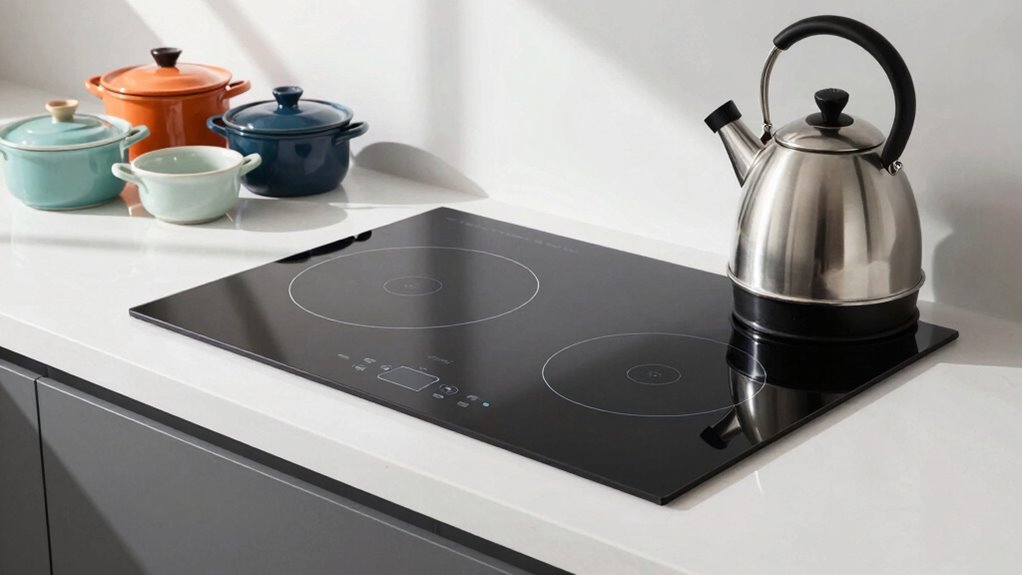

To set up your induction cooktop, make certain your kitchen is organized and has enough clear counter space near suitable electrical outlets. Use compatible cookware with a magnetic base, like cast iron or stainless steel, and perform a magnet test to confirm. You’ll need reliable wiring, possibly a surge protector, and accessories like lids and trivets for convenience. Proper ventilation and secure installation are key. Keep everything maintained for safe, efficient cooking—continuing will reveal more tips to perfect your setup.

Get the little things that make your day delivered free — and shop member deals
- Fast, free delivery on millions of items
- Access to Prime Big Deal Days deals on October 6–7
- Prime Video, Amazon Music and more included
Key Takeaways
- Use flat-bottomed, magnetically compatible cookware like cast iron or stainless steel.
- Ensure electrical outlets can handle high power requirements; avoid unnecessary adapters.
- Keep the workspace organized, clutter-free, and near power sources for safety and efficiency.
- Verify cookware compatibility with magnetic tests or manufacturer labels before cooking.
- Include essential accessories such as heat-resistant mats, trivets, and compatible lids for optimal setup.
induction compatible cookware set
As an affiliate, we earn on qualifying purchases.
As an affiliate, we earn on qualifying purchases.
Is Your Kitchen Ready for Induction Cooking?
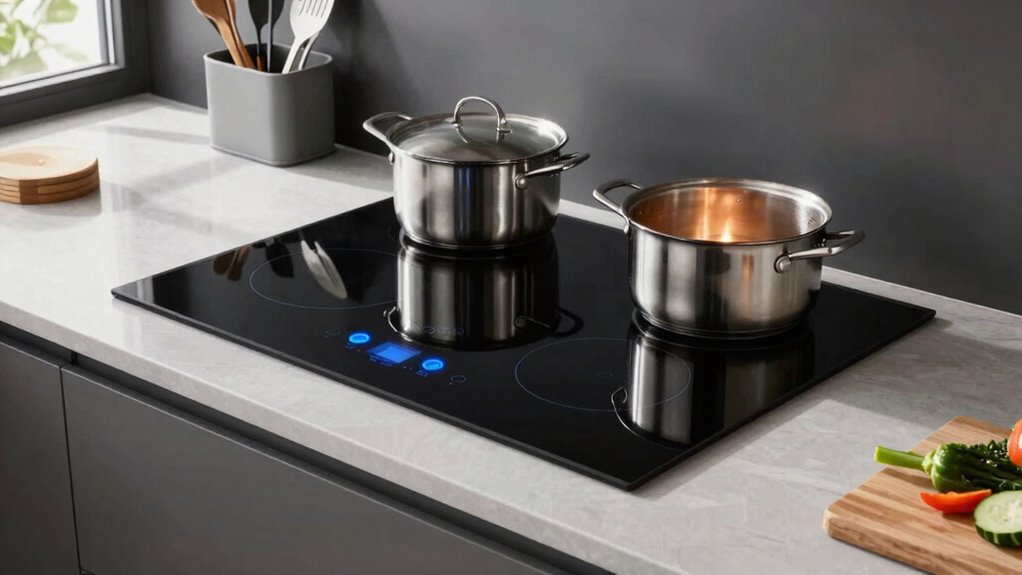
Before switching to induction cooking, you need to guarantee your kitchen is properly prepared. First, assess your kitchen aesthetics—an organized, clutter-free space enhances safety and efficiency. Clear countertops and create designated areas for cookware and accessories. Check that your electrical outlets can handle the power requirements of induction appliances. Upgrading your kitchen’s look with sleek, modern appliances can boost its visual appeal. Induction cooking also considerably increases cooking speed, so ensure your cookware is compatible to take full advantage of faster heating times. Keep your workspace well-lit and ventilated for safety and comfort. By making these adjustments, you’ll create an environment that’s both stylish and functional, ready to optimize your induction cooking experience.
Do You Need Special Cookware for Induction?
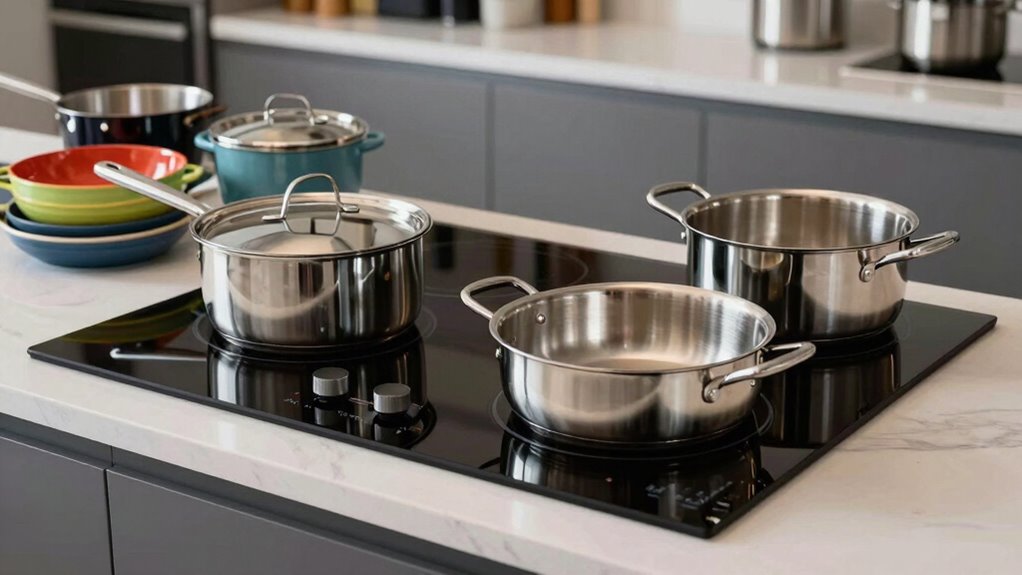
You’ll need cookware with compatible materials, like cast iron or magnetic stainless steel, for induction cooking. Check if your pots and pans have a magnetic base to guarantee they work properly. Without the right cookware, your induction stove won’t heat efficiently or at all. Ensuring your cookware has a magnetic base is essential for successful induction cooking. Additionally, verifying the induction compatibility of your cookware can save you time and prevent frustration during setup.
Compatible Materials Needed
To use an induction cooktop effectively, your cookware must be made from magnetic materials that can generate heat when in contact with the magnetic field. This is where magnetic compatibility becomes essential. Not all cookware works with induction; only induction cookware with a magnetic base will heat properly. Look for pots and pans made from stainless steel or cast iron, as they tend to be compatible. Aluminum and copper cookware won’t work unless they have a magnetic layer added to their base. To test your cookware’s magnetic compatibility, simply see if a magnet sticks firmly to the bottom. If it does, you’re good to go. Ensuring your cookware is induction-compatible guarantees efficient heating and safe operation on your induction cooktop. Additionally, choosing high-efficiency solar panels can help offset energy use and reduce your overall carbon footprint while maintaining sustainable kitchen practices. Proper cookware selection is essential for optimal induction heating performance, ensuring your cooking experience is both efficient and safe. Being aware of magnetic properties in cookware can help you quickly identify suitable options and avoid frustration during meal preparation.
Magnetic Base Requirements
A magnetic base is essential for cookware to work on an induction cooktop because it interacts directly with the cooktop’s magnetic field to generate heat. If you’re using copper cookware, make sure it has a magnetic layer at the bottom, as pure copper isn’t magnetic and won’t work on induction. Glass pots and traditional cookware without a magnetic base won’t work either. To test your existing pots, see if a magnet sticks to the bottom; if it does, you’re good to go. Induction-compatible cookware typically features a ferromagnetic layer, ensuring proper heat transfer. Using cookware without a magnetic base will result in no heat, so always verify before cooking. Copper and glass pots require special construction to be compatible with induction stoves. Additionally, induction compatibility depends on the presence of a magnetic layer, so understanding your cookware’s construction is key. Some cookware manufacturers now produce induction-ready options that are designed specifically for this purpose, making it easier to identify suitable pieces. Regularly testing your cookware’s magnetic properties can help prevent surprises during meal prep and ensure ongoing compatibility.
How to Check If Your Cookware Works With Induction
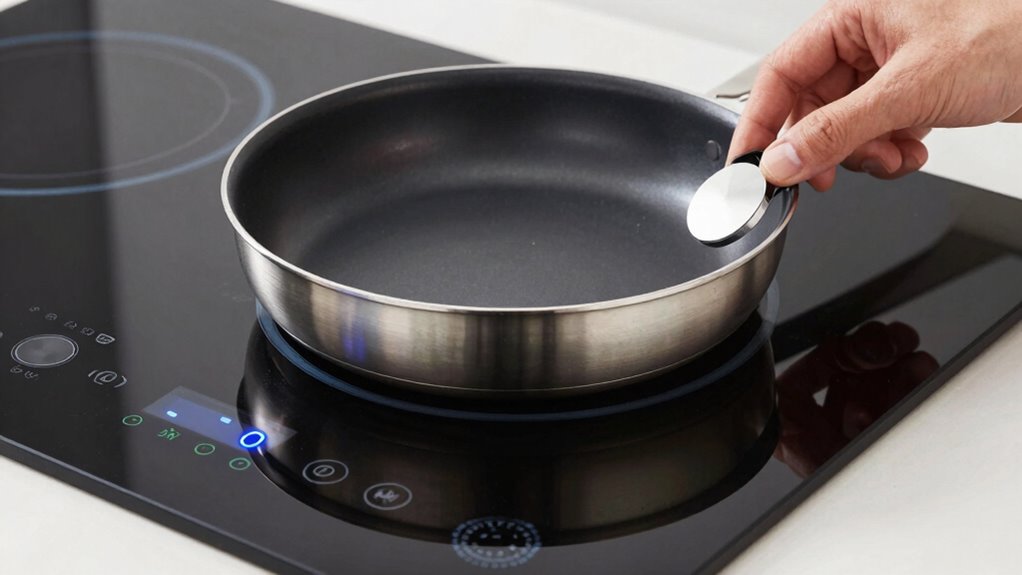
To see if your cookware is compatible with induction, start by checking if it has a magnetic bottom. You can simply hold a magnet to the bottom—if it sticks, you’re good to go. Also, look for manufacturer labels that specify if the cookware is induction-compatible. Additionally, induction compatibility testing methods can help confirm whether your cookware will work efficiently with your induction stove. Using a magnetic test is a quick way to determine compatibility without any special tools. For the most accurate results, you might also consider product testing, which can help identify issues related to induction-specific cookware features that may affect performance.
Magnetic Bottom Required
Checking if your cookware works with induction is straightforward—just see if it has a magnetic bottom. This feature is essential for cookware compatibility with induction cooktops. If a magnet sticks firmly to the bottom, your cookware likely has a magnetic bottom that can transfer heat efficiently. If the magnet doesn’t stick, your cookware probably won’t work on an induction stove. Not all pots and pans are compatible, so verifying this is a quick step before using your new setup. Keep in mind that the magnetic bottom needs to be flat and smooth for proper contact with the cooktop. Proper magnetic properties are crucial for ensuring effective heat transfer and safe cooking. By ensuring your cookware has the right magnetic properties, you’ll avoid frustration and ensure your induction cooking experience is smooth and effective. Additionally, checking for compatibility with your specific cookware type can save you time and prevent damage to your cooktop. Confirming the magnetic strength of your cookware can help you select the most efficient options for your setup. To further ensure optimal performance, consider testing with a magnet to quickly verify if your cookware is suitable. Moreover, understanding magnetic field interaction can help you troubleshoot any issues that might arise during cooking.
Test With Magnet
Wondering if your cookware is compatible with induction? Try a simple magnetic test to find out. Hold a magnet firmly against the bottom of your pot or pan. If the magnet sticks strongly, your cookware has a magnetic base, indicating good cookware compatibility with induction cooking. If the magnet barely sticks or doesn’t stick at all, your cookware likely won’t work on an induction stove. This quick test gives you a clear answer without needing to check labels or manufacturer details. Keep in mind, only magnetic materials like cast iron or certain stainless steel work with induction, so this test is a reliable way to determine if your cookware will perform on an induction cooktop. It’s an easy step to ensure your setup is compatible before cooking. Additionally, understanding the dog breeds that are suitable for active households can help you choose cookware that matches your busy lifestyle. To further ensure compatibility, consider induction cookware options that are specifically designed for induction stoves, which can enhance your cooking experience. Knowing the different types of cookware that are compatible can save you time and money when upgrading your kitchen tools. Being aware of induction compatibility can also help you avoid unnecessary purchases and optimize your kitchen setup.
Check Manufacturer Labels
Looking at the manufacturer labels on your cookware is a quick and reliable way to determine if it’s compatible with induction cooking. Labels often specify if the cookware is induction-compatible, saving you time and guesswork. Confirming induction safety is essential, so check for symbols like a coil or mention of induction readiness. Durable cookware is key for long-term use, and labels can indicate if your pots and pans meet quality standards. If the label states “induction compatible” or includes an induction symbol, you can confidently use your cookware on an induction stove. Cookware materials play a crucial role in induction compatibility, so understanding the composition can help you make informed choices. Additionally, testing cookware at home can be an effective way to verify compatibility if labels are unclear. Conducting a simple magnetic test by seeing if a magnet sticks to the bottom of the cookware is an easy way to confirm induction suitability. This simple step helps prevent damage to your cooktop and ensures safe, efficient cooking. Always verify labels before use to maximize cookware durability and maintain a safe induction cooking setup. Moreover, understanding induction compatibility can help you select the best cookware to enhance your cooking experience and prolong the lifespan of your appliances.
What Equipment Do You Need to Set Up Your Induction Stove?

To set up your induction stove effectively, you’ll need a few essential pieces of equipment. First, verify you have compatible cookware, such as ferromagnetic pots and pans, to maintain induction safety and maximize energy efficiency. A good-quality power outlet and reliable wiring are critical to prevent electrical issues. You might also consider a surge protector to safeguard your stove during power fluctuations. Additionally, a heat-resistant surface or countertop mat can protect your workspace from heat. A digital thermometer can help monitor cooking temperatures for precision. While accessories aren’t necessary for basic setup, investing in a compatible pot magnet or induction interface disk can improve energy transfer and safety if needed. With this equipment, you’ll set a solid foundation for safe, efficient induction cooking.
Accessories That Make Induction Cooking More Convenient
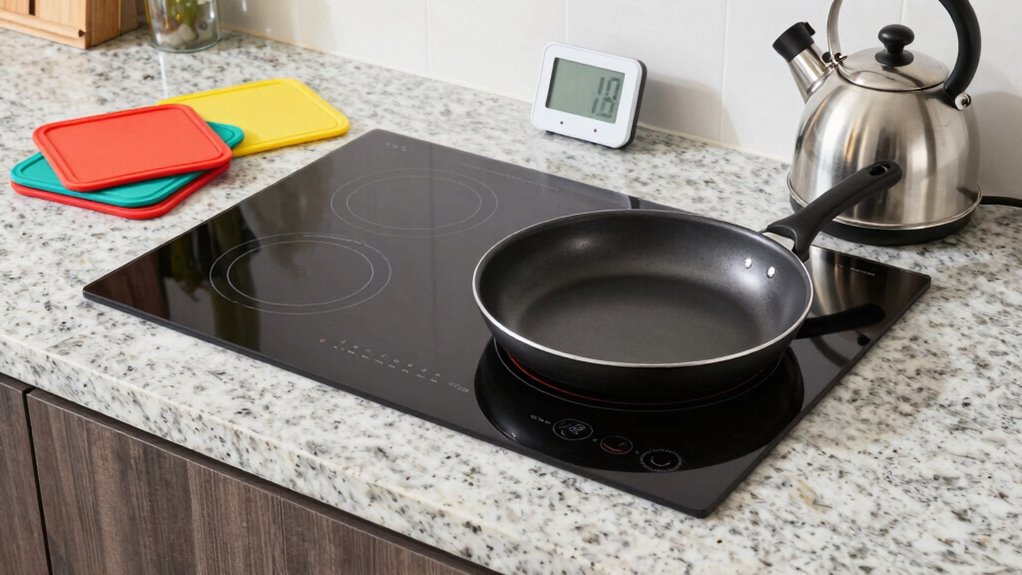
Accessories can considerably enhance your induction cooking experience by making it more efficient and convenient. A key accessory is a magnetic skillet or pan that meets cookware compatibility and magnetic requirements, ensuring proper heat transfer. Using the right accessories simplifies cooking and prevents damage to your stove.
| Accessory | Benefit | Compatibility Tip |
|---|---|---|
| Magnetic skillet | Faster, even heating | Check magnetic requirements |
| Induction-compatible lids | Prevents spills, retains heat | Ensure cookware compatibility |
| Pot holders and trivets | Protects surfaces, handles heat | Use heat-resistant materials |
| Silicone utensils | Durable, heat-resistant tools | Compatible with induction surfaces |
How to Prepare Your Kitchen Space for Induction Cooking
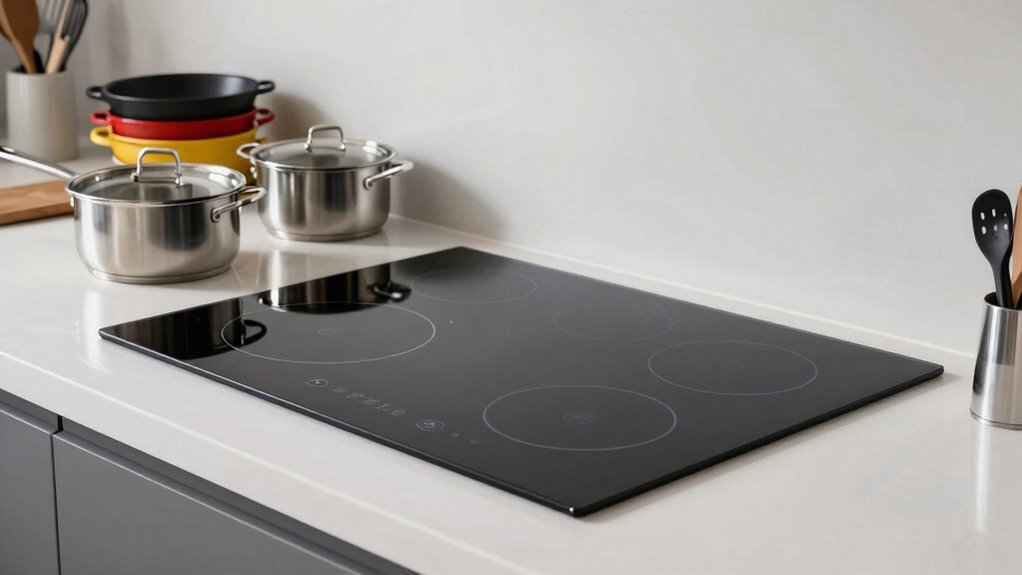
Preparing your kitchen for induction cooking starts with creating a suitable workspace that maximizes efficiency and safety. Start by evaluating your kitchen layout to ensure there’s enough clear counter space near power outlets for your induction cooktop. Keep the area free of clutter to prevent accidents and streamline your cooking process. Additionally, consider ventilation needs—induction cooking produces minimal heat, but good airflow helps dissipate any cooking odors or fumes. If your kitchen lacks an exhaust fan or range hood, think about installing one or opening windows during use. Proper placement of your cooktop and ensuring easy access to cookware are also crucial. By adjusting your kitchen layout and addressing ventilation, you set the stage for a safe, efficient induction cooking experience.
What Installation Steps Can You Skip?
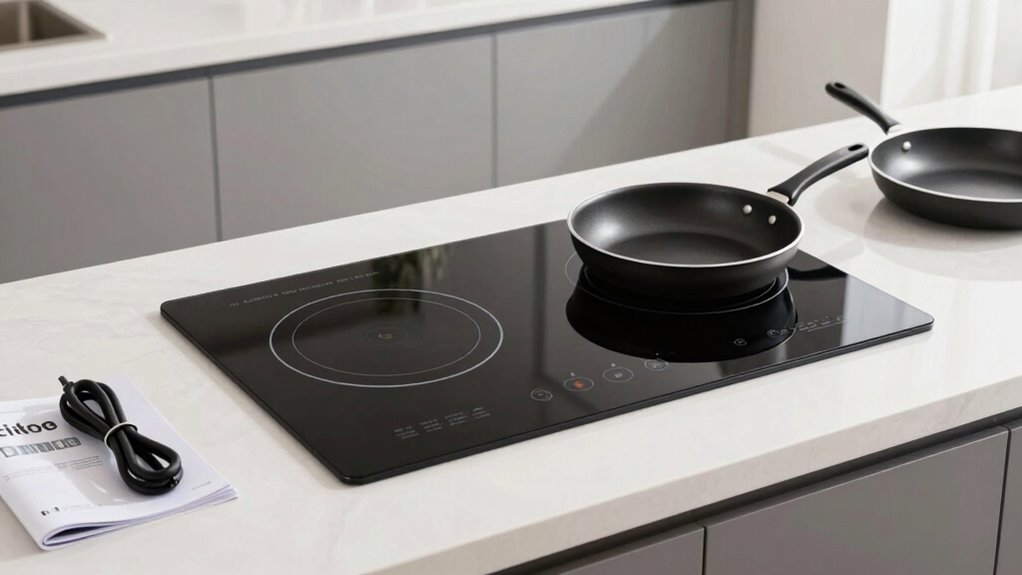
Are there any installation steps you can skip when setting up your induction cooktop? Absolutely. Some installation shortcuts involve skipping unnecessary tools or procedures that don’t add value or safety. For example, if your countertop is already level and sturdy, you can skip extra leveling tools or reinforcing brackets. Similarly, if the electrical outlet is compatible and nearby, you won’t need additional wiring or adapters. Avoid overcomplicating the process by following unnecessary steps that won’t improve the setup. Focus instead on the essential tasks: securing the cooktop properly and ensuring proper electrical connection. Skipping unnecessary tools and steps saves time and effort without compromising safety or performance. Just remember to follow the manufacturer’s basic instructions for a secure and safe installation.
Tips for Maintaining Your Induction Stove and Saving Costs
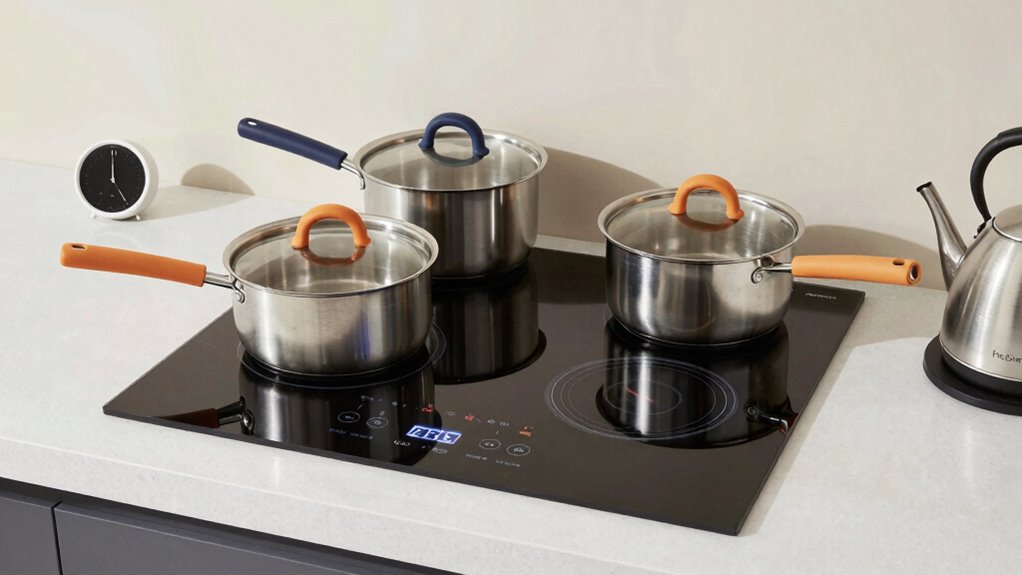
Once your induction cooktop is properly installed, maintaining it becomes key to ensuring it operates efficiently and lasts longer. Regular cleaning prevents build-up that can hinder induction safety and reduce energy efficiency. Use a soft cloth and mild cleaner to wipe the surface after each use. Avoid abrasive materials that can scratch the glass. Check for loose connections and ensure proper ventilation to prevent overheating. To save costs, use cookware with flat bottoms for better energy transfer. Here’s a quick guide:
| Tip | Why it Matters | How to Implement |
|---|---|---|
| Clean regularly | Maintains induction safety | Wipe after each use |
| Use compatible cookware | Boosts energy efficiency | Match cookware to stove |
| Check connections | Ensures safety | Inspect cords periodically |
| Ventilation | Prevents overheating | Keep vents unobstructed |
Frequently Asked Questions
Can I Use My Existing Cookware if It’s Not Magnetic?
You can’t use your existing cookware if it’s not magnetic because of magnetic compatibility issues. To find out, do a simple cookware testing with a magnet; if it sticks, your cookware works with induction. If it doesn’t, you’ll need to acquire magnetic-compatible pots and pans. Don’t assume; testing is the best way to ensure your cookware is suitable for induction cooking.
Do I Need Professional Installation for My Induction Stove?
You don’t necessarily need professional assistance for installation, but it’s highly recommended to guarantee proper setup and safety. Follow the manufacturer’s instructions carefully, paying attention to installation requirements like proper electrical connections and ventilation. If you’re unsure about handling electrical work or if local codes demand it, hiring a professional guarantees compliance and reduces risks. Ultimately, professional installation helps your induction stove operate efficiently and safely from the start.
Are There Safety Concerns With Induction Cooking?
You should be aware that induction cooking is generally safe, but there are a few safety concerns. It doesn’t pose a significant fire hazard if used properly, but you still need to avoid overheating and keep flammable materials away. Electric shock is rare, but you should confirm your stove is properly grounded and avoid touching the surface with wet hands. Regularly inspect the cord and connections to prevent any potential hazards.
How Energy-Efficient Is Induction Compared to Gas or Electric?
You’ll find that induction cooking is more energy-efficient than gas or electric options because it uses direct electromagnetic energy to heat your cookware quickly and precisely. This reduces energy consumption and minimizes waste. Plus, it has a lower environmental impact since it heats only the pan, not the surrounding air. Overall, induction saves you money on energy bills and helps you contribute to a greener environment.
Can Induction Stoves Be Used Outdoors or in RVS?
Yes, you can use induction stoves outdoors and in RVs, but consider their outdoor durability and RV compatibility first. Choose models designed for portability and withstand outdoor conditions, like weather-resistant surfaces. Confirm your RV has adequate power sources, such as a generator or shore power, since induction stoves need reliable electricity. Keep safety in mind, and always follow manufacturer guidelines for outdoor or RV use to enjoy efficient cooking anywhere.
Conclusion
Now that you know the basics, bringing brilliance to your kitchen with induction cooking is simple and smart. Make certain your space is set, your cookware is compatible, and your stove stays spotless. Stick to these steps, skip the snags, and save yourself stress and money. With a little preparation, you’ll enjoy efficient, exciting, and eco-friendly cooking every day. Get ready to reap the rewards of a radiant, reliable induction setup—your culinary comfort zone awaits!
Fall Picks
fall essentials
As an affiliate, we earn on qualifying purchases.

![A Better Way To Tie Your Gym Shorts. (Or Any Drawstring) [Video]](https://getaninsight.com/wp-content/uploads/2026/07/a-better-way-to-tie-your-gym-shorts-or-any-drawstring-video-featured-380x200.jpg)