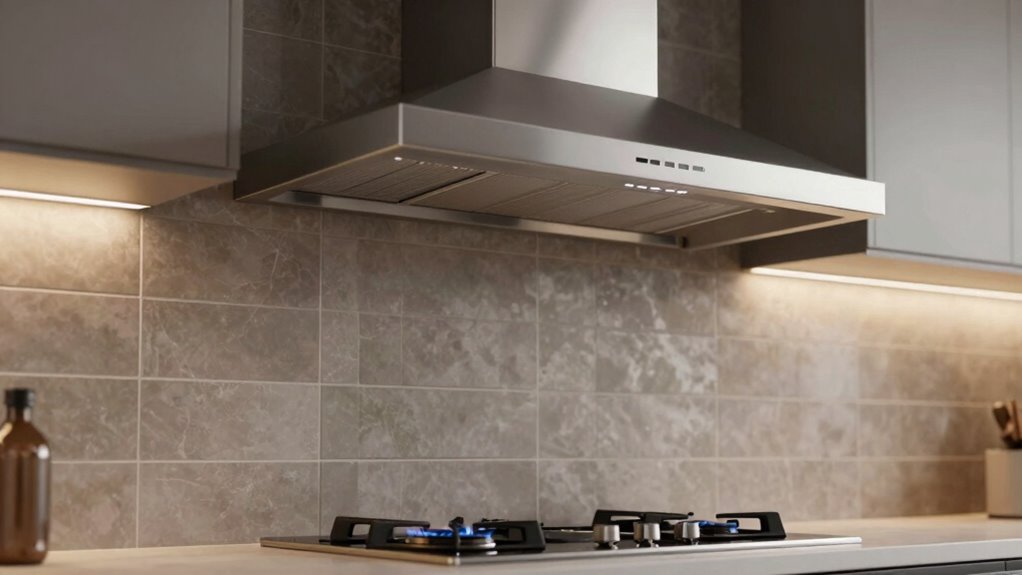
To match your range hood’s CFM to your stove, consider your stove size, cooking habits, and kitchen space. Typically, a 30-inch stove needs at least 300 CFM, but if you cook frequently with smoke or grease, you might want a higher rating. Properly sizing your vent guarantees effective removal of odors, smoke, and grease while avoiding excess noise or energy use. To learn how to find the perfect fit, keep exploring for more tips.
Key Takeaways
- Match your range hood’s CFM to your stove’s width and cooking habits for effective ventilation.
- Use the rule of thumb: multiply stove width in inches by 10 to estimate required CFM.
- Consider kitchen size and layout to prevent under- or over-ventilation, balancing noise and efficiency.
- Higher CFM is needed for frequent, smoky, or greasy cooking, but avoid excessive power to reduce noise.
- Choose reputable brands with clear specifications to ensure reliable performance and proper airflow matching.

Outus 9 Inspirational Wall Art Prints for Classroom Office, 8x10, Unframed
- Complete Set of 9 Posters: Includes 9 inspirational prints and 40 adhesive dots
- Ideal Size for Walls: Each poster measures approximately 8 x 10 inches
- High-Quality Material: Made of durable, laminated cardstock for longevity
As an affiliate, we earn on qualifying purchases.
Why CFM Is Critical for Effective Range Hood Ventilation
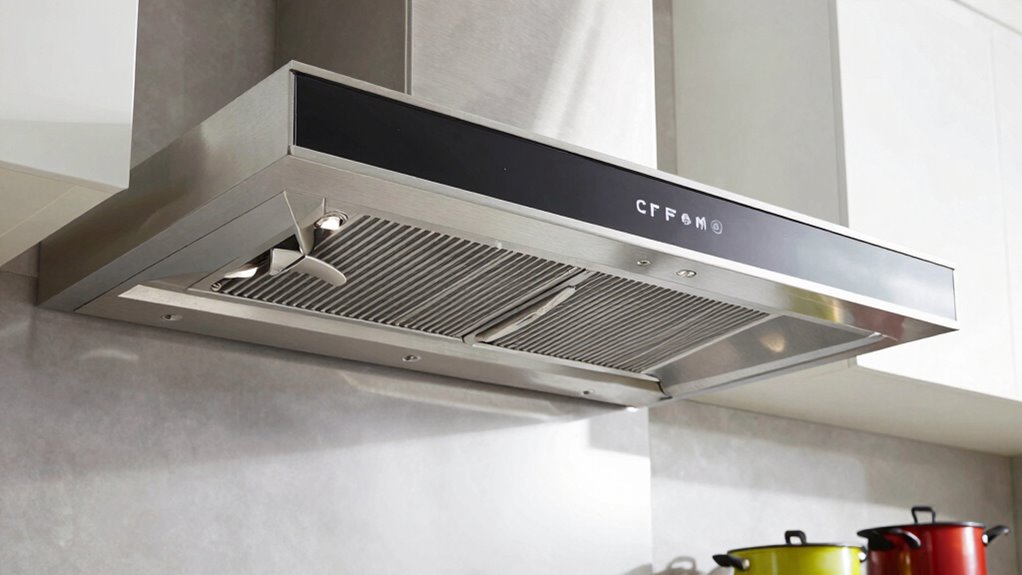
Understanding why CFM is crucial for effective range hood ventilation starts with recognizing that a higher CFM rating means the hood can move more air quickly. This directly impacts ventilation efficiency because faster air exchange removes smoke, odors, and grease more effectively. When your range hood has sufficient CFM, it can keep your kitchen air cleaner and healthier by preventing buildup of airborne particles. A higher CFM ensures that contaminated air doesn’t linger, reducing the risk of lingering smells and potential grease fires. Proper air exchange is essential for maintaining a comfortable cooking environment. Without adequate CFM, your range hood can’t perform at its best, leading to poor ventilation and lingering odors. Additionally, selecting the right synthetic lubricants for your range hood components can enhance its performance and longevity, ensuring optimal operation over time. In short, CFM plays an indispensable role in ensuring your kitchen stays fresh and safe, especially when considering ventilation capacity and how it affects overall kitchen air quality.
How to Calculate the Right CFM Based on Your Stove Size
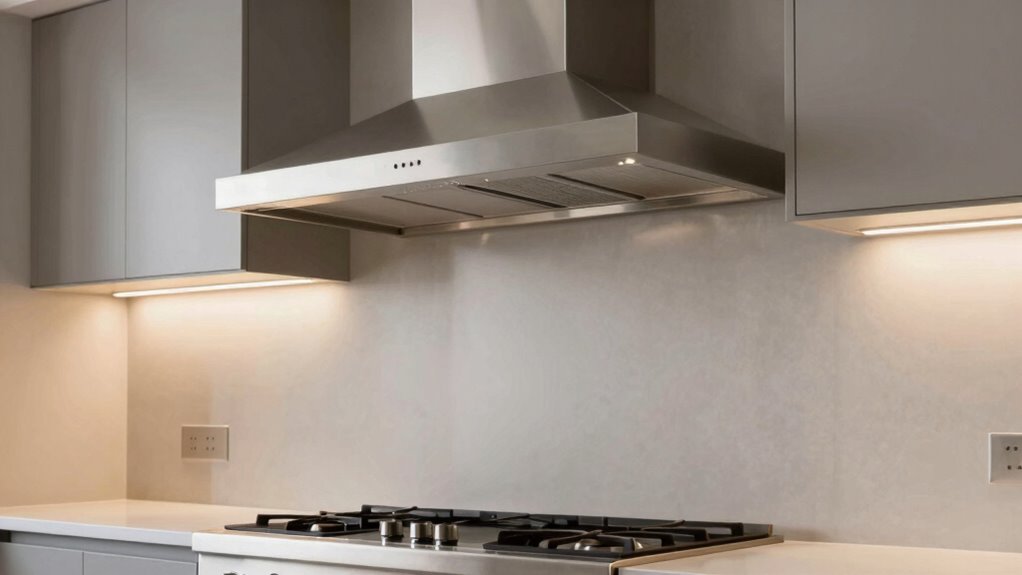
To determine the right CFM for your range hood, start by considering the size of your stove. The airflow measurement needed depends on the stove’s width and cooking habits. For hood sizing, a general rule is to match the CFM to the stove’s surface area, measured in inches. For example, a 30-inch stove typically requires a hood with at least 300 CFM, while larger stoves may need more airflow. Multiply your stove’s width by a factor of 10 to estimate the needed airflow. This calculation ensures effective ventilation without over- or under-powering your hood. Proper hood sizing based on your stove size guarantees ideal airflow measurement, promoting efficient removal of smoke, grease, and odors.
Matching Range Hood CFM to Your Cooking Style
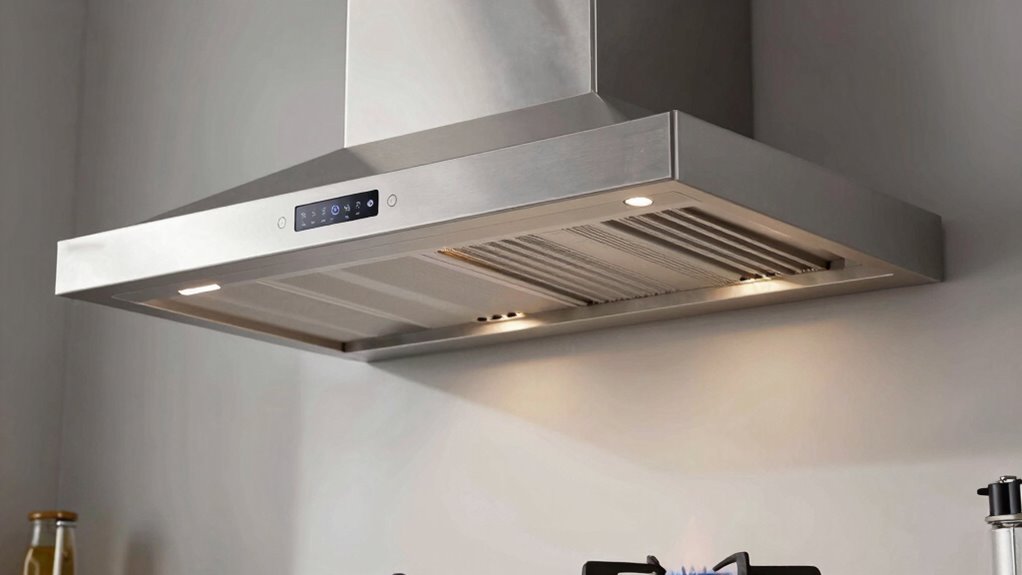
Choosing the right CFM for your range hood isn’t just about stove size—it also depends on how often and what you cook. If you cook frequently or prepare smoky, greasy, or strong-smelling foods, you’ll need a higher CFM to keep your kitchen fresh. Your cooking habits directly influence your ventilation needs; for example, avid home chefs or those who love deep-frying should opt for more powerful airflow. Additionally, your kitchen layout matters—an open-plan space might require a higher CFM since odors and fumes spread more easily. Consider your cooking style and kitchen setup to select a range hood that effectively captures odors and maintains good air quality. Matching CFM to your lifestyle guarantees your kitchen stays comfortable and odor-free. Proper ventilation capacity is essential for optimal performance and indoor air quality.
Common Mistakes When Choosing Range Hood CFM and How to Avoid Them
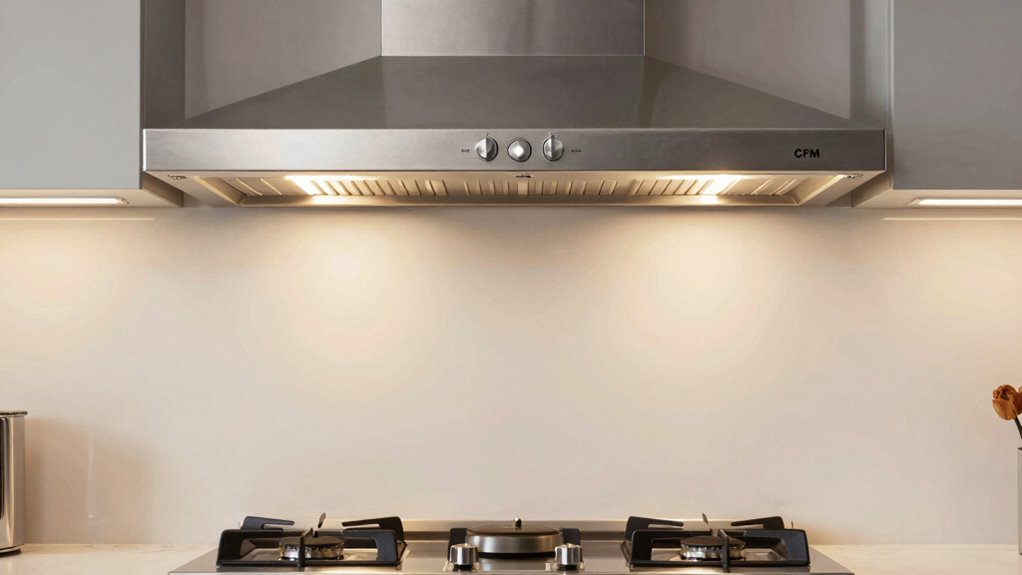
Many people overestimate the power they need or ignore their kitchen’s size when choosing a range hood. This can lead to selecting a unit that’s either too strong or too weak for your space and cooking habits. To get it right, consider your kitchen dimensions and typical cooking activities carefully.
Overestimating Needed Power
It’s common to overestimate the amount of power your range hood needs, thinking that more CFM (cubic feet per minute) will always lead to better ventilation. Many fall for ventilation myths, assuming higher CFM guarantees cleaner air and safety. But overspending on a powerful hood can be unnecessary and noisy. Safety considerations also come into play—an excessively powerful hood might create drafts or disturb kitchen airflow, which can impact other appliances. Instead, focus on matching your hood’s CFM to your stove’s size and cooking habits. Proper ventilation isn’t about maximum power; it’s about the right power. Overestimating can lead to waste and inconvenience, so choose a hood that efficiently ventilates your space without excess noise or energy use. Understanding car protection options can help you select accessories that complement your home environment and improve overall safety. Additionally, consulting manufacturers’ guidelines can provide valuable insights into selecting the appropriate CFM for your specific setup. Remember that ventilation efficiency is key to achieving optimal airflow without unnecessary expenditure. Recognizing proper sizing of your hood helps prevent over- or under-ventilation, ensuring both safety and efficiency. Being aware of installation space constraints can also influence the ideal CFM choice to suit your kitchen layout.
Ignoring Kitchen Size
One common mistake is ignoring the size of your kitchen when selecting a range hood’s CFM. The ventilation capacity you need depends heavily on your kitchen’s size. A small space requires less airflow, while a large kitchen needs higher CFM to effectively remove smoke, heat, and odors. If you choose a hood based solely on your stove’s power without considering room dimensions, you risk poor ventilation. Insufficient ventilation capacity can leave your kitchen stuffy and dirty air lingering. Measure your kitchen’s square footage and ceiling height to determine the appropriate CFM. Proper sizing of your range hood’s ventilation capacity to your kitchen size guarantees ideal airflow, improves air quality, and prevents unnecessary strain on your ventilation system. Proper ventilation capacity ensures your cooking space remains comfortable and safe. Additionally, understanding kitchen airflow needs helps you select a vent that balances energy efficiency with effective performance. An improperly matched CFM can also lead to excessive noise and higher energy costs, so choosing the right capacity is essential. To accurately assess your needs, consider how air circulation impacts overall kitchen comfort and safety. Don’t overlook this essential step for a well-ventilated cooking space.
What Additional Factors Matter When Selecting a Range Hood
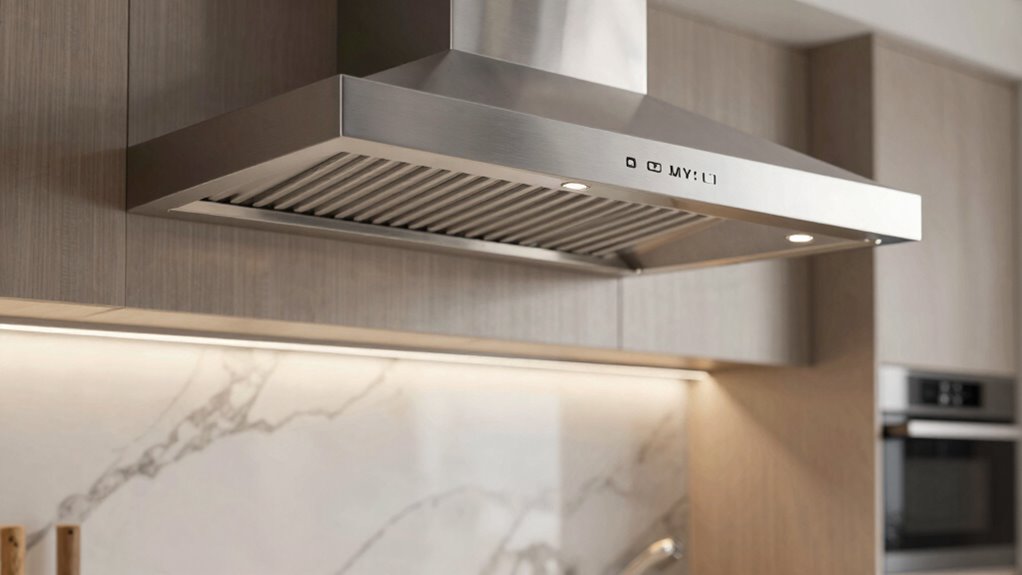
Choosing the right range hood involves more than just considering CFM ratings; several additional factors can impact its effectiveness and suitability for your kitchen. Kitchen aesthetics matter because your range hood should complement your design style and not stand out awkwardly. Noise levels are also *essential*—if the hood is too loud, it can become a disturbance during cooking or conversations. Consider the finish and shape of the hood to match your cabinetry and overall decor. Ventilation type, filter ease, and maintenance are important too, ensuring the hood functions efficiently without added hassle. Additionally, understanding proper ventilation standards can help you select a hood that effectively removes smoke and odors. It’s also helpful to evaluate the air exchange rate to ensure your kitchen remains well-ventilated during heavy cooking. Paying attention to ventilation efficiency can lead to better air quality and energy savings. Incorporating proper ducting system design can further enhance performance and reduce operational noise. By paying attention to these factors, you’ll select a range hood that not only keeps your kitchen fresh but also enhances its look and comfort.
How to Pick the Perfect Range Hood CFM Step-by-Step
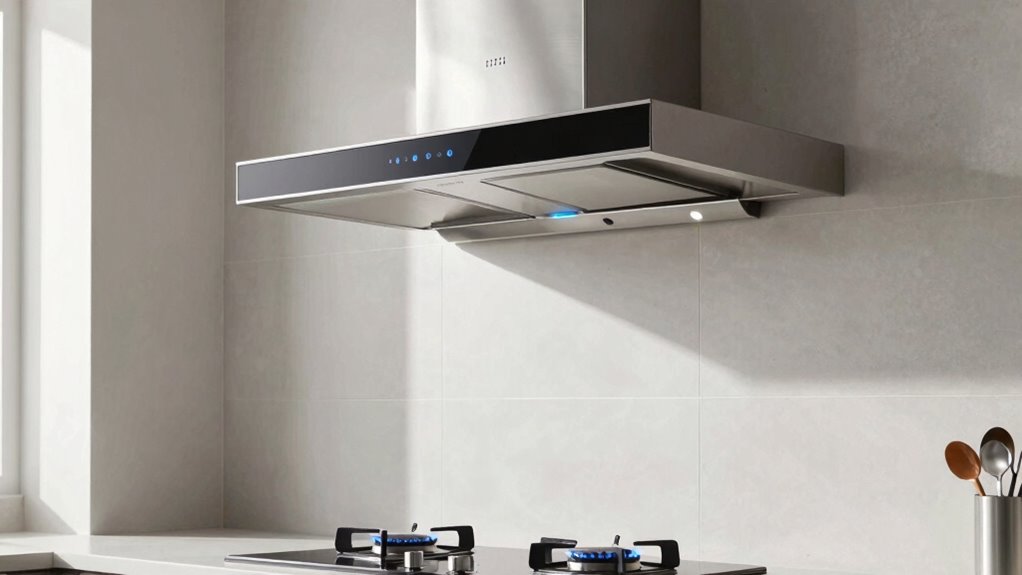
To select the perfect range hood CFM, start by evaluating your cooking habits and kitchen size. If you cook often or prepare smoky dishes, opt for higher CFM to ensure proper ventilation. Consider your kitchen decor—sleek, modern designs often pair well with more powerful hoods, while traditional styles may need a more subtle option. Check the brand reputation; trusted brands typically offer reliable performance and clearer specifications, making your choice easier. Measure your kitchen’s dimensions and ventilation needs to match the CFM accordingly. Remember, a hood with too low CFM won’t effectively clear fumes, while overly powerful models might be noisy or overpower your decor. Additionally, understanding ventilation requirements can help you select a hood that balances performance with your kitchen’s specific needs. Ensuring your kitchen ventilation meets the recommended standards can improve indoor air quality and safety. Being aware of support for breakfast options can also inspire you to prepare quick, nutritious meals that complement your cooking setup. Incorporating energy-efficient appliances can further enhance your kitchen’s sustainability while maintaining optimal ventilation. Exploring the latest wall art trends can help you create a stylish kitchen environment that reflects your personality. Following these steps helps you find a balance between performance, style, and quality.
Frequently Asked Questions
Can a Higher CFM Always Improve Ventilation Effectiveness?
A higher CFM doesn’t always improve ventilation effectiveness. While it can remove smoke and odors faster, it might increase fan noise and cause drafts that disrupt air quality. If the CFM is too high for your stove size, you risk inefficiency and discomfort. Match the CFM to your stove’s needs to make certain of effective ventilation without excessive noise or negative impacts on air quality, creating a healthier, more comfortable kitchen environment.
How Loud Is a Range Hood With High CFM?
A range hood with high CFM can be quite loud, often reaching noise levels between 60 to 70 decibels or more at maximum fan speed. That’s comparable to a busy restaurant or vacuum cleaner, so you might find it disruptive during cooking. If you prefer quieter operation, look for models with adjustable fan speeds, allowing you to balance noise levels and ventilation effectiveness based on your needs.
Do Duct Types Affect the Necessary CFM?
Yes, duct types affect the necessary CFM. You need to take into account duct materials and installation requirements because smooth, rigid ducts like metal reduce airflow resistance, letting your range hood perform efficiently at lower CFM. Flexible or restrictive ducts increase resistance, requiring higher CFM to vent smoke and odors effectively. So, choosing proper duct materials and following installation requirements ensures your hood’s ventilation matches your stove’s needs without overworking the system.
Is There a Recommended CFM for Small Apartments?
For small apartments, a range hood with around 150 to 300 CFM typically provides adequate ventilation. You want enough airflow to remove cooking odors and smoke efficiently without overpowering the small space. Consider your apartment’s airflow needs and guarantee your hood matches the size and cooking habits. Proper ventilation keeps your air fresh and comfortable, making your small space more enjoyable and healthier to live in.
How Often Should I Clean My Range Hood Filters?
Did you know that grease buildup can reduce your range hood’s efficiency by up to 50%? You should clean your filters every 1 to 3 months, depending on how often you cook. Regular filter maintenance ensures proper ventilation and keeps your kitchen smelling fresh. For heavy cooking, increase cleaning frequency. Simply remove, soak in warm soapy water, and scrub gently to maintain best performance.
Conclusion
Choosing the right CFM is like tuning an instrument—you need harmony between your stove and vent to keep your kitchen singing smoothly. When you match ventilation to your cooking style and stove size, you’re crafting a symphony of efficiency and safety. Don’t let common mistakes drown out your efforts; instead, navigate the process with confidence. With the right range hood CFM, your kitchen will breathe effortlessly, transforming every meal into a masterpiece.