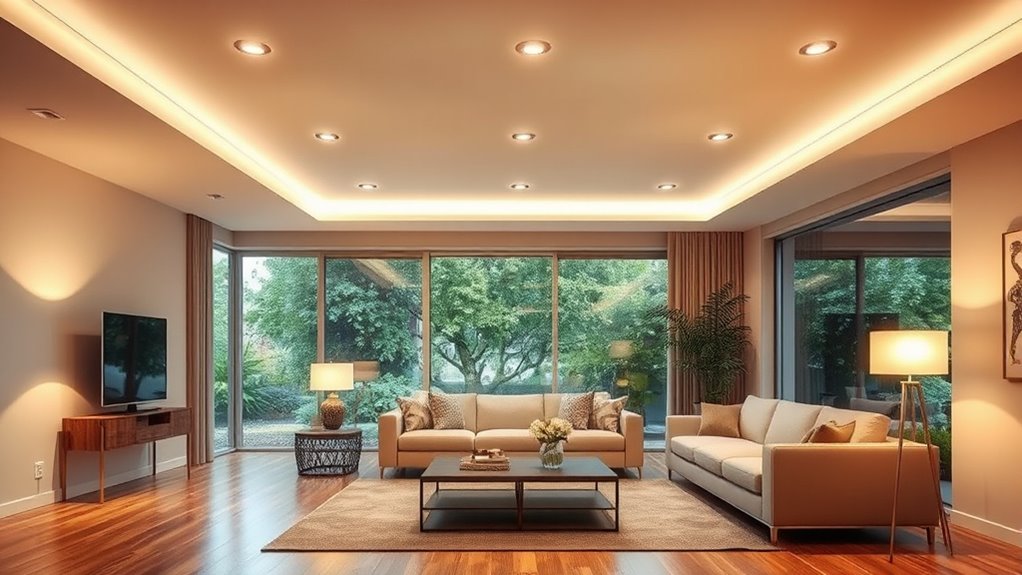

Switching to LED lighting everywhere in your home can cut your energy use by up to 75%, saving you money and helping the environment. LEDs last much longer than traditional bulbs and use considerably less power, which means fewer replacements and lower bills. Smart LED options make it easy to control and schedule your lighting for maximum efficiency and convenience. To discover how these upgrades can make a difference, keep exploring the benefits of energy-efficient lighting.
Key Takeaways
- Switching to LEDs reduces energy consumption and lowers electricity bills significantly.
- LEDs have a longer lifespan, decreasing replacement and maintenance costs over time.
- Smart lighting features enable remote control, scheduling, and dimming for optimized energy use.
- Automated and programmable LED systems help prevent unnecessary lighting, enhancing overall efficiency.
- Investing in energy-efficient LEDs and smart controls supports sustainability and long-term savings.
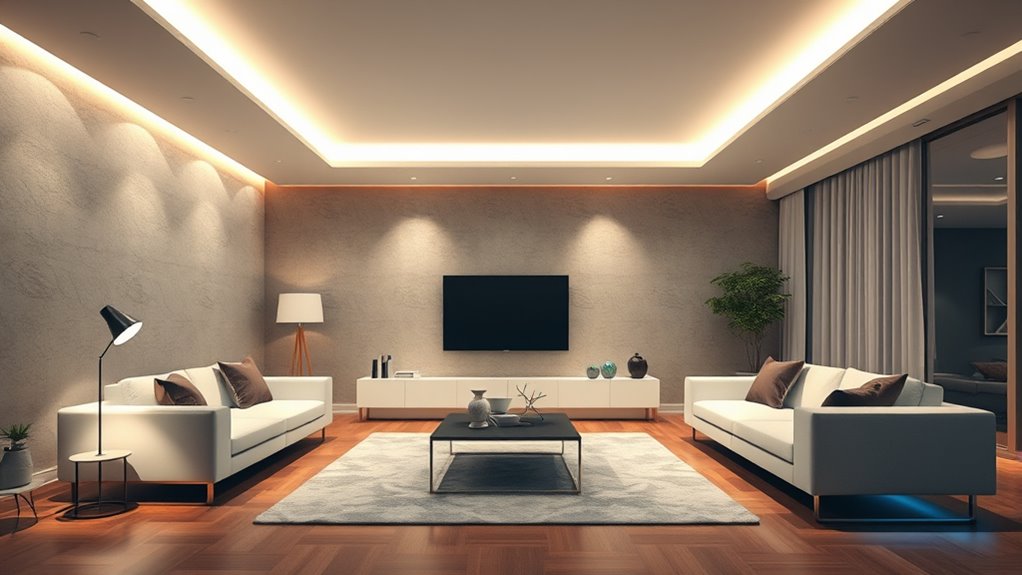
Have you ever wondered how you can reduce your energy bills while still keeping your space well-lit? The answer might be simpler than you think: switching to energy-efficient lighting, particularly LED bulbs. Not only do LEDs consume notably less power, but they also last much longer, making them a smart choice for your home. By embracing smart lighting options, you can optimize your lighting setup, further enhancing your cost savings. Smart lighting allows you to control your lights remotely, set schedules, and adjust brightness levels easily, ensuring you’re never wasting electricity when it’s not needed.
Switch to energy-efficient LED and smart lighting to lower bills and enhance home convenience.
When you replace traditional incandescent or halogen bulbs with LEDs, you immediately notice a drop in your energy consumption. LED technology is designed to use less wattage while producing the same amount of light, which directly translates into lower energy bills. Over time, these savings can add up considerably, especially if you have multiple fixtures throughout your home. Additionally, because LEDs have a longer lifespan—often exceeding 25,000 hours—you won’t need to replace bulbs as frequently, saving you money on replacements and maintenance. Understanding the importance of energy-efficient technology helps you make informed choices for a sustainable home.
Incorporating smart lighting into your setup takes your cost savings a step further. Imagine setting your lights to turn off automatically when you leave a room or dimming them during movie night to create the perfect ambiance. These features help prevent unnecessary energy use, ensuring that every lumen is purposeful. Many smart lighting systems can be integrated with home automation platforms, giving you centralized control via your smartphone or voice commands. This means you can fine-tune your lighting from anywhere, reducing waste and optimizing energy efficiency effortlessly.
Furthermore, smart lighting offers the advantage of customizable schedules. You can program your lights to turn on and off at specific times, aligning with your daily routine. For instance, you can set outdoor lights to turn on at dusk and off at dawn, avoiding wasted energy during daylight hours. This level of control not only enhances convenience but also maximizes your cost savings by ensuring your lights are only on when needed.
Switching to LEDs and smart lighting is a practical, impactful step toward a more energy-efficient home. You’ll enjoy brighter, more versatile lighting options while considerably lowering your energy bills. Plus, the long-term durability of LEDs means you’re investing in a sustainable solution that benefits both your wallet and the environment. By making these simple changes, you’re taking control of your energy use and saving money without sacrificing the comfort and illumination your home deserves.
energy-efficient LED light bulbs
As an affiliate, we earn on qualifying purchases.
As an affiliate, we earn on qualifying purchases.
Frequently Asked Questions
Are LED Lights Safe for All Household Environments?
Yes, LED lights are generally safe for all household environments. You should check their dimming compatibility to guarantee they work with your existing fixtures and choose the right color temperature for each space. LEDs emit minimal heat and no harmful UV radiation, making them safe for indoor use. Just make sure to select high-quality LEDs and follow manufacturer instructions to maximize safety and performance in every room.
How Do LED Lights Affect Indoor Air Quality?
Bright bulbs boost your home’s beauty, but you might wonder about their air quality impact. Luckily, LEDs emit no harmful fumes or toxins, so they don’t negatively affect indoor air quality. However, proper ventilation considerations are essential to prevent dust buildup around fixtures and ensure fresh airflow. You can confidently enjoy the clean, clear air with LEDs, knowing they’re safe and sustainable while enhancing your home’s atmosphere.
Can LED Bulbs Be Recycled Easily?
Yes, LED bulbs can be recycled easily through specialized recycling programs. The recycling process safely manages components like metals and plastics, reducing environmental impact. You should check with local recycling centers or stores offering e-waste programs to guarantee proper disposal. Recycling LEDs helps conserve resources, prevents hazardous waste, and minimizes pollution, making it an eco-friendly choice that supports sustainability efforts and reduces your home’s overall environmental footprint.
Do LEDS Perform Well During Power Outages?
During a power outage, LEDs perform surprisingly well, thanks to their incredible durability. You might think they’d flicker or go out, but many LED bulbs keep shining brightly, making them your reliable lighting hero. Their power outage performance often surpasses traditional bulbs, proving their resilience. So, when the lights go out, your LEDs stand strong, offering steady illumination and peace of mind in any blackout situation.
Are There Any Health Risks Associated With LED Lighting?
You might worry about health risks from LED lighting, but they’re generally safe. However, prolonged blue light exposure can cause eye strain and disrupt sleep patterns, so it’s good to limit screen time before bed. Some LEDs emit electromagnetic interference, which could affect sensitive electronics, but this isn’t a health risk. Using LEDs with proper shielding and taking breaks can help minimize any potential issues.
Conclusion
Switching to LED lighting isn’t just about saving energy; it’s about making a smart choice that benefits your wallet and the environment. Imagine flipping a switch and knowing your home’s lighting is both efficient and long-lasting—coincidence or not, it’s a win-win. By embracing LEDs, you’ll enjoy brighter spaces and lower bills, all while contributing to a greener planet. So why wait? Your smarter, more sustainable home starts with just one switch.

![A Better Way To Tie Your Gym Shorts. (Or Any Drawstring) [Video]](https://getaninsight.com/wp-content/uploads/2026/07/a-better-way-to-tie-your-gym-shorts-or-any-drawstring-video-featured-380x200.jpg)