To dial in your water softener’s hardness without wasting salt, start by accurately testing your water using test strips or kits to determine mineral levels. Adjust the system’s settings based on these results, and regularly monitor the performance. Re-test periodically to guarantee proper calibration, and fine-tune the regeneration cycle as needed. Proper maintenance and staying vigilant about salt levels help optimize efficiency—keep exploring to learn more about achieving the best results.

Get the little things that make your day delivered free with Prime
- Fast, free delivery on millions of items
- Prime Video, Amazon Music and more included
- Member-only deals all year
Key Takeaways
- Test water hardness regularly using test kits or strips to determine mineral levels accurately.
- Adjust the softener’s control panel settings to match your tested water hardness.
- Set the regeneration cycle and salt dosage based on the current hardness level to optimize salt use.
- Monitor salt levels monthly, refilling before salt drops below halfway to prevent wastage.
- Re-test water after adjustments to ensure proper calibration and avoid unnecessary salt consumption.
As an affiliate, we earn on qualifying purchases.
How Does Your Water Softener Decide on Hardness Settings?
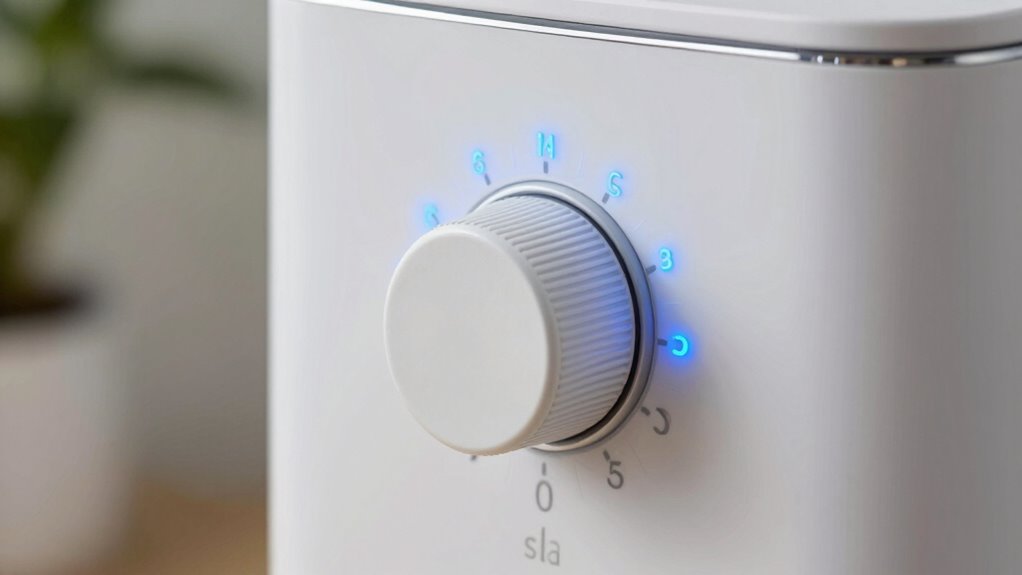
Your water softener determines the appropriate hardness settings by analyzing the mineral content in your water, typically through a user-provided water test or an integrated sensor. During water softener calibration, the device assesses the level of calcium and magnesium ions responsible for hardness. Once the hardness level is identified, you can adjust the hardness level adjustment on the control panel to match your water’s mineral content. Proper calibration guarantees the softener works efficiently, preventing overuse of salt and water. If the settings are too high, you may waste resources; if too low, your water won’t soften adequately. Regularly monitoring and adjusting the hardness level helps maintain ideal performance, saving you money and extending the lifespan of your softening system. Understanding water mineral content can help optimize the settings for maximum efficiency, especially when considering water testing methods to accurately measure mineral levels. Additionally, many modern water softeners feature automatic hardness adjustment capabilities that simplify this process. Being aware of water quality variations in your area can also aid in maintaining optimal system performance.
How to Accurately Test Your Water’s Hardness
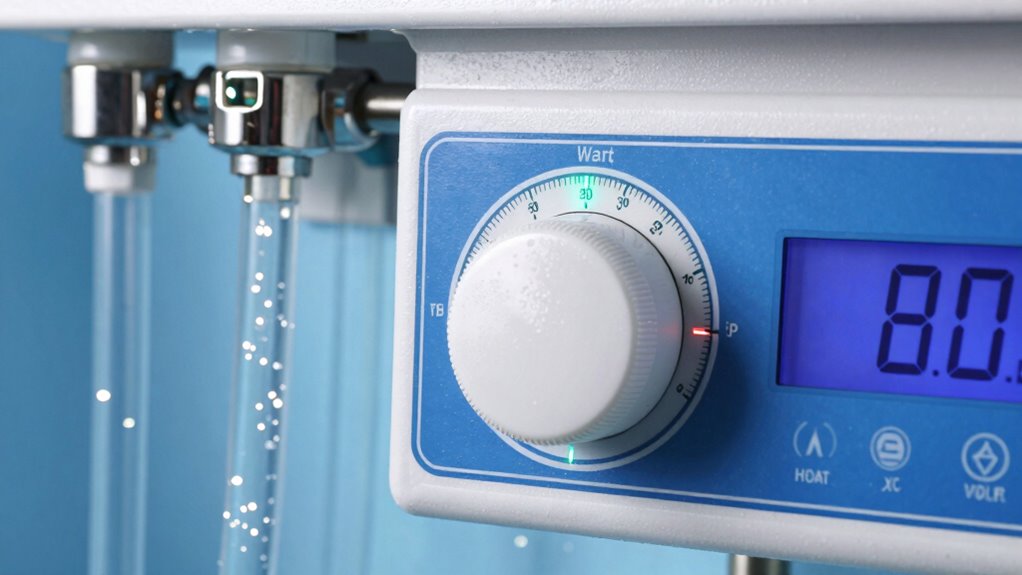
To make certain your water softener is set correctly, you need to accurately test your water’s hardness level. Water testing involves using a test kit or test strips specifically designed for hardness measurement. Start by collecting a sample of your tap water in a clean container. Dip the test strip into the water or add a few drops of testing solution, following the package instructions. Wait for the color to develop, then compare it to the provided chart to determine your water’s hardness level, usually expressed in grains per gallon (GPG) or parts per million (PPM). Accurate water testing provides essential data, ensuring your softener is dialed in properly. Regular testing helps maintain efficient operation without wasting salt or reducing system lifespan. Proper testing procedures are crucial for achieving optimal water softener performance. Additionally, understanding your water’s baseline hardness can help you adjust your system more precisely for optimal efficiency and cost savings, especially when considering water quality variations. Performing regular water tests ensures your system remains calibrated to your specific water conditions, preventing unnecessary salt use and prolonging the lifespan of your softener.
How to Adjust Your Water Softener Settings for Better Efficiency
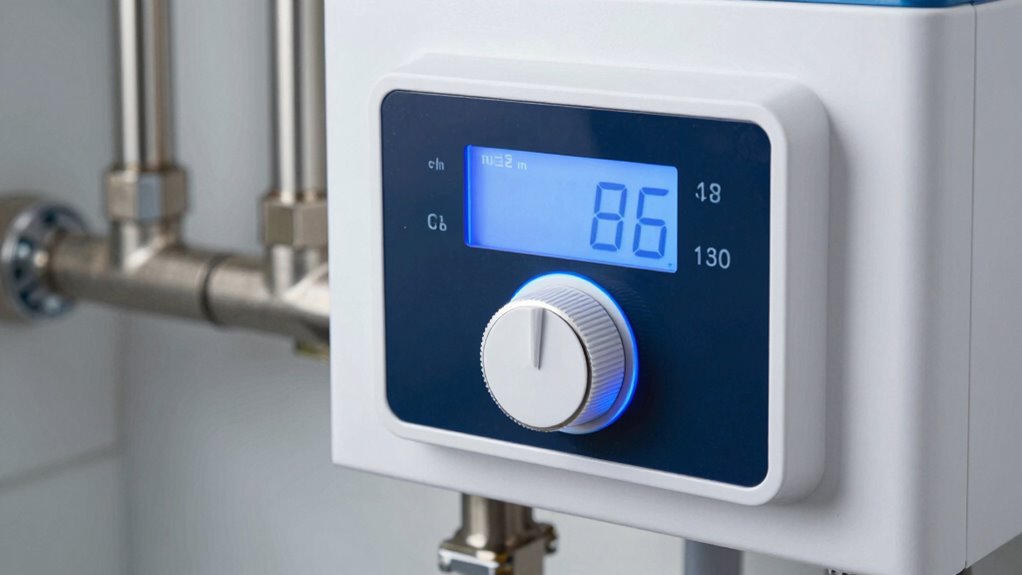
Adjusting your water softener settings can substantially improve its efficiency and lifespan. Properly tuned settings match your water quality, reducing unnecessary salt consumption and conserving resources. Start by adjusting the regeneration cycle based on your water hardness test results. If your water is less hard, decrease the salt dosage and extend the regeneration interval. Use the table below to help guide your adjustments:
| Water Hardness | Salt Usage | Regeneration Frequency | Notes |
|---|---|---|---|
| Soft | Less salt | Less often | Saves salt and water |
| Hard | More salt | More often | Ensures effective softening |
Additionally, regularly testing your water hardness ensures your softener settings remain accurate and effective. Fine-tuning these settings helps you avoid waste, keeps your water softener running smoothly, and maximizes efficiency. Understanding your water quality is key to achieving the best results and avoiding overuse of salt. Monitoring your system’s performance data allows for better adjustments over time, leading to more consistent results. Consistent adjustments based on water test results can further enhance your system’s performance.
Fine-Tuning Salt Usage Based on Water Hardness and Household Needs
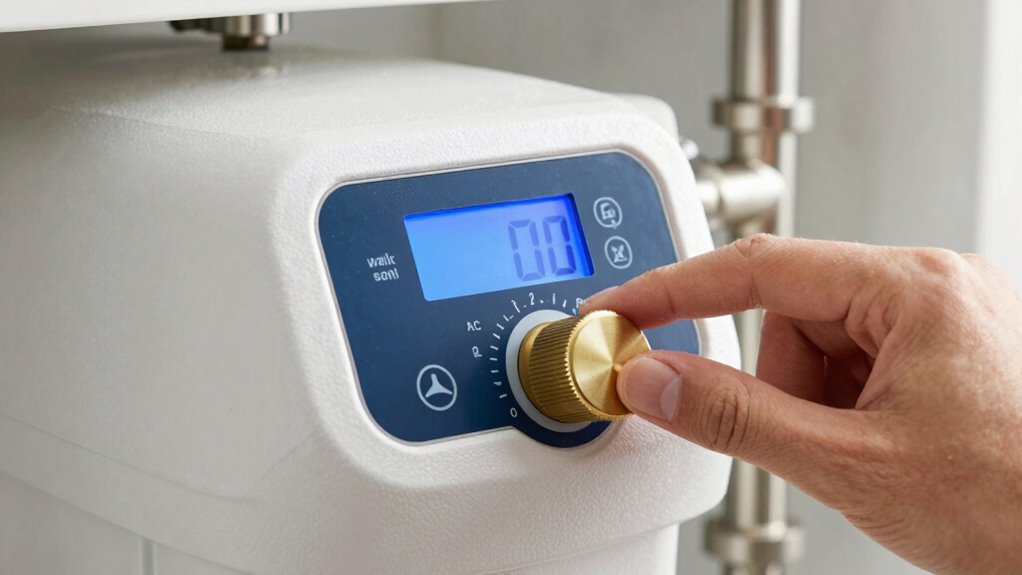
Fine-tuning your salt usage based on water hardness and household needs guarantees your water softener runs efficiently without waste. By adjusting the salt levels and using salt savers, you can prevent over-salting and save money. Regular hardness calibration ensures your system responds accurately to your water’s mineral content. Consider household demands—more residents or high water usage may require more frequent regeneration, while smaller households can reduce salt intake. Monitoring your water’s hardness helps you set ideal salt levels, avoiding unnecessary salt consumption. Additionally, using salt savers can extend salt longevity and improve efficiency. Proper system maintenance and gear care tips can further enhance your overall cycling experience. Regularly testing your water quality ensures your settings remain accurate and effective. Staying informed about personality assessments can help you understand your preferences and improve household management strategies. Remember, a properly calibrated softener minimizes salt waste and maintains water quality, making your setup more eco-friendly and cost-effective. Incorporating water testing into your routine allows for precise adjustments and optimal performance.
How to Monitor Your Softener’s Performance and Re-Test Regularly
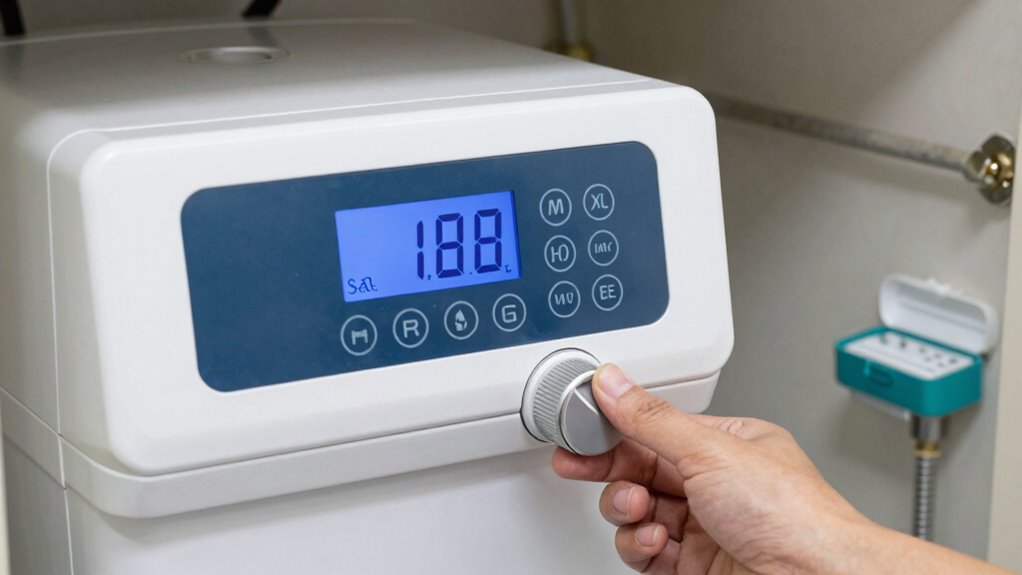
You need to regularly check your water softener’s performance to make certain it’s working efficiently. Schedule testing sessions to monitor water quality and adjust salt levels as needed. Consistent testing helps catch issues early and keeps your system running smoothly. Understanding consumer deals like cash back and discounts can also help you save money on maintenance supplies or upgrades. Additionally, being aware of environmental impact considerations can guide you toward eco-friendly practices when maintaining your system. Implementing proper system calibration ensures your water softener operates at optimal levels, conserving resources and extending the lifespan of your equipment. Regular testing also supports a curiosity-driven approach to understanding your water system’s performance, ensuring you’re proactive about its care and efficiency. Staying informed about water quality testing methods can further enhance your ability to maintain a balanced and effective system.
Schedule Regular Testing
How can you guarantee your water softener continues to work effectively? Regular testing is key. By monitoring your water quality, you can catch signs of mineral buildup or declining softening performance early. Schedule testing every few months to ensure your system maintains ideal hardness levels. This consistent monitoring helps prevent scale accumulation that affects appliance efficiency and prolongs your softener’s lifespan. Keep an eye on household water taste, soap usage, and any unusual buildup around fixtures. Implementing water quality testing techniques can further enhance your ability to maintain optimal system function. Consistent testing allows you to adjust settings if needed, saving salt and energy. Remember, proactive checks help avoid costly repairs and ensure your water stays soft and clean, providing the best results for your home. Staying informed about water quality monitoring techniques can also help optimize your system’s performance. Stay vigilant, and your softener will perform reliably for years to come.
Adjust Salt Levels
Monitoring your softener’s salt levels regularly is essential for maintaining ideal performance. Check the salt level in the brine tank at least once a month, especially before the regeneration cycle begins. When the salt drops below the halfway mark, it’s time to add more. Proper salt levels ensure the softener regenerates effectively without wasting salt or water. During each regeneration cycle, observe if the system is using an appropriate amount of salt; overuse indicates too much salt, while underuse suggests insufficient salt. Adjust the salt level accordingly to optimize performance. Regularly re-testing your water hardness after adjustments confirms your settings are correct. Staying attentive to your salt level and regeneration cycle helps keep your water softener efficient and prolongs its lifespan. Additionally, understanding how the seasons influence water hardness can help you anticipate when more frequent adjustments may be necessary.
Common Causes of Salt Waste and How to Fix Them
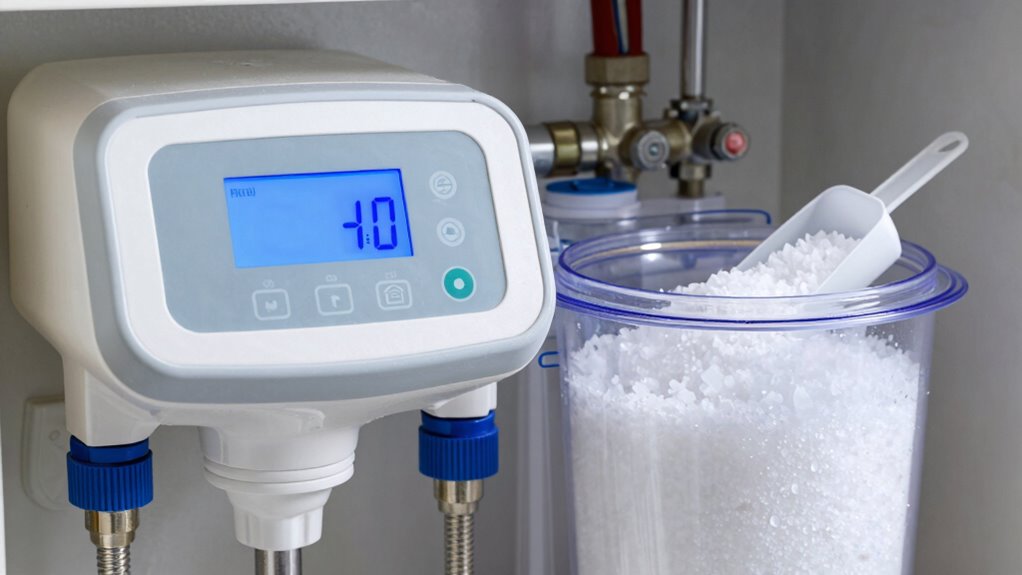
One of the most common reasons for salt waste in a water softener is inefficient regeneration, which occurs when the system doesn’t properly use the salt to regenerate the resin beads. This can happen due to brine clogging or mineral buildup, blocking the flow of brine and preventing effective regeneration. When the resin isn’t regenerated properly, you end up using more salt than necessary, leading to waste. To fix this, check for brine clogging and clean or replace the brine valve if needed. Regularly flush out mineral buildup from the mineral tank and resin bed. Additionally, ensure the system is set to the correct regeneration cycle and salt dosage. Proper maintenance keeps your softener running efficiently and saves salt.
Maintaining Your Water Softener for Long-Term Cost Savings
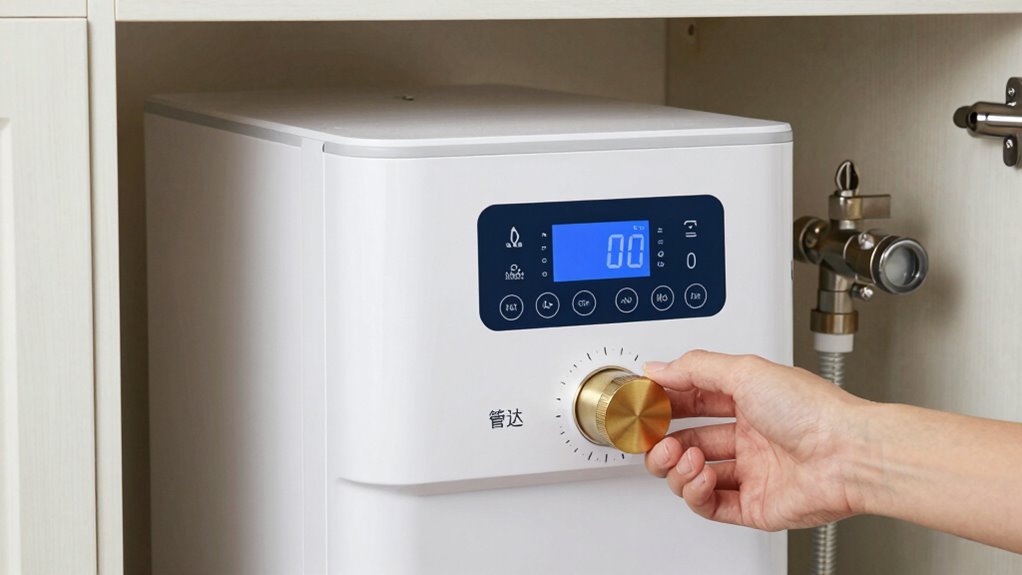
Regularly maintaining your water softener is essential to guarantee it operates efficiently and saves you money over time. Proper upkeep helps maintain water quality by preventing mineral buildup inside the system, which can impair performance. Check the brine tank and resin bed regularly, and clean them as needed to remove any accumulated minerals. Keep an eye on the regeneration cycle to ensure it’s functioning correctly, reducing salt waste. Also, inspect for salt bridges or mounded salt that can hinder the softening process. By staying proactive with maintenance, you extend your system’s lifespan and avoid costly repairs. Consistent attention keeps your water softener running smoothly, ensuring you enjoy high water quality while minimizing mineral buildup and saving money on salt and energy bills.
Frequently Asked Questions
Can I Adjust Hardness Settings Manually or Automatically?
You can adjust hardness settings manually or use automatic calibration. Manual adjustment lets you set the hardness level directly, giving you control over how much salt your softener uses. Automatic calibration detects your water’s hardness and adjusts settings accordingly, saving salt and energy. Both options work well, so choose based on your preference for control or convenience. Regularly check and fine-tune your settings for peak performance.
What Signs Indicate My Water Softener Needs Recalibration?
You’ll notice your water softener needs recalibration if you see increased salt consumption or inconsistent water flow. If the softened water feels less effective or your appliances develop buildup, it’s a sign the system isn’t functioning at its best. Regularly check your salt levels and monitor flow rates. When issues arise, recalibrate your settings to guarantee efficient operation and prevent salt waste, maintaining soft water quality.
How Often Should I Re-Test My Water’s Hardness?
You should re-test your water’s hardness every 3 to 6 months to guarantee accurate calibration. Regular testing helps you adjust salt usage efficiently, preventing waste and prolonging your softener’s lifespan. If your water quality changes or you notice issues like soap not lathering well, re-test sooner. Keeping up with calibration frequency ensures your softener works effectively without overspending on salt or wasting resources.
Are There Specific Salt Types Best for Different Water Conditions?
Choosing the right salt is like finding the perfect suit—tailored to your water’s unique condition types. For well water, opt for high-purity, solar or evaporated salt to prevent residue buildup. If your water is especially hard, consider mineral-specific salts that enhance salt compatibility. This careful selection guarantees your softener functions at its best, conserving salt and energy, and keeping your water crystal clear and gentle on your home’s plumbing.
How Does Water Temperature Affect Softener Efficiency?
Temperature effects can substantially impact your softener performance. When water is cold, ion exchange slows down, reducing efficiency and potentially leaving hard minerals untreated. Conversely, warmer water speeds up the process, improving salt regeneration and softening effectiveness. To optimize softener performance, keep water temperature consistent and within the recommended range. This ensures maximum efficiency, minimizes salt waste, and maintains soft water quality for your home.
Conclusion
By regularly testing your water and fine-tuning your softener settings, you can save up to 20% on salt costs each year. Keeping an eye on performance helps prevent waste and extends your system’s lifespan. Remember, proper maintenance not only cuts expenses but also guarantees your water stays soft and pure. Stay proactive, and you’ll enjoy the benefits of an efficient, cost-effective softening system for years to come.
Fall Picks
fall essentials
As an affiliate, we earn on qualifying purchases.