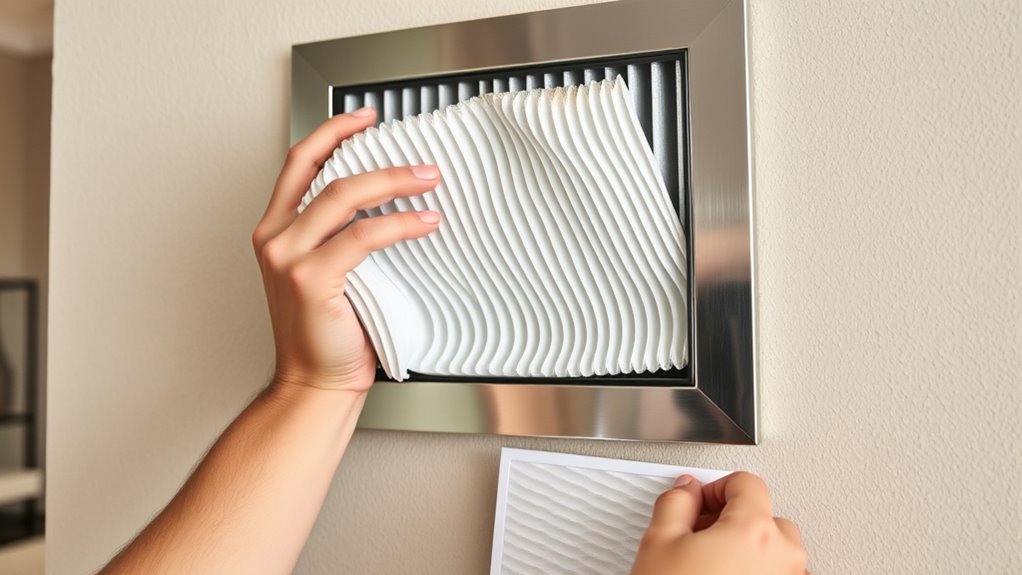
To change your home air filter, start by locating it in the return duct or near the blower compartment, then turn off your HVAC system. Carefully remove the dirty filter, noting its orientation and airflow arrows. Choose a replacement filter that matches the size and rating of the old one. Insert the new filter with the airflow arrows pointing toward the blower motor, then turn your system back on. Keep it up, and you’ll discover more tips to keep your system running smoothly.
Key Takeaways
- Turn off your HVAC system before removing the old filter to prevent dust and debris spreading.
- Locate the filter in the return duct or near the blower and note its orientation.
- Remove the old filter carefully, checking its size and airflow direction for the new filter.
- Insert the new filter with airflow arrows pointing toward the blower motor, ensuring a snug fit.
- Turn the system back on and verify smooth operation, maintaining regular filter replacement for optimal performance.
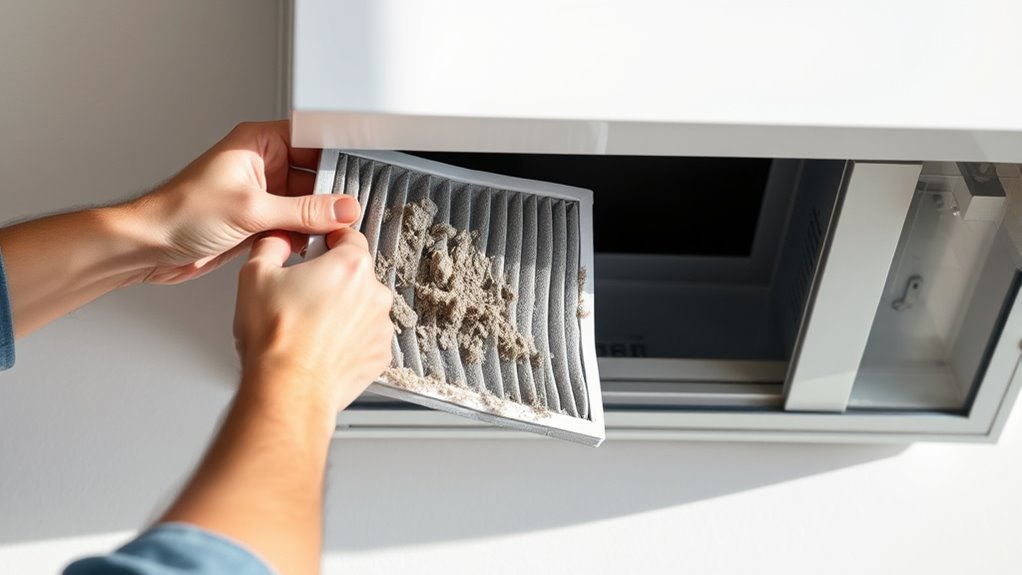
Changing your home air filter is a simple yet vital task to guarantee good indoor air quality and keep your HVAC system running efficiently. When you perform regular filter replacement, you’re actively improving the air quality inside your home, making it healthier and more comfortable for everyone. A clean filter traps dust, pollen, pet dander, and other airborne particles, preventing them from circulating through your living space. Over time, filters become clogged with debris, which reduces airflow and strains your HVAC system. This not only diminishes indoor air quality but also leads to higher energy bills and potential system failures. That’s why it’s essential to check and change your air filter regularly—usually every 1 to 3 months, depending on your household’s needs.
To begin, locate your air filter. Most systems have a designated slot in the return air duct or near the blower compartment. Once you find it, turn off your HVAC system to prevent debris from being disturbed or system damage. Carefully remove the old filter, paying attention to how it’s positioned. Many filters have arrows indicating airflow direction; keep these in mind for the new filter. When you handle the filter, make sure to avoid knocking dust into the air. If you notice excessive dust or mold, it might be wise to wear a mask or gloves for safety.
Next, check the specifications on your current filter to choose the correct replacement. Filters come in various sizes, ratings, and types—like fiberglass, pleated, or electrostatic. Select the right one based on your HVAC unit’s requirements and your air quality needs. Insert the new filter, ensuring the airflow arrows point in the correct direction, usually toward the blower motor. Proper installation is key to maintaining good airflow and effective filtration. Regularly changing your air filter can also help prolong the lifespan of your HVAC system by preventing unnecessary strain. Once everything is in place, turn your HVAC system back on and observe if it runs smoothly.
Frequently Asked Questions
How Often Should I Replace My Air Filter During Allergy Season?
During allergy season, you should replace your air filter more frequently to maintain good air quality. Typically, changing it every 30 to 45 days helps guarantee the filter’s lifespan is maximized and allergens are effectively removed from the air. If you notice increased dust, odors, or reduced airflow, it’s a sign to replace the filter sooner. Keeping up with regular changes improves indoor air quality and keeps your HVAC system running smoothly.
Can I Clean and Reuse My Home Air Filter?
You might wonder if you can clean and reuse your air filter to save money, but most filters aren’t designed for multiple uses. Reusing can reduce filter lifespan and compromise air quality. To clean, gently vacuum or wash with water if the filter is washable; otherwise, replace it. Remember, proper cleaning methods extend the filter’s effectiveness, but for peak performance, it’s best to follow manufacturer guidelines and replace when necessary.
What Type of Air Filter Is Best for Pets?
When choosing an air filter for pets, you want one that effectively captures airborne allergens like pet dander and hair. Look for filters with high MERV ratings and filter materials designed for allergen removal, such as electrostatic or HEPA filters. These filters trap smaller particles, improving air quality and reducing pet-related allergies. Regularly replacing these filters guarantees they maintain their efficiency and keep your home cleaner and healthier.
How Do I Know if My Air Filter Is the Right Size?
You can determine if your air filter is the right size by checking the filter dimensions printed on its frame. Use sizing tools like a tape measure to double-check these measurements, guaranteeing they match your HVAC system’s requirements. Proper sizing ensures ideal airflow and filtration. If you’re unsure, consult your system’s manual or ask a professional to help you select the correct filter size for your home.
Are There Smart Filters That Monitor Air Quality?
Yes, there are smart filter options that monitor air quality. These filters come with built-in air quality sensors that track pollutants, allergens, and humidity levels. When air quality changes, the filters can alert you or automatically adjust to improve indoor air. You can connect these smart filters to your smartphone or smart home system, allowing you to monitor and manage your home’s air quality conveniently and effectively.
Conclusion
Now that you’ve mastered changing your air filter, your home’s air will be so fresh, it might just feel like you’re breathing in a mountain breeze every day! Say goodbye to dust bunnies and sneezing fits, and hello to a cleaner, healthier house. Keep up with this simple task, and you’ll be the superhero of your home’s air quality—fighting off allergens and making your indoor space feel like a five-star spa every single day!