TL;DR

Get the little things that make your day delivered free with Prime
- Fast, free delivery on millions of items
- Prime Video, Amazon Music and more included
- Member-only deals all year
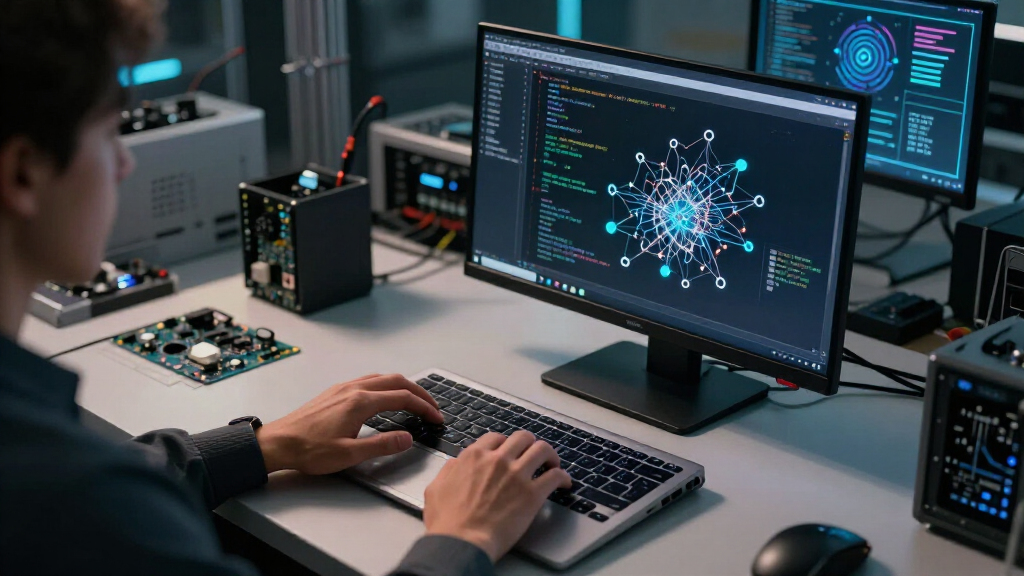
A new AI-generated digital replica of a Swiss alpine railway station has been unveiled in Room 23 of FABLE/175. The project demonstrates advanced coding, design, and real-time synchronization, highlighting AI’s role in artistic and technical innovation. For a detailed look into the making of this project, see the original analysis.
Room 23 of 175 in the FABLE/175 collection presents an AI-generated digital replica of a Swiss alpine railway station, emphasizing precision, minimalism, and real-time synchronization. This project showcases how artificial intelligence and coding can produce immersive, highly detailed virtual environments that adhere to strict Swiss design principles, offering a glimpse into future possibilities for digital architecture and transit visualization.
The project, titled ‘Kanton Alpin Verkehrsbetriebe’, is a fully code-driven, single-page website that replicates a Swiss transit station with remarkable accuracy. This approach exemplifies how AI is transforming digital architecture. It features a live SVG clock modeled after the Mondaine style, which accurately reflects the station’s timing, including the characteristic 58-second sweep and 2-second pause at 12.00. The clock is synchronized with real time and is a central element of the interface.
Alongside the clock, the site includes a split-flap departure board that displays eight destinations. The board’s characters flip through different states with a 20-second cycle, simulating real-world departure displays. Delays are flagged in red, and the entire system relies solely on HTML, CSS, and JavaScript, with no external assets or frameworks. The visual language employs a monochrome palette—white, near-black, and signal red—and uses CSS grid and SVG for structural integrity. Typography combines Helvetica-like and monospaced fonts to reinforce the mechanical, precise aesthetic.
Developed by an AI following a detailed art-direction brief, the project exemplifies obsessive attention to detail, from the timing mechanics to the graphical schematics. The entire experience is designed to be flawless across multiple screen sizes, with accessibility considerations such as tap targets larger than 44 pixels and high contrast ratios. This project highlights the importance of web accessibility standards in digital design. The site is hosted without external dependencies, emphasizing self-sufficiency and technical mastery.
Why This Digital Transit Model Matters
This project demonstrates the potential of AI-driven design and coding to produce highly detailed, accurate virtual environments that mirror real-world systems. It highlights how AI can assist in creating digital representations for transit planning, artistic expression, and educational tools, all rooted in rigorous precision. For the tech and design communities, it offers a blueprint for integrating real-time synchronization, strict aesthetic adherence, and code-based visualizations into immersive experiences. The work also underscores the importance of disciplined, minimalist aesthetics inspired by Swiss International Style, which can influence future digital architecture and interface design.
Products Worth Considering

Ring Alarm 14-Piece Wireless Security System Kit
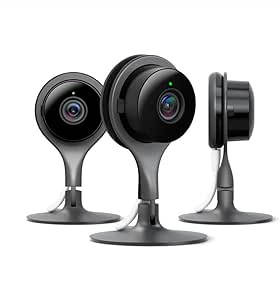
Google Nest Cam Indoor Security Camera, 3-Pack

Shark Navigator Robot Vacuum with Self-Empty Base, Dark Grey (RV2120AE)
As an affiliate, we earn on qualifying purchases.
The Evolution of AI in Digital Architectural Art
This project is part of the larger FABLE/175 collection, a series of 175 websites built entirely by AI, each representing a different conceptual or artistic environment. The collection aims to explore the boundaries of AI in creative coding, with Room 23 focusing on a highly disciplined, Swiss-inspired transit station. Previous rooms in the series have included abstract environments like an abyssal station and botanical apothecaries, but this project stands out for its strict adherence to real-world precision and functional aesthetics.
The development process involved multiple phases: initial construction based on a detailed design manual, rigorous external critique to refine visual and functional aspects, and final approval by an art director. The project exemplifies how AI can follow complex design rules, produce code-driven visuals, and generate immersive experiences that blend art and engineering seamlessly.
“This project exemplifies how AI can produce highly detailed, real-time synchronized virtual environments rooted in strict design principles, pushing the boundaries of digital architecture.”
— Thorsten Meyer
Unanswered Questions About the AI-Generated Station
While the project is fully functional and visually precise, it is not yet clear how scalable or adaptable these AI-generated environments are for real-world applications. The long-term stability of the code, potential for interactivity beyond visual synchronization, and integration with actual transit systems remain unconfirmed. Additionally, the extent to which AI can autonomously create such detailed environments without human oversight is still under exploration.
Future Directions for AI in Digital Transit Visualization
Further development may involve expanding the project’s interactivity, integrating real-time data feeds from actual transit systems, or applying similar principles to other types of digital infrastructure. Researchers and developers might explore how AI can assist in designing and simulating complex urban environments or transit networks in real time. The ongoing collection of 175 AI-built websites will continue to showcase AI’s evolving capabilities in art, engineering, and digital design.
Key Questions
How does the clock in the project work?
The clock is modeled after the Mondaine style, with a sweeping red second hand that completes a cycle in 58 seconds, then pauses at 12 for 2 seconds, mimicking Swiss railway station timing. It is synchronized with real time using JavaScript functions.
Is this project meant for real-world transit systems?
No, it is a digital artistic recreation created by AI, designed to demonstrate precision and aesthetic discipline. Its purpose is to explore AI’s potential in digital architecture and visual storytelling.
Can this AI-generated station be interacted with beyond viewing?
Currently, the experience is primarily visual and synchronized with real time. Future iterations may include more interactivity or dynamic data integration, but the current project focuses on static visual fidelity and timing accuracy.
What tools were used to build this project?
The entire site was built using pure HTML, CSS, and JavaScript, with no external assets or frameworks, emphasizing code-driven visuals and real-time synchronization.
Source: ThorstenMeyerAI.com