When you shop across borders, understanding duties and taxes helps you avoid surprises. These fees depend on your package’s declared value, contents, and destination country’s rules. Accurate customs declarations guarantee smooth clearance and prevent delays or confiscation. Research import restrictions and use online calculators to estimate costs. Staying informed about customs processes helps you budget better and ensures your items arrive quickly. Keep going to discover more tips for hassle-free cross-border shopping.
Key Takeaways
- Customs duties depend on declared value and product classification under Harmonized System codes.
- Taxes such as VAT or sales tax vary by country and may be paid by sender or recipient.
- Accurate customs declarations prevent delays, fines, or confiscation of shipments.
- Research destination country’s regulations to avoid restricted or prohibited items.
- Proper preparation and documentation ensure smooth clearance and avoid unexpected costs.
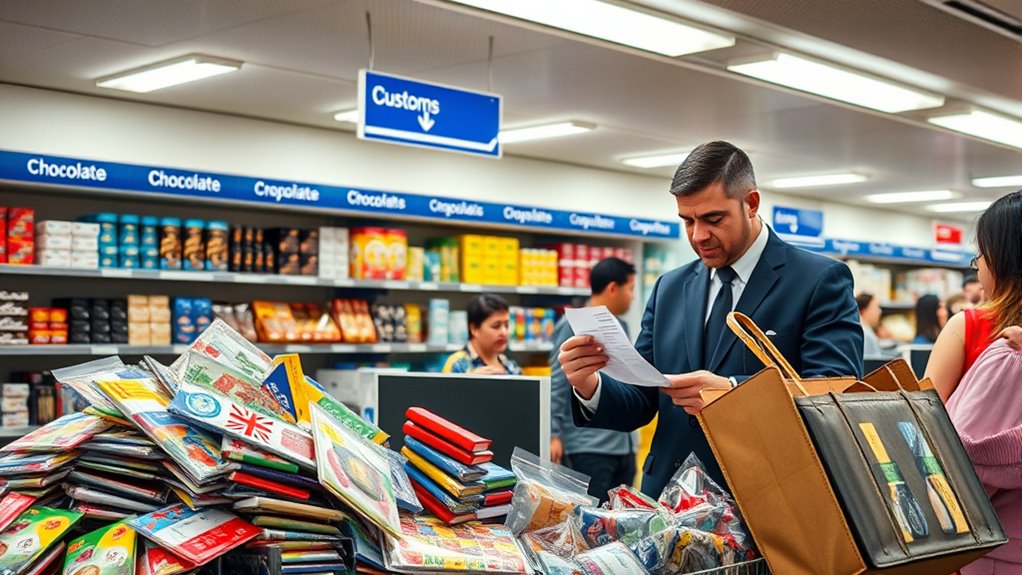
Cross-border shopping has become increasingly popular as consumers seek better deals, unique products, or access to brands unavailable in their home countries. However, when you’re bringing goods across borders, it’s indispensable to understand the customs declaration process and international shipping regulations. These steps are paramount for ensuring your package clears customs smoothly and that you don’t face unexpected duties or delays.
When you ship or receive items internationally, you must complete a customs declaration form. This document provides customs authorities with details about the contents, value, and origin of your package. Accurately filling out the customs declaration is essential because it influences the duties and taxes you might owe. Misdeclaring the value or mislabeling items can lead to fines, confiscation, or delays. Always be honest and precise about what you’re sending, especially if you’re claiming items as gifts or personal belongings.
Understanding international shipping regulations is equally important. These rules vary from country to country but generally govern what can be imported, packaging standards, and documentation requirements. Some countries restrict certain products, such as alcohol, tobacco, or luxury goods, or impose limits on quantities. If you ignore these regulations, your shipment might get held up at customs, returned, or destroyed. Before sending or purchasing items from abroad, research the specific import restrictions and prohibited items for your destination country.
Another key aspect is knowing the customs duties and taxes that might apply to your cross-border purchases. Duties are typically calculated based on the declared value of the goods and their classification under the Harmonized System codes used internationally. Your goods might also incur VAT or sales taxes, depending on the destination. These costs are usually paid either by the sender or recipient, so it’s useful to clarify who is responsible beforehand. If duties or taxes are due upon arrival, they’ll need to be settled before you can receive your package.
To avoid surprises, always check the customs regulations of your destination country before making a purchase or shipping a package. Many countries offer online tools or customs calculators to estimate potential duties and taxes. Being informed helps you budget accurately and prevents delays at customs checkpoints. Additionally, vetting the shipping carrier’s policies can help you understand their procedures and avoid unexpected fees. Remember, a clear customs declaration and adherence to international shipping regulations aren’t just bureaucratic hoops—they’re indispensable steps that ensure your cross-border shopping experience is smooth, legal, and swift.
Frequently Asked Questions
How Can I Estimate Customs Duties Before Shopping?
To estimate customs duties before shopping, start with duty calculation tools available online from your country’s customs agency. These tools use customs valuation, considering the item’s price, shipping, and insurance, to give you an estimate. Make sure to check specific duty rates for your product category, as they vary. This way, you can budget accurately and avoid surprises when your package arrives.
Are There Any Items Permanently Restricted From Border Crossing?
You can’t bring prohibited items or restricted goods across borders—it’s like trying to smuggle the very essence of danger! Many items, like illegal drugs, weapons, endangered species, and certain medications, are permanently restricted from crossing borders. Customs authorities enforce these rules to protect nations and their citizens. Always check the specific restrictions of your destination country before shopping; otherwise, you risk confiscation, fines, or even legal trouble.
How Do I Claim a Duty Refund on Returned Items?
To claim a duty refund on returned items, first check the retailer’s return policy and verify the items qualify for a refund. You’ll need to present proof of purchase and customs documentation at the border or customs office. Follow the refund process by submitting a claim form and supporting receipts. Once approved, you’ll receive the duty refund, typically through a check or credited back to your original payment method.
What Are the Penalties for Under-Declaring Goods?
If you under-declare goods, you risk hefty penalty fines and legal consequences. Think of it as walking a tightrope—one misstep can lead to serious repercussions. Customs authorities take under-declaration seriously to protect revenue. You could face substantial fines, seizure of goods, or even criminal charges. To avoid this, be honest and accurate when declaring your items, ensuring you stay within legal boundaries and prevent costly penalties.
Can I Shop Duty-Free Online and Pick up Abroad?
Yes, you can shop duty-free online and pick up abroad if the store offers tax exemptions for international customers. Many online retailers provide this option, allowing you to avoid paying local taxes and duties at the time of purchase. However, be aware that customs may still charge duties or taxes when you pick up your goods, depending on the country’s regulations. Always check the store’s policies and local import rules beforehand.
Conclusion
Remember, what goes around comes around. When you cross borders, understanding duties and taxes helps you avoid surprises and keeps your shopping hassle-free. Always research the rules before you go, so you’re not caught off guard at customs. By staying informed, you can enjoy your purchases without worry. After all, knowledge is power—especially when it comes to crossing borders. Happy shopping, and safe travels!