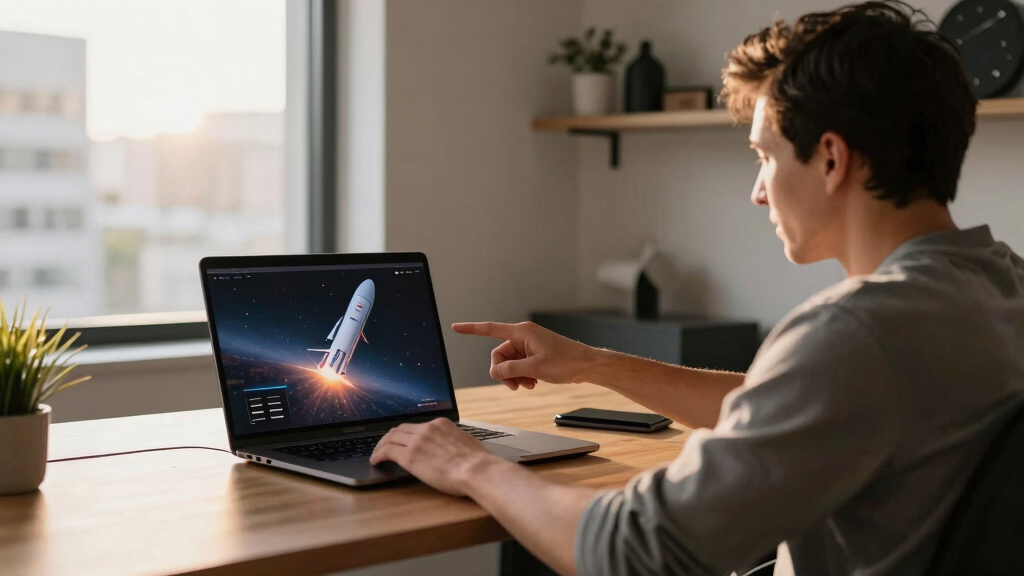

📊 Full opportunity report: The $60 Billion Bargain: Why Cursor Could Be a Steal for SpaceX on ThorstenMeyerAI.com — validation score, market gap, and execution plan.

Get the little things that make your day delivered free with Prime
- Fast, free delivery on millions of items
- Prime Video, Amazon Music and more included
- Member-only deals all year
TL;DR
SpaceX has exercised an option to acquire AI coding startup Cursor for $60 billion in all-stock, a move that appears highly advantageous given Cursor’s rapid revenue growth and strategic assets. The deal was completed with minimal dilution and was met with a market boost for SpaceX.
SpaceX has announced it will acquire Cursor, the AI coding tool company, for $60 billion in all-stock. This strategic move, announced on June 16, comes just days after SpaceX’s record-breaking IPO valued the company at over $2 trillion. The deal’s timing and structure suggest a calculated effort to secure a leading position in enterprise AI tools with minimal dilution and market impact, making it a noteworthy development in both AI and aerospace sectors.
SpaceX’s acquisition of Cursor involves an all-stock transaction valued at $60 billion. The deal was executed with only 3.4% dilution relative to SpaceX’s IPO valuation, and the company’s stock rose approximately 16% on the news, boosting SpaceX’s market cap to nearly $2.94 trillion. Cursor, which reported roughly $4 billion in annualized revenue, has experienced rapid growth, doubling its revenue every four months and projecting $6 billion in revenue by 2026.
Key assets include Cursor’s profitable enterprise subscription segment, its developer platform, and its own coding model, Composer. The acquisition also blocks competitors like OpenAI and Microsoft from gaining control over Cursor, which has rebuffed multiple offers from these firms. Additionally, Cursor’s reliance on external models and API costs is expected to diminish as SpaceX integrates its own supercomputers and models, potentially transforming Cursor into a highly profitable asset.
The $60B bargain: why Cursor could be a steal
$60 billion for a code editor sounds like a bubble. Look past the headline and the price isn’t the scandal — it’s the discount. Here’s the case that SpaceX got Cursor cheap.
A melting multiple, paid in appreciating paper that cost almost nothing, for the profitable leader of the only AI category reliably making money — plus the missing app layer and an escape from the margin trap. If the growth holds and integration doesn’t break the product, $60B will read like a down payment. The risk isn’t overpaying for what Cursor is — it’s breaking what made it worth buying.
Strategic Value of the Cursor Acquisition for SpaceX
This deal positions SpaceX as a major player in enterprise AI, leveraging Cursor’s rapid growth, profitable niche, and strategic assets to accelerate its AI ambitions. By owning a leading developer platform and proprietary models, SpaceX reduces dependence on third-party providers, potentially unlocking significant profit margins. The acquisition also prevents competitors from consolidating a key distribution channel, giving SpaceX a competitive edge in the AI-driven enterprise market, which is expected to grow rapidly.
As an affiliate, we earn on qualifying purchases.
Background on SpaceX’s AI and Business Strategy
Prior to this deal, SpaceX’s focus was primarily on aerospace and satellite technology, with recent efforts in AI through its xAI division. Cursor emerged as a leader in generative AI coding tools, with a fast-growing revenue base and a proven product. The company had turned down offers from OpenAI and Microsoft, indicating its strategic value and independence. The broader AI market has seen intense competition, with companies racing to own workflows and developer interfaces, making Cursor a coveted asset. SpaceX’s move reflects a broader trend of vertical integration in AI, similar to its approach in aerospace manufacturing.
“This acquisition accelerates our AI capabilities and secures a critical foothold in enterprise AI workflows.”
— SpaceX spokesperson
Unanswered Questions About the Acquisition’s Future Impact
It remains unclear how effectively SpaceX will integrate Cursor’s technology and team, and whether the projected revenue growth will materialize as planned. The long-term profitability of the combined assets and potential regulatory or competitive responses also remain uncertain. Additionally, the precise impact on Cursor’s existing customer base and the company’s operational independence is still developing.
Next Steps for SpaceX and Cursor Integration
SpaceX will likely focus on integrating Cursor’s technology into its own AI stack, potentially launching new products based on Composer and its proprietary models. The company may also seek to expand Cursor’s enterprise customer base and further block competitors. Monitoring Cursor’s revenue growth, product development, and market positioning over the coming quarters will be key to assessing the deal’s success.
Key Questions
Why did SpaceX pay so much for Cursor?
SpaceX valued Cursor for its rapid revenue growth, profitable enterprise segment, proprietary models, and strategic position as a developer platform. The deal also prevents competitors from acquiring a key AI workflow asset.
How will this acquisition affect SpaceX’s core business?
It could diversify SpaceX’s revenue streams, accelerate its AI capabilities, and improve margins by internalizing AI costs. The integration may also bolster SpaceX’s position in the AI industry.
What does this mean for competitors like OpenAI and Microsoft?
By acquiring Cursor and rebuffing offers from rivals, SpaceX has limited their access to a leading developer platform, potentially giving it a competitive advantage in enterprise AI markets.
Will Cursor remain independent after the acquisition?
It is not yet clear, but initial indications suggest integration into SpaceX’s broader AI stack, with potential operational changes and product alignment in the future.
What are the risks of this deal for SpaceX?
Potential risks include integration challenges, overestimation of revenue growth, and market or regulatory hurdles. The long-term profitability depends on successful internalization and product development.
Source: ThorstenMeyerAI.com
Columbus Day / Indigenous Peoples' Day Picks
long weekend sales
As an affiliate, we earn on qualifying purchases.