
📊 Full opportunity report: What Makes AI 4K Monitors Stand Out In 2026? on ThorstenMeyerAI.com — validation score, market gap, and execution plan.

Get the little things that make your day delivered free with Prime
- Fast, free delivery on millions of items
- Prime Video, Amazon Music and more included
- Member-only deals all year
TL;DR
AI 4K monitors in 2026 are distinguished by advanced display features like higher refresh rates, improved color accuracy, and smarter connectivity options. These innovations enhance gaming, creative work, and everyday use, setting new standards for desktop displays.
In 2026, AI-enhanced 4K monitors are defining the market with features like higher refresh rates, smarter connectivity, and improved color accuracy, making them a key upgrade for gamers, creatives, and professionals. These advancements are driven by integrated artificial intelligence, which optimizes display performance and user interface in real-time, offering a more responsive and tailored experience.
Leading brands such as Dell, LG, and Samsung have introduced AI-powered 4K monitors that incorporate adaptive refresh rates, enhanced color calibration, and intelligent connectivity features. For example, Dell’s latest S2725QS model includes a 120Hz IPS panel with AI-driven motion smoothing and auto-calibration, providing a smoother visual experience for gaming and creative tasks. Meanwhile, Samsung’s ViewFinity S8 integrates AI to optimize ergonomics and color accuracy based on ambient lighting and user preferences.
Industry experts note that these AI features are designed to improve usability and visual fidelity, especially for users engaged in high-resolution content creation, gaming, and multitasking. The integration of AI also enables smarter connectivity, such as automatic device detection and optimized data transfer, making setups more efficient. The market has seen a shift toward monitors that combine high performance with intelligent features, pushing the boundaries of what 4K displays can deliver in 2026.
The 9 picks
- 1
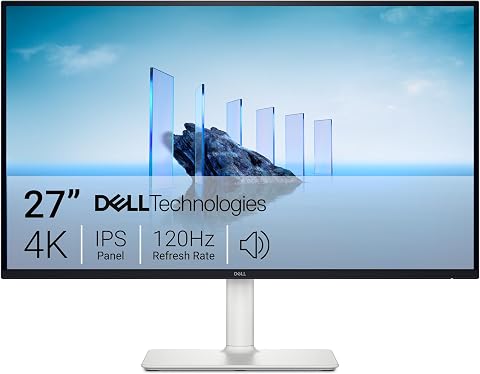 Dell 27 Plus 4K Monitor – S2725QS – 27-inch 4K (3840 x 2160) 120Hz IPS Displa…View on Amazon →
 - 2
 LG 27US500-W Ultrafine 27-Inch 4K UHD HDR10 IPS MonitorView on Amazon →
 - 3
 LG 27UP650K-W 27-inch 4K UHD IPS Computer Monitor with HDR and Adjustable StandView on Amazon →
 - 4
 Dell 32 Plus 4K Monitor – S3225QS – 31.5-inch 4K (3840 x 2160) VA Panel, AMD…View on Amazon →
 - 5
 Dell 27 Plus 4K USB-C Monitor – S2725QCView on Amazon →
 - 6
 Acer Nitro 27” 4K UHD Gaming IPS Monitor with AMD FreeSync, 72Hz Refresh Rate…View on Amazon →
 - 7
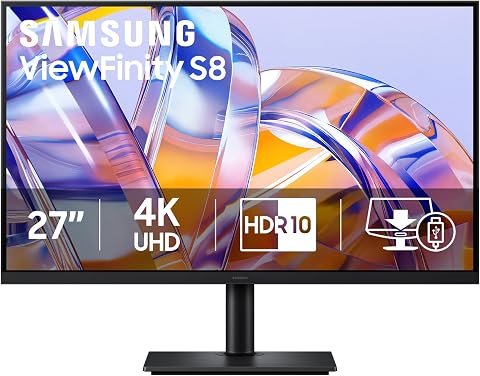 Samsung 27" ViewFinity S8 (S80UH) 4K UHD Monitor with USB-C and Ergonomic StandView on Amazon →
 - 8
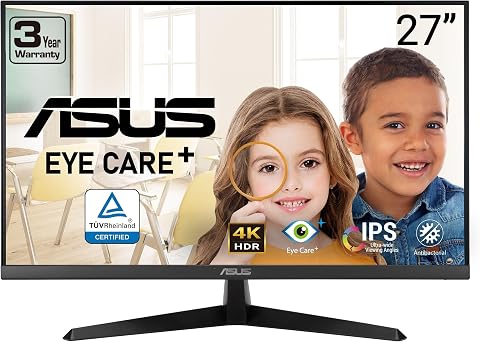 ASUS 27” 4K Eye Care Monitor (VY27UQ)View on Amazon →
 - 9
 LG 32UR550K-B 32-inch 4K UHD HDR Monitor with Adjustable StandView on Amazon →
Impact of AI-Enhanced 4K Monitors on User Experience
These AI-powered 4K monitors significantly improve the user experience by providing smoother visuals, more accurate colors, and smarter connectivity, which benefit professionals, gamers, and everyday users. The integration of AI allows for real-time adjustments that enhance productivity and immersion, making these displays a central part of modern digital workflows.
This technological shift also influences market competition, encouraging manufacturers to innovate further and offer more tailored, intelligent display solutions. For consumers, this means access to monitors that adapt dynamically to their needs, potentially reducing setup complexity and improving overall satisfaction. As AI integration becomes more widespread, it could redefine standards for display quality and usability in the coming years.
Evolution of 4K Monitors Leading to AI Integration
Over the past few years, 4K monitors have steadily improved in resolution, color accuracy, and refresh rates. In 2024, the focus shifted toward smarter features like adaptive sync and better ergonomics. The advent of AI in 2026 marks the next step, with brands embedding artificial intelligence into hardware and software to optimize performance in real-time.
This evolution was driven by increasing demands from gamers, creative professionals, and remote workers seeking more responsive and versatile displays. Early AI features in monitors primarily focused on auto-calibration and motion smoothing, but recent models now include intelligent connectivity, ambient light adaptation, and user-specific customization, reflecting a broader trend toward smarter devices.
“Our ViewFinity S8 leverages AI to optimize ergonomics and color accuracy, providing a smarter, more comfortable workspace.”
— Samsung spokesperson
Unresolved Questions About AI-Enhanced 4K Monitors
While AI features are promising, it is not yet clear how widespread their adoption will be across all models and price ranges in 2026. Specific details about long-term reliability, calibration accuracy, and how AI algorithms adapt over time are still emerging. Additionally, the impact of AI on power consumption and device longevity remains to be fully understood.
Future Developments and Market Adoption Expectations
Manufacturers are expected to expand AI capabilities in upcoming models, focusing on more personalized display adjustments and smarter connectivity options. Consumer demand for intuitive, adaptive screens will likely drive further innovation, with AI features becoming standard in high-end and mid-range monitors by late 2026. Ongoing software updates and AI improvements will also shape how these monitors evolve in the next year.
Key Questions
How does AI improve 4K monitor performance?
AI enhances performance by optimizing refresh rates, color calibration, and connectivity in real-time, providing smoother visuals and more accurate colors tailored to user needs.
Are AI features in 4K monitors worth the extra cost?
For users seeking better responsiveness, color accuracy, and smarter connectivity, AI features can justify a higher price. However, value depends on individual use cases and preferences.
Will all 4K monitors adopt AI technology by 2026?
While many high-end models are incorporating AI features, widespread adoption across all price ranges is uncertain. Lower-cost models may lag behind initially but could include basic AI functionalities over time.
What should I consider when choosing an AI-enabled 4K monitor?
Look at the specific AI features offered, such as adaptive calibration, ergonomic adjustments, and connectivity support, along with panel type, refresh rate, and connectivity options suited to your needs.
Source: ThorstenMeyerAI.com
Halloween Picks
halloween
As an affiliate, we earn on qualifying purchases.