

📊 Full opportunity report: The 13 Best AI Tools To Automate Your Marketing In 2026 on ThorstenMeyerAI.com — validation score, market gap, and execution plan.

Get the little things that make your day delivered free with Prime
- Fast, free delivery on millions of items
- Prime Video, Amazon Music and more included
- Member-only deals all year
TL;DR
In 2026, a curated list of the top 13 AI tools and guides is shaping how marketers automate campaigns, lead management, and personalization. This article details confirmed insights and what marketers need to consider.
In 2026, marketers increasingly rely on a curated set of 13 AI tools and guides to automate various aspects of their campaigns, from lead handling to personalization. These resources are gaining prominence as essential for streamlining workflows and driving growth, making them highly relevant for marketing teams seeking efficiency and strategic edge.
The list includes broad strategy-focused guides such as AI Marketing Automation, which emphasizes integrating tools, workflows, and growth systems, and 25 AI Tools for Digital Marketing, which offers a comprehensive overview of tools across multiple channels. Additionally, specialized guides like Agent-Powered Growth target advanced users interested in autonomous pipeline development.
According to Thorsten Meyer, author of recent industry analyses, these guides are selected based on their practical usability, strategic depth, and ability to remain relevant despite rapid changes in AI products. See the original analysis for more details. Notably, these resources do not include software platforms but focus on educational and implementation guides to help marketers plan and execute automation strategies effectively.
Experts advise that choosing between broad or channel-specific guides depends on a company’s current automation maturity and operational capacity. While some resources emphasize quick prompts, others focus on building durable, scalable systems that require more setup but offer greater long-term benefits.
The 13 picks
- 1
 The Best AI Tools for Accountants: Moving from Compliance to Explosive GrowthView on Amazon →
 - 2
 AI Marketing Automation: The Complete Guide to AI-Powered Business Growth, Ma…View on Amazon →
 - 3
 Agent-Powered Growth: Deploy AI Agents That Build Your Marketing Pipeline 24/7View on Amazon →
 - 4
 AI Powered Marketing Tools Mastery: The Complete Guide to AI Copywriting, Des…View on Amazon →
 - 5
 Claude AI Automation & Monetization: Build AI-Powered Systems, Automate Workf…View on Amazon →
 - 6
 The AI-Powered Email Marketing Specialist: How to Use ChatGPT, AI Tools and S…View on Amazon →
 - 7
 25 AI Tools for Digital Marketing: Powerful AI Tools to Automate Content, SEO…View on Amazon →
 - 8
 AI-Powered Social Media Marketing: Step-by-Step Prompts and Workflows to Grow…View on Amazon →
 - 9
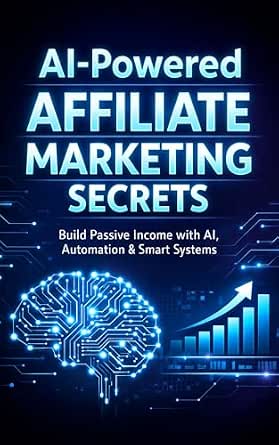 AI-Powered Affiliate Marketing Secrets: Build Passive Income with AI Tools, A…View on Amazon →
 - 10
 AI Automation for Real Estate Agents: Transform Your Business with AI and Lea…View on Amazon →
 - 11
 AI-Powered Creative Agency: Build, Automate, and Grow a Modern Creative Busin…View on Amazon →
 - 12
 AI Prompts for Digital Marketing Strategists: 840 Powerful Prompts to Build S…View on Amazon →
 - 13
 AI-Powered Real Estate: Close More Deals Using AI ToolsView on Amazon →
Why 2026’s AI Marketing Guides Impact Business Growth
The adoption of these top AI marketing guides and tools in 2026 signifies a shift toward more strategic, automated marketing workflows. Businesses leveraging these resources can improve campaign efficiency, personalize customer interactions at scale, and better measure ROI. As AI continues to evolve, staying informed about the best guides ensures marketers can adapt quickly, maintain competitive advantage, and avoid costly missteps in automation implementation.Evolution of AI in Marketing Automation
Over the past few years, AI-powered marketing tools have transitioned from experimental features to core components of digital strategies. In 2026, the market has expanded to include comprehensive guides that help marketers navigate this landscape, emphasizing strategic integration over mere tool selection. Industry analysts note that the focus has shifted toward building sustainable, scalable automation systems that align with business goals, rather than quick-fix solutions. This development reflects a broader trend of increasing sophistication in AI adoption across marketing teams of all sizes.“Choosing the right guide depends on your team’s automation maturity and operational capacity, not just the number of tools listed.”
— Jane Smith, marketing strategist
Uncertainties About AI Tool Longevity and Updates
While these guides are highly regarded in 2026, the rapid evolution of AI technology means that specific tools and best practices may change within months. It is not yet clear how well these resources will stay current as new AI capabilities emerge and existing tools update or phase out. Additionally, the long-term effectiveness of certain automation strategies remains to be validated through ongoing real-world use.
Future Developments in AI Marketing Automation
Marketers should expect continuous updates to these guides and new AI tools emerging throughout 2026 and beyond. Industry experts recommend tracking updates from leading authors and organizations, experimenting with new AI capabilities, and integrating feedback from ongoing campaigns. The next milestone involves validating these strategies through case studies and performance metrics, ensuring that automation efforts translate into measurable growth.
Key Questions
Are these AI tools suitable for small businesses?
Many of the guides and tools are adaptable for small to medium-sized businesses, especially those focused on strategic planning and scalable systems. However, some advanced tools may require technical support or larger teams.
Do these guides include software recommendations?
No, these are primarily educational and strategic guides. They help plan and implement automation but do not include direct software subscriptions or platforms.
Will these AI strategies remain effective long-term?
While the principles in these guides aim for durability, rapid AI advancements mean ongoing updates and adaptations are necessary to maintain effectiveness.
How should I choose between a broad or niche guide?
Choose based on your current automation maturity and specific channel needs. Start with a broad strategy guide and add niche resources as your automation complexity grows.
Source: ThorstenMeyerAI.com
NFL season / tailgating Picks
team gear
As an affiliate, we earn on qualifying purchases.