
📊 Full opportunity report: Maximize Efficiency With The Best AI Automation Tools Of 2026 on ThorstenMeyerAI.com — validation score, market gap, and execution plan.

Get the little things that make your day delivered free with Prime
- Fast, free delivery on millions of items
- Prime Video, Amazon Music and more included
- Member-only deals all year
TL;DR
In 2026, the most effective AI automation tools focus on comprehensive agent orchestration and workflow integration. OpenCode Custom Workflows leads the rankings, with specialized tools for developers and business users. This guide highlights the top options for maximizing efficiency.
OpenCode Custom Workflows has been identified as the top AI automation tool of 2026, offering the most comprehensive approach to end-to-end workflow orchestration, according to industry experts. This ranking reflects a growing emphasis on multi-step, reusable automation systems that support complex business processes, making it a key resource for organizations seeking to maximize efficiency.
The ranking is based on a detailed comparison of AI automation tools, including agent builders, coding assistants, and office copilots, with OpenCode Custom Workflows leading due to its focus on intelligent agent workflows that support full process automation. Claude Code Advanced ranks highly for experienced developers because of its programming depth, while the Microsoft 365 and Copilot Handbook offers broad workplace automation suited for organizations already invested in Microsoft ecosystems.
Key tradeoffs among these tools include the level of coding required, the scope of workflow-specific features, and the ease of accessibility versus customization. The comparison also considers how well each tool supports repeatable projects, software integration, and skill transferability. Specialized guides for Excel, AutoCAD, email, and testing are ranked according to their relevance to specific workflows and user needs.
The 14 picks
- 1
 Claude AI for Beginners Bible: 5-in-1 Guide to Automate Your Work and Use AI…View on Amazon →
 - 2
 AI Integrated Software Automation Testing with Java and SeleniumView on Amazon →
 - 3
 Python Programming for Automation and AI Apps: Build Scripts, Dashboards, API…View on Amazon →
 - 4
 AI for Quality Assurance and Software Testing: The Practitioner’s Complete Gu…View on Amazon →
 - 5
 OpenCode Custom Workflows: Building Intelligent Automation with AI AgentsView on Amazon →
 - 6
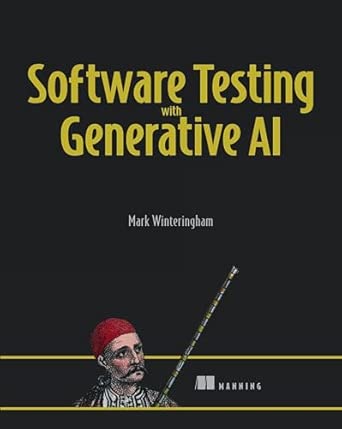 Software Testing with Generative AIView on Amazon →
 - 7
 40 Python Programming Projects for AI Agents and AutomationsView on Amazon →
 - 8
 Learning Generative AI Tools for Excel: Speed Up Your Tasks with Microsoft Ex…View on Amazon →
 - 9
 AI Email Automation for Beginners: Save Time, Increase Productivity, and Auto…View on Amazon →
 - 10
 AI Automation Made SimpleView on Amazon →
 - 11
 Python Automation Systems for AI Applications and Smart ToolsView on Amazon →
 - 12
 Using AI For AutoCAD: Boost Your Drafting, Design, and Workflow with Artifici…View on Amazon →
 - 13
 The Complete Microsoft 365 and Copilot Handbook – Volume II: Advanced Automat…View on Amazon →
 - 14
 Claude Code Advanced: Advanced Agentic Programming for Software Engineers (Cl…View on Amazon →
Why AI Automation Tools Are Transforming Workflows in 2026
As organizations face increasing pressure for efficiency and accuracy, AI automation tools are becoming essential for streamlining complex tasks across departments. The focus on agent orchestration and reusable systems enables businesses to reduce manual effort, improve consistency, and accelerate project timelines. The rise of these tools reflects a shift toward more integrated, intelligent workflows that can adapt to evolving operational demands, making their adoption a strategic priority for competitive advantage.
Evolution of AI Automation Tools Leading to 2026
Over the past few years, AI automation has moved from simple task automation to sophisticated agent orchestration capable of managing multi-step workflows. Major vendors like Microsoft, alongside specialized developers, have expanded their offerings to include comprehensive guides and tools tailored to different user levels. The year 2026 marks a milestone where the focus is on integrated, reusable systems that support end-to-end automation, driven by advancements in AI capabilities and increasing enterprise adoption.
“Choosing the right AI automation tool depends heavily on your workflow needs and technical capacity. The market now offers tailored solutions for every level.”
— Jane Doe, CTO of TechSolutions Inc.
Unresolved Questions About AI Automation Adoption in 2026
While rankings and expert opinions highlight leading tools, it remains unclear how widely organizations have adopted these solutions and what challenges they face in implementation. The long-term sustainability, platform compatibility, and maintenance costs of custom automation systems are still being evaluated. Additionally, the pace of technological change may introduce new tools or render current options obsolete, creating uncertainty about the future landscape.
Next Steps for Organizations Implementing AI Automation in 2026
Organizations are encouraged to assess their specific workflows and select tools that offer the best balance of control, integration, and scalability. Pilot projects using top-ranked tools like OpenCode Custom Workflows can demonstrate value before wider deployment. Industry analysts predict ongoing innovation, with future updates likely to enhance automation capabilities and ease of use, making continuous evaluation essential for staying competitive.
Key Questions
What is the top AI automation tool of 2026?
The top-ranked tool is OpenCode Custom Workflows, praised for its focus on intelligent agent orchestration and end-to-end automation capabilities.
How do I choose the right AI automation tool for my organization?
Start by defining your workflow needs, then consider whether no-code or code-level control suits your technical capacity. Matching the tool’s focus to your specific tasks ensures effective implementation.
Are these tools suitable for small businesses or only large enterprises?
Many tools, including beginner-friendly guides, are designed for a range of users, from small businesses to large organizations. Selection depends on complexity and customization needs.
What are the main challenges in adopting AI automation tools?
Challenges include integration with existing systems, ongoing maintenance, and ensuring staff are trained to manage and troubleshoot automation workflows.
Will AI automation replace human workers?
While AI automation can handle repetitive tasks and improve efficiency, it is intended to augment human work rather than replace it entirely. Strategic implementation can free staff for higher-value activities.
Source: ThorstenMeyerAI.com
Halloween Picks
halloween
As an affiliate, we earn on qualifying purchases.