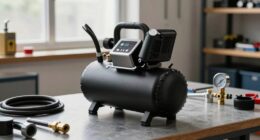

The most vital feature of a sump pump backup system during storms is its reliability to operate automatically when the primary pump fails or power goes out. This guarantees your basement stays dry, preventing flooding and water damage when heavy rain hits. Look for systems with automatic activation, sensors, and backup power sources like batteries or water. To discover how to choose the best backup system for your home, keep exploring these key features.
Key Takeaways
- Automatic activation ensures the backup pump operates immediately during power outages or heavy rainfall.
- Reliable battery or water power sources are crucial for continuous backup during storms.
- Regular maintenance and testing prevent backup failure when storm conditions occur.
- Compatibility with the primary sump pump enhances overall system dependability.
- Smart monitoring features provide real-time alerts, ensuring timely response during storm events.
Why a Backup Sump Pump Is Critical During Storms
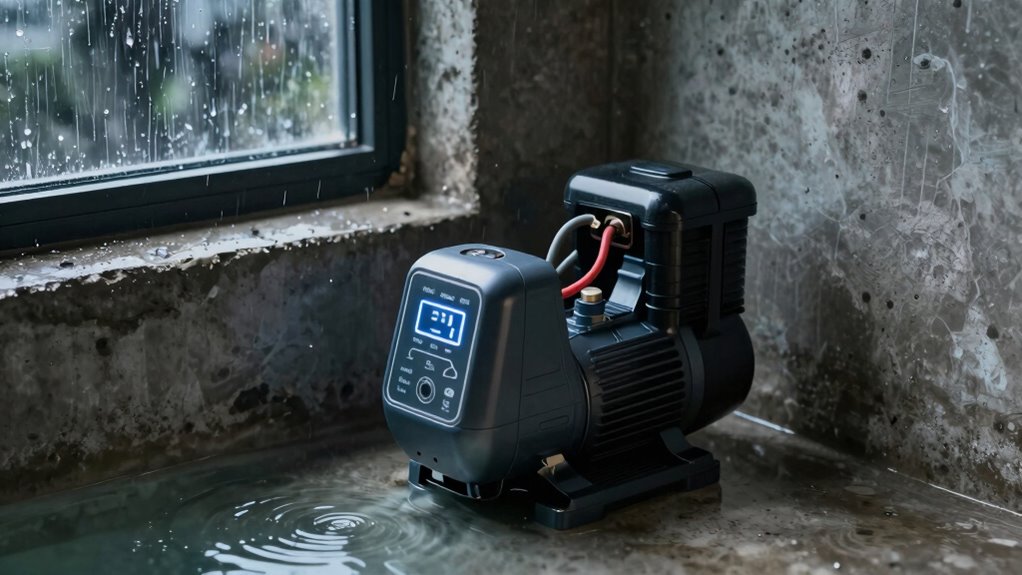
During storms, heavy rainfall can quickly overwhelm your primary sump pump, leaving your basement vulnerable to flooding. That’s why storm preparedness includes having a backup sump pump in place. Without it, even a well-maintained pump may fail under extreme conditions, risking costly water damage. A backup system ensures your sump pump maintains efficiency when the primary struggles, providing peace of mind during heavy storms. It acts as a fail-safe, activating automatically if the main pump can’t keep up. This added layer of protection is essential because storms often bring unpredictable, intense rainfall that can flood your basement if your sump pump isn’t prepared. Investing in a backup sump pump is a proactive step toward safeguarding your home from storm-related water damage. Additionally, understanding the importance of protecting your savings against unforeseen events can help you make more informed decisions about home safety investments.
What Are the Types of Backup Sump Pumps?

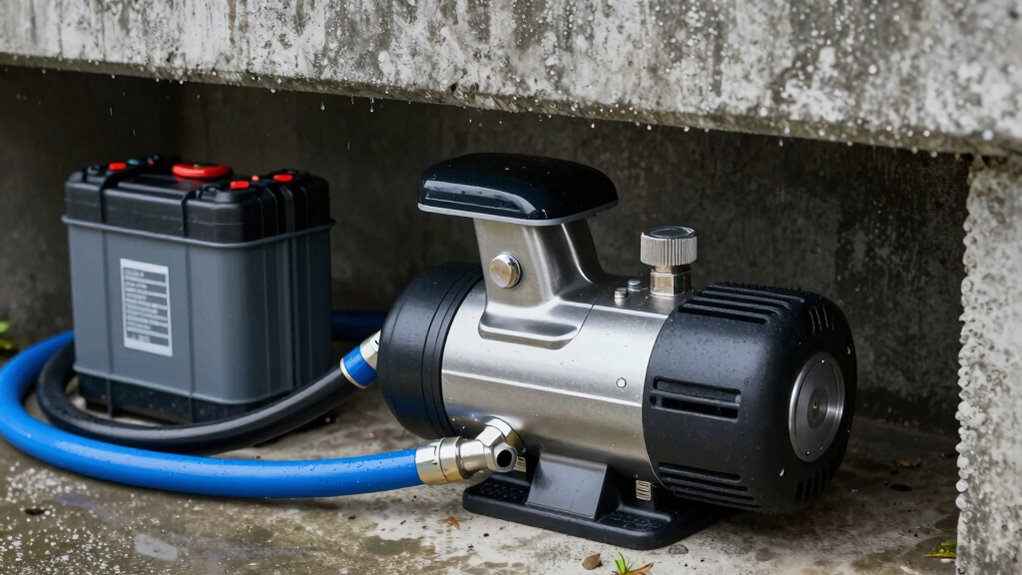
When choosing a backup sump pump, it’s important to understand the different types available to guarantee you select the right one for your home. Each type offers unique benefits and considerations related to sump pump capacity and backup system lifespan. Battery-powered pumps are reliable during power outages, but their lifespan depends on battery quality and usage. They provide essential backup during storms. Water-powered pumps work without batteries, using municipal water pressure. They have a longer lifespan but may struggle with higher sump capacities. Combination systems integrate both battery and water power, offering flexibility and extended backup capacity, ensuring your system stays operational longer during severe weather. Being aware of the different types of backup systems can help you choose the most effective solution for your needs. Understanding how these systems operate effectively can help you make a more informed decision to protect your home. Additionally, considering the initial installation costs and ongoing maintenance requirements can ensure you select a system that fits your budget and long-term needs. Moreover, researching system reliability can help you avoid unexpected failures when you need backup most. Regular maintenance and testing of these backup systems can further enhance their performance during emergencies, providing peace of mind when storms hit.
Which Backup System Is Best for Your Home?

Choosing the right backup system depends on factors like battery power reliability, maintenance needs, and your budget. You’ll want a solution that’s dependable during storms, easy to keep in good shape, and affordable to install. Let’s explore which options best fit your home’s specific needs. Regular safety checks are essential to ensure your backup system functions properly when needed. Conducting routine inspections can help identify potential issues before they become critical. Considering power storage options that are weatherproof and durable can help prevent failures during critical moments. Additionally, understanding the system capacity can help determine how long your backup will keep your sump pump running during extended outages. Understanding nail health and proper maintenance can also extend the lifespan of your backup system components and ensure optimal performance when it matters most.
Battery Power Reliability
If you want your sump pump to keep working during a power outage, battery power reliability is crucial. A dependable backup offers standby power when the grid fails, giving you peace of mind during storms. To guarantee maximum performance, consider these key factors:
- Battery longevity – Choose a system with long-lasting batteries so you won’t need frequent replacements during critical times. A quality battery can prevent unexpected failures and extend the overall lifespan of your backup system.
- Standby power capacity – Ensure the backup can handle your sump pump’s demands without faltering.
- Consistent performance – Opt for reliable systems that provide steady power, preventing flooding and damage. Vetted – Floating on Water features can influence the effectiveness of your backup. Additionally, understanding cybersecurity threats associated with smart backup systems can help protect your home’s infrastructure. Incorporating smart monitoring capabilities can enable remote diagnostics and improve system responsiveness. Recognizing power outage risks and preparing accordingly can further enhance your home’s resilience.
- Compatibility with free floating systems – Selecting a backup designed to work seamlessly with free floating sump pumps can enhance overall reliability.
A backup with solid standby power and durable batteries keeps your home protected, even in the worst weather. Prioritize these features to safeguard your property when it matters most.
Ease of Maintenance
Battery-powered backup systems are convenient for maintaining sump pump operation during power outages, but their ease of maintenance can vary considerably. Some systems require regular checks of the battery charge and fluid levels, which can affect the sump pump’s lifespan if neglected. Others have simpler designs with longer-lasting batteries that need less frequent upkeep. Generally, maintenance frequency depends on the specific model and how often storms occur. You’ll want a system that’s easy to inspect and service, so you don’t risk failure when you need it most. Choosing a backup with straightforward upkeep ensures your sump pump remains reliable without adding unnecessary hassle. Additionally, understanding the importance of somatic awareness can help you recognize early signs of system failure before a storm hits. Regularly reviewing maintenance procedures can further ensure your system stays in top condition. Staying informed about safety and emergency protocols can also enhance your readiness for unexpected power outages. Being aware of system vulnerabilities allows you to take proactive steps to prevent failures. Ultimately, ease of maintenance helps protect your home during storms by keeping your backup system ready and functional.
Cost and Installation
When selecting a sump pump backup system, cost and installation complexity are key factors to contemplate. Your choice impacts your home’s safety and your budget. Consider these points:
- The cost comparison between battery-powered and water-powered backups, where batteries can be pricey upfront but save money long-term.
- The installation challenges that come with some systems, like needing additional wiring or plumbing, which can be intimidating or require professional help.
- The peace of mind knowing that a more expensive system might provide better reliability during storms, preventing costly water damage. Additionally, system durability plays a crucial role in ensuring long-term performance.
- Evaluating the environmental impact of different backup systems can help you choose a more sustainable option that aligns with eco-friendly values. environmental impact
- Considering the maintenance requirements of each system can also influence your decision, as some may need regular checks to ensure optimal operation. Regular maintenance can extend the lifespan of your backup system and improve its overall performance.
- Assessing the reliability during power outages is vital, since a backup system that performs well in emergencies will better protect your home when it matters most.
Balancing affordability with ease of installation ensures you get the right backup without unnecessary stress. Choosing wisely keeps your home protected when it matters most.
Features to Consider in a Backup Sump Pump System

When choosing a backup sump pump, you’ll want to take into account how reliable the battery power is during outages. It’s also important to look for automatic activation features that kick in without you needing to intervene. These features ensure your system works seamlessly when you need it most. Additionally, understanding the costs involved in different types of backup systems can help you make a more informed decision. For example, some systems include battery maintenance requirements that can affect long-term operation and costs.
Battery Power Reliability
Ensuring reliable power during a backup sump pump operation is essential to prevent flooding, especially during power outages. When storm preparedness matters most, your backup system must depend on a strong, dependable battery. Without it, your home risks flooding when the power cuts out. Consider these key points:
- You need a battery with enough capacity to run your sump pump for several hours.
- Regular maintenance and testing ensure your battery stays charged and ready.
- Backup batteries should be protected from extreme temperatures and moisture to prevent failure.
A reliable battery power source gives you peace of mind during storms, knowing your sump pump will keep working when it’s needed most. Trust in this feature to safeguard your home against flood damage during power outages.
Automatic Activation Features
Automatic activation features are crucial for ensuring your backup sump pump kicks in promptly during a flood threat. With reliable automatic activation, you won’t have to worry about manually switching the pump on when water levels rise unexpectedly. Sensor technology plays a key role here, detecting rising water levels quickly and accurately. These sensors monitor conditions constantly, triggering the pump immediately when necessary. Look for systems with advanced sensor technology that reduces false alarms and guarantees prompt response. Automatic activation not only provides peace of mind but also helps prevent basement flooding and water damage. By choosing a backup sump pump with these features, you ensure it operates seamlessly during storms, activating precisely when you need it most.
How Backup Systems Protect Your Basement During Heavy Storms
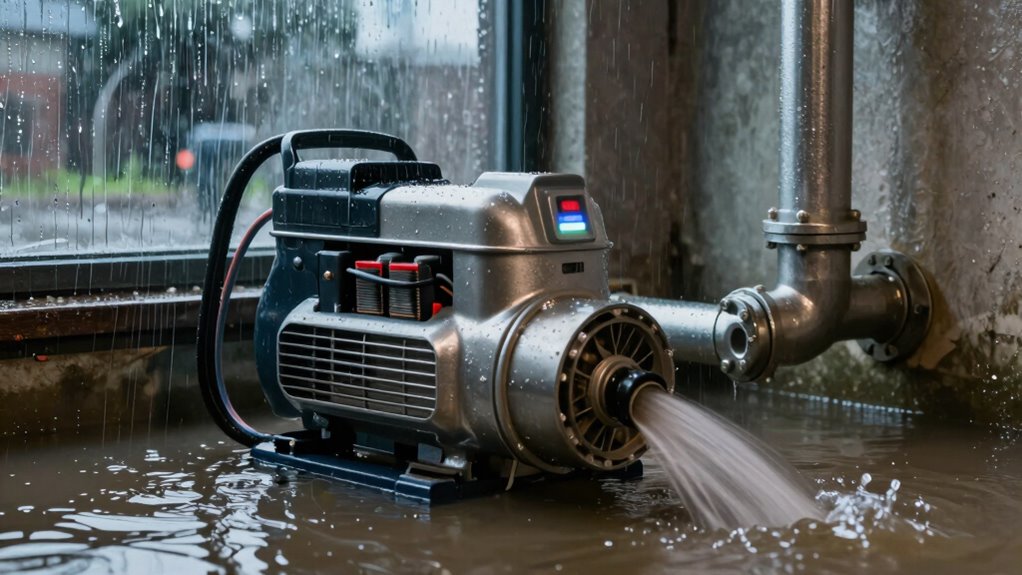
Heavy storms can quickly overwhelm your primary sump pump, leaving your basement vulnerable to flooding. Backup systems step in to prevent disaster by providing reliable flood prevention when your main pump fails. They operate automatically, ensuring continuous protection even during power outages. Without proper pump maintenance, your backup might not work when needed most, risking costly water damage.
Here are three ways backup systems save your basement:
- They activate instantly during heavy rainfall, preventing water accumulation.
- They keep your basement dry, safeguarding your belongings and home structure.
- They provide peace of mind, knowing your flood prevention measures are robust and dependable.
Investing in backup systems is essential to protect your home, especially when storms strike unexpectedly.
How to Install a Backup Sump Pump Step by Step
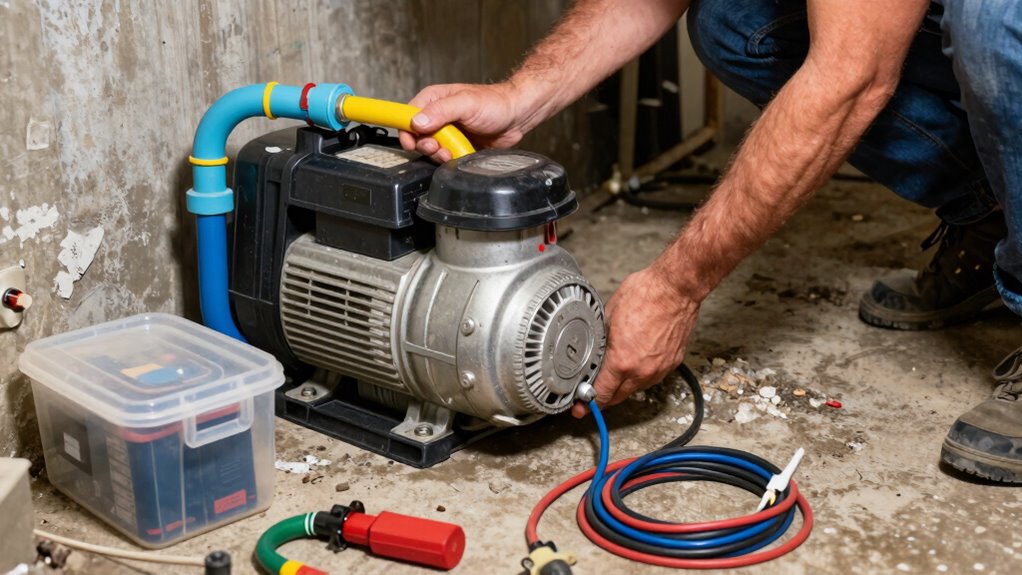
Installing a backup sump pump might seem intimidating, but breaking it down into clear steps makes it manageable. First, choose a suitable location near your existing sump pump. Turn off the power and disconnect the primary pump to prevent water damage. Install the backup unit according to the manufacturer’s instructions, ensuring it’s secure and level. Connect the discharge pipe properly to direct water away from your home. If your backup system has a battery, check the battery’s condition and connect it securely. During power outages, the backup pump kicks in, preventing water damage even when the main pump fails. Test the system thoroughly to ensure it operates correctly. Proper installation guarantees your basement remains dry during storms, even if the power goes out.
Maintenance Tips to Keep Your Backup System Ready

To guarantee your backup sump pump system remains ready when you need it most, regular maintenance is essential. Proper sump pump maintenance boosts storm preparedness and ensures your system works flawlessly during heavy rain. Here are three critical tips:
Regular maintenance keeps your backup sump pump ready and your home protected during storms.
- Test your backup pump monthly to confirm it activates correctly and removes water efficiently.
- Clean the sump pit and check for debris or obstructions that could hinder operation.
- Inspect the battery and charging system regularly, replacing it every 3-5 years to prevent failure during storms.
Staying proactive with maintenance gives you peace of mind, knowing your backup system will perform when storm conditions threaten your home. Consistent upkeep is the key to reliable storm preparedness and protecting your home from flooding.
Real-Life Stories: How Backup Pumps Saved Homes During Storms

Regular maintenance keeps your backup sump pump ready, but nothing beats hearing firsthand accounts of how these systems have protected homes during storms. Many homeowners have experienced flood prevention thanks to their backup pumps kicking in during power outages or heavy rain. These stories highlight the significance of emergency preparedness when severe weather strikes. In one case, a family’s backup pump prevented a basement flood during a hurricane, saving thousands in damages. Another homeowner credits their backup system for avoiding mold and structural issues after a sudden storm. These real-life experiences show that having a reliable backup pump isn’t just about convenience—it’s a vital safety feature. During storms, your backup pump can be the difference between disaster and safety, ensuring your home stays dry and protected.
Frequently Asked Questions
How Long Does a Backup Sump Pump Battery Typically Last?
Your backup sump pump battery typically lasts about 3 to 5 years, depending on usage and maintenance. To maximize its battery life, you should regularly check the charge, keep the terminals clean, and perform periodic testing. Keep the battery fully charged, and replace it when it shows signs of diminished capacity. Proper maintenance guarantees your backup system remains reliable during storms, giving you peace of mind when it matters most.
Can Backup Sump Pumps Operate Automatically During Power Outages?
Yes, backup sump pumps can operate automatically during power outages, ensuring you’re never caught off guard. They typically feature battery-powered operation and sensors that activate when water levels rise, making storm preparedness easier. To keep them running smoothly, follow maintenance tips like regular battery checks and cleaning. Don’t wait till the floodgates open—stay proactive to protect your home when storms hit.
What Is the Average Lifespan of a Backup Sump Pump System?
Your backup sump pump system typically lasts around 5 to 10 years, depending on battery maintenance and usage. Regularly check and replace the battery to guarantee reliable operation during storms. Proper pump installation also extends its lifespan. Keep an eye on the battery’s health and perform routine maintenance to prevent failure when you need it most. With good care, your backup system provides peace of mind during heavy rains.
Are Backup Sump Pumps Noisy During Operation?
You might find some backup sump pumps noisy during operation, but it’s usually minimal. Noise levels vary depending on the system and installation, so choosing a quieter model and proper installation tips can make a big difference. Remember, during storms, the peace of mind knowing your system works quietly to protect your home outweighs any minor noise. Proper maintenance and professional setup help keep noise levels low and your worry-free during heavy rains.
How Do I Troubleshoot if My Backup Sump Pump Isn’t Activating?
If your backup sump pump isn’t activating, first check the alarm indicators for any alerts. Confirm the battery is properly maintained and charged, as a low or dead battery prevents activation. Inspect the wiring and connections for damage or loose contacts. Test the float switch to make sure it moves freely. Regular maintenance and monitoring of alarm signals help you catch issues early, keeping your system ready for storms.
Conclusion
During storms, your sump pump is your home’s first line of defense—without it, flooding becomes inevitable. A backup system acts as your safety net, ready to step in when the primary fails. Ignoring this essential feature could leave your basement vulnerable just when you need protection most. Don’t wait for disaster; invest in a reliable backup pump now. After all, peace of mind during a storm is priceless—and a backup system makes that possible.