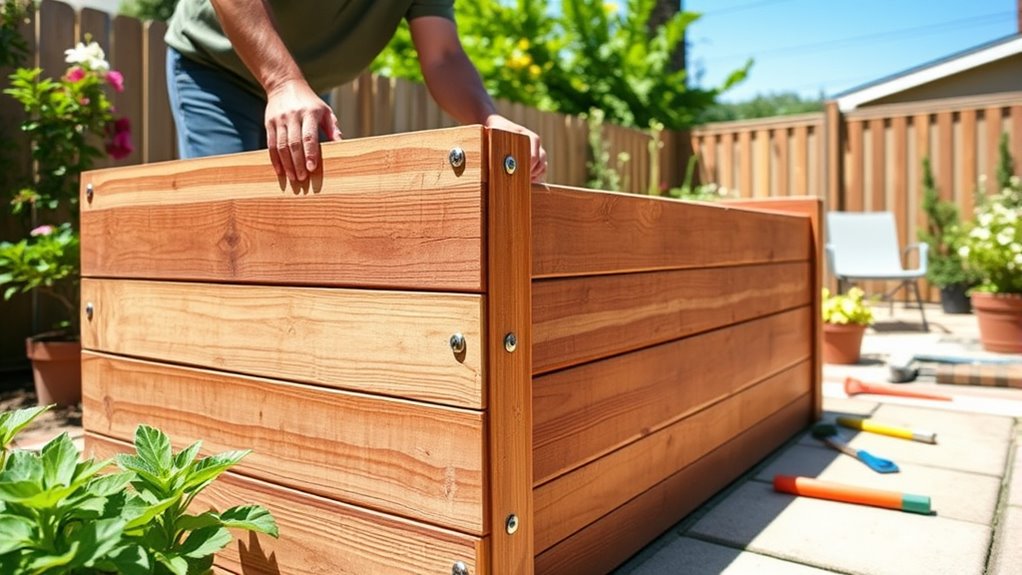

Building a raised garden bed is a simple weekend project that involves preparing the soil, assembling sturdy sides, and filling it with a mix of compost, soil, and organic matter. Guarantee you level the base and remove weeds or debris to set a healthy foundation. Regularly monitor pests and maintain soil health for a thriving garden. If you’d like step-by-step tips and expert advice, keep exploring to get started with confidence!
Key Takeaways
- Prepare a level site and assemble the bed frame with sturdy materials for stability.
- Fill the bed with a nutrient-rich mix of compost, garden soil, and organic matter.
- Loosen existing soil, remove weeds, and thoroughly water after filling to settle the soil.
- Use pest control strategies like physical barriers and companion planting to protect your plants.
- Monitor and maintain soil and plant health throughout the season for a productive garden.
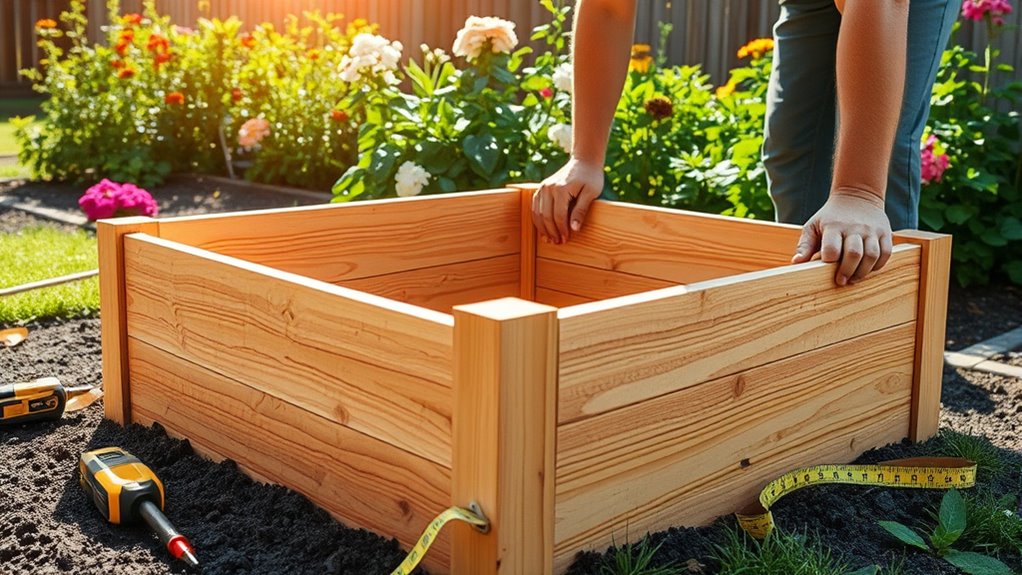
Building a raised garden bed is a practical way to create a productive and attractive outdoor space. When you start, one of your first tasks is soil preparation. Unlike traditional garden plots, a raised bed allows you to control the soil quality, which is vital for healthy plants. You’ll want to fill your bed with a mix of high-quality compost, garden soil, and organic matter to guarantee your plants get the nutrients they need. Before filling, loosen the existing soil and remove any weeds or debris to prevent pests and diseases from taking hold. Mixing in compost not only enriches the soil but also improves drainage, helping to prevent waterlogging and root rot. Take the time to verify the soil is evenly distributed and well-drained, as this sets the foundation for a successful garden. Using the right soil mixture is essential for promoting healthy root growth and maximizing plant vigor.
Start your raised garden bed with nutrient-rich, well-drained soil for healthy, thriving plants.
Once your soil is prepared, it’s important to think about pest control. Raised beds can sometimes be more susceptible to pests like slugs, snails, or even insects that can damage your plants. To minimize these problems, you can implement physical barriers such as mesh covers or row covers. Planting companion plants that repel pests, like marigolds or garlic, can also be effective. Regularly inspecting your plants and removing any visible pests early prevents infestations from spreading. Mulching with organic materials like straw or wood chips not only helps conserve moisture and regulate soil temperature but also acts as a barrier against crawling pests. Additionally, avoiding overwatering and keeping the area tidy removes hiding places for pests and reduces their chances of establishing a foothold. Maintaining healthy soil and plant conditions is a key pest prevention strategy that supports sustainable gardening practices.
As you fill your raised bed, make sure to level the soil surface to promote even watering and plant growth. Once filled, water the soil thoroughly to settle it and encourage root development. This initial watering also helps activate beneficial microorganisms in your compost and soil mix. Throughout the growing season, monitor for signs of pest activity and take prompt action if needed. Using organic pest controls, like neem oil or insecticidal soaps, can help manage pests without harming beneficial insects or the environment. Remember, a healthy, pest-free environment starts with good soil preparation and ongoing vigilance.
Building your raised garden bed isn’t just about construction; it’s about setting the stage for healthy, thriving plants. Proper soil preparation and pest control strategies give you a head start, making your garden easier to manage and more productive. With these steps in place, you’ll enjoy a lush, vibrant garden that’s both attractive and sustainable, all achieved over just a weekend.

Daily Flip Calendar with Inspirational Quotes - Motivational Perpetual Calendar Desk Office Home Decor for Women, Gifts Desk Accessories for Girls Positive Affirmations
- Durable Cardboard Base: Thick, stable, double-sided design
- Compact Size: 6 x 4.3 inches for easy placement
As an affiliate, we earn on qualifying purchases.
Frequently Asked Questions
What Is the Ideal Size for a Raised Garden Bed?
The ideal size for a raised garden bed depends on your space and gardening goals, but common garden bed dimensions are 4×8 feet or 4×4 feet. Consider bed size considerations like accessibility and ease of maintenance—keeping the bed no wider than 4 feet allows you to reach the center comfortably. Adjust the length based on your yard, but guarantee the height is at least 12 inches for good soil drainage.
How Do I Prevent Pests From Damaging My Plants?
To prevent pests from damaging your plants, implement pest deterrent strategies like installing physical barriers, such as row covers or mesh screens. Use natural pest control methods like introducing beneficial insects, planting pest-repellent plants, and applying organic repellents. Regularly inspect your garden for signs of pests, and promptly remove any affected plants or pests. Combining these techniques helps protect your garden effectively while maintaining an eco-friendly approach.
What Type of Soil Is Best for Raised Beds?
You should use a high-quality mix of soil amendments like compost, peat moss, and vermiculite to guarantee your raised bed has nutrient-rich, well-draining soil. Avoid heavy clay or overly compacted soil, as drainage issues can harm your plants. Opt for a balanced blend that promotes good aeration and moisture retention, giving your plants the best environment to thrive and preventing common problems caused by poor soil conditions.
How Often Should I Water My Raised Garden Bed?
Like a trusty horse, your raised garden bed needs consistent care. You should water it deeply about once a day, especially during hot weather, but adjust your watering schedule based on drought considerations and soil moisture. Check the soil regularly; if it’s dry a couple of inches down, it’s time to water. This routine helps keep your plants healthy and thriving, avoiding both underwatering and overwatering.
Can I Build a Raised Bed on Uneven Ground?
Yes, you can build a raised bed on uneven ground, but ground leveling is essential for stability. Start by evaluating the terrain and clear any debris. You might need to create a level foundation using gravel or pavers before placing your bed. Proper bed placement on a level surface ensures good drainage and prevents shifting over time. Taking these steps will give your garden bed a sturdy, long-lasting setup.
Conclusion
By building a raised garden bed, you’re planting the seeds for a lush, thriving oasis right in your backyard. With just a weekend’s effort, you’ll transform your space into a fertile haven, as easy as turning over a new leaf. So roll up your sleeves and get ready to watch your garden grow—it’s a rewarding journey that’ll blossom into beauty and bounty, like a garden awakening from a long, restful sleep.