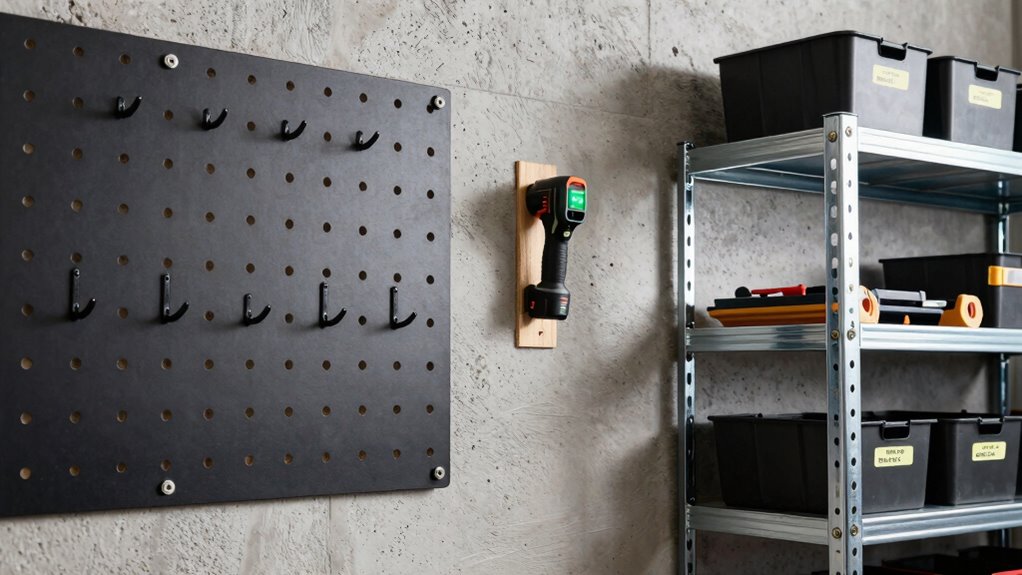

To find studs for your garage storage, start by measuring from corners or outlets, as studs are usually 16 or 24 inches apart. Use a magnet or tap on the wall for a solid sound indicating a stud. To verify safety, confirm the location with small nails or a stud finder. Knowing load limits helps you avoid overloading shelves, ensuring they last longer and stay secure. Keep exploring to discover more helpful tips.

Get the little things that make your day delivered free — and shop member deals
- Fast, free delivery on millions of items
- Access to Prime Big Deal Days deals on October 6–7
- Prime Video, Amazon Music and more included
Key Takeaways
- Use a measuring tape to locate wall studs by measuring 16 or 24 inches from corners or outlets.
- Tap walls lightly or use a magnet to detect nails or screws indicating stud positions.
- Secure heavy shelves directly into wall studs using appropriate anchors and screws for maximum support.
- Confirm load limits of shelves and brackets to prevent overloading and ensure safety.
- Regularly inspect installation for levelness, tight fasteners, and signs of stress to maintain safe storage.
As an affiliate, we earn on qualifying purchases.
Why Finding Wall Studs Is Key to Safe Garage Shelving

Finding wall studs is essential for installing safe and sturdy garage shelving because it guarantees your shelves are anchored to a solid support. Proper stud spacing ensures your shelves are evenly supported, preventing sagging or collapse under heavy loads. Studs provide the necessary wall reinforcement, giving you a secure point to attach brackets or anchors. If you miss the studs, your shelves may be poorly mounted, risking damage or injury. Knowing where studs are located helps you distribute weight evenly and maximize load capacity. Plus, anchoring into studs increases stability, especially when storing bulky or heavy items. Understanding wall framing details can further enhance the safety and effectiveness of your installation. Recognizing stud spacing patterns can help you plan your storage setup more efficiently and avoid unnecessary adjustments. Additionally, using stud finders can make the process quicker and more accurate, saving time and reducing frustration. Being aware of load limits can also prevent overloading your shelves, ensuring long-term durability and safety. Using proper tools such as a level and measuring tape can also improve the accuracy of your installation.
How to Locate Wall Studs Using Basic Tools

Locating wall studs with basic tools is straightforward once you understand the process. Start by measuring from a corner or an existing fixture, as studs are typically spaced 16 or 24 inches apart. Use a measuring tape to find this distance accurately. Once you’ve identified a potential stud location, mark the spot with wall marking to keep track. Tap lightly along the wall with a hammer; a solid sound indicates a stud, while a hollow sound suggests space between studs. Alternatively, you can use a small nail or pin to test for the stud behind the wall. Consistent wall marking helps you track your measurements and ensures you’re accurately locating the studs before installing heavy shelving or storage systems. Understanding stud spacing standards can help improve your accuracy and efficiency in finding studs. Additionally, using a stud finder can make the process quicker and more precise, especially on unfamiliar walls. Recognizing wall material types can further aid in selecting the most effective method for stud detection and load assessment. Incorporating knowledge of sound wave principles can also assist in distinguishing between stud and hollow spaces more reliably. Knowing load limits is also essential when planning to hang heavy items, ensuring safety and stability.
Easy and Advanced Ways to Find Wall Studs Without a Stud Finder
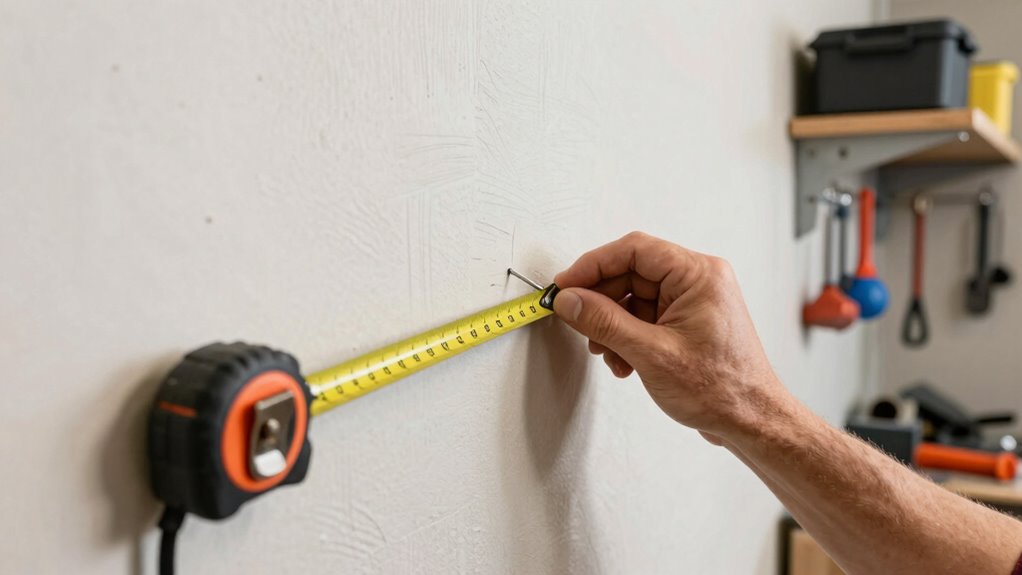
When you don’t have a stud finder, there are both simple and more advanced methods to detect wall studs. DIY tips include using a hammer or nail to tap along the wall—listen for solid sounds indicating studs. For more accuracy, a magnet can locate drywall screws or nails, revealing stud positions. Tool comparisons show that a simple hammer tap works well for quick checks, while a magnet provides a more precise method without damage. For advanced detection, measuring from corners or outlets can help, as studs are usually spaced 16 or 24 inches apart. Additionally, understanding the load limits of your garage storage system is essential before hanging heavy items to prevent damage or accidents. To improve accuracy, some professionals use visual cues like slight bumps or indentations on the wall surface, which can indicate the edges of studs. Recognizing the standard stud spacing can also streamline the process of locating studs more efficiently. Incorporating stud spacing patterns into your planning can further enhance detection accuracy and ensure secure mounting. Here’s a quick comparison:
| Method | Ease | Accuracy | Damage Risk |
|---|---|---|---|
| Hammer tapping | Easy | Moderate | Low |
| Magnet | Easy | Good | None |
| Measuring from corners | Moderate | Good | None |
| Visual cues | Easy | Variable | None |
How Much Weight Can Garage Shelves Hold? Understanding Load Limits
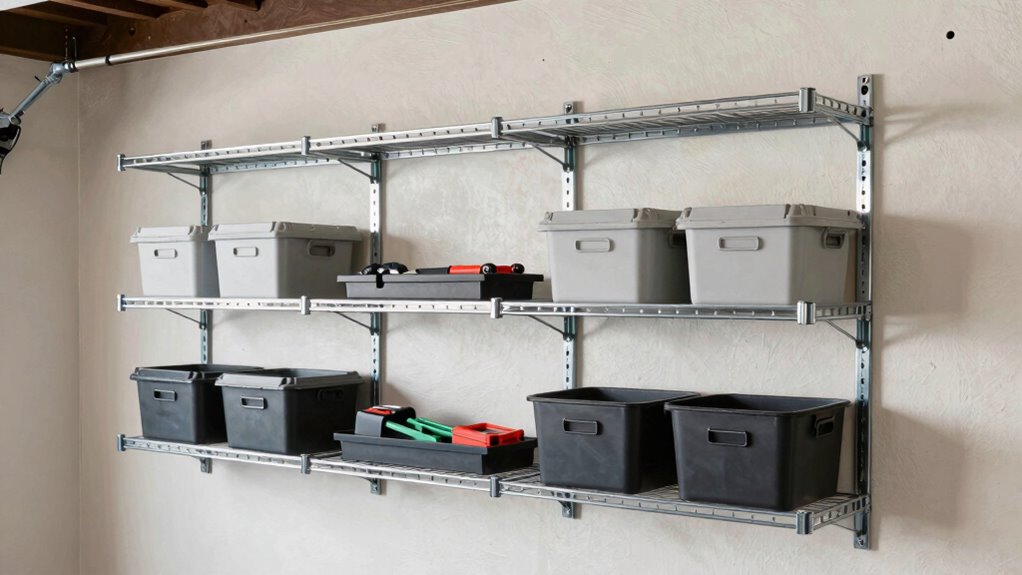
Knowing how much weight your garage shelves can handle is essential for safe storage. Factors like typical weight capacities, material strength, and proper installation all influence load limits. Understanding these points helps you choose and set up shelves that meet your storage needs without risking damage or accidents. Additionally, considering smart home technology features such as sensors or automation can enhance safety and monitoring of your storage space. For example, integrating load sensors can provide real-time weight data, helping prevent overloading and ensuring safety. Properly assessing material strength and load limits can also facilitate safer organization, especially when storing heavier items. Recognizing weight distribution across shelving units is crucial to prevent uneven stress that could compromise stability. Implementing load management systems can further optimize storage safety and efficiency.
Typical Weight Capacities
Garage shelves are designed to support a range of weights, but understanding their load limits is vital to guarantee safety and durability. Most standard garage shelving units can hold between 150 to 300 pounds per shelf, making them suitable for garage organization and tool storage. Heavy-duty models may support up to 600 pounds or more, perfect for storing larger items or bulk supplies. It’s important to check the manufacturer’s specifications to avoid overloading, which can cause damage or accidents. Light-duty shelves are ideal for smaller items, while heavier-duty options accommodate power tools, paint cans, and equipment. Always distribute weight evenly across the shelves to maximize capacity and maintain safety. Proper installation methods ensure your shelving units maintain their load-bearing capacity over time. Additionally, understanding load limits can help prevent potential hazards and prolong the lifespan of your storage solutions. Being aware of weight distribution techniques can also enhance the safety and effectiveness of your shelving system. Regularly inspecting your shelves for signs of wear or stress is essential, as structural integrity may diminish over time, increasing the risk of failure.
Material Strength Factors
The strength of garage shelves largely depends on the materials used in their construction, which directly impacts how much weight they can support. Durable materials resist material fatigue and maintain structural reinforcement over time. For example, steel offers high load capacity and resilience, while wood may weaken with repeated use. Understanding these factors helps you select shelves that won’t buckle under stress. Additionally, measurement tools can help you accurately assess load limits to ensure safety and durability.
Installation Considerations
Understanding load limits is vital when installing garage shelves, as exceeding their weight capacity can lead to structural failure or damage. Before installation, consider the weight of items you plan to store and verify your shelves can handle that load. Keep in mind that the location near your garage door may experience more vibrations, so heavier items should be placed away from these areas. Proper anchoring into studs is essential for safety and stability. Also, during insulation installation, avoid compromising the shelving’s support system. Reinforcing shelves with sturdy brackets can help distribute weight evenly. Always check the load limits specified by the manufacturer. Stud finding techniques can ensure your shelves are anchored securely into the wall’s structural elements. Taking these considerations into account ensures your garage storage remains safe, functional, and durable over time.
How to Secure Shelves and Hooks to Wall Studs Safely
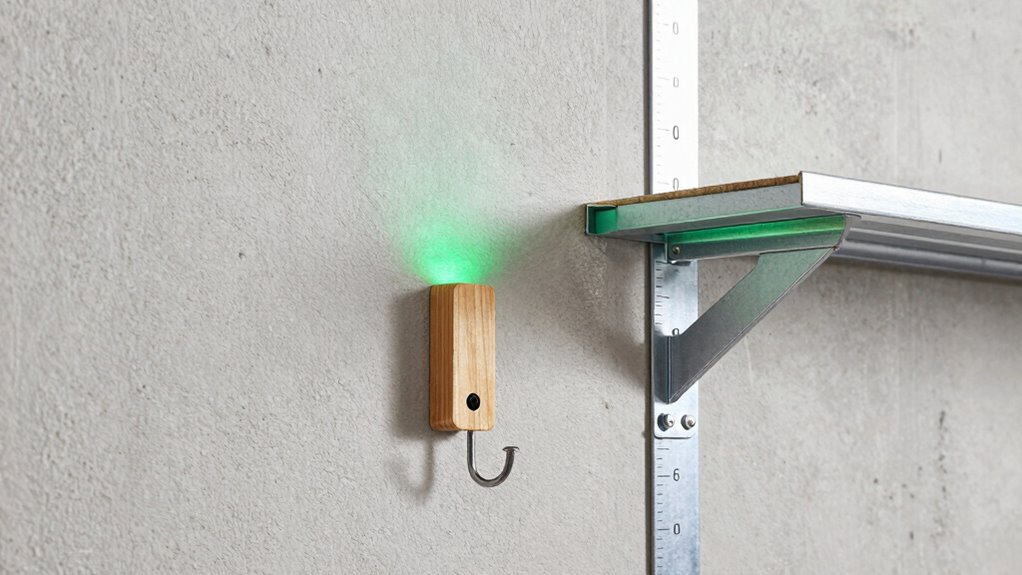
Securing shelves and hooks to wall studs is essential for creating a safe and sturdy storage system in your garage. To do this effectively, locate the studs first—use a stud finder for accuracy. When attaching shelves, choose appropriate anchors and screws that can support the weight of your items, avoiding those that are too short or weak. For hooks meant for decorative wall art or lighter tools, ensure they’re anchored directly into the studs to prevent falling. While planning your setup, consider your paint color selection to create a cohesive look. Properly fastened shelves and hooks prevent accidents and damage. Always double-check that fasteners are tight and level, ensuring everything stays securely mounted and your garage remains organized and safe. Additionally, understanding building codes and safety standards can be useful if you need to transfer funds securely for home improvement purchases.
Top Mistakes to Avoid When Installing Garage Storage
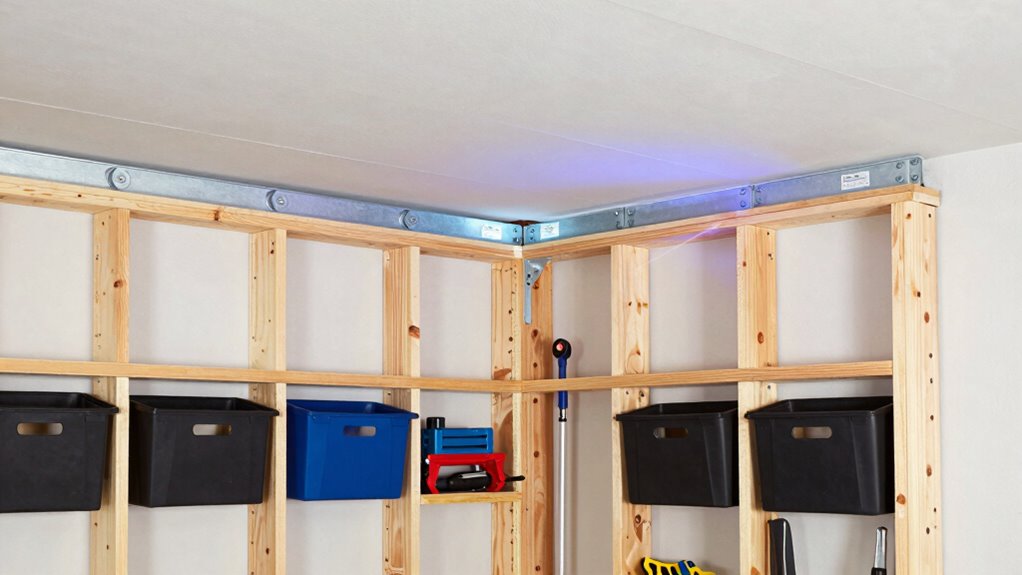
Many homeowners make common mistakes during garage storage installation that can compromise safety and durability. One mistake is ignoring safety regulations, such as overloading shelves or using improper anchors, which can lead to accidents or damage. Failing to properly secure storage units to wall studs can cause shelves to collapse under heavy loads. Another mistake is poor storage organization, like stacking items unevenly or overloading one area, increasing risk of falling objects. Additionally, rushing the installation without checking load limits can weaken the entire system. Always follow manufacturer instructions and ensure all components are correctly mounted to studs. Taking these precautions helps maintain a safe environment, prevents damage, and guarantees your garage storage remains functional and reliable over time.
Frequently Asked Questions
Can I Install Heavy Shelves Without Locating Wall Studs?
You shouldn’t install heavy shelves without locating wall studs first. Using stud finder methods helps identify where studs are, ensuring secure support. Wall material considerations are essential because drywall alone can’t handle heavy loads. For heavy shelves, anchor directly into studs to prevent damage or accidents. If studs aren’t available, consider using heavy-duty wall anchors rated for the weight or installing a mounting board across multiple studs for added support.
What Tools Are Best for Finding Studs in Different Wall Types?
Finding wall studs is like searching for hidden treasures; you need the right tools. A stud finder, especially an electronic one, quickly scans walls for studs, while a magnetic detector pinpoints nails or screws in the studs. Use a combination of both to get accurate results across different wall types, like drywall or plaster. These tools help you confidently install heavy shelves, knowing you’re anchoring into solid support.
How Often Should Garage Storage Be Inspected for Safety?
You should inspect your garage storage system at least once a year to guarantee safety considerations are met. Regular inspections help identify loose or damaged components, preventing accidents or damage. Check for proper mounting, load capacity, and wear on shelves and hooks. If you notice any issues, tighten or replace parts promptly. Staying proactive with your inspection schedule keeps your garage safe and your storage system reliable.
Are There Weight Limits for Different Types of Garage Hooks?
Think of garage hooks like trusty steeds—each with its own strength. Light-duty hooks hold around 20-50 pounds, perfect for small tools or keys. Medium-duty hooks bear 50-150 pounds, ideal for bikes or garden gear. Heavy-duty hooks, like sturdy stallions, can carry over 150 pounds, suitable for ladders or large equipment. Always check the weight capacity and hook type to guarantee your gear stays safe and secure.
How Do Temperature and Humidity Affect Garage Storage Safety?
Temperature fluctuations and moisture impact garage storage safety by causing materials to expand, contract, or warp, which weakens hooks and shelving over time. Humidity promotes rust and corrosion on metal components, reducing their load capacity. To stay safe, keep the garage well-ventilated, control humidity levels, and inspect your storage systems regularly for signs of wear. Proper maintenance guarantees your items stay secure and your garage remains safe.
Conclusion
By mastering how to find studs and understanding load limits, you can turn your garage into a sturdy haven. Picture your shelves as reliable bridges, securely anchored to the wall’s backbone, ready to hold everything from heavy tools to seasonal decorations. When you install with care and avoid common mistakes, your storage system becomes a safe, organized space—transforming clutter into a harmonious, functional environment you can trust for years to come.
NFL season / tailgating Picks
team gear
As an affiliate, we earn on qualifying purchases.