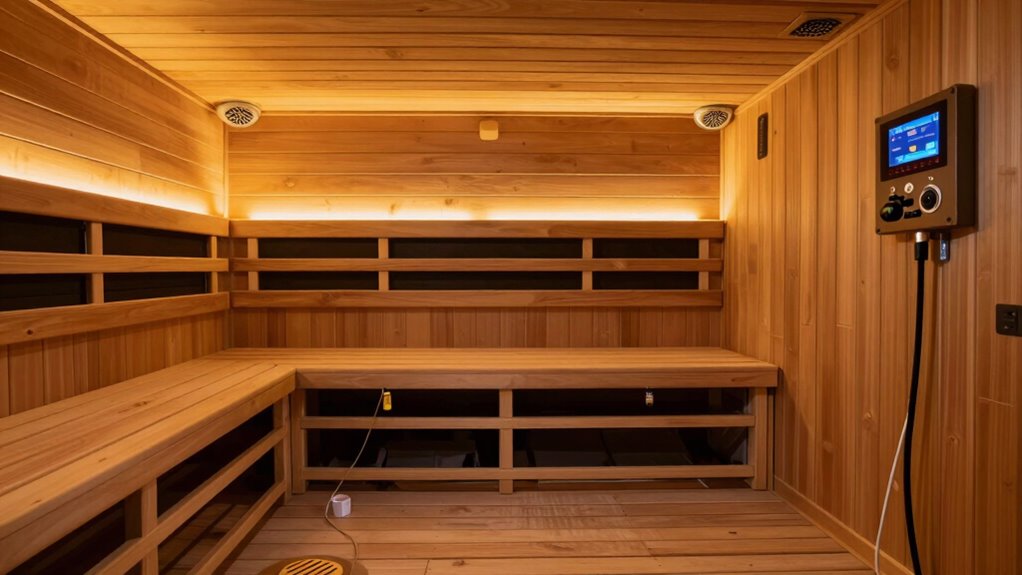
To set up your infrared sauna safely, guarantee your electrical system can handle the heater’s power needs with dedicated circuits and proper grounding. Install a ventilation system with intake and exhaust vents to control humidity and air quality. Choose moisture-resistant flooring materials like sealed concrete or tiles to prevent water damage. Maintaining equipment and checking wiring regularly keeps your sauna safe for long-term use. Keep exploring to discover detailed tips that can help you optimize your setup and ensure safety.
Key Takeaways
- Ensure the electrical system can handle the sauna’s wattage with dedicated 20-30A circuits, proper grounding, and adherence to local codes.
- Plan ventilation with intake vents near the floor and exhaust vents near the ceiling, using quality fans for effective air exchange.
- Use moisture-resistant flooring materials like tiles or sealed concrete, and insulate the floor to reduce heat loss and prevent damage.
- Regularly inspect electrical connections, heating elements, and ventilation components for safety and optimal performance.
- Support long-term safety by routine cleaning, checking controls, and promptly replacing worn components or fixing wiring issues.
What You Need to Know About Power and Safety for Your Infrared Sauna
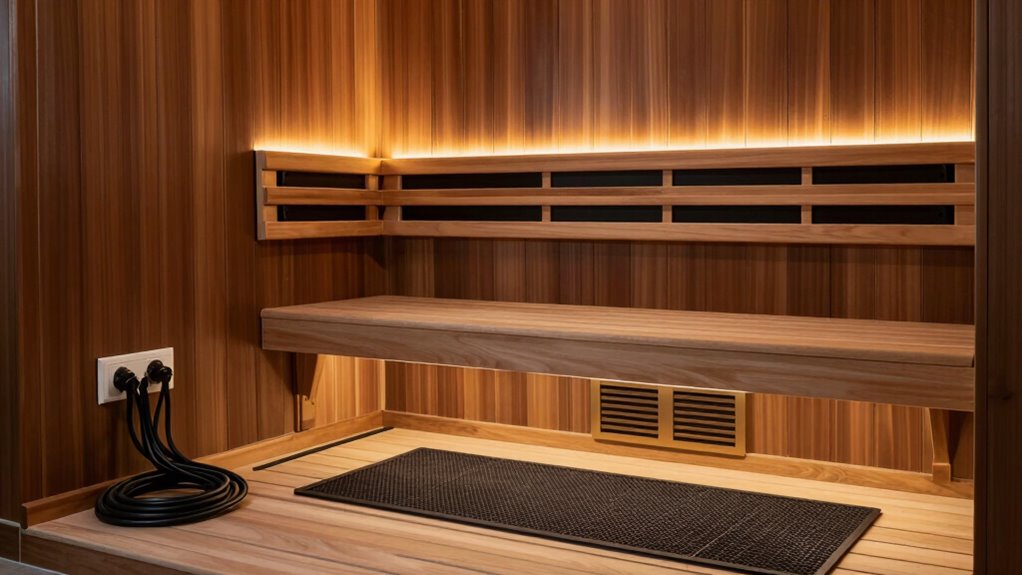
Before setting up your infrared sauna, understanding the electrical requirements and safety precautions is vital. Infrared therapy relies on proper power sources to deliver effective heat without hazards. Make certain your electrical system can handle the sauna’s voltage and wattage needs, and always follow local electrical codes. Sauna ergonomics also play a role; confirm the setup prevents overheating or electrical issues that could compromise safety. Proper grounding and circuit protection are essential to avoid shocks or fires. Additionally, verify that your power supply is stable and reliable to maintain consistent infrared therapy sessions. Ensuring your electrical system capacity is adequate can prevent overloads and potential hazards. Checking your circuit breaker capacity regularly is important to avoid trips during use. It’s also prudent to conduct regular safety inspections of your electrical connections and components. Maintaining proper electrical wiring ensures the longevity and safety of your sauna setup. Prioritize safety measures to protect yourself and maximize the benefits of your sauna, guaranteeing a safe, comfortable experience every time.
How to Choose the Right Power Supply for Your Home Sauna
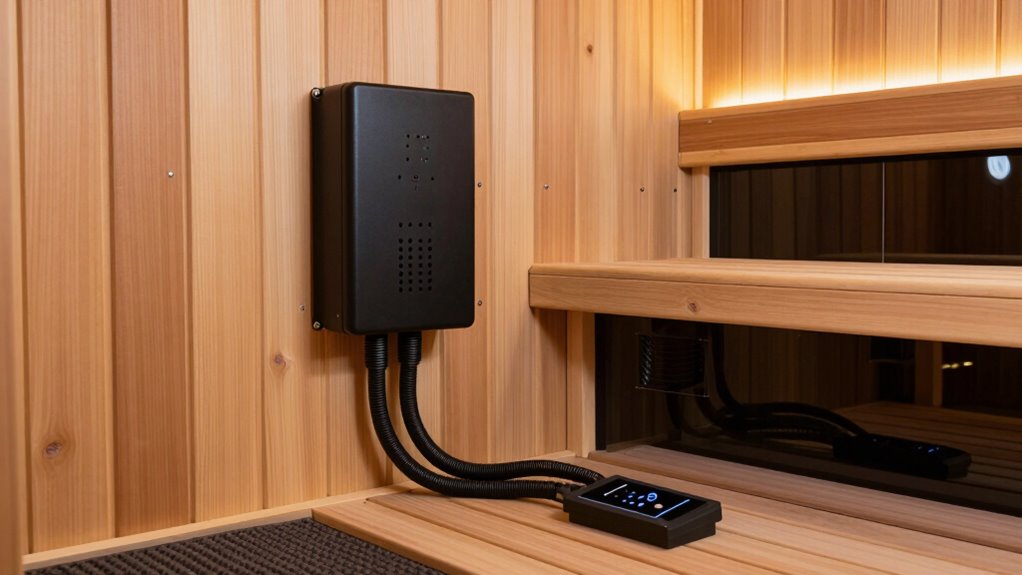
Selecting the right power supply for your home sauna is essential to guarantee safe and efficient operation. Consider how your lighting options will impact power needs—dimmable LED lights often use less energy and create a relaxing atmosphere. Your seating arrangements also influence power requirements; larger benches may require more wattage for even heat distribution. Check your sauna’s size and heating element specifications to determine the appropriate amperage and voltage. Ensuring your electrical system can handle the load prevents overloads and potential hazards. Proper electrical wiring is crucial to accommodate your setup and avoid safety issues. Adequate circuit capacity is also vital to support all components without risk of tripping breakers. Additionally, understanding the power capacity of your system can help optimize performance and prevent electrical issues. Regular system inspections can identify potential problems before they lead to safety concerns. Considering the electrical code requirements in your area can also ensure compliance and safe installation. Remember, a well-chosen power supply not only supports your desired lighting and seating setup but also guarantees consistent, safe heating. Proper planning now saves you from costly adjustments later and guarantees a comfortable, enjoyable sauna experience.
Electrical Requirements and Safety Precautions You Can’t Ignore
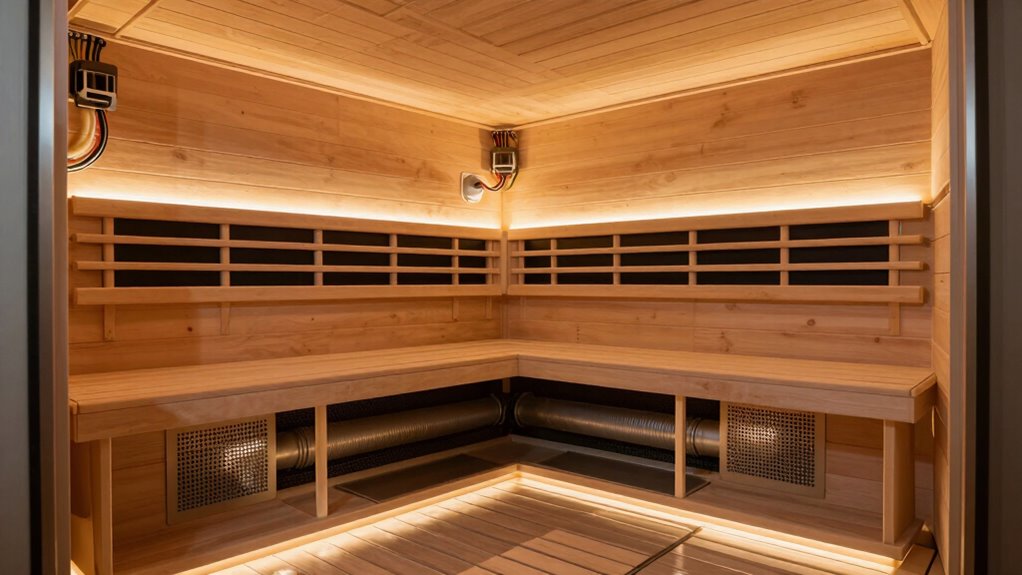
Before installing your infrared sauna, you need to make certain your circuit can handle the load without tripping. Proper grounding is essential to prevent electrical shocks and ensure safety. Ignoring these requirements can lead to serious hazards and damage to your equipment. Additionally, consulting a qualified electrician can help verify that your home’s electrical system is suitable for the sauna’s power needs for safe operation. Ensuring your electrical system can support high-power devices like a sauna is crucial, especially considering power capacity and load management. Understanding electrical safety guidelines can further help prevent potential risks during installation and use. Always verify that extension cords and power strips meet extension cord standards to reduce the risk of electrical fires or overloads.
Circuit Compatibility and Load
Ensuring your electrical system can handle an infrared sauna is crucial for safety and ideal performance. You need to check that your circuit compatibility supports the sauna’s power requirements and that load management prevents overloads. Use dedicated circuits for your sauna to avoid tripping breakers or damaging wiring. Here’s a quick overview:
| Component | Requirement | Purpose |
|---|---|---|
| Circuit amperage | 20-30 amps depending on sauna size | Handles load safely |
| Voltage | 220-240V | Powers the heating elements |
| Breaker size | Correct breaker for circuit | Protects against overload |
| Wiring gauge | 10-12 AWG wire | Supports current flow |
| Load management | Avoid overloading circuits | Ensures safety and longevity |
Proper load management and circuit compatibility are essential for safe, efficient sauna use. Understanding electrical requirements is key to ensuring your setup is both safe and effective.
Proper Grounding Procedures
Have you properly grounded your infrared sauna to prevent electrical hazards? Grounding safety is essential for protecting you from shocks and fire risks. Ensure your sauna is connected to a proper electrical grounding system, following local codes and manufacturer instructions. Use a grounded metal conduit or a grounding wire that’s securely attached to the sauna’s frame and the electrical panel. Don’t skip inspecting the grounding connection regularly, especially after moving or repairs. Faulty electrical grounding can lead to dangerous electric shocks or damage to the unit. Always use a qualified electrician to handle grounding procedures, confirming that the setup meets safety standards. Proper electrical grounding isn’t optional—it’s a critical safety measure you can’t ignore when installing your infrared sauna. Additionally, understanding electrical grounding helps ensure your setup adheres to safety standards and minimizes risks. Remember that grounding systems are designed to prevent dangerous voltage buildup and protect your equipment from electrical faults. Regularly checking your grounding connections is vital to maintaining safety over time. Incorporating proper grounding practices can further enhance overall safety and reliability of your sauna installation. Properly implementing grounding protocols can also extend the lifespan of your sauna and prevent costly repairs.
Effective Ventilation Strategies for a Safe and Comfortable Sauna
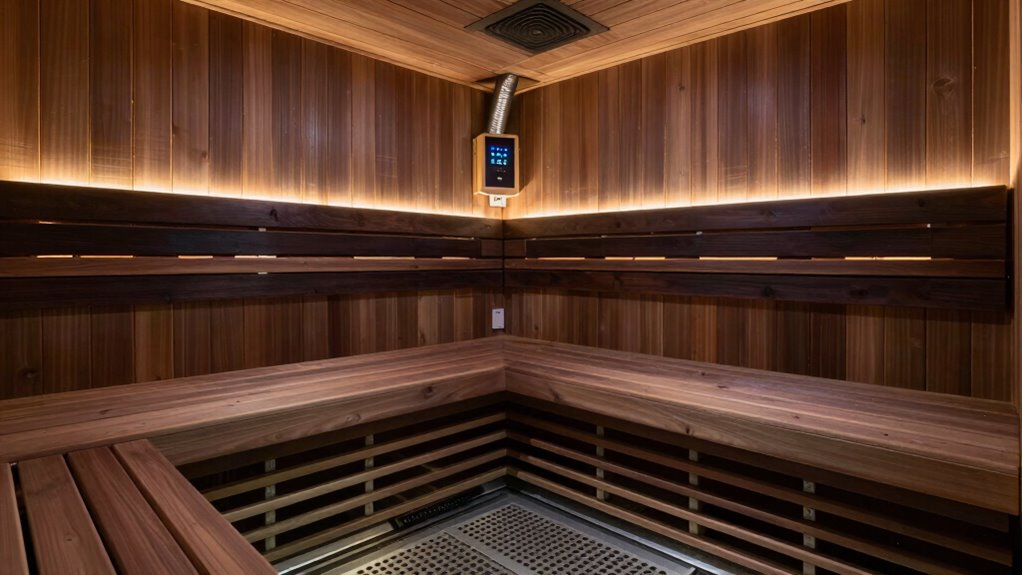
Proper ventilation is essential for maintaining a safe and comfortable infrared sauna environment. You want to guarantee airflow optimization so fresh air circulates effectively, preventing stuffiness and stale odors. Proper ventilation also helps regulate humidity control, keeping moisture levels balanced to avoid excessive dampness or dryness. To achieve this, install vents or adjustable intake and exhaust openings that can be easily managed. Keep the vents unobstructed, and consider incorporating a small fan if needed to enhance airflow. Regularly check your ventilation system to ensure it functions properly. Good airflow and humidity management not only improve comfort but also extend the lifespan of your sauna components and promote healthier, more enjoyable sessions. Additionally, using eco-friendly materials for any modifications or upgrades can help reduce environmental impact and create a more sustainable sauna environment. Incorporating air quality sensors can further optimize ventilation by providing real-time feedback on indoor air conditions. Ensuring that your ventilation system is designed with proper airflow principles in mind helps prevent issues like mold growth and structural damage. Maintaining adequate ventilation is also crucial for preventing the buildup of harmful indoor pollutants and ensuring overall air quality. Implementing regular maintenance routines can help identify and resolve potential ventilation problems before they affect your sauna’s performance.
How to Install a Ventilation System in Your Infrared Sauna
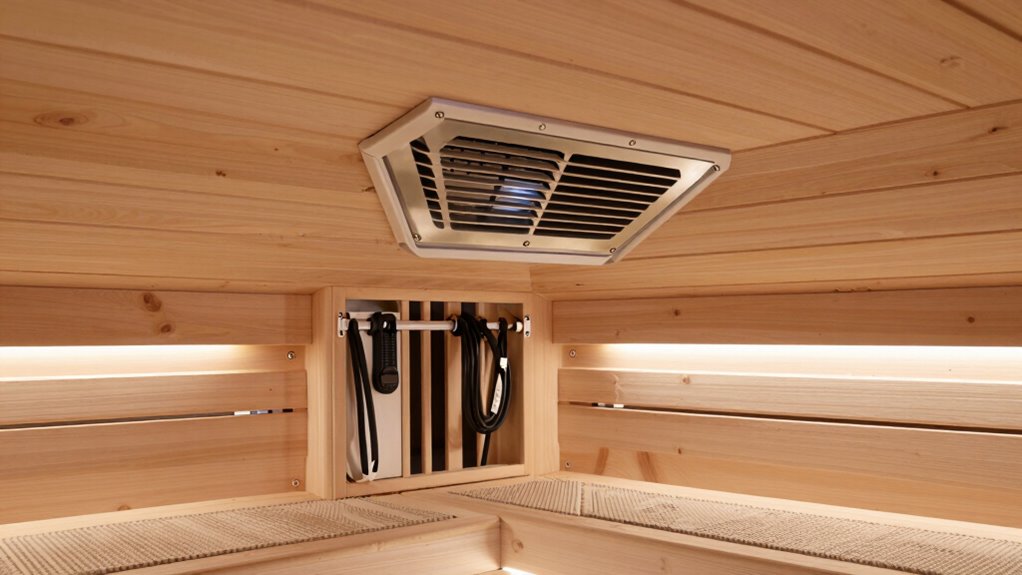
Installing a ventilation system in your infrared sauna starts with planning the placement of intake and exhaust vents. You want the ventilation fan to be positioned where it can facilitate efficient air exchange, ideally near the ceiling to exhaust hot, moist air. The intake vent should be placed lower, allowing fresh air to flow in and promote continuous circulation. Confirm the vents are properly sealed around the edges to prevent air leaks. Use a high-quality ventilation fan rated for sauna use to handle moisture and heat. Proper installation ensures effective air exchange, reducing humidity and maintaining comfortable conditions. Additionally, considering inclusive casting can help ensure your sauna environment is welcoming and accessible to all users. By carefully planning vent placement and selecting the right fan, you’ll create a safe, well-ventilated environment that enhances your sauna experience. Properly installed ventilation systems also help prevent the buildup of stale air and odors, improving overall air quality. Furthermore, verifying that the ventilation system is correctly installed helps prevent moisture buildup and potential water damage, contributing to the longevity of your sauna.
Flooring Options That Protect Your Space From Heat and Moisture
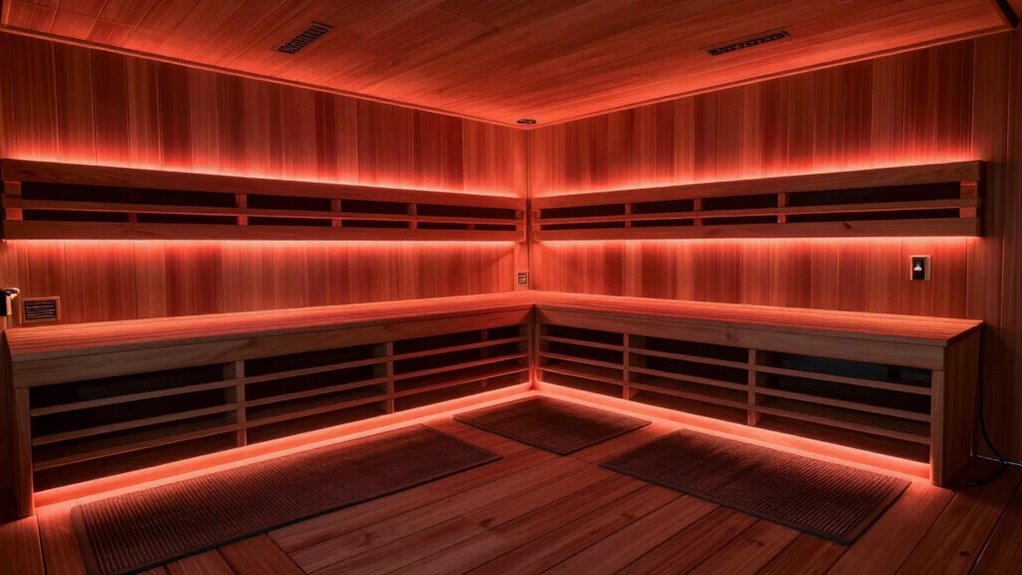
Choosing the right flooring is essential to safeguard your space from heat and moisture. Moisture-resistant materials, insulation, and padding help keep your sauna safe and comfortable. Let’s explore the best options to ensure your setup lasts.
Moisture-Resistant Materials
Selecting the right moisture-resistant flooring is essential for an infrared sauna because it keeps your space protected from heat and humidity. Using moisture resistant materials guarantees your floor withstands constant exposure to humidity without warping or rotting. Materials like ceramic tiles, vinyl, or sealed concrete are excellent choices, as they offer durability and easy maintenance. These options help you control humidity levels effectively, preventing moisture buildup that could damage your flooring or promote mold growth. Additionally, moisture-resistant floors contribute to a safer environment by reducing slipping hazards caused by moisture. When choosing flooring, prioritize materials specifically designed for high humidity environments. Proper moisture control not only prolongs the lifespan of your sauna but also maintains a clean and healthy space for your relaxation.
Insulation and Padding
To guarantee your infrared sauna remains comfortable and safe, insulating the floor with the right materials is vital for protecting against heat loss and moisture intrusion. Proper thermal insulation helps retain heat efficiently, reducing energy costs and ensuring consistent warmth. Choose padding materials that provide cushioning and moisture resistance, such as foam or rubber mats, to enhance comfort and prevent damage from humidity. Installing insulation beneath the flooring prevents heat from escaping and shields your space from moisture buildup, which can cause mold or deterioration. Ensure your padding materials are waterproof and durable, fitting securely without shifting. This combination of thermal insulation and padding creates a stable, insulated surface that maintains ideal sauna conditions while safeguarding your space from potential heat and moisture damage.
Troubleshooting Power and Ventilation Issues During Setup
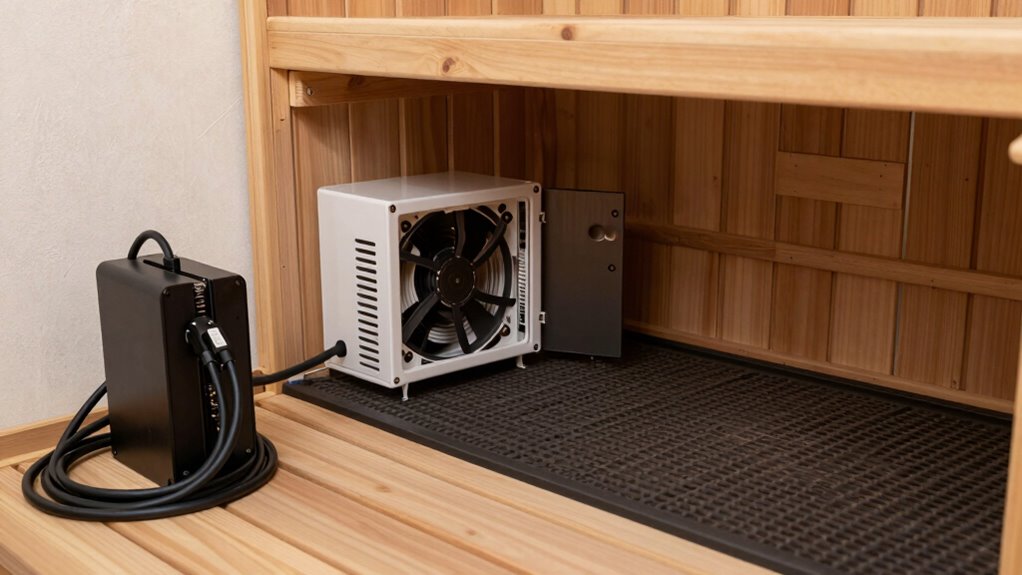
Power and ventilation issues can disrupt your infrared sauna setup if not addressed promptly. You might notice power fluctuations, causing the sauna to turn on and off unexpectedly, or experience ventilation noise that’s louder than normal. First, check your power source—verify your outlet provides consistent voltage and isn’t overloaded with other devices. Inspect the wiring for loose connections or damage. If ventilation noise persists, confirm that vents aren’t blocked or obstructed by debris, and ensure fans are mounted correctly. Sometimes, a simple reset of circuit breakers or replacing faulty wiring resolves power inconsistencies. For persistent noise or fluctuations, consult a licensed electrician or technician. Addressing these issues early keeps your setup safe, functional, and free from interruptions during your relaxing sauna sessions.
Maintaining Your Infrared Sauna for Long-Term Safety and Performance

Regular maintenance is essential to guarantee your infrared sauna remains safe and performs at its best over time. To ensure infrared heater safety, regularly inspect the heating elements for damage or wear and keep them clean. Follow sauna maintenance tips like cleaning the interior surfaces and checking electrical connections to prevent potential hazards. Keep ventilation unobstructed to maintain proper airflow and avoid overheating. Test your sauna’s controls periodically to ensure they’re functioning correctly. Additionally, replace worn or damaged components promptly. Proper upkeep not only prolongs the lifespan of your sauna but also keeps it safe for use. Consistent maintenance helps you enjoy the benefits of your infrared sauna while minimizing risks, ensuring it remains a safe, effective, and enjoyable feature of your wellness routine.
Frequently Asked Questions
Can I Install My Infrared Sauna Outdoors?
Yes, you can install your infrared sauna outdoors, but make certain it’s properly insulated for outdoor placement. Use high-quality sauna insulation to withstand weather conditions and prevent heat loss. Additionally, choose a sheltered spot to protect it from rain, snow, and direct sunlight. Proper ventilation is essential, so incorporate outdoor-rated vents or fans. Always follow manufacturer guidelines and consider a weatherproof cover or enclosure for added protection and longevity.
What Materials Are Best for Sauna Flooring?
You should choose sauna flooring options made from moisture-resistant materials like ceramic tile, sealed hardwood, or vinyl. These materials prevent water damage and mold growth, ensuring durability and safety. Avoid carpets or untreated wood, as they can trap moisture and deteriorate quickly. Opt for slip-resistant surfaces for safety, and make sure the flooring is easy to clean and maintain to keep your sauna environment healthy and comfortable.
How Often Should Ventilation Filters Be Replaced?
Have you ever wondered how fresh your sauna feels after a deep breath? You should replace your ventilation filters every 3 to 6 months, depending on usage. Regular filter maintenance ensures the best airflow and air quality. Keep an eye out for visible dirt or reduced airflow, which signals it’s time for a replacement. Following a consistent replacement schedule maintains a healthy, enjoyable sauna experience.
Are Extension Cords Safe for Sauna Power Supply?
Extension cords are generally not safe for sauna power supply because they can cause overheating and electrical hazards. To guarantee safety, always follow power supply guidelines and use a dedicated, properly rated outlet for your sauna. If you must extend power, choose high-quality extension cords rated for outdoor or high-amp use, and avoid running them through walls or under carpets. Prioritize safety to prevent any electrical issues.
How Do I Prevent Mold Growth in My Sauna?
Worried about mold growth in your sauna? You can prevent it with proper moisture control and mold prevention measures. Keep the area well-ventilated after use, wipe down surfaces regularly, and use a dehumidifier if needed. Make sure to dry the sauna thoroughly and fix any leaks promptly. Isn’t it better to maintain a clean, mold-free environment so you can enjoy your sauna safely and healthily?
Conclusion
Ensuring your infrared sauna is powered safely, well-ventilated, and properly protected isn’t just about setup—it’s about enjoying peace of mind and long-lasting performance. Are you ready to create a safe, comfortable sanctuary that withstands the test of time? By following these guidelines, you’ll maximize your sauna experience while prioritizing safety and durability. So, why settle for anything less than a perfectly installed, safe retreat? Your wellness journey starts with the right setup.