

To create an open concept living space safely and efficiently, start by identifying which walls are load bearing. Consult a structural engineer or qualified contractor to assess your home and determine support options like beams or steel supports. Properly installing these supports will help maintain your home’s stability while removing walls. Ensuring safety and professional guidance are key, so keep exploring to learn how to plan and execute your renovation successfully.
Key Takeaways
- Identify load bearing walls through professional assessment before removal.
- Consult structural engineers to design appropriate supports like beams or steel posts.
- Replace walls with engineered supports to maintain home stability and open space.
- Ensure proper installation of supports and safety measures during the renovation process.
- Coordinate with experienced contractors for a safe, efficient, and aesthetically pleasing open concept design.
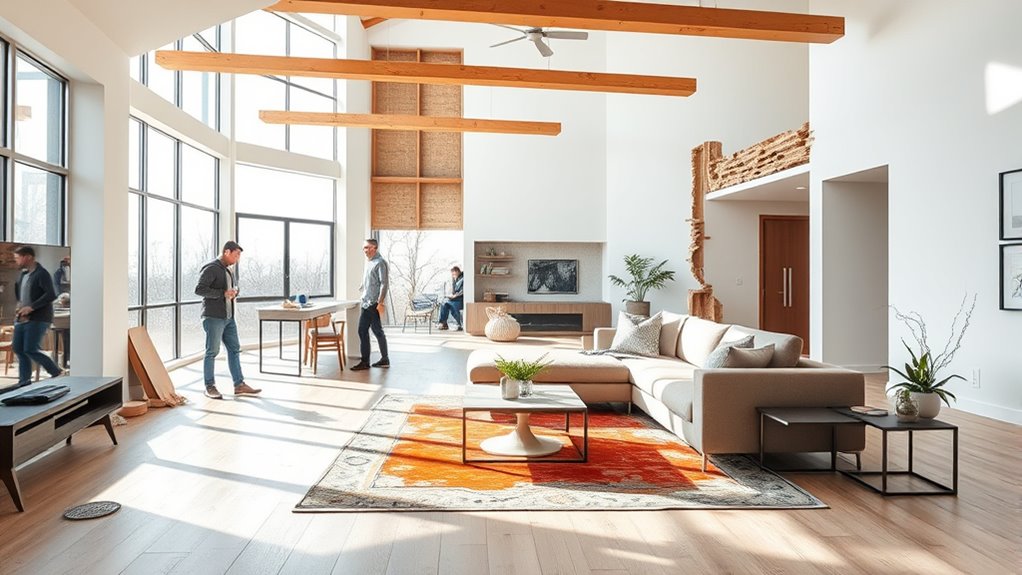
Have you ever wondered why open concept living has become so popular? It’s because removing walls creates a spacious, inviting environment that promotes better flow and interaction. But before you start knocking down partitions, it’s vital to understand that not every wall can be taken out without consequences. Some walls are load bearing walls, which means they provide essential structural support to your home. These walls carry the weight of the ceiling, roof, or upper floors, acting as the backbone that keeps the entire structure stable. Removing or altering load bearing walls without proper planning can cause serious issues, including sagging ceilings, uneven floors, or even structural failure. That’s why identifying which walls are load bearing is the first step in any open-concept renovation.
To do this safely, you should consult a structural engineer or a qualified contractor. They can assess your home’s layout, determine which walls are load bearing, and suggest appropriate alternatives. Sometimes, it’s possible to replace a load bearing wall with a beam or a steel support that can bear the load while opening up the space. These structural supports are designed to transfer weight safely across the opening, maintaining the integrity of your home. It’s important to remember that installing such supports isn’t a DIY project; it requires professional expertise to guarantee everything is properly engineered and installed.
Once the load bearing walls are identified and supported correctly, you can plan your open concept layout with confidence. Removing these walls will immediately make your space feel larger and more connected, allowing for a seamless flow between the kitchen, living, and dining areas. Plus, it opens up opportunities for better natural light distribution, making your home brighter and more welcoming. Keep in mind, though, that you’ll need to coordinate with professionals to guarantee the structural support is integrated smoothly into your design. This might include installing headers, beams, or posts that blend with your aesthetic while bearing the necessary load. Additionally, understanding the importance of vetted products and proper safety measures can help ensure your renovation is both successful and secure.
Frequently Asked Questions
What Permits Are Required for Removing Load-Bearing Walls?
You need permits for removing load-bearing walls to guarantee safety and code compliance. Start with a structural assessment from a licensed engineer to confirm the wall’s load-bearing status. Then, choose a qualified contractor experienced in structural modifications. Your contractor will help you obtain the necessary permits from local building authorities. Skipping this process can lead to fines or safety hazards, so always follow proper procedures before removing any load-bearing wall.
How Do I Identify Load-Bearing vs. Non-Load-Bearing Walls?
Think of your walls as the backbone of your home. To identify load-bearing versus non-load-bearing walls, examine framing techniques—load-bearing walls usually run perpendicular to joists or beams above. Look for wall reinforcement, such as thicker studs or additional support beams. Check your blueprints or consult a structural engineer if you’re unsure. Recognizing these differences guarantees you preserve your home’s integrity while opening up your space safely.
What Are the Best Materials for Supporting Open Spaces?
You should choose sturdy structural support materials like steel beams, laminated veneer lumber, or engineered wood for supporting open spaces. These materials provide reliable strength while allowing you to create decorative wall options such as glass panels, open shelving, or partial dividers that enhance aesthetics. Using the right support materials guarantees safety and durability, giving your open-concept living area a seamless, stylish look without compromising structural integrity.
How Long Does a Wall Removal Project Typically Take?
Think of your wall removal project as a carefully choreographed dance—smooth, deliberate, and precise. Typically, it takes about one to three weeks, depending on the complexity and your construction timeline. During project planning, you’ll coordinate permits, demolition, and reinforcement work. Rushing can cause chaos, so give yourself ample time to guarantee safety and quality. With proper planning, you’ll soon enjoy a stunning, open space that feels like a gust of fresh air.
What Are Common Pitfalls to Avoid During Wall Removal?
You should avoid rushing the project or ignoring a structural assessment, as removing walls can be risky. Watch out for hazardous materials like asbestos or lead paint, which require special handling. Always verify if the wall is load-bearing before removal, and don’t skip consulting professionals. Failing to do so can cause structural issues or health hazards, making your project unsafe and costly. Prioritize safety and proper planning at every step.
Conclusion
Removing walls to create an open concept living space can boost your home’s value by up to 10%. With careful planning and proper safety measures, you can transform your home into a spacious, inviting environment without unnecessary risks. Remember, over 60% of homeowners who undertake wall removal report increased satisfaction with their living areas. So, if you’re ready for a change, embrace the process confidently—your ideal open-concept space is within reach!