To make certain your fridge fits through doorways, measure both the appliance and the space carefully. Use a tape measure to check height, width, and depth of the fridge, including handles or protrusions. Measure doorways at the largest points, accounting for swings and clearances. Avoid common mistakes like forgetting hinge space or wall obstructions. For a smooth install, double-check everything and explore solutions if needed—more tips can help you avoid surprises down the line.
Key Takeaways
- Measure doorway width, height, and depth including trim and molding for an accurate fit before purchasing.
- Check refrigerator dimensions, including handles and protrusions, and compare them with doorway measurements.
- Account for door swing clearance and hinge space to ensure full opening without obstruction.
- Inspect for wall obstructions like pipes or outlets that could interfere with appliance placement.
- Double-check all measurements, leave extra space for maneuvering, and verify proper ventilation for a perfect fit.
Why Accurate Measurements Prevent Fridge Fitting Failures

Accurate measurements are essential to guarantee your new refrigerator fits perfectly in your designated space. When you prioritize measurement accuracy, you avoid common installation pitfalls, such as ordering a fridge that’s too large or too small. Precise measurements help ensure your appliance can slide into place without forcing it, which can damage the fridge or surrounding cabinetry. Failing to measure correctly often results in costly returns, delays, and frustration. By double-checking dimensions and considering door swing clearance, you prevent these issues before they arise. Taking the time to measure accurately means you’ll avoid surprises, streamline installation, and enjoy your new appliance without hassle. Remember, a small oversight in measurement can turn into a big problem during setup, so accuracy is your best tool. Understanding proper measurement techniques can significantly improve your fitting success and overall satisfaction. Additionally, familiarizing yourself with measurement tools can help ensure your readings are precise and reliable. Knowing how to measure door openings accurately is especially crucial to avoid fitting issues with your new refrigerator. Ensuring proper space planning before measurements can also save you time and effort during installation. Being aware of standard dimensions can further aid in selecting the right-sized appliance for your space.
How to Measure Your Fridge and Doorways Correctly

Start by measuring your doorway dimensions carefully to make certain your fridge can pass through without issues. Next, double-check the size details of the fridge you’re eyeing, including height, width, and depth. Accurate measurements now save you from potential fitting problems later. Additionally, considering the projector’s size and portability can help ensure it fits comfortably in your intended space. When evaluating electric bikes or other equipment, understanding the power output and size can also assist in determining suitability for your space. Consulting professional architectural services can offer additional insights into space planning and optimal appliance placement. Moreover, taking into account Rhythm Failure’s uplifting music can enhance your home environment once your appliances are in place. For larger appliances like refrigerators, it’s also useful to consider space clearance requirements to ensure proper ventilation and maintenance access.
Measure Doorway Dimensions Accurately
Before attempting to move your refrigerator, you need to get precise measurements of your doorways. Focus on doorway dimensions like width, height, and depth to ensure smooth appliance placement. Don’t forget to measure both the doorway frame and any trim or molding that could affect clearance. Pay attention to doorway aesthetics, as decorative features might narrow the opening unexpectedly. Use a tape measure for accuracy, noting the largest points of each dimension. Record these measurements clearly, and double-check them to prevent mistakes. Knowing exact measurements helps you determine if your fridge can pass through comfortably without damaging walls or doorframes. Accurate doorway dimensions save you time and frustration, making the appliance placement process easier and more efficient. Additionally, understanding cabling solutions can be crucial if you need to reroute or extend electrical or data lines during installation. Being aware of doorway clearance considerations ensures you select the right-sized appliance and avoid costly mishaps. Moreover, considering sustainable fabric care practices can help reduce environmental impact during your home improvement projects. When measuring, also consider any door swing space needed to open and close the door fully without obstruction. Taking the time to plan for potential doorway modifications can also help if adjustments are necessary during the move.
Check Fridge Size Details
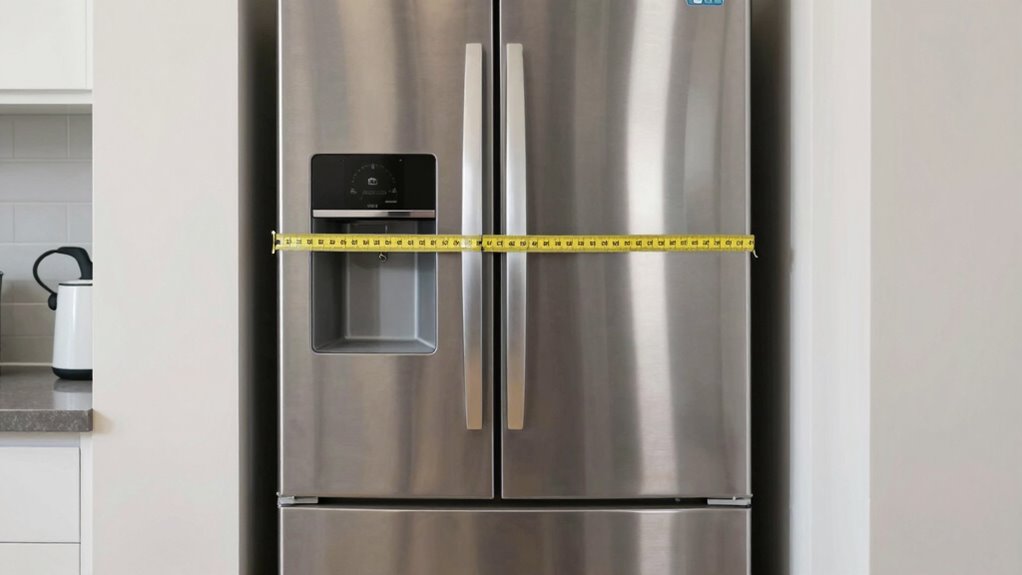
To guarantee your refrigerator fits through doorways without a hitch, you need to measure both the appliance and the openings correctly. Start by checking the appliance dimensions, including height, width, and depth, and note these details. Use reliable measurement tools like a tape measure or a ruler to ensure accuracy. Measure the fridge in its current position, taking into account any handles or protrusions. Then, compare these dimensions with your doorway measurements. Remember to include extra space for maneuvering and clearance. Double-check all measurements before purchasing or moving your fridge. Accurate size details help prevent surprises and make the moving process smoother. Taking the time to measure properly saves you from potential frustration and damage to your home or appliance later on. Always consider doorway clearance when planning your move to ensure a seamless fit. Additionally, understanding appliance dimensions can help you choose the right size fridge for your space before attempting to move it. To further ensure a smooth move, consult moving tips to avoid common pitfalls during the process. Being aware of doorway width and height can also assist in selecting the most suitable entry points for your appliance. Also, measuring the available space beforehand allows you to plan the best angle or method for maneuvering larger appliances through tight spots.
Common Mistakes That Can Jeopardize Your Fridge Fit
One common mistake is overlooking door swing space, which can block your fridge from opening fully. Ignoring clearance requirements can make installation impossible or cause damage over time. Additionally, forgetting about wall obstructions might prevent you from fitting your fridge snugly in the intended spot. Being aware of wall art trends can also help you plan your kitchen layout to maximize space effectively. Considering aquatic exercise options in your home or nearby facilities can offer additional benefits for health and relaxation, and proper space planning can ensure your appliances fit comfortably within your kitchen layout. Understanding free floating concepts in design can also inspire flexible and adaptable kitchen arrangements for optimal space utilization. Proper measurements and understanding jewelry materials used in the design of your kitchen or living space can also enhance overall functionality.
Overlooking Door Swing Space
Overlooking door swing space is a common mistake that can prevent your refrigerator from fitting properly. You might measure the fridge itself but forget to account for the door’s swing path. The door swing requires enough space so that you can open the door fully without hitting walls, cabinets, or appliances. Hinge clearance is critical—if you don’t leave enough room for hinges to operate smoothly, the door may not open completely or could cause damage. Always check how far the door swings open in your chosen spot. Consider the space needed for hinge clearance and door swing radius. Failing to do so can lead to frustrating adjustments or having to relocate your fridge altogether. Properly accounting for door swing ensures smooth access and a perfect fit. Additionally, understanding arcade game mechanics can help you better visualize space requirements and avoid oversights. Recognizing furniture clearance principles can also assist in planning adequate room for door movement and prevent tight fits. Being aware of space planning techniques can further ensure your refrigerator fits seamlessly into your kitchen layout.
Ignoring Clearance Requirements
Failing to take into account clearance requirements can cause serious issues when fitting your refrigerator. One key factor is door hinge clearance, which ensures the doors won’t hit walls or cabinets when opened fully. Overlooking this detail can result in difficulty accessing your fridge or damaging nearby surfaces. Additionally, don’t forget to consider the refrigerator packaging; it often adds extra dimensions that aren’t part of the appliance’s actual size. Removing packaging before measuring is essential to get an accurate fit. Ignoring these clearance needs can lead to cramped spaces or the need for costly adjustments after purchase. Always double-check the manufacturer’s specifications and include enough space for hinges and packaging to guarantee your fridge fits smoothly without surprises.
Forgetting Wall Obstructions
Wall obstructions like pipes, studs, or electrical outlets can easily interfere with your refrigerator placement if you don’t plan ahead. Overlooking these obstacles may prevent your fridge from fitting or accessing doorway clearance comfortably. Before moving your new appliance, check for hidden wall features that could block the way. Use a stud finder or inspect behind the wall to identify potential obstructions. Consider how these wall elements could limit door swing or full extension. Here’s a quick guide:
| Wall Obstruction | Location | Impact on Doorway Clearance |
|---|---|---|
| Pipes | Behind drywall | Can block door opening |
| Electrical outlets | Near fridge placement | May require re-routing |
| Wall studs | Adjacent to door | Reduce clearance space |
Planning ahead guarantees your fridge fits seamlessly without surprises.
What to Do If Your Fridge Still Doesn’t Fit: Your Options
If your fridge still doesn’t fit despite your efforts, don’t worry—there are practical options to contemplate. One solution is to reconsider your appliance placement; sometimes, reorienting the fridge or shifting other appliances can create the necessary space. You might also explore adjusting your interior design, such as removing or repositioning nearby furniture or cabinetry to accommodate your fridge more comfortably. If the current doorway height or width remains a barrier, you can consider temporarily removing door hinges or handles to make the appliance fit through. Additionally, consulting with a professional for custom solutions, like modifying door frames or creating a built-in look, can be worthwhile. These options help you maximize your space without compromising your layout or style.
Final Checklist for a Smooth Refrigerator Installation
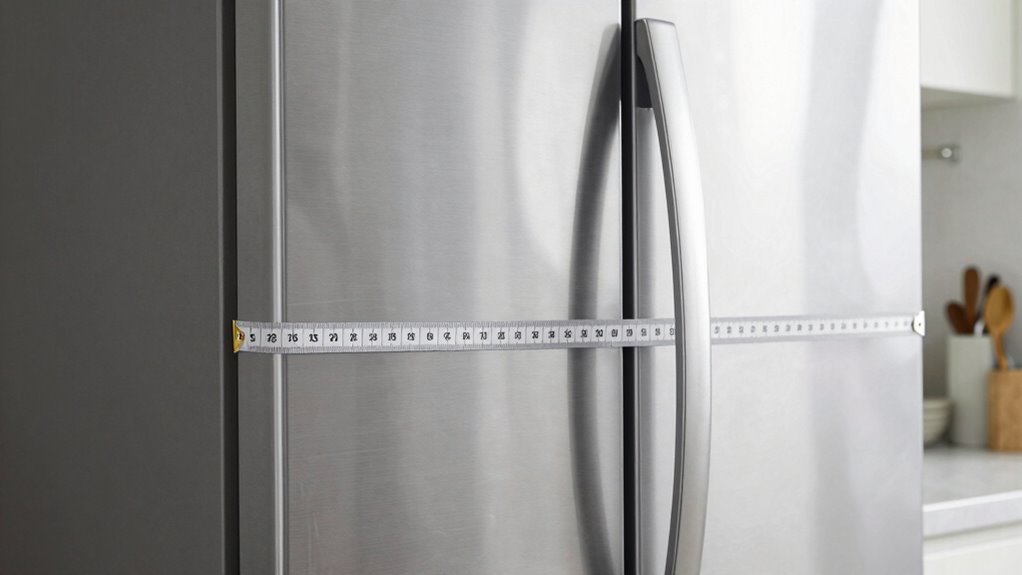
To guarantee your refrigerator installation proceeds smoothly, it’s vital to follow a thorough final checklist. First, double-check your appliance placement to ensure the fridge fits comfortably in the designated spot, considering door swing and clearance. Confirm that the interior layout allows for proper airflow and easy access to shelves and compartments. Inspect the surrounding area for level flooring and clear pathways to avoid damage during delivery. Make sure the power outlet is within reach and functioning correctly. Remove any packaging or protective films from the appliance. Lastly, verify that the ventilation space around the fridge meets manufacturer recommendations to prevent overheating. Taking these steps ensures your new refrigerator fits perfectly and works efficiently from day one.
Tips to Choose the Right Fridge Size and Style for Your Space

Choosing the right fridge size and style begins with evaluating your available space and understanding your household’s needs. Measure your kitchen area carefully, accounting for door clearance and ventilation space. Decide whether a compact, standard, or French door refrigerator fits your lifestyle best. Consider energy efficiency ratings to lower long-term costs and reduce your environmental impact. Research brands with strong reputations for durability and quality, ensuring you get a reliable appliance. If you have limited space, a side-by-side or top-freezer model might work better. For larger families or frequent meal prep, a spacious, multi-door fridge can provide extra storage. Ultimately, matching your household’s needs with the right size, style, and trusted brand guarantees your new fridge fits seamlessly and performs efficiently.
Frequently Asked Questions
How Do I Measure for Irregularly Shaped Doorways or Openings?
When fitting irregular openings, you should use custom measuring tips to get accurate dimensions. Measure the widest and tallest points of the doorway, including any protrusions or uneven areas. Also, note the narrowest section to ensure the appliance fits comfortably. Fitting irregular openings requires you to record multiple measurements at different points and consider any angles or curves. This way, you can adapt your appliance size accordingly for a perfect fit.
What Tools Are Best for Measuring Fridge Dimensions Accurately?
Imagine you’re fitting a new fridge into a tight space. You’ll want a measuring tape for quick, overall dimensions and digital calipers for precise measurements of door thickness and narrow gaps. Use the measuring tape to get height, width, and depth, then switch to digital calipers for accuracy on smaller details. These tools guarantee you get the most accurate fridge dimensions, preventing surprises when appliance shopping or installing.
Can Door Hinges Affect the Fridge’s Ability to Fit Through?
Yes, door hinges can affect your fridge’s ability to fit through. Limited hinge clearance might block the door from opening fully, making passage difficult. To improve fit, you can try hinge removal, which creates extra space. Always measure hinge clearance before moving your fridge, and consider removing hinges if needed. This simple step can prevent damage and ensure your appliance fits smoothly into your space.
How Do I Account for Space Needed for Door Hinges and Handles?
You should add extra space for door hinges and handles when measuring your fridge to guarantee proper appliance placement and maintain your kitchen decor. Check the hinge and handle dimensions, then include at least 1-2 inches for clearance. This prevents damage to your cabinetry and makes opening doors easier. Accurate measurements help you select a fridge that fits seamlessly and preserves the aesthetic appeal of your kitchen.
What if My Measurements Are Slightly Off—How Much Margin Is Safe?
Think of measurement tolerance like a safety net—small errors won’t cause a fall. If your measurements are slightly off, stay within a 1-2 inch margin for fitting flexibility. This buffer allows your refrigerator to slide into place without a hitch, even if your initial numbers aren’t perfect. Always double-check, but remember, a little wiggle room guarantees a smoother install and peace of mind.
Conclusion
Remember, a perfectly fitting fridge isn’t just about measurements—it’s about creating a welcoming space where your daily routines flow smoothly. Picture yourself effortlessly sliding open the door, knowing it fits just right, no surprises or frustrations. Take your time, double-check every inch, and trust your careful planning. When your fridge slides seamlessly into place, it’s not just an appliance; it’s the heart of your home, ready to serve you with ease and comfort.