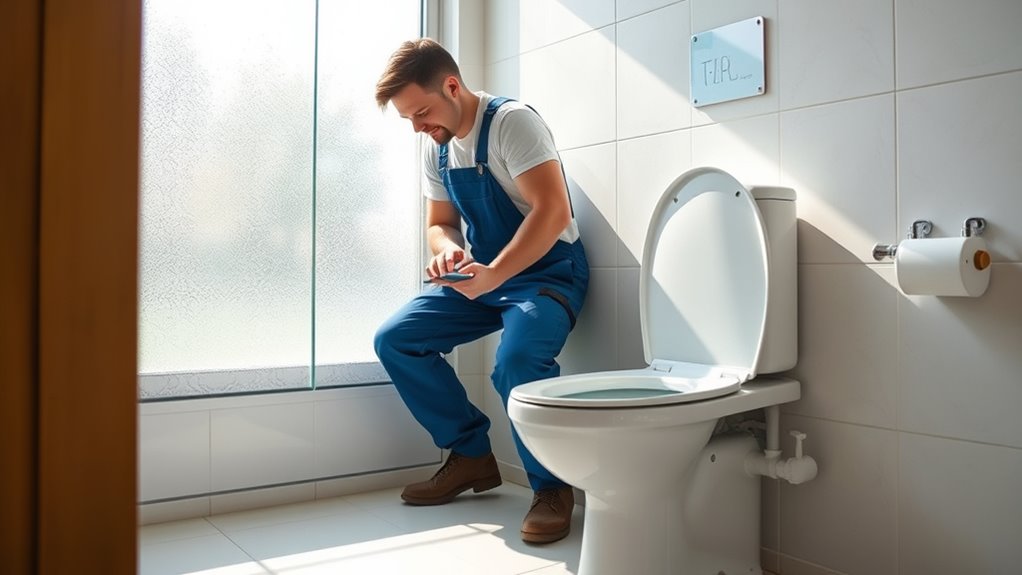

Replacing your old toilet with a water-saving model helps cut water use, lowers utility bills, and supports environmental efforts. Start by turning off the water supply, draining the existing toilet, and carefully removing it. Install the new unit with a wax ring and secure it properly to prevent leaks. Look for models with EPA WaterSense certification and low GPF ratings. For a smooth upgrade and tips on proper installation, keep exploring the next steps.
Key Takeaways
- Turn off the water supply, drain the old toilet, and carefully remove it to prepare for installation.
- Inspect the flange for damage and clean the area before installing the new toilet.
- Place a wax ring on the flange, align the new toilet, and secure it with bolts for a proper seal.
- Choose a water-saving toilet with EPA WaterSense certification and a low GPF (1.28 or less).
- Perform regular maintenance, fix leaks promptly, and consider professional installation for optimal results.
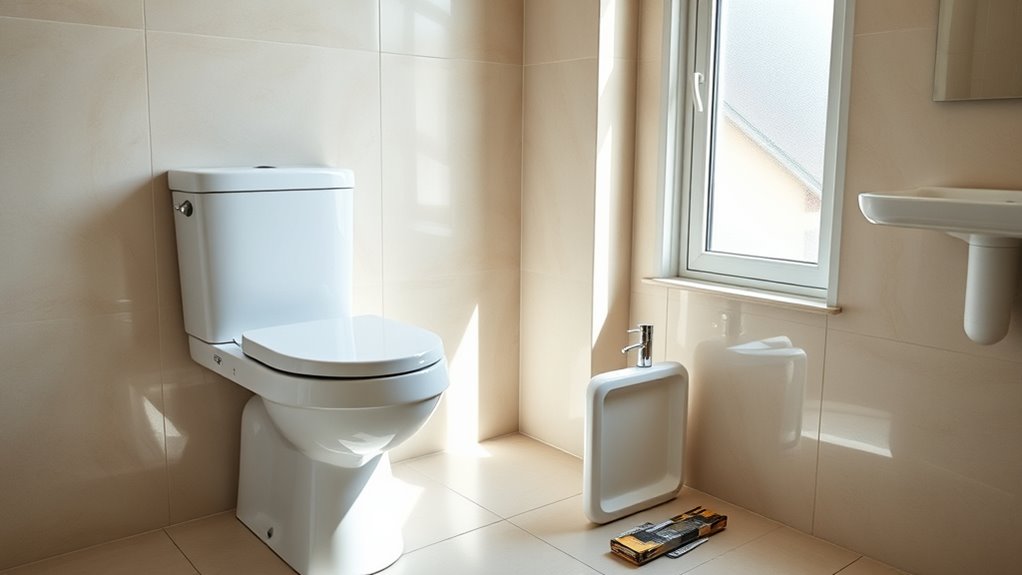
Upgrading to a water-saving toilet is a smart move that can reduce your household’s water usage and lower your utility bills. When you decide to replace your old toilet, it’s essential to consider proper toilet installation to ensure everything functions smoothly and efficiently. A new, eco-friendly model can significantly cut down on water waste, making a noticeable difference in your monthly expenses. By choosing a high-efficiency toilet, you’re taking a concrete step toward water conservation, helping preserve this vital resource for future generations.
Upgrading to a water-saving toilet reduces water use and lowers utility bills effectively.
The process begins with turning off the water supply and draining the existing toilet. Removing the old unit carefully minimizes mess and prevents damage to your bathroom floor. Once the old toilet is out, you’ll need to prepare the flange and inspect it for cracks or damage. Installing the new toilet involves placing a wax ring onto the flange, aligning the toilet bowl properly, and securing it with bolts. It’s crucial to ensure the toilet is level and tightly sealed to prevent leaks and avoid costly repairs later on. If you’re comfortable with DIY projects, this task is manageable, but hiring a professional can guarantee a flawless toilet installation.
Choosing the right water-saving toilet goes beyond just picking a model with a low gallon per flush (GPF) rating. Look for certifications like WaterSense, which indicate the toilet meets EPA standards for water efficiency. These models typically use around 1.28 GPF or less, compared to older toilets that often use 3.5 to 5 gallons per flush. Not only does this reduce your water bill, but it also contributes to water conservation efforts in your community. Modern water-saving toilets are designed with powerful flushing mechanisms to handle waste effectively while using significantly less water.
In addition to installing a new toilet, consider other water-saving practices around your bathroom. Fixing leaks promptly, installing dual-flush mechanisms, and using low-flow fixtures can further enhance your water conservation efforts. Remember that proper toilet installation ensures your new model works efficiently from day one, preventing issues like leaks, clogging, or insufficient flushing power. Regular maintenance and timely repairs can extend the lifespan of your investment, making your home more eco-friendly and cost-effective over time.
Ultimately, replacing your old toilet with a water-saving model is an investment in your home’s efficiency and the environment. It’s a straightforward upgrade that pays off through lower water bills and a reduced ecological footprint. By paying close attention during toilet installation and selecting a model designed for water conservation, you’re making a positive impact on both your household and the planet.
Frequently Asked Questions
How Do I Choose the Right Water-Saving Toilet for My Bathroom?
You should choose a water-saving toilet that features a modern design and is made from eco-friendly materials. Look for models with a dual-flush system, which allows you to select a full or half flush, saving water. Consider the size and shape to match your bathroom’s style and space. Check reviews for efficiency and durability, ensuring the toilet aligns with your eco-conscious values and aesthetic preferences.
Can I Install a New Toilet Myself Without Professional Help?
You can definitely do a DIY installation, but be aware that around 80% of homeowners find plumbing adjustments challenging. If you’re comfortable with basic tools and following instructions, you can replace your new water-saving toilet yourself. Just turn off the water, remove the old unit, and install the new one carefully. However, if you encounter complex plumbing issues, it’s wise to seek professional help to avoid leaks or damage.
What Are the Warranty Options for Water-Efficient Toilets?
You’ll find warranty options for water-efficient toilets typically include warranty coverage on parts and sometimes the entire unit. Many brands offer replacement policies if the toilet malfunctions within a certain period, often one to five years. Always read the warranty details carefully to understand what’s covered, whether you need to register your product, and if there are any limitations. This guarantees you’re protected and know how to get repairs or replacements if issues arise.
How Long Does a Typical Toilet Installation Take?
You’ll want to plan for about 2 to 3 hours to install your new toilet. The process starts with disconnecting the old toilet, then replacing the toilet bowl and flushing mechanism, and finally sealing everything properly. While it might seem straightforward, unexpected issues can extend the time. Ensuring all parts fit correctly and that the water supply is shut off can make the installation smoother and faster.
Are Water-Saving Toilets Compatible With Existing Plumbing?
Yes, water-saving toilets are compatible with existing plumbing. They typically work with standard plumbing fixture compatibility and fit most homes without major modifications. When installing, check the toilet flushing mechanisms to guarantee proper connection and function. Most models are designed to replace old toilets easily, but it’s always good to verify the size and connection type to avoid any surprises during installation.
Conclusion
Upgrading to a water-saving toilet not only conserves your home’s water but also reduces your utility bills. Many believe these models can’t perform as well as traditional ones, but recent innovations prove otherwise. Modern water-efficient toilets are just as powerful and reliable, debunking this myth. So, when you replace your old toilet, you’re making a smart choice for the environment and your wallet—proving that saving water doesn’t mean sacrificing performance.