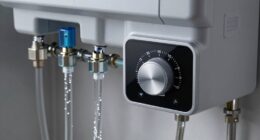
To find the right tankless water heater size, first calculate your household’s peak hot water demand by listing fixtures used simultaneously and their flow rates. Multiply the number of fixtures by their flow rates to get your total gallons per minute needed. Add a buffer for future growth and peak times. Proper sizing avoids shortages and energy waste, so understanding flow-rate math is key—keep going to learn how to get it just right.
Key Takeaways
- Calculate the total flow rate by adding simultaneous fixture demands during peak usage times.
- Determine flow rates for each fixture and appliance to estimate accurate hot water needs.
- Include buffers for future household growth and energy efficiency in your sizing calculations.
- Consider water pressure and pipe size, as they influence flow rates and heater capacity requirements.
- Regularly reassess sizing if household size or demand patterns change to maintain system efficiency.
Why Properly Sizing Your Tankless Water Heater Matters
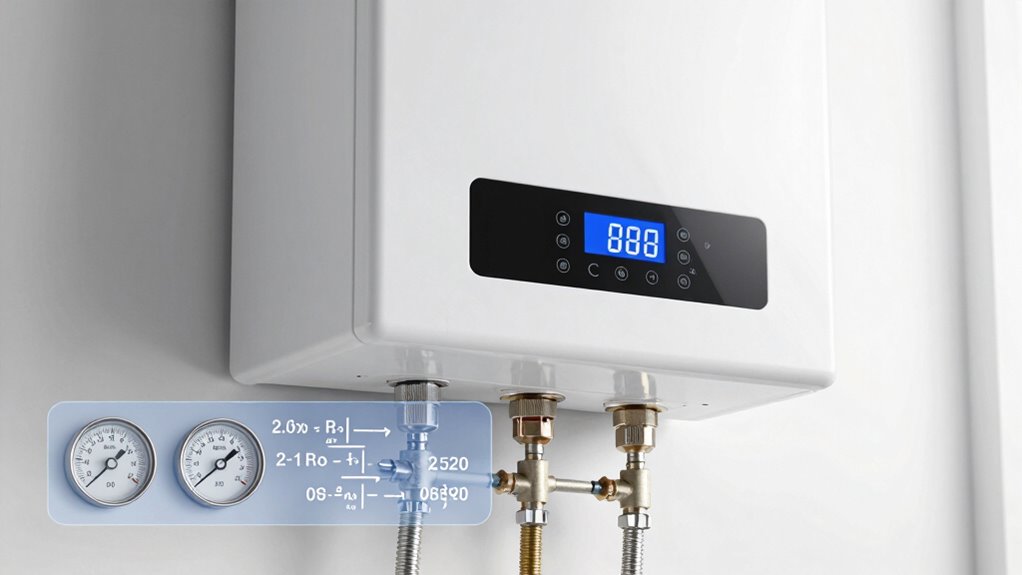
Properly sizing your tankless water heater is essential because an undersized unit won’t provide enough hot water to meet your household’s needs, leading to inconveniences and disruptions. When your heater is too small, you might experience temperature fluctuations, where water gets uncomfortably hot or cold unexpectedly. This inconsistency can be frustrating during daily routines. Additionally, an improperly sized unit reduces energy efficiency, causing it to work harder or cycle more frequently, which wastes energy and increases costs. By choosing the right size, you ensure your system delivers a steady supply of hot water without overworking itself. Proper sizing helps maintain consistent water temperatures, minimizes energy consumption, and provides reliable hot water service for your household’s demands. Understanding your flow rate needs is vital to selecting the appropriate size for your household. Accurately calculating your hot water demand helps prevent undersizing or oversizing your unit, ensuring optimal performance and energy savings. To achieve this, it’s also important to consider peak usage times to avoid shortages during busy mornings or evenings. Knowing your body piercing care routines can also impact your home maintenance schedule and ensure your system remains efficient and reliable. Additionally, considering long-term household growth can help you select a unit that will meet future needs without frequent replacements.
How to Calculate Your Household’s Hot Water Needs

To size your tankless water heater accurately, you first need to determine your household’s hot water consumption. Start by listing your daily activities and estimating their hot water use. Consider these factors:
Assess your household’s hot water needs by listing daily activities and estimating their flow requirements.
- Number of bathrooms and whether they’re used simultaneously
- Typical appliances like dishwashers and washing machines
- Water conservation habits that might reduce flow rates
- The importance of balancing work and personal life to prevent burnout and maintain household efficiency. Additionally, understanding hot water flow rates can help you select a system that meets your family’s needs without unnecessary oversizing. Recognizing refrigerant leaks and other mechanical issues can also impact the efficiency of your chosen unit over time. Being aware of system maintenance needs ensures your water heater operates optimally throughout its lifespan. Properly managing system components can further enhance performance and longevity.
What Are Flow Rates and How Do They Affect Your Heater Size?
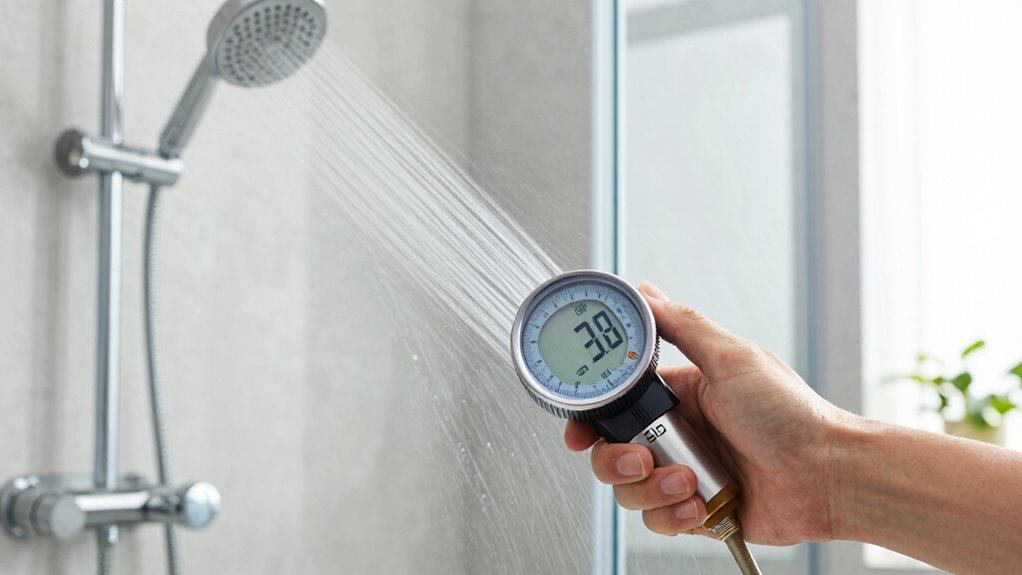
Flow rates refer to the amount of hot water that flows from your fixtures and appliances per minute. Your pipe diameter influences these flow rates—wider pipes allow more water to pass through quickly, impacting your heater’s size. Water pressure also plays a key role; higher pressure increases flow rates, enabling larger fixtures to operate simultaneously. If your water pressure drops, flow rates decrease, possibly requiring a bigger heater to meet your household needs. Understanding how pipe diameter and water pressure affect flow rates helps you select the right tankless water heater. A unit sized too small may struggle to supply hot water when multiple fixtures run, while an oversized unit could be unnecessarily costly. Accurate flow rate assessment ensures efficient hot water delivery tailored to your household’s usage. Flow rate calculations are essential for precise sizing and to prevent undersizing or oversizing your heater. Additionally, considering household water demand can help ensure your heater is appropriately matched to your daily hot water needs. Properly assessing flow rates ensures your tankless water heater operates efficiently and meets your household’s needs without unnecessary expense. Enhancing your understanding of water flow dynamics can further optimize your hot water system’s performance.
How to Use Simple Formulas to Find Your Required Flow Rate

To determine your ideal tankless water heater size, you need to calculate your hot water needs accurately. Using simple flow rate formulas makes this process straightforward and helps make certain you select a unit that meets your household’s demands. Let’s walk through how to apply these formulas to find your required flow rate. Incorporating AI-powered data analytics can further optimize your sizing calculations by providing insights into your specific usage patterns.
Calculating Hot Water Needs
Understanding your hot water needs is essential for selecting the right tankless water heater. To determine your required flow rate, start by estimating your household’s usage. Consider these key factors:
- Count the peak simultaneous fixtures (showers, faucets, appliances) used at once.
- Multiply each fixture’s flow rate by the number of users to get total gallons per minute.
- Add a buffer for energy efficiency and future needs, ensuring your heater can handle peak demand.
- Remember to account for hot water demand patterns, which can vary based on your household’s habits and schedule. Additionally, understanding average consumption can help you better estimate your needs and avoid oversizing or undersizing your unit. Being aware of home theater projector requirements, for example, can be useful when considering additional water needs for maintenance or cleaning. Recognizing the importance of proper sizing ensures you select a unit that efficiently meets your household’s peak hot water requirements. A solid grasp of flow-rate math can significantly improve your selection process and ensure reliable hot water supply.
Applying Flow Rate Formulas
Applying flow rate formulas allows you to quickly and accurately determine the hot water flow your household needs. By using simple calculations, you can account for temperature fluctuation and guarantee your tankless heater is appropriately sized. Start by estimating the number of fixtures you’ll use simultaneously and their flow rates. Then, incorporate the desired temperature rise—how much your cold water needs to be heated—to optimize energy efficiency. This helps prevent under- or over-sizing, which can lead to inconsistent water temperatures or wasted energy. Using these formulas, you’ll find a precise flow rate that meets your household’s demands while maintaining energy efficiency. Understanding flow rate calculations is crucial for selecting the right heater size and ensuring optimal performance. Additionally, proper sizing helps extend the lifespan of your unit and improves overall system reliability. Incorporating accurate calculations can also minimize energy consumption and reduce utility costs over time. Being aware of the importance of correct sizing can further enhance your system’s efficiency and longevity.
How to Match Your Flow Rate to the Right Tankless Water Heater
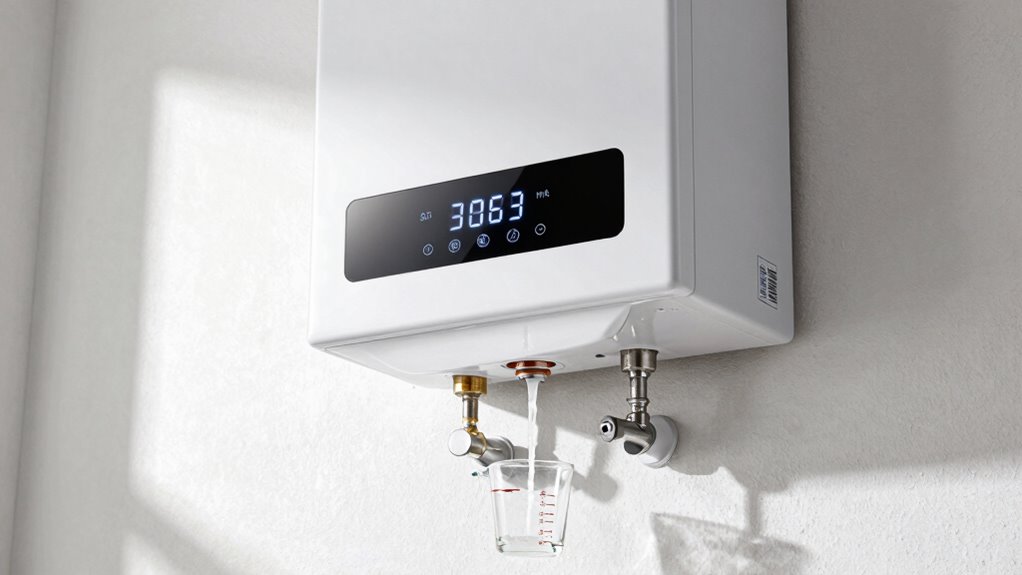
Choosing the right tankless water heater starts with accurately matching its flow rate to your household’s needs. To do this, consider your daily water usage and prioritize water conservation and energy efficiency. First, list the fixtures you use simultaneously, like showers, faucets, and appliances. Second, determine the flow rate for each fixture during peak use. Third, add these flow rates to find your total required flow rate. This calculation ensures you select a heater that provides enough hot water without wasting energy or water. Remember, a unit with too high a flow rate consumes more energy, reducing efficiency, while too low won’t meet your needs. Matching flow rate precisely ensures you maximize water conservation, energy efficiency, and comfort. Additionally, understanding your actual water demand helps optimize your system’s performance and costs. Proper sizing also considers the peak usage times, ensuring reliable hot water supply during busy periods. Knowing your peak water demand can further assist in choosing the most efficient system for your household, and considering system capacity helps prevent shortfalls during high-demand periods.
Common Sizing Mistakes and How to Avoid Them
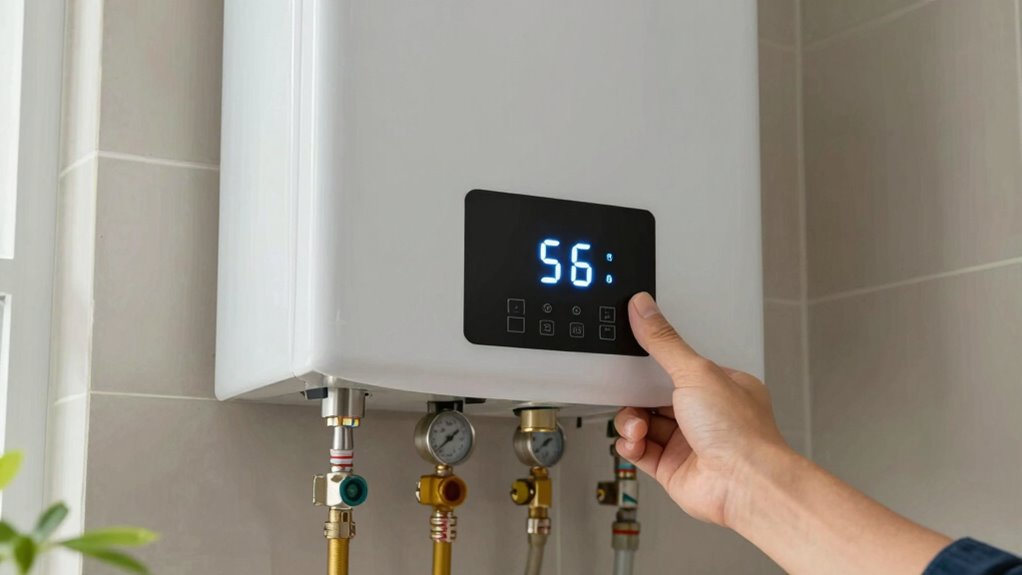
Many people overestimate their hot water needs, leading to choosing a tankless heater that’s too large and costly. Ignoring peak usage times can cause cold surprises when everyone’s using water simultaneously. To avoid these mistakes, you need to accurately assess your actual demands and plan for busy periods.
Overestimating Hot Water Needs
One of the most common mistakes when sizing a tankless water heater is overestimating your hot water needs. Many fall for hot water myths and tankless misconceptions, thinking bigger is always better. This leads to unnecessary costs and energy waste. To avoid this, focus on your actual usage:
- Calculate the exact flow rates of your most-used fixtures.
- Consider only your peak simultaneous demands, not total daily use.
- Be wary of exaggerated claims about hot water needs from sales pitches or myths.
Overestimating can cause you to buy a larger unit than necessary, increasing upfront costs. Proper sizing guarantees efficiency and saves money. Remember, a correctly sized tankless heater delivers enough hot water without overkill.
Ignoring Peak Usage Times
Ignoring peak usage times is a common mistake that can lead to selecting a tankless water heater that’s too small. Many underestimate peak demand, which occurs during busy mornings or family gatherings, causing insufficient hot water. Seasonal variation also impacts your hot water needs; for example, colder months often increase hot water consumption. If you size your heater based solely on average usage, you risk running out of hot water during these busy periods. To avoid this mistake, consider the highest hot water demand your household experiences, accounting for peak demand and seasonal shifts. Properly sizing for peak times ensures your tankless water heater can handle the maximum flow rate needed, providing reliable hot water whenever you need it most.
Adjusting Your Water Heater Size When Household Needs Change
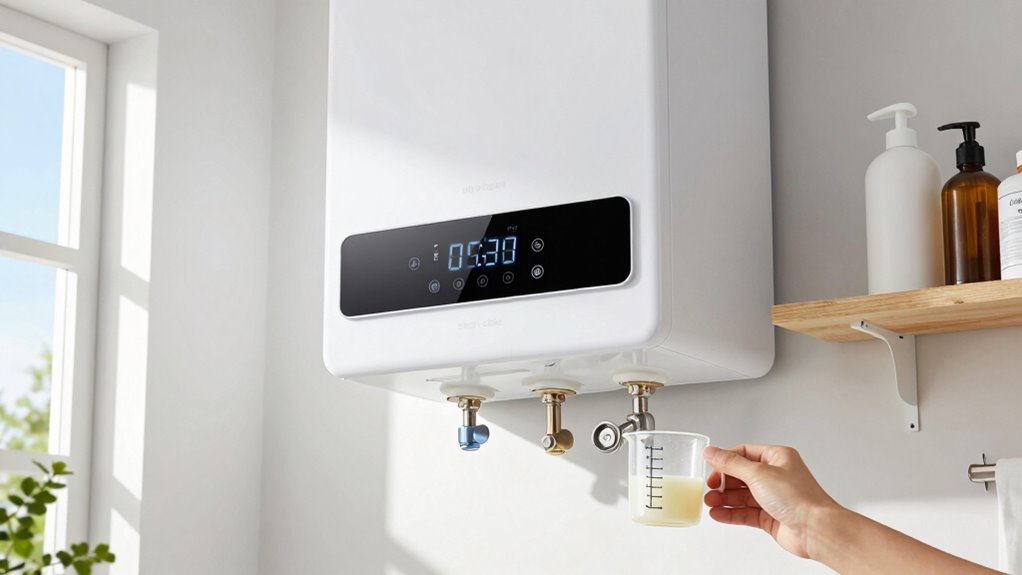
When your household’s needs change—such as welcoming a new family member or experiencing increased demand—you may need to modify your tankless water heater size to ensure consistent hot water supply. If you previously relied on storage tanks or installed your unit in a limited space, consider these steps:
- Reassess your peak flow rates to determine if your current unit can handle increased demand.
- Evaluate installation locations for better access to main water lines or to accommodate size adjustments.
- Upgrade to a larger capacity unit if your household’s hot water needs grow, ensuring it can handle multiple simultaneous outlets without issue.
Adjusting your tankless water heater size keeps hot water flowing smoothly, even as household demands change.
Frequently Asked Questions
Can I Size a Tankless Heater for Future Household Expansions?
Yes, you can size a tankless heater for future expansion by considering sizing considerations now. To do this, estimate your future household’s hot water needs, including additional fixtures or appliances. Choose a unit with a higher flow rate than current demands to accommodate growth. This guarantees you won’t need a replacement soon, saving you time and money while maintaining reliable hot water supply as your household expands.
How Does Climate Affect Hot Water Demand Calculations?
Climate impact markedly influences hot water demand calculations, especially with seasonal variation. In colder climates, you’ll need a higher flow rate to compensate for increased heating needs, as outdoor temperatures drop. Conversely, warmer regions experience less demand, reducing sizing requirements. Understanding these climate effects helps you select a tankless water heater that efficiently meets your household’s needs year-round, ensuring comfort without overspending on capacity.
Are There Different Sizing Considerations for Outdoor vs. Indoor Units?
Yes, there are different sizing considerations for outdoor versus indoor units. For outdoor models, you need to account for outdoor durability, guaranteeing the unit withstands weather conditions like rain, snow, and temperature fluctuations. Indoor units require proper ventilation to prevent overheating and ensure efficient operation. You should choose a size that meets your hot water demand while considering these factors, so your system remains reliable and efficient year-round.
How Do Energy Efficiency Ratings Influence Size Selection?
Sure, because choosing a water heater is just about size, right? Not quite. When considering energy efficiency ratings, like Energy Star, you’ll want a unit that aligns with insulation standards to maximize savings. An efficient model might be smaller but still meets your demand without wasting energy. So, don’t just size based on flow rate—factor in ratings to make certain you get a unit that’s eco-friendly and cost-effective.
What Are Signs My Current Heater Is Undersized or Oversized?
You’ll notice your current heater is undersized if you experience inconsistent hot water, especially during peak usage, or if thermal expansion causes pressure relief valve activations. Oversized units may waste energy and produce excessive hot water, leading to higher bills. Pay attention to pressure relief valve triggers and fluctuating water temperatures. These signs help you determine if your heater needs resizing to match your household’s flow rate, ensuring efficiency and safety.
Conclusion
Properly sizing your tankless water heater guarantees you never run out of hot water when you need it most. Did you know that households with multiple bathrooms can experience a 20% increase in hot water demand during peak times? By understanding flow rates and accurately calculating your needs, you’ll avoid costly mistakes and enjoy reliable hot water. Take the time to size your heater correctly—your comfort and efficiency depend on it.