
📊 Full opportunity report: Improve Sales Relationships With Strategic Pre-Call Memory Cards on IdeaNavigator AI — validation score, market gap, and execution plan.

Get the little things that make your day delivered free with Prime
- Fast, free delivery on millions of items
- Prime Video, Amazon Music and more included
- Member-only deals all year
TL;DR
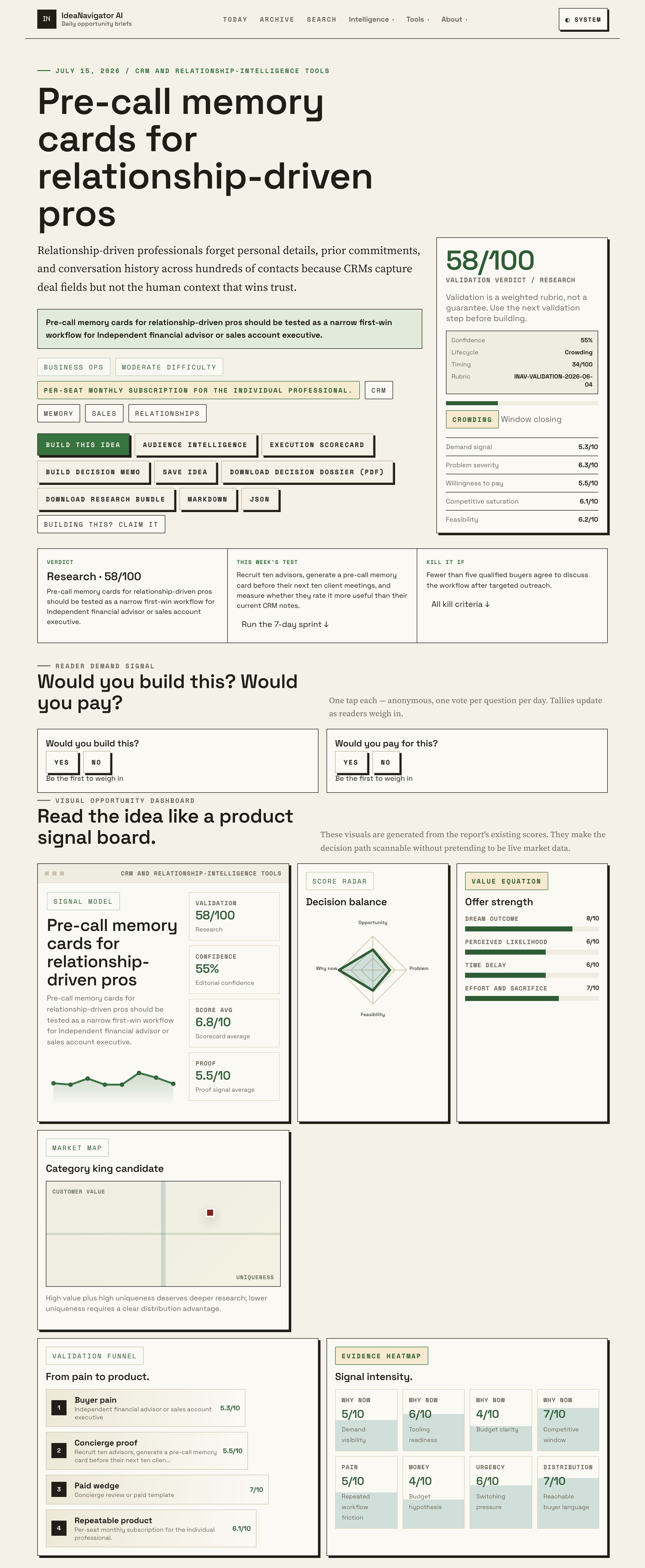
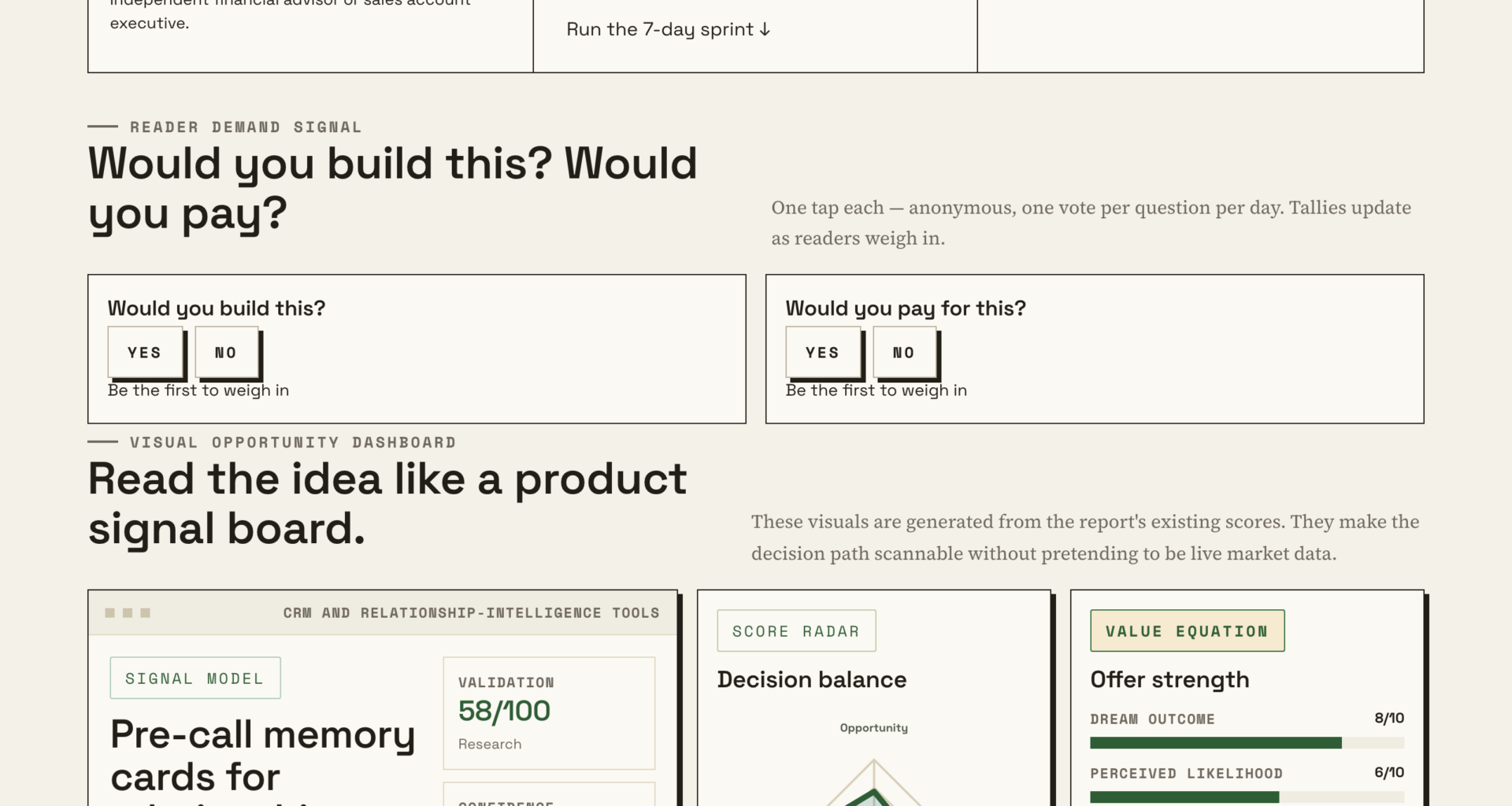
A new tool involving pre-call memory cards is being tested for independent financial advisors and sales reps. It aims to enhance relationship management by summarizing past interactions, potentially improving client trust and retention.
Independent financial advisors and sales account executives are beginning to test a new tool — pre-call memory cards — designed to enhance client relationships by summarizing past interactions and personal details. This development aims to address the gap in current CRM systems, which often fail to capture the human context that fosters trust and loyalty.
The proposed pre-call memory card system connects a contact’s previous emails, notes, and commitments to generate a concise, one-page summary before each client interaction. This summary highlights key personal details, recent promises, and open discussion threads, enabling professionals to approach each call with better context. The initiative is being tested with a small group of independent financial advisors, who will generate memory cards for ten upcoming client meetings and then evaluate their usefulness compared to existing CRM notes.
According to an anonymous researcher involved in the project, the goal is to validate whether these memory cards help professionals recall important details more effectively, thereby strengthening trust and improving service quality. The system leverages recent advances in large-language-model summarization, making it feasible to distill lengthy conversation histories into compact, searchable formats that traditional CRMs cannot easily provide.
Why Personalized Memory Tools Matter for Relationship Building
This development could significantly impact how relationship-driven professionals manage client interactions, potentially leading to higher trust, better client retention, and increased sales. By capturing and surfacing personal details and past commitments, the system aims to make every client interaction more meaningful. As trust is a key factor in financial advising and sales, tools that improve the recall of personal context could provide a competitive edge for early adopters. The success of this approach could also influence broader CRM and relationship management strategies across various industries.
As an affiliate, we earn on qualifying purchases.
The Limitations of Current CRM Systems in Capturing Human Context
Traditional CRM platforms primarily focus on deal stages, contact information, and transaction history, but often fall short in recording the human and emotional context that underpins trust. Relationship-driven professionals frequently forget personal details, prior promises, or ongoing discussion points, which can hinder relationship growth. Recent advances in AI, especially large-language models, now enable summarization of extensive conversation histories into concise formats, making it possible to bridge this gap. This initiative builds on the growing recognition that effective relationship management requires more than just transactional data.
“The ability to quickly access a summary of a client’s recent interactions and personal details could transform relationship management for advisors and sales professionals.”
— an anonymous researcher
Uncertainties About Effectiveness and Adoption
It is not yet clear how widely these memory cards will be adopted by professionals or whether they will demonstrably improve relationship outcomes. The validation process is ongoing, and results from initial testing are not yet available. Additionally, questions remain about how seamlessly the system can integrate into existing workflows and whether professionals will find the summaries sufficiently accurate and helpful to replace or supplement their current notes.
Next Steps in Testing and Validation of Memory Cards
The next phase involves recruiting ten advisors to generate and evaluate memory cards over their upcoming client meetings. Their feedback will determine whether the system adds value beyond current CRM notes. If successful, wider deployment and integration with existing CRM platforms could follow. Further research will explore how these tools influence client trust, retention, and overall relationship quality.
Key Questions
How do pre-call memory cards differ from traditional CRM notes?
Pre-call memory cards are generated by AI summarization of past interactions, highlighting personal details and open threads, whereas traditional CRM notes are often manual and focus on transactional data.
Who is developing this memory card system?
The initiative is being tested by independent financial advisors and sales professionals, leveraging recent AI advances for summarization.
Will this tool replace current CRM systems?
It is designed to complement existing CRM systems by providing a quick, human-centric summary before client calls. Integration details are still under development.
When will the system be widely available?
Wider availability depends on successful testing outcomes. If validated, commercial rollout could occur within the next year.
What are the main benefits of using pre-call memory cards?
They aim to improve relationship quality by helping professionals recall personal details, previous promises, and ongoing discussion points, thereby fostering trust and loyalty.
Source: IdeaNavigator AI
Halloween Picks
halloween
As an affiliate, we earn on qualifying purchases.