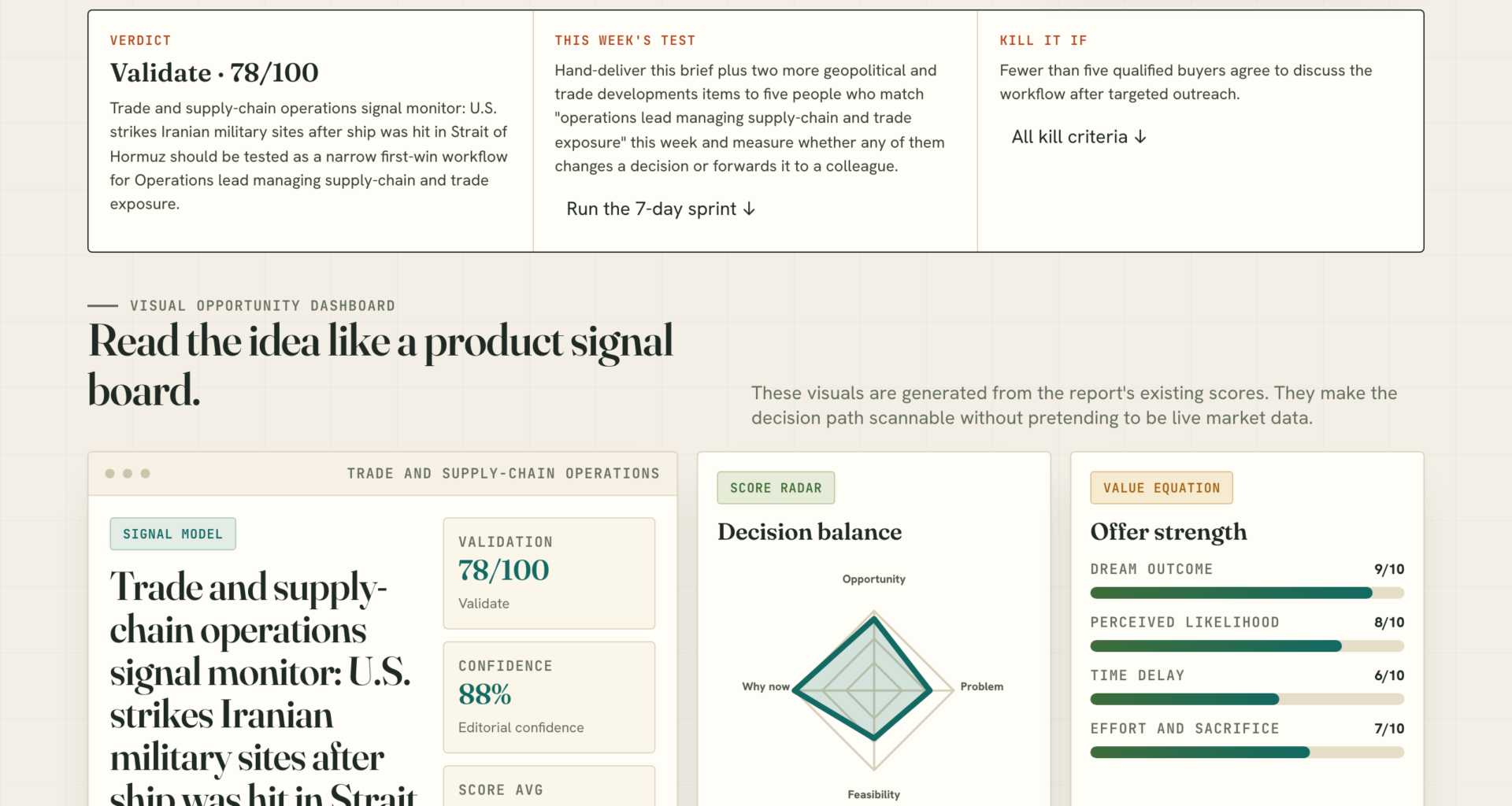

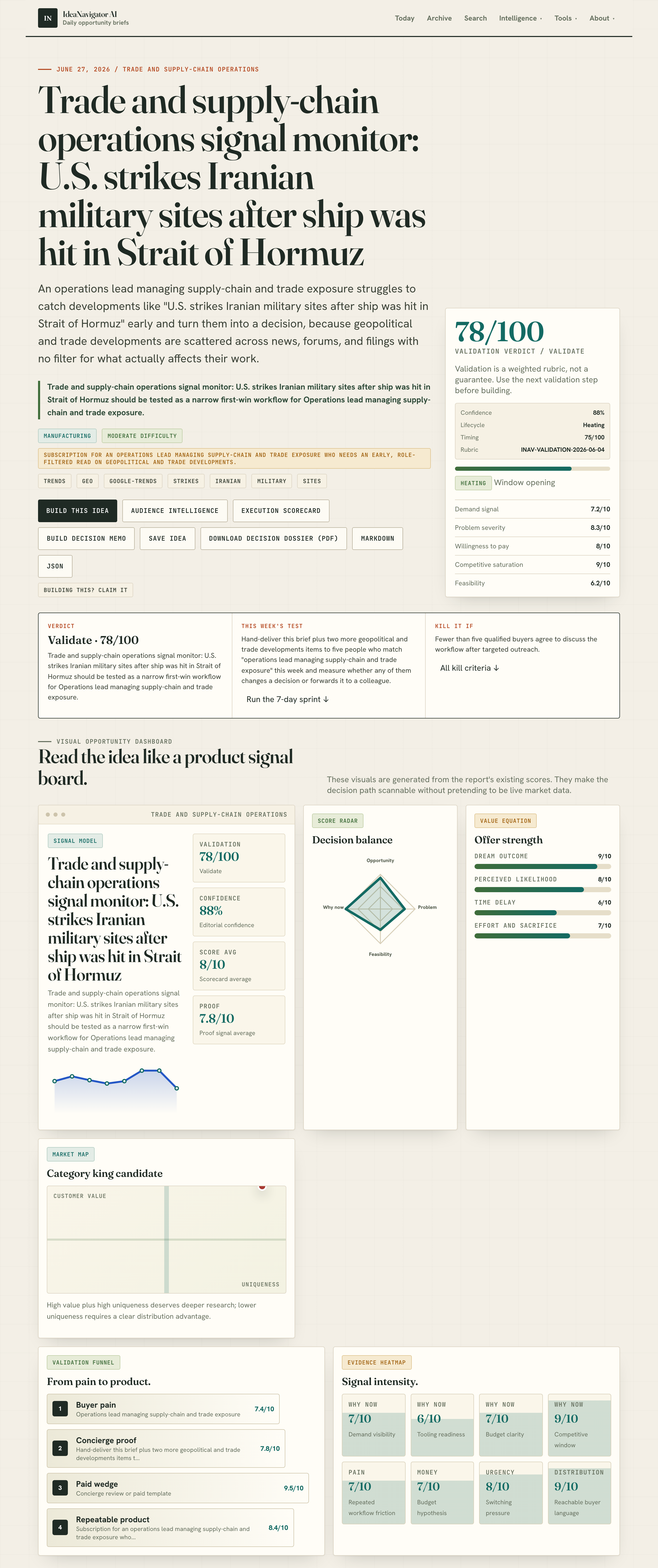
📊 Full opportunity report: Trade and supply-chain operations signal monitor: U.S. strikes Iranian military sites after ship was hit in Strait of Hormuz on IdeaNavigator AI — validation score, market gap, and execution plan.
TL;DR
The U.S. launched strikes on Iranian military targets after a ship was hit in the Strait of Hormuz. This escalation impacts global trade routes and supply chains, with ongoing uncertainty about further developments.
The United States has launched military strikes against Iranian military sites in response to an attack on a commercial vessel in the Strait of Hormuz, marking a significant escalation in regional tensions. This action directly affects global trade routes and supply chain stability, making it a critical development for international trade operations.
According to official U.S. military statements, the strikes targeted Iranian military infrastructure believed to be responsible for the recent attack on a commercial vessel in the Strait of Hormuz. The incident involved an unidentified vessel hitting a ship, which has yet to be officially confirmed as an attack, but U.S. authorities attribute it to Iran. The strikes were carried out early this morning and have been described as a limited military response aimed at deterring future aggression. Iran has condemned the strikes, calling them provocative and unlawful, but has not yet issued any further military response. The event has caused immediate disruptions in maritime traffic in the region, with some shipping companies rerouting or delaying shipments. Experts warn that such escalations could threaten global supply chains, especially for oil and energy markets, which heavily depend on the Strait of Hormuz as a key transit point.Implications for Global Trade and Supply Chains
This escalation signals a potential increase in regional instability that could threaten global supply chains, especially energy exports from the Middle East. The strikes may lead to heightened security measures, increased shipping costs, and potential delays in critical goods. For companies managing supply chains, understanding the evolving geopolitical landscape is vital to mitigate risks and adjust logistics strategies accordingly. The event underscores the importance of real-time geopolitical monitoring for supply chain resilience, especially in regions with high geopolitical volatility.maritime geopolitical risk monitoring tools
As an affiliate, we earn on qualifying purchases.
As an affiliate, we earn on qualifying purchases.
Recent Escalations and Regional Tensions in the Strait of Hormuz
The Strait of Hormuz has long been a flashpoint for geopolitical tensions, with Iran frequently threatening to close the waterway in response to international sanctions and regional conflicts. In recent months, there have been multiple incidents involving ships and military posturing, raising fears of broader conflict. The U.S. and Iran have a history of confrontations over maritime security, with previous incidents leading to diplomatic protests and limited military actions. The current strikes follow a series of recent incidents in the region, including drone and missile attacks on oil infrastructure, which have increased the risk of escalation. The U.S. has emphasized its intention to protect freedom of navigation, while Iran has accused Western powers of meddling and provoking conflict.“The strikes were a targeted response to deter further aggression and protect maritime security in the region.”
— U.S. Defense Department spokesperson
Unconfirmed Details and Potential Escalation Risks
It is not yet clear whether Iran will undertake further military responses or retaliate directly against U.S. interests. The exact locations and scale of the Iranian military sites targeted remain undisclosed, and the broader impact on regional stability is still uncertain. Analysts warn that the situation could escalate into broader conflict, but no additional military actions have been officially announced at this time.
Monitoring Regional Responses and Supply Chain Impacts
Next steps include close monitoring of Iran’s response, potential diplomatic negotiations, and shifts in maritime security measures. Shipping companies and supply chain managers should prepare for possible disruptions, rerouting, or increased costs. Further military or diplomatic developments are expected over the coming days, which will influence regional stability and global trade flows.
Key Questions
What triggered the U.S. strikes against Iran?
The strikes followed an attack on a commercial vessel in the Strait of Hormuz, which U.S. officials attribute to Iran. The incident involved a ship being hit, prompting a military response aimed at deterring further aggression.
Could this lead to a broader conflict?
While current actions are limited, there is a risk of escalation if Iran retaliates or if regional tensions increase. The situation remains fluid, and further military or diplomatic responses are possible.
How will this affect global trade routes?
The Strait of Hormuz is a critical chokepoint for oil and energy shipments. Disruptions or increased security measures could lead to higher shipping costs, delays, and supply chain adjustments for companies relying on this route.
What should supply chain managers do now?
They should monitor geopolitical developments closely, consider rerouting options, and prepare for potential delays or cost increases in shipments passing through the region.
Are there any diplomatic efforts underway to de-escalate?
At this stage, no official diplomatic negotiations have been announced. The focus remains on regional security and managing the immediate aftermath of the strikes.
Source: IdeaNavigator AI